Why You Overeat Even When You’Re Motivated Explained
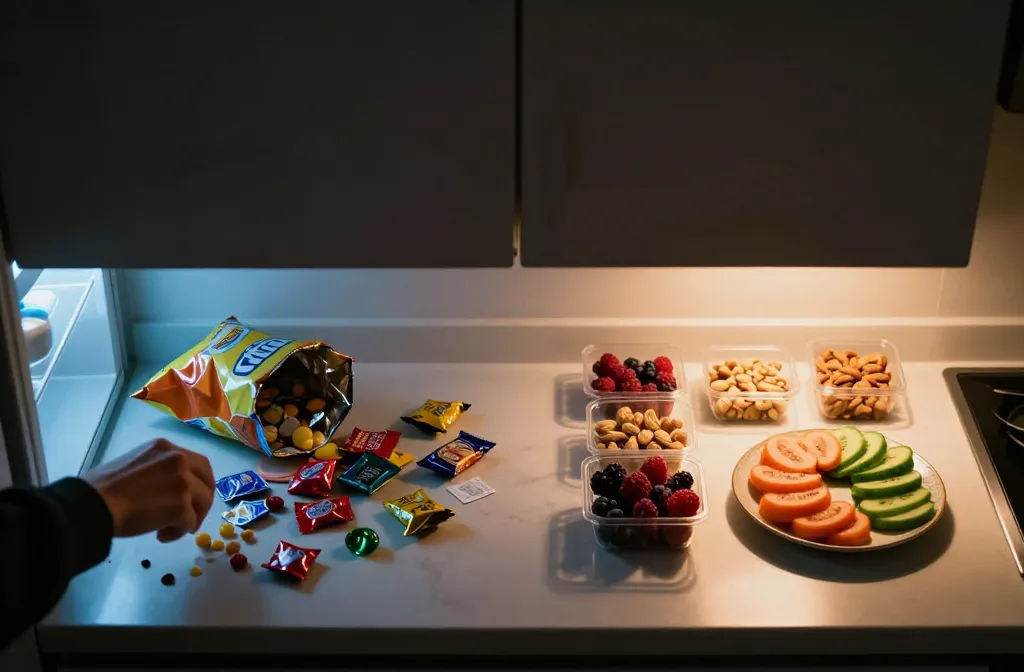
You swear you’re committed. You plan meals, you set goals, you even say no to cake at 2 p.m. And then 9 p.m. happens. Suddenly you’re eating straight from the bag and wondering what kind of food goblin possessed you. You’re not broken. Your brain just runs on a system that doesn’t care about your motivational speech.
FREE 7-Day Easy Dinner Reset
Get 7 healthy, family-friendly dinners complete with recipes and simple meal plans delivered straight to your inbox.
Your Brain Loves Shortcuts (And Snacks)
Your brain runs two systems: the fast, automatic one and the slower, thoughtful one. When you feel tired, stressed, or distracted, the fast system takes the wheel. It craves quick energy and familiar habits.
Translation: You reach for chips, not chickpeas. The fast system wins when you:
- Wait too long to eat (blood sugar dips = impulsive choices)
- Keep trigger foods in sight (hello, dopamine)
- End the day mentally exhausted (decision fatigue is real)
Make the Shortcut Work for You
Set up easy wins:
- Pre-portion snacks so your automatic brain grabs a reasonable amount
- Put fruit/protein front-and-center on the fridge shelf
- Use smaller plates to nudge portion sizes without thinking
Hunger Isn’t Just in Your Stomach

You’ve got physical hunger, emotional hunger, and “it’s here so I’ll eat it” hunger. Motivation doesn’t fix the wrong kind of hunger.
Physical hunger builds gradually, any food works, and you feel satisfied after.
Emotional hunger arrives fast, needs specific foods, and never feels done.
Environmental hunger just means food appeared (office donuts say hi).
Quick Hunger Check
Ask:
- “Would I eat a chicken breast right now?” If yes, you’re probably physically hungry.
- “What emotion am I avoiding?” If you know the answer, it’s emotional hunger.
- “If the food wasn’t here, would I still want it?” If no, it’s environmental.
Stress, Sleep, and Hormones: The Sneaky Trio
Sleep less than 7 hours? Your hunger hormones go chaotic. Ghrelin (the “eat more” signal) increases, leptin (the “you’re good” signal) drops. Add stress, and your body shouts “carbs now” like a toddler at Target.
Actionables (IMO the most underrated fixes):
- Prioritize 7–9 hours of sleep like it’s your job
- Eat protein + fiber at breakfast to stabilize blood sugar
- Use 5-minute stress resets (walk, box breathing, outside light)
Restriction Backfires (Every. Single. Time.)

You decide to “be good.” You cut carbs, sugar, and fun. Your brain registers scarcity and dials up cravings. Then one slip becomes “screw it, I ruined the day,” and you overeat.
Better strategy:
- Plan structured flexibility (yes, dessert has a job)
- Use addition over subtraction (add protein, fiber, volume)
- Eat consistent meals to avoid binge-triggered hunger swings
The 80% Rule
Eat until you feel about 80% full. That takes practice. Slow down, chew, ask yourself mid-meal: “If I stop now, will I feel good in 20 minutes?” If yes, park the fork.
Your Environment Is Rigged (Fix It, Don’t Fight It)
Motivation works when the environment helps. It fails when your counter looks like a snack aisle.
Design your defaults:
- Keep tempting foods invisible (opaque containers, high shelves)
- Plate snacks—no eating from bags
- Pre-plan treat windows so they don’t become “oops” binges
Meal Templates > Meal Plans
Plans blow up. Templates flex:
- Breakfast template: Protein + fiber + fruit (eggs + whole-grain toast + berries)
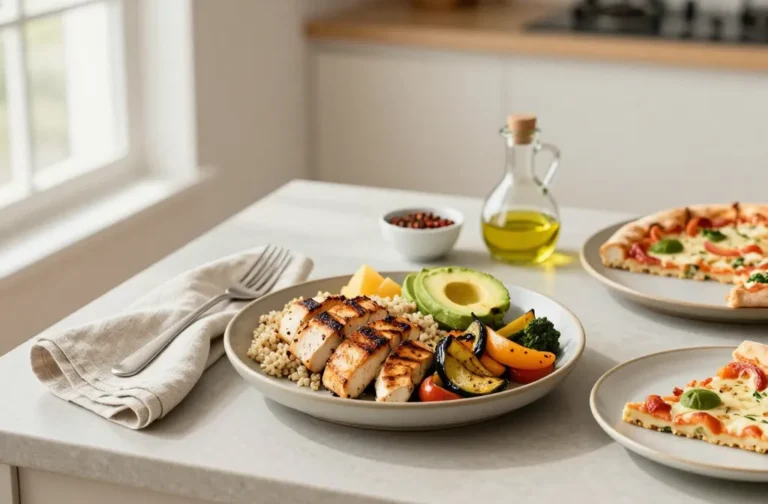
- Lunch template: Protein + veg + carb + fat (chicken bowl, beans, rice, avocado)
- Dinner template: Protein-heavy, veg-forward, carbs as needed for activity
Habits Beat Willpower (FYI, This Is the Whole Game)

Willpower fades at 8:37 p.m. Habits run on autopilot all day. Build tiny habits you can crush even on “meh” days.
Try:
- Protein first bite at every meal
- One snack rule after dinner (pick it, plate it, enjoy it)
- 2-minute friction before impulse eats (set a timer, drink water, reassess)
When Motivation Is High, Build Systems
Use that motivated window to make choices easier when you’re tired later.
Weekend power moves:
- Prep a few grab-and-go proteins (chicken, tofu, Greek yogurt)
- Chop high-volume veggies (cucumbers, peppers, carrots)
- Batch-cook smart carbs (rice, quinoa, potatoes) for mix-and-match meals
Decision Rules That Save You
- Eat every 3–5 hours to avoid “snackpocalypse” later
- Two treats per day, guilt-free—just count and enjoy
- Close the kitchen an hour before bed (brush teeth, lights off)
Never Wonder What's For Dinner Again
Get 7 healthy, family-friendly dinners complete with recipes, grocery lists, and simple meal plans delivered straight to your inbox.
FAQ
Why do I overeat even when I’m not hungry?
Emotions, environment, and habit loops drive a lot of eating. If you feel stressed, bored, or exposed to constant cues (smells, ads, open bags), your brain nudges you to eat anyway. Build small buffers—pause two minutes, portion the food, and check if you actually want it.
Is sugar addiction a thing?
Sugar lights up reward pathways, but the research points more to patterns of restriction and bingeing than true addiction for most people. If you eat regularly, include protein and fiber, and allow treats, those intense “must have it” cravings usually calm down.
Do I need to track calories to stop overeating?
Not required. Helpful sometimes, annoying often. You can improve portions with plate templates, consistent meal timing, and hunger checks. If you like data, track protein and fiber first—calories usually follow.
What should I do after a binge?
Don’t “compensate” with restriction. That guarantees another binge. Hydrate, eat a normal protein-rich meal next time you’re hungry, go for a walk, and review the trigger. Then tweak your environment or routine accordingly. Done. Move on.
How much protein keeps me full?
Aim for roughly 20–40 grams per meal depending on your size and activity. Pair it with fiber and some fat for staying power. Example: Greek yogurt + berries + chia seeds checks all the boxes.
Is late-night eating always bad?
Not automatically. It’s mostly a problem when it turns into mindless snacking. If you train late or truly feel hungry, eat a planned, protein-forward snack and call it. Structure beats chaos.
Conclusion
You don’t overeat because you lack character. You overeat because your brain loves easy energy, stress fogs your judgment, and your environment throws snacks at your face. Build simple systems, add protein and fiber, keep treats in the plan, and set your kitchen up to help future-you. Motivation gets you started. Systems keep you consistent, IMO the real flex.
Estimated Nutrition for Sample “Stop-Overeating” Friendly Recipes
FYI: These are quick, high-satiety, easy-to-prep ideas. I used standard USDA data and typical portions. Values are per serving and approximate.
1) Greek Yogurt Berry Bowl
Ingredients (1 serving):
– 3/4 cup nonfat Greek yogurt (170 g)
– 1/2 cup mixed berries, fresh or frozen (75 g)
– 1 tbsp chia seeds (12 g)
– 1 tsp honey (7 g)
Serving size: 1 bowl (about 265 g)
Estimated nutrition per serving:
– Calories: 190
– Total Fat: 4.5 g
– Total Carbohydrates: 26 g
– Dietary Fiber: 8 g
– Net Carbs: 18 g
– Protein: 17 g
2) Protein-Loaded Egg Wrap
Ingredients (1 serving):
– 2 large eggs
– 1 high-fiber tortilla (8–9 inch, ~45 g)
– 1/4 avocado (50 g)
– Handful spinach (30 g)
– 1 tbsp salsa (15 g)
Serving size: 1 wrap
Estimated nutrition per serving:
– Calories: 380
– Total Fat: 22 g
– Total Carbohydrates: 28 g
– Dietary Fiber: 11 g
– Net Carbs: 17 g
– Protein: 20 g
3) Chicken, Rice, and Veg Bowl
Ingredients (1 serving):
– 4 oz cooked chicken breast (113 g)
– 3/4 cup cooked brown rice (150 g)
– 1 cup steamed broccoli (150 g)
– 1 tsp olive oil (5 g)
– Lemon, garlic, salt to taste
Serving size: 1 bowl
Estimated nutrition per serving:
– Calories: 430
– Total Fat: 10 g
– Total Carbohydrates: 49 g
– Dietary Fiber: 6 g
– Net Carbs: 43 g
– Protein: 34 g
4) Cottage Cheese Crunch Bowl
Ingredients (1 serving):
– 3/4 cup low-fat cottage cheese (170 g)
– 1/2 cup chopped cucumber (75 g)
– 1/2 cup cherry tomatoes (75 g)
– 1 tbsp roasted sunflower seeds (9 g)
– Dash everything bagel seasoning
Serving size: 1 bowl (about 330 g)
Estimated nutrition per serving:
– Calories: 220
– Total Fat: 9 g
– Total Carbohydrates: 10 g
– Dietary Fiber: 2 g
– Net Carbs: 8 g
– Protein: 24 g
5) Tofu Veggie Stir-Fry
Ingredients (2 servings; estimate 1 serving nutrition below):
– 8 oz firm tofu (226 g)
– 2 cups mixed veggies (bell pepper, snap peas, carrots; ~300 g)
– 1 tbsp soy sauce (15 g)
– 2 tsp sesame oil (10 g)
– 1 tsp honey or maple (7 g)
– 1 tsp cornstarch (3 g) + splash water
Serving size: 1/2 of recipe
Estimated nutrition per serving:
– Calories: 240
– Total Fat: 13 g
– Total Carbohydrates: 16 g
– Dietary Fiber: 4 g
– Net Carbs: 12 g
– Protein: 16 g
6) Peanut Butter Banana Protein Toast
Ingredients (1 serving):
– 1 slice whole-grain bread (40 g)
– 1 tbsp natural peanut butter (16 g)
– 1/2 small banana, sliced (50 g)
– Sprinkle cinnamon, pinch salt
Serving size: 1 toast
Estimated nutrition per serving:
– Calories: 220
– Total Fat: 9 g
– Total Carbohydrates: 30 g
– Dietary Fiber: 5 g
– Net Carbs: 25 g
– Protein: 7 g
7) Tuna Avocado Rice Cakes
Ingredients (1 serving):
– 2 plain rice cakes (18 g total)
– 1 pouch light tuna in water, drained (2.5 oz/70 g)
– 1 tbsp mashed avocado (15 g)
– 1 tsp light mayo or Greek yogurt (5 g)
– Lemon juice, pepper
Serving size: 2 topped rice cakes
Estimated nutrition per serving:
– Calories: 210
– Total Fat: 5 g
– Total Carbohydrates: 20 g
– Dietary Fiber: 1 g
– Net Carbs: 19 g
– Protein: 20 g
8) Chocolate Protein “Pudding”
Ingredients (1 serving):
– 1/2 cup low-fat Greek yogurt (113 g)
– 1/2 scoop chocolate whey (15 g)
– 1 tsp cocoa powder (2.5 g)
– 1 tsp maple syrup or stevia to taste
– Splash milk or water to thin
Serving size: 1 bowl (~150 g)
Estimated nutrition per serving:
– Calories: 160
– Total Fat: 2 g
– Total Carbohydrates: 12 g
– Dietary Fiber: 2 g
– Net Carbs: 10 g
– Protein: 22 g
Disclaimer: Nutrition values are estimates based on standard USDA data and common brand averages. Your ingredients and portions may vary, so adjust accordingly.
Loved This Recipe?
If you're looking for more simple, healthy dinners your family will actually eat, grab my FREE 7-Day Easy Dinner Reset. You'll get 7 easy dinner recipes, simple grocery lists, and a done-for-you plan that takes the stress out of mealtime.