Why Restricting Food Backfires Every Time and What Works
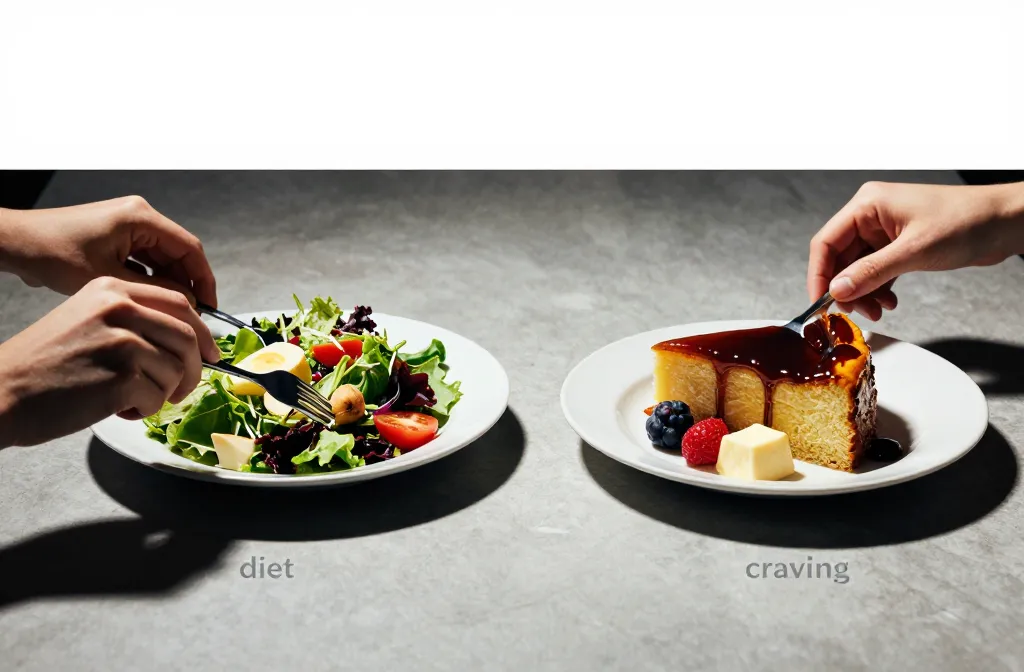
You promise yourself you’ll “be good,” skip dessert, and suddenly all you can think about is cake. Five hours later, you’re stress-forking icing straight from the tub. Sound familiar? You didn’t fail — your brain just hates rigid rules. Every time you clamp down on food, your body pushes back, louder and louder. Let’s unpack why that happens and what to do instead.
FREE 7-Day Easy Dinner Reset
Get 7 healthy, family-friendly dinners complete with recipes and simple meal plans delivered straight to your inbox.
The Brain Hates “Don’t” Rules
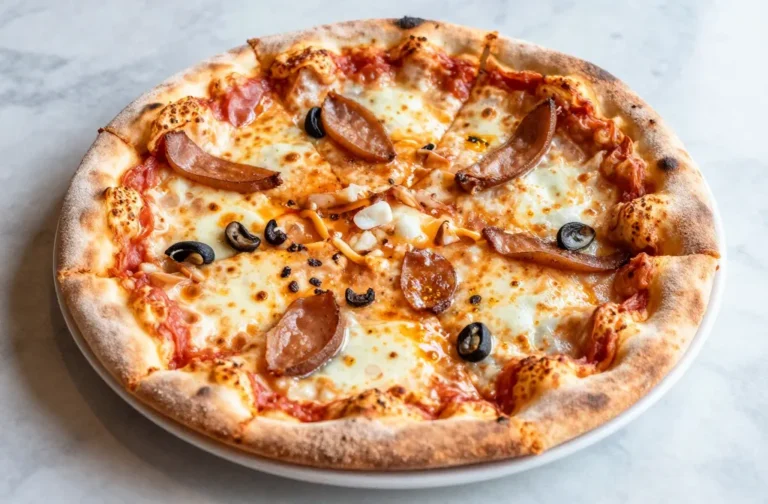
Tell yourself not to think about pizza, and your brain turns into a 24/7 pizza channel. That’s called ironic rebound — restriction makes the “forbidden” food more tempting. When you label foods as off-limits, you train your brain to obsess.
Bottom line: The more you restrict, the more you crave. Not willpower — wiring.
Why Forbidden Foods Taste Better (Temporarily)
Your brain releases extra dopamine when you anticipate a rare treat. Make brownies “rare,” and your brain screams, “Now or never!” So you don’t just want brownies — you want them all, right now.
Restriction Triggers a Biological Alarm

Your body evolved to survive famine, not bikini season. When you cut calories hard, your metabolism acts like an anxious mom, slamming on the brakes.
- Hunger hormones spike: Ghrelin (hunger) goes up, leptin (fullness) drops.
- Metabolism slows: Your body burns fewer calories at rest.
- Energy dips: You feel tired and cranky, which FYI makes cravings louder.
That’s why “I’ll just eat less” backfires. Your biology votes against it every time.
All-Or-Nothing Thinking = All-Or-Everything Eating
You “break the rules” with one cookie, so you decide the day is ruined and polish off the box. That’s diet math: one slip equals total failure. Real math says one cookie equals… one cookie.
Try a reframe: One choice doesn’t define your day. You can always pivot at the next meal. IMO, progress > perfection by a thousand miles.
The Guilt-Binge Cycle
- Restrict a “bad” food.
- Crave it non-stop.
- Eat it, feel guilty.
- Double down on restriction to “fix it.”
Repeat forever — unless you step off the guilt treadmill and allow foods without moral labels.
Permission Doesn’t Mean Chaos

People fear that if they allow all foods, they’ll never stop eating donuts. But when you give unconditional permission to eat, novelty fades. Your brain relaxes. Donuts become… donuts. Not a last-meal-on-earth situation.
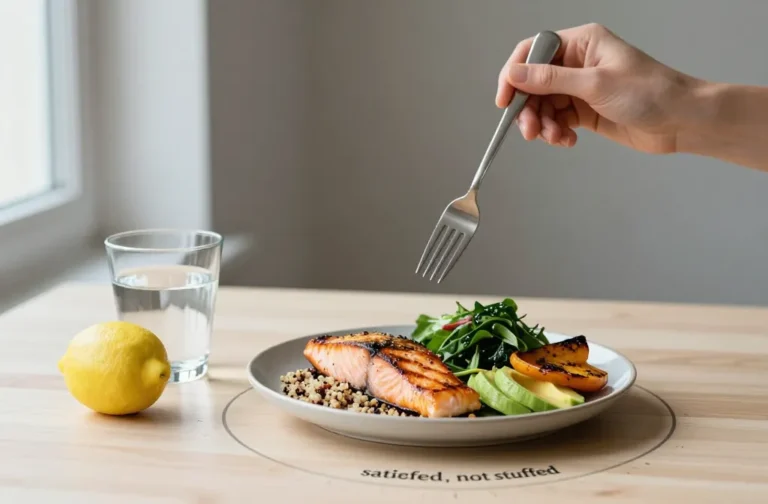
Practice this: Put the “forbidden” food on your plate with a balanced meal. Eat mindfully. Notice the taste. Stop when you feel satisfied, not stuffed. Boring? Exactly the point.
Gentle Structure Beats Rigid Rules
Swap hard no’s for light guardrails:
- Add protein and fiber to every meal for staying power.
- Plan satisfying snacks so you don’t hit 0% battery at 4 p.m.
- Use “sometimes” and “today I want” instead of “never” and “I can’t.”
Hunger and Fullness Are Tools, Not Enemies
You can’t white-knuckle hunger forever. You also can’t “outsmart” fullness by chugging water. Tune in instead:
- Check-in before eating: Am I hungry, bored, stressed, or just procrastinating?
- Mid-meal pause: A few breaths. Still enjoying this? Still hungry?
- End with curiosity: How does my body feel — energized, heavy, satisfied?
It’s not woo-woo. It’s data. And IMO it beats tracking every crumb.
What Actually Works Long-Term

Diets sell quick wins, not sustainable habits. Your life needs the opposite.
Build a flexible foundation:
- Eat enough, consistently: Three meals + 1–2 snacks. No heroic hunger.
- Prioritize the “big rocks”: Protein, fiber, colorful produce, and foods you love.
- Move in ways you enjoy: Joyful consistency beats punishing intensity.
- Sleep and stress: Cravings scream when you’re exhausted and frazzled.
- Make room for fun foods: Planned, guilt-free, and satisfying.
Red Flags That You’re Restricting (Even If You Swear You’re Not)
- You “save up” calories for later.
- You skip meals to “make up” for last night.
- You only eat dessert if you worked out.
- You fear social plans because of the menu.
If you nodded to any of these, your body noticed too.
FAQ
Isn’t some restriction necessary for weight loss?
You need a gentle calorie deficit for fat loss, but “gentle” matters. Extreme restriction tanks your metabolism, spikes cravings, and leads to rebound eating. A small, sustainable deficit — while keeping favorite foods — works better and feels human.
What if I can’t trust myself around certain foods?
Start with training wheels. Eat that food with a balanced meal, not when you’re starving. Portion it onto a plate, sit down, and savor. Over time, scarcity fades and control improves. This is exposure therapy for your taste buds.
How do I stop bingeing after a “bad” day?
Never Wonder What's For Dinner Again
Get 7 healthy, family-friendly dinners complete with recipes, grocery lists, and simple meal plans delivered straight to your inbox.
Drop the “bad.” Eat your next normal meal with protein, carbs, fat, and fiber. Drink water, go for a walk, and move on. One day doesn’t undo your progress, but the shame spiral might.
Can intuitive eating help if I want to change my body?
Yes, if you focus on body respect and behavior change first. Many people see composition shifts when they eat enough, lift, sleep, and reduce chaotic swings. Intuition plus gentle structure beats punishment plus rules.
What if my doctor told me to cut certain foods?
Medical restrictions (e.g., celiac, allergies) are different from diet rules. Work with a registered dietitian to create satisfying swaps so you don’t live in scarcity mode. You still deserve meals that feel abundant.
Conclusion
Restriction sounds disciplined, but it’s a trap door. Your brain fixates, your body rebels, and your willpower taps out by Thursday. Build a flexible routine, keep your favorite foods, and listen to your actual hunger cues. When you drop the rules, you drop the chaos — and that’s where consistency finally sticks.
Estimated Nutrition Facts for Sample Recipes
FYI: Values below use standard USDA data and typical home-cook portions. Net Carbs = Total Carbs − Fiber. These are estimates and can vary with brands and exact measurements.
Recipe 1: Greek Yogurt Parfait with Berries and Granola
Assumed recipe (1 serving):
- 3/4 cup (170 g) nonfat plain Greek yogurt
- 1/2 cup mixed berries (strawberries/blueberries)
- 1/4 cup granola
- 1 tsp honey
Estimated per serving:
- Serving size: 1 parfait (about 300 g)
- Calories: 275
- Total Fat: 4 g
- Total Carbohydrates: 45 g
- Dietary Fiber: 4 g
- Net Carbs: 41 g
- Protein: 18 g
Recipe 2: Avocado Toast with Egg
Assumed recipe (1 serving):
- 1 slice whole-grain bread (40 g)
- 1/2 medium avocado (75 g)
- 1 large egg, fried in minimal oil (nonstick spray)
- Pinch of salt, pepper, lemon
Estimated per serving:
- Serving size: 1 topped toast
- Calories: 320
- Total Fat: 20 g
- Total Carbohydrates: 28 g
- Dietary Fiber: 8 g
- Net Carbs: 20 g
- Protein: 12 g
Recipe 3: Chicken Veggie Stir-Fry with Rice
Assumed recipe (2 servings total):
- 8 oz boneless skinless chicken breast
- 2 cups mixed veggies (bell pepper, broccoli, snap peas)
- 1 tbsp canola oil
- 2 tbsp low-sodium soy sauce
- 1 tsp honey
- 1 tsp minced garlic, 1 tsp grated ginger
- 2 cups cooked white rice total (1 cup per serving)
Estimated per serving:
- Serving size: 1 plate (about 400 g)
- Calories: 520
- Total Fat: 12 g
- Total Carbohydrates: 66 g
- Dietary Fiber: 4 g
- Net Carbs: 62 g
- Protein: 34 g
Recipe 4: Peanut Butter Banana Smoothie
Assumed recipe (1 serving):
- 1 medium banana (118 g)
- 1 tbsp peanut butter (16 g)
- 1 cup unsweetened almond milk
- 1 scoop vanilla whey protein (30 g)
- Ice
Estimated per serving:
- Serving size: ~14 oz smoothie
- Calories: 330
- Total Fat: 9 g
- Total Carbohydrates: 36 g
- Dietary Fiber: 4 g
- Net Carbs: 32 g
- Protein: 30 g
Recipe 5: Simple Lentil Soup
Assumed recipe (4 servings total):
- 1 cup dry brown lentils (192 g)
- 1 tbsp olive oil
- 1 small onion, 2 carrots, 2 celery stalks
- 1 clove garlic
- 4 cups low-sodium vegetable broth
- Spices: cumin, bay leaf, salt, pepper
Estimated per serving:
- Serving size: 1.5 cups (~360 g)
- Calories: 240
- Total Fat: 4 g
- Total Carbohydrates: 38 g
- Dietary Fiber: 13 g
- Net Carbs: 25 g
- Protein: 13 g
Disclaimer: Nutrition values are estimates based on standard USDA data and typical portions. Actual numbers vary with brands, measurements, and cooking methods. If you have medical or dietary needs, consult a registered dietitian.
Loved This Recipe?
If you're looking for more simple, healthy dinners your family will actually eat, grab my FREE 7-Day Easy Dinner Reset. You'll get 7 easy dinner recipes, simple grocery lists, and a done-for-you plan that takes the stress out of mealtime.