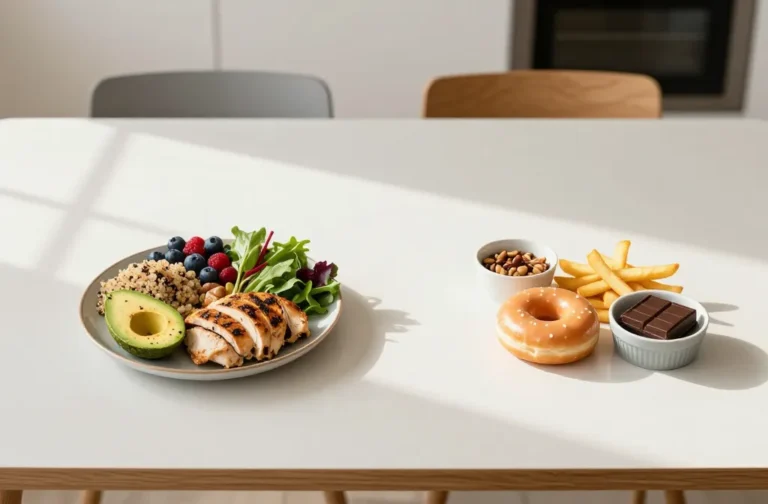
The Real Reason Why You Overeat Even When You Know Better
You know that second slice of cake won’t help your long-term goals. You also know your jeans don’t stretch forever. And yet… fork to mouth, again. What gives? You’re not weak. You’re human—with a brain wired to overeat for reasons that make complete sense once you see them.
FREE 7-Day Easy Dinner Reset
Get 7 healthy, family-friendly dinners complete with recipes and simple meal plans delivered straight to your inbox.
Your Brain Isn’t Broken—It’s Outgunned
Food companies engineer snacks to light up your brain like a pinball machine. That combo of sugar, fat, and salt? It hijacks reward circuits and shouts “More, please!” way louder than your future self can whisper “Maybe don’t.”
The dopamine teaser
Your brain releases dopamine in anticipation, not just after you eat. That’s why walking past a bakery can make you hungry even after dinner. You don’t crave fullness—you crave the hit.
Hyper-palatable foods cheat the system
– They dissolve fast, so you don’t “feel” full.
– They pack lots of calories in small bites.
– They lack fiber and protein—the stuff that keeps you satisfied.
TL;DR: Your biology pays attention to survival, not macros. And modern junk food knows your codes.
Hunger Isn’t Just in Your Stomach

You feel hunger in at least three ways. Mix them up, and overeating becomes your default.
Physical hunger
Stomach growls, low energy, maybe cranky. Protein, fiber, and time usually solve it.
Emotional hunger
Stress, boredom, loneliness. It comes on fast and demands something specific (hello, ice cream). Food soothes, but only for a few minutes.
Environmental hunger
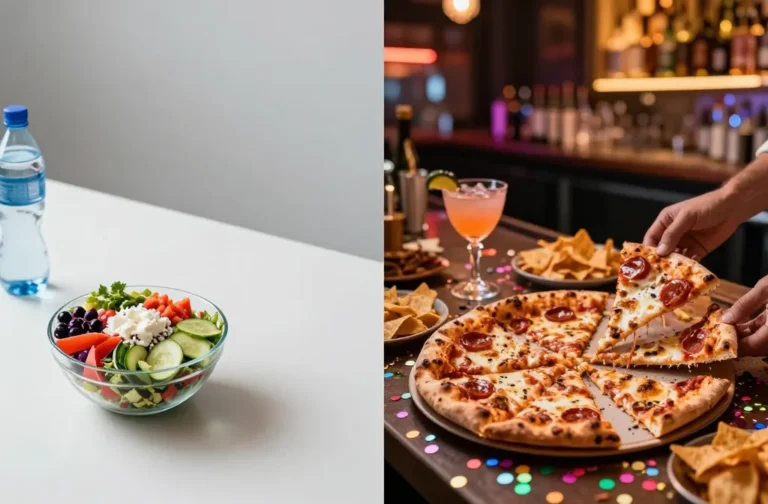
You’re not hungry, but your friend orders fries and suddenly you “need a taste.” Visual cues push your buttons, FYI.
Pro tip: Pause and ask, “Which hunger is this?” If it’s not physical, try a non-food fix first for 10 minutes. If you still want it, go ahead—just choose on purpose.
Willpower Has a Battery (And You Keep Draining It)
You only get so many good decisions in a day. Then life happens—emails, kids, traffic, chaos—and your brain chooses the easiest option: eat what’s in front of you.
Decision fatigue is real
– Endless food choices wear you down.
– “I’ll be good later” becomes “I’ll start Monday.”
– Restrictive rules backfire because your brain rebels.
Design beats discipline. If you keep cookies on the counter, you’ll eat cookies. If you keep chopped fruit and Greek yogurt in arm’s reach, that’s what you’ll grab. You’re not weak; your environment is loud.
Stress Changes Your Appetite (and Your Choices)

Cortisol (the stress hormone) nudges you toward quick energy—carbs and fat. That’s biology, not a character flaw.
What stress eating solves (briefly)
– It distracts you from discomfort.
– It gives a dopamine buffer.
– It gives you something to control when life feels bonkers.
The fix isn’t “just stop.” The fix is “reduce the stress load you can, and build stress outlets that aren’t edible.” Walks, 5-minute breathwork, journaling trash thoughts, a fast call to a friend—boring, yes, but effective.
Perfectionism Makes Overeating Worse
All-or-nothing thinking sets traps. One “bad” choice turns into a free-for-all because you think the day is ruined. Spoiler: it’s not.
Make the bounce-back tiny
– Overate at lunch? Eat a normal dinner. Don’t punish yourself.
– Craved cookies? Pair two cookies with protein and move on.
– Traveling? Aim for “good enough” meals, not layout-perfect macros.
Progress > perfection. IMO, the fastest way to stop overeating is to stop labeling foods as moral choices. Food is food. Your next choice matters more than your last one.
You Don’t Eat Enough (Yes, Really)

If you undereat during the day, your body collects the bill at night—with interest. You’ll crave calorie-dense stuff because you’re genuinely under-fueled.
Build meals that actually fill you up
– Protein: 25–40g each meal
– Fiber: 8–12g from veggies, legumes, whole grains
– Fat: 10–20g to slow digestion
– Carbs: enough to support your activity (not zero, not chaos)
If you constantly “snack” but never feel satisfied, you probably need an actual meal.
Never Wonder What's For Dinner Again
Get 7 healthy, family-friendly dinners complete with recipes, grocery lists, and simple meal plans delivered straight to your inbox.
Habits Run on Autopilot
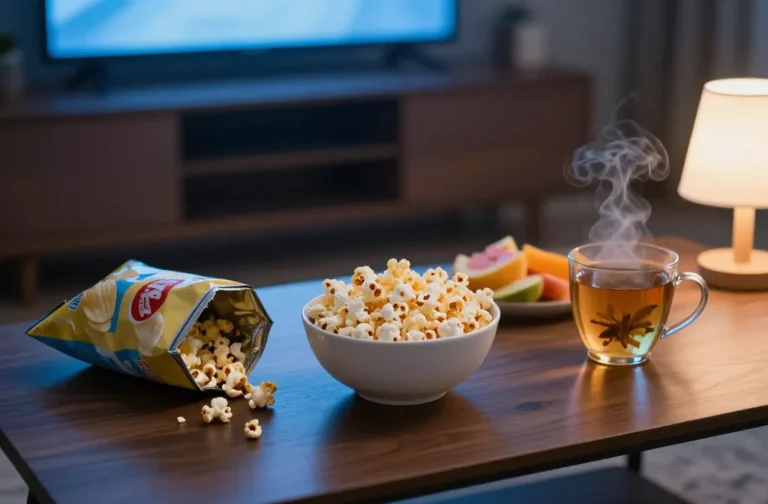
You snack during Netflix because you always snack during Netflix. That’s a loop: cue → routine → reward. You don’t “decide”; your brain does it for you.
Change the loop, don’t fight it
– Keep the cue (Netflix).
– Swap the routine (tea, gum, sliced apples, knitting—yes, really).
– Keep a reward (cozy blanket, new show, text a friend).
Do that for a few weeks and your brain learns the new path. No drama required.
Okay, So How Do You Actually Eat Less Without Hating Life?
Let’s make this practical and non-miserable.
- Front-load protein and fiber at breakfast. You’ll crave less madness later.
- Eat at predictable times so you don’t show up ravenous.
- Keep trigger foods out of sight or in single-serve portions.
- Use a “Pause Plate”: put a normal portion on a plate, eat it at a table, pause 5 minutes before seconds.
- Match stress with tools: walk, breathe, vent, journal—something.
- Sleep 7–8 hours. Poor sleep cranks up hunger hormones and wrecks judgment. FYI, it’s the most underrated “diet” tool.
- Adopt a “mostly” mindset: aim for 80% helpful choices, 20% fun. It’s sustainable.
FAQ
How do I know if I’m physically hungry or just craving?
Physical hunger creeps in slowly and any decent meal sounds good. Cravings hit fast and demand something specific. Try the apple test: if an apple sounds meh, you’re probably chasing a feeling, not fuel.
Is it okay to keep my favorite snacks at home?
Yes, but control the context. Store them out of sight, buy single-serve packs, and pair them with protein. Treats don’t need to vanish; they just need better boundaries.
Do “cheat days” help or hurt?
Hurt, usually. They encourage binge-restrict cycles. Plan “fun foods” throughout the week instead. It’s less dramatic and way more sustainable, IMO.
What’s one change that makes the biggest difference?
Eat a protein- and fiber-rich breakfast. It stabilizes hunger, mood, and willpower for the rest of the day. Not sexy, but wildly effective.
How long until cravings calm down?
Give it 2–3 weeks of regular meals, better sleep, and less food chaos. Cravings won’t disappear, but they’ll get quieter and easier to manage.
Do I need to track calories?
Not necessarily. Some people love data; others spiral. If you track, use it as feedback, not judgment. Otherwise, use simple habits: hand-sized protein, a fist of carbs, a thumb of fat, and half a plate of veggies.
Conclusion
You overeat because your brain prioritizes survival, your environment tempts you, and life keeps throwing curveballs. You don’t need more willpower—you need better systems. Feed yourself well, lower the noise, build tiny guardrails, and keep it “mostly” consistent. You’ll eat enough, enjoy your food, and stop feeling like you’re battling your own brain. Promise.
Estimated Nutrition for Example “Overeating-Proof” Meals
Below are three simple, satisfying meal ideas with estimated nutrition per serving. Serving sizes are noted; values use standard USDA averages and will vary by brand and prep.
1) High-Protein Greek Yogurt Bowl
Serving size: 1 bowl (1 cup nonfat Greek yogurt, 1/2 cup blueberries, 1 tbsp honey, 1 oz chopped almonds)
– Calories: ~435
– Total Fat: ~16 g
– Total Carbohydrates: ~46 g
– Dietary Fiber: ~7 g
– Net Carbs: ~39 g
– Protein: ~34 g
Ingredients used:
– Greek yogurt, nonfat, plain, 1 cup: 130 kcal, 23g protein, 9g carbs, 0g fat
– Blueberries, 1/2 cup: 42 kcal, 11g carbs, 2g fiber
– Honey, 1 tbsp: 64 kcal, 17g carbs
– Almonds, 1 oz: 164 kcal, 14g fat, 6g carbs, 3.5g fiber, 6g protein
2) Chicken, Quinoa, and Veggie Bowl
Serving size: 1 bowl (4 oz cooked chicken breast, 3/4 cup cooked quinoa, 1 cup roasted broccoli, 1 tbsp olive oil used for cooking, lemon/seasoning)
– Calories: ~575
– Total Fat: ~22 g
– Total Carbohydrates: ~49 g
– Dietary Fiber: ~8 g
– Net Carbs: ~41 g
– Protein: ~44 g
Ingredients used:
– Chicken breast, cooked, 4 oz: 187 kcal, 35g protein, 4g fat
– Quinoa, cooked, 3/4 cup: 167 kcal, 30g carbs, 3g fiber, 6g protein
– Broccoli, roasted, 1 cup: 55 kcal, 11g carbs, 4g fiber, 4g protein
– Olive oil, 1 tbsp: 119 kcal, 14g fat
3) Veggie Egg Scramble with Avocado Toast
Serving size: 1 plate (2 large eggs, 1 cup mixed peppers/onions sautéed, 1 tsp olive oil, 1 slice whole-grain bread, 1/4 medium avocado)
– Calories: ~470
– Total Fat: ~28 g
– Total Carbohydrates: ~34 g
– Dietary Fiber: ~9 g
– Net Carbs: ~25 g
– Protein: ~19 g
Ingredients used:
– Eggs, 2 large: 143 kcal, 13g protein, 9.5g fat, 1g carbs
– Mixed peppers/onions, sautéed, 1 cup: ~50 kcal, ~12g carbs, ~2g fiber
– Olive oil, 1 tsp: 40 kcal, 4.5g fat
– Whole-grain bread, 1 slice: ~100 kcal, 18g carbs, 3g fiber, 4g protein
– Avocado, 1/4 medium: ~135 kcal, 12.5g fat, 7g carbs, 5g fiber, 1.5g protein
Disclaimer: Nutrition values are estimates based on typical USDA data and common brands. Actual numbers vary by product, cooking method, and portion size.
Loved This Recipe?
If you're looking for more simple, healthy dinners your family will actually eat, grab my FREE 7-Day Easy Dinner Reset. You'll get 7 easy dinner recipes, simple grocery lists, and a done-for-you plan that takes the stress out of mealtime.