Finally Doable the Step-by-Step Plan to Stop Overeating for Good
You want to stop overeating, not join a monastery. Good news: you don’t need superhuman discipline or a color-coded spreadsheet. You need a clear plan, a few smart defaults, and a little self-awareness (the non-cringey kind). Let’s cut through the noise and build a step-by-step system that actually sticks—no guilt, no food rules, just steady progress you can live with.
FREE 7-Day Easy Dinner Reset
Get 7 healthy, family-friendly dinners complete with recipes and simple meal plans delivered straight to your inbox.
Know Your Overeating Triggers (Seriously, Know Them)
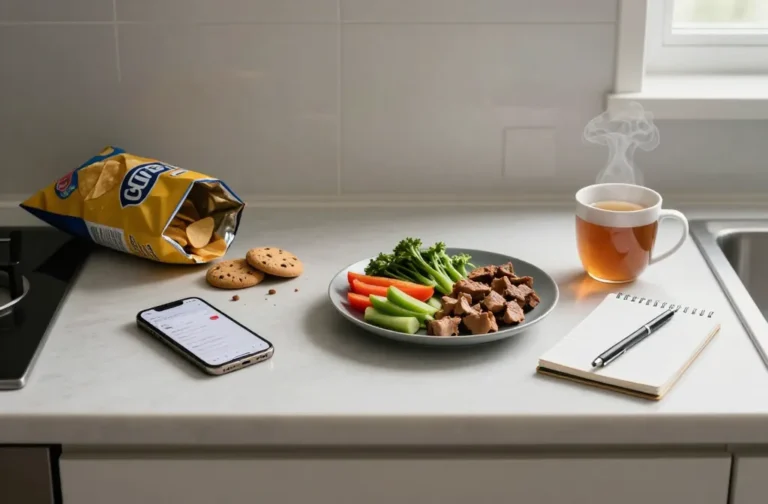
You can’t fix what you don’t see. Start by noticing when and why you overeat. Bored? Stressed? Celebrating? All valid—but different triggers need different tools.
Do this for one week:
- Log just three things for each overeating moment: time, emotion, and what you ate.
- Look for patterns: late-night snacking, weekend brunch chaos, post-meeting stress bites.
- Pick your top two triggers. Ignore the rest (for now). Focus wins.
Common Triggers You Can Tackle Fast
- Hunger backlog: You skip meals, then raid the pantry. Fix with planned protein + fiber earlier in the day.
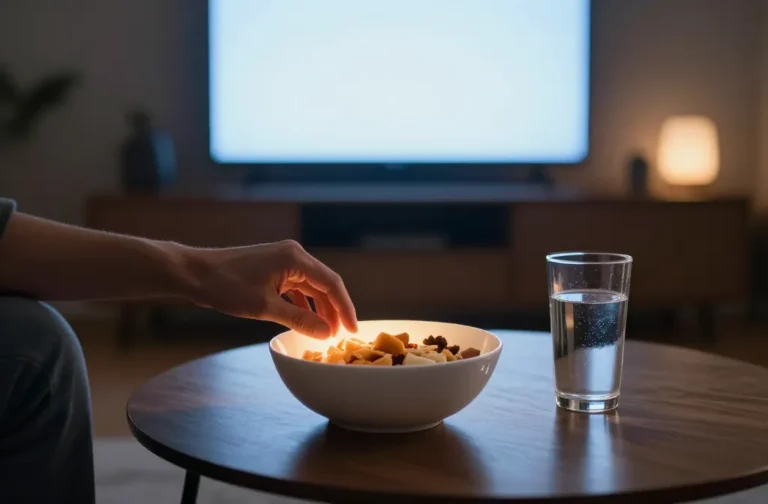
- Screen eating: Netflix turns one bowl into three. Fix with plated portions and no eating from the bag.
- Stress spiral: You eat to mute your brain. Fix with 10-minute “pause” rituals before food (walk, breathing, water).
Build Meals That Actually Satisfy

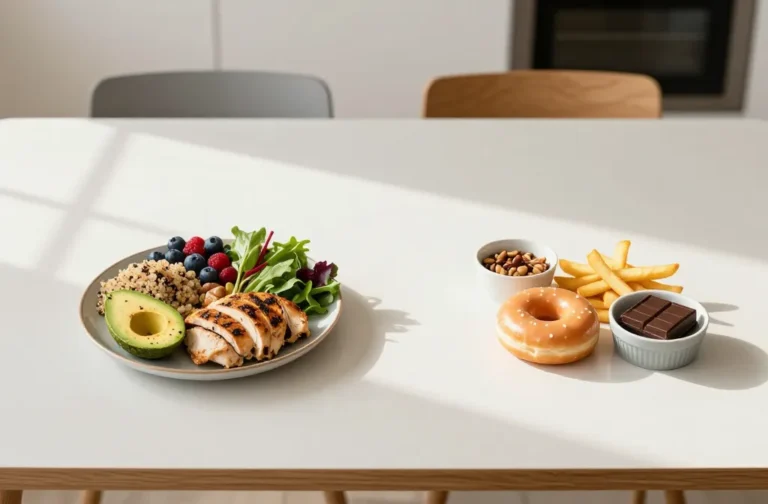
If your meals don’t keep you full, your snacks will riot. Design each meal with the trifecta: protein, fiber, and volume. That combo slows digestion and shuts down the snack monster.
Use this simple plate:
- Protein: 25–40 g (chicken, tofu, Greek yogurt, eggs, fish, lean beef, tempeh)
- Fiber carbs: 1–2 cups (veggies, beans, berries, whole grains)
- Smart fats: 1–2 tbsp (olive oil, nuts, seeds, avocado)
Quick Swaps That Help Immediately
- Swap cereal for Greek yogurt + berries + nuts.
- Swap pasta bowls for pasta + extra veg + chicken or beans.
- Swap chips for air-popped popcorn + a piece of fruit (IMO, undefeated crunch).
Use Portion Systems, Not Willpower
We all lie to ourselves with “just one handful.” Create friction and structure so your future self doesn’t need to wrestle your current self.
Try these:
- Plate everything: No eating from packages. Always serve a portion.
- Single-serve your danger foods: Buy mini packs or pre-portion into small bags.
- Use smaller plates and bowls: Visual cues trick your brain, and FYI, your brain loves being tricked.
- Delay window: Want seconds? Wait 10 minutes with a glass of water. If you still want it, go for it—mindfully.
The 80% Rule (A.K.A. “Comfortably Satisfied”)
Aim to stop at about 80% full. Not stuffed, not starving. Ask: “Could I take a light walk after this?” If the answer is yes, you’re golden.
Plan for Snack Attacks (Because They’re Coming)

You won’t out-motivate a 4 p.m. energy dip. Plan for it instead. Stock snacks that fill you up without flipping the overeating switch.
Snack blueprint:
- Protein: 15–25 g (Greek yogurt, cottage cheese, jerky, protein shake)
- Fiber or produce: Apple, carrots, berries, snap peas
- Hydration: Have a water or tea first—half of “hunger” is thirst or boredom
Pre-Commit with a “Snack Shelf”
Put your go-to snacks on one eye-level shelf in the fridge or pantry. Make them easy to grab. Hide the “uh-oh” foods up high or out of sight. Out of sight isn’t childish—it’s smart environment design.
Handle Emotions Without Raiding the Fridge
Emotional eating isn’t a character flaw—it’s a coping tool. Keep the tool, add a few more.
Use the 3-step pause:
- Name it: “I feel anxious/lonely/bored.”
- Move for 5 minutes: Walk, stretch, or do 20 slow breaths.
- Choose: If you still want food, have a planned snack and eat it sitting down.
Make a 10-Minute SOS List
Write 5 non-food actions that calm you fast:
- Go outside for fresh air
- Text a friend a meme (scientifically therapeutic, probably)
- Take a hot shower
- Put on music and tidy one small area
- Do a guided breathing video
Structure Your Day So You Don’t “Fall Off” at Night

Night overeating usually starts at breakfast (or the lack of it). If you under-eat all day, your evening turns into a buffet.
Daily anchors:
- Front-load protein: 30–40 g at breakfast keeps cravings quiet.
- Regular meals: Eat every 3–5 hours. No hero fasting if it triggers binges later.
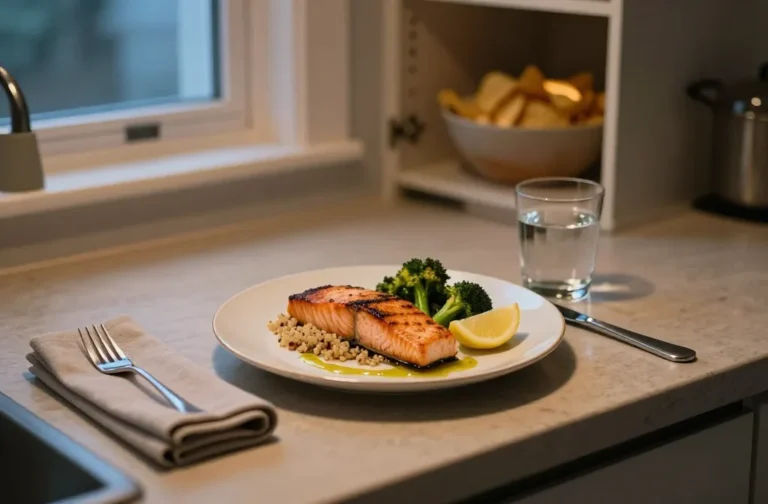
- Night routine: Close the kitchen after dinner with a “finisher” (mint tea, yogurt cup, square of dark chocolate).
If Late-Night Eating Hits Hard
Try a 7–8/10 fullness dinner (slightly more filling), keep dessert small but satisfying, and set a “brush teeth” alarm. Sounds silly, works like magic.
Track the Right Things (Hint: Not Just the Scale)
Overeating reduces from patterns changing, not perfection. Track tiny wins so your brain sees progress.
Track weekly:
Never Wonder What's For Dinner Again
Get 7 healthy, family-friendly dinners complete with recipes, grocery lists, and simple meal plans delivered straight to your inbox.
- Number of days you hit protein + fiber at 2+ meals
- Number of overeating moments (we want trend down, not zero)
- Energy, mood, and sleep quality
IMO, these matter more than a single weigh-in. Your behaviors lead your results—always.
FAQs
What if I overeat anyway? Did I “ruin” the day?
Nope. You didn’t ruin anything. A single meal can’t derail your health; the “screw it” spiral after it can. Return to normal at the next meal. Drink water, take a quick walk, and move on. Boring advice, elite results.
Should I cut out trigger foods completely?
Not unless you want them to become 10x more tempting. Keep them in controlled portions, and eat them after protein-rich meals. If a food always detonates your plan, buy it only when you plan to eat it, not for daily storage.
Do I need to count calories?
Not required. Structure and protein often solve 80% of overeating. If you want data, track for 1–2 weeks to learn your true portions, then switch to plate methods. FYI, precision helps some people, annoys others—choose your adventure.
How long until I stop overeating?
You’ll feel change in 1–2 weeks if you follow the plate rules and the pause routine. Solid habits usually click in 6–8 weeks. Progress > perfection. You’re rewiring behavior, not installing a new app.
Can I drink alcohol and still make progress?
Yes, with boundaries. Cap it at 1–2 drinks and eat protein first. Alcohol lowers inhibition, so pre-portion snacks and decide “no second dinner” before you start sipping.
Simple Recipes With Nutrition Estimates
Below are three easy, satisfying options designed to curb overeating by hitting protein, fiber, and volume. Serving sizes are noted, and nutrition values are estimates based on standard USDA data.
1) High-Protein Greek Yogurt Bowl
Ingredients (1 serving):
- 3/4 cup nonfat Greek yogurt
- 1/4 cup low-fat Greek yogurt (for creamier texture)
- 1/2 cup blueberries
- 1 tbsp chopped almonds
- 1 tsp honey
Estimated nutrition per serving (about 1 generous bowl, ~260 g):
- Calories: 250
- Total Fat: 6 g
- Total Carbohydrates: 31 g
- Dietary Fiber: 4 g
- Net Carbs: 27 g
- Protein: 22 g
2) Chicken, Veg, and Quinoa Power Bowl
Ingredients (1 serving):
- 4 oz cooked skinless chicken breast, chopped
- 3/4 cup cooked quinoa
- 1 cup roasted broccoli
- 1/2 cup cherry tomatoes
- 1 tbsp olive oil (drizzled over bowl)
- Lemon juice, salt, pepper, garlic (to taste)
Estimated nutrition per serving (one bowl, ~450–500 g):
- Calories: 580
- Total Fat: 19 g
- Total Carbohydrates: 58 g
- Dietary Fiber: 10 g
- Net Carbs: 48 g
- Protein: 41 g
3) Veggie Egg Scramble with Toast
Ingredients (1 serving):
- 2 large eggs
- 1/2 cup liquid egg whites
- 1 cup spinach
- 1/2 cup diced bell pepper
- 1 tsp olive oil
- 1 slice whole-grain toast
Estimated nutrition per serving (one plate):
- Calories: 380
- Total Fat: 18 g
- Total Carbohydrates: 29 g
- Dietary Fiber: 6 g
- Net Carbs: 23 g
- Protein: 32 g
Disclaimer: Nutrition values are estimates based on typical USDA ingredient data and average products. Actual numbers will vary by brand, cooking method, and portion size.
Conclusion
You don’t need perfect willpower—you need a repeatable system. Identify your top triggers, build protein-and-fiber meals, portion with intention, and add non-food coping tools. Track the wins that matter and let consistency carry you. The goal isn’t “never overeat again”; it’s “I know what to do next”—and now, you do.
Loved This Recipe?
If you're looking for more simple, healthy dinners your family will actually eat, grab my FREE 7-Day Easy Dinner Reset. You'll get 7 easy dinner recipes, simple grocery lists, and a done-for-you plan that takes the stress out of mealtime.