How to Gain Control Around Food Again Without Willpower
Food feels like it’s driving the car and you’re just buckled in for the chaos? Been there. The more you “try to be good,” the louder the cravings get. You don’t need superhuman willpower—you need a plan that makes your brain and body chill out around food. Let’s reset the vibe, rebuild trust, and get control back without turning every meal into a mental math test.
FREE 7-Day Easy Dinner Reset
Get 7 healthy, family-friendly dinners complete with recipes and simple meal plans delivered straight to your inbox.
First, let’s kill the all-or-nothing trap
Restriction lights your brain on fire. The more you forbid a food, the more power it gets. That’s not a character flaw; it’s biology doing what biology does.
What to do instead:
- Stop labeling foods “good” or “bad.” Try “more often” and “less often.”
- Plan room for fun foods on purpose. When everything’s allowed, nothing needs a secret binge.
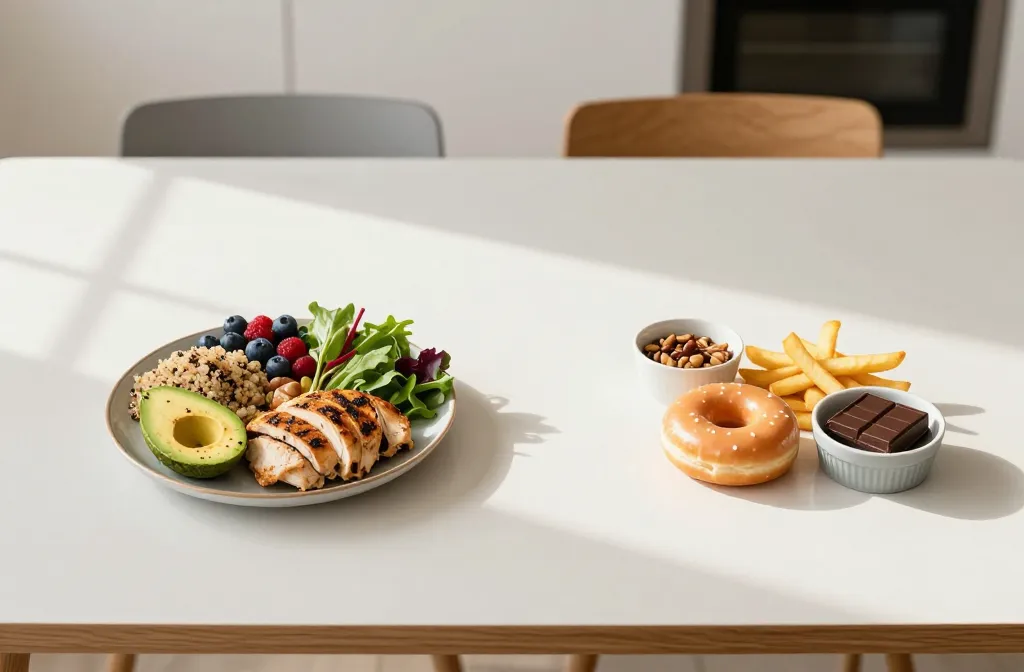
- Use the 80/20 approach. 80% nutrient-dense, 20% joy. IMO, that’s the sweet spot.
Stabilize hunger first (cravings get quieter when your blood sugar does)

You can’t out-discipline low blood sugar. If you go too long without eating, your body will override your best intentions.
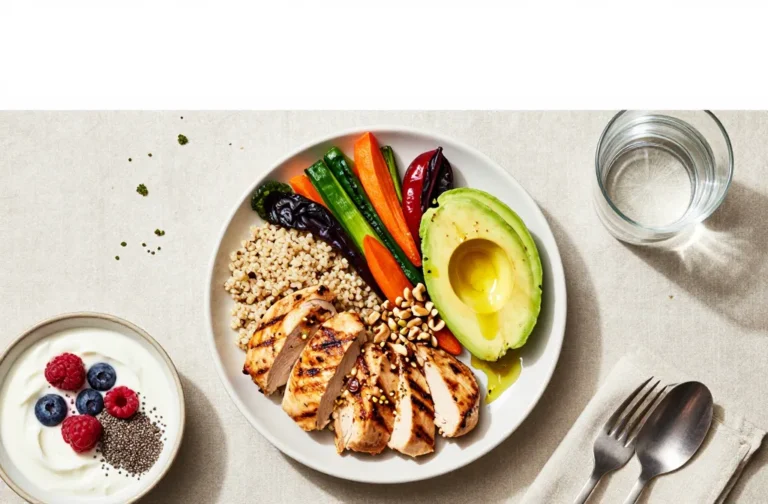
Build meals with the PFF formula:
- Protein (keeps you full): eggs, Greek yogurt, chicken, tofu, beans
- Fat (slows digestion): avocado, olive oil, nuts, seeds
- Fiber (volume + steady energy): veggies, fruit, whole grains, legumes
Sample day (not a meal plan, just vibes)
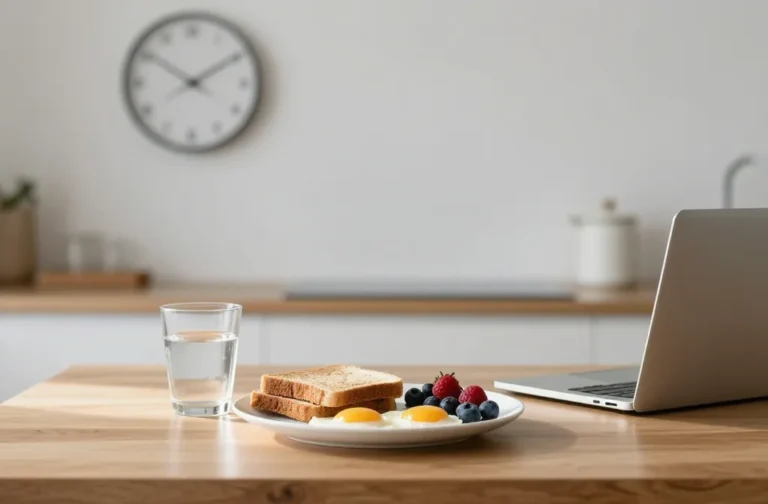
- Breakfast: Greek yogurt + berries + chia + honey
- Lunch: Tuna salad on whole-grain toast + side salad
- Snack: Apple + peanut butter
- Dinner: Sheet-pan chicken, potatoes, broccoli + olive oil
- Treat: A cookie after dinner—on purpose
Build “pause power” instead of willpower
You don’t need to say no forever—you just need a 2-minute window to check in. Cravings usually peak and pass fast.
Try the 5–5–5 check-in:
- Drink water and breathe for 30 seconds.
- Ask: “On a scale of 1–10, how hungry am I?” (Be honest.)
- Decide: Eat now, wait 5 minutes, or swap for something more satisfying.
If you still want it—eat it, but make it count
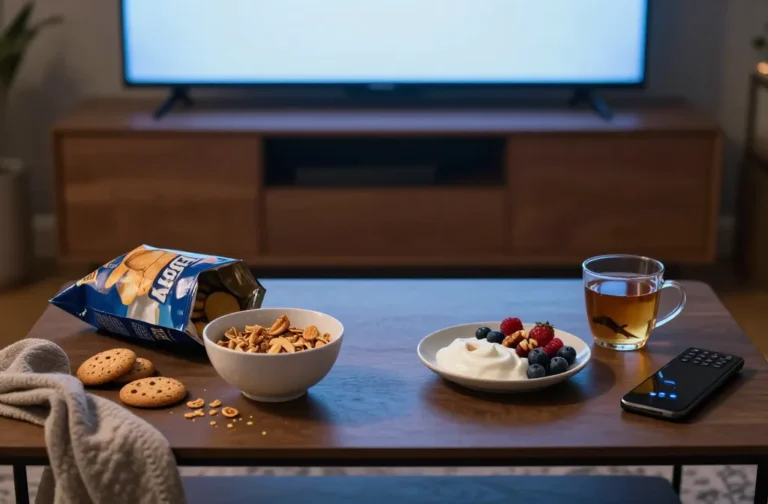
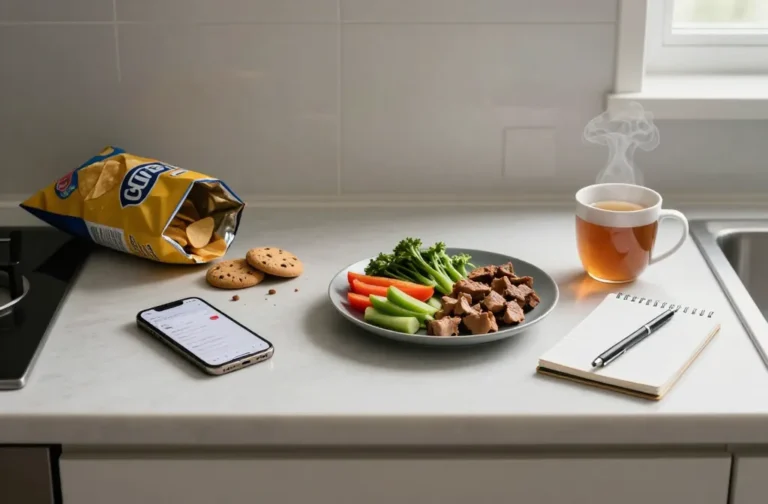
- Plate it. No eating from bags or boxes.
- Sit down. Phone away. Taste the thing.
- Rate satisfaction after: Did this hit the spot? If not, why?
Strategize your environment (make the easiest choice the best choice)

Your kitchen can either gaslight you or support you. Let’s make it do the latter.
Simple swaps:
- Put protein-forward snacks at eye level (Greek yogurt cups, cheese sticks, hummus, nuts).
- Pre-cut fruit and veg. Lazy-proof your fiber.
- Decant snacks into single-serve containers. You’re not weak; those family-size bags are just chaos.
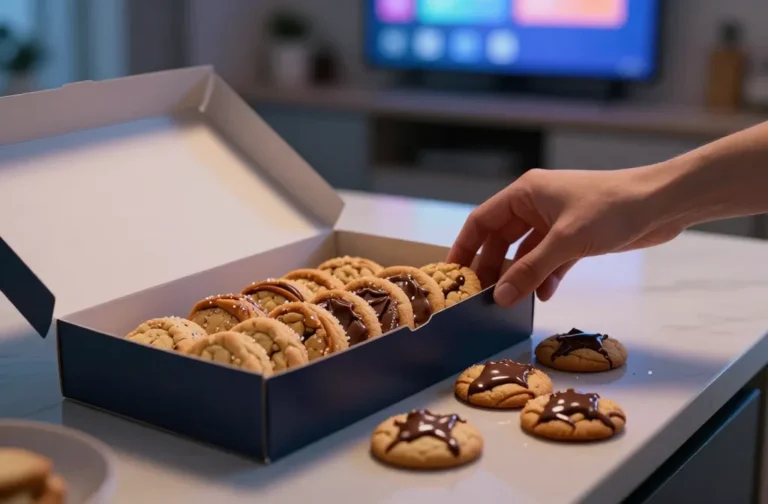
- Keep treats, but store them out of sight. Out of sight ≠ forbidden; it just removes the constant nudge.
Rebuild trust with gentle structure, not rigid rules
Control doesn’t come from being stricter. It comes from being predictable. Your body relaxes when it knows feeding time happens regularly.
Non-negotiables that help fast:
- Eat every 3–4 hours while awake.
- Have protein at each meal and snack (FYI, 20–35 g at meals hits the sweet spot for most adults).
- Hydrate—thirst often masquerades as “I need a muffin or I’ll die.”
- Sleep 7–8 hours. Sleep debt cranks up hunger hormones like a broken thermostat.
When weekends derail you
Plan anchor meals. Pick two reliable meals (say, breakfast and lunch) and keep dinner flexible. That alone reduces Sunday-night “I blew it” panic.
Eat the fun foods, but upgrade the context

You can eat pizza. You just don’t need to be starving with zero protein within a mile.
Pair smart:
- Craving cookies? Add a glass of milk or a scoop of Greek yogurt.
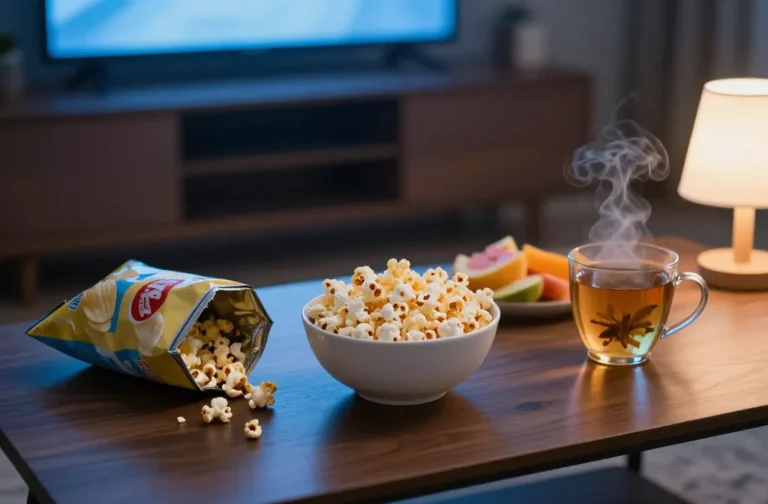
- Love chips? Pair with tuna salad or a turkey roll-up.
- Ice cream night? Add some nuts for fat + protein. Still delicious. Less chaos.
Mindset tweaks that actually stick
Food control isn’t a finish line. It’s reps. Some days feel easy; others, not so much. You’re building a skill, not taking a test.
Keep these in your back pocket:
- One meal never ruins anything. The next choice always counts.
- “I can have it later” reduces urgency. Scarcity fuels binges; abundance calms them.
- Perfection is the worst coach. Consistency with compassion wins. IMO, it’s the only thing that wins.
FAQ
Should I cut out sugar to gain control?
You can reduce added sugar and feel better, sure. But strict elimination often backfires and fuels binge–restrict cycles. Start by adding protein and fiber to your meals, then decide where sugar fits. If you love dessert, plan for it a few times a week on purpose.
How do I stop nighttime snacking?
Front-load your day. Most nighttime grazing flows from under-eating earlier. Eat a legit dinner with protein, fat, and fiber. If you still want a snack, portion it, sit down, and enjoy it without multitasking. Sometimes a warm tea after helps signal “kitchen closed.”
What if I don’t trust myself with trigger foods at home?
Never Wonder What's For Dinner Again
Get 7 healthy, family-friendly dinners complete with recipes, grocery lists, and simple meal plans delivered straight to your inbox.
Build tolerance gradually. Buy single-serve portions at first. Eat them mindfully a few times per week, paired with protein. Over time, the scarcity charge fades and the food loses its “pull.” If it still steamrolls you, store it out of sight or keep it a “sometimes buy.”
Do I need to track calories or macros?
You don’t need to, but tracking can teach awareness. If it stresses you out, skip it. Use plate visuals instead: half veggies/fruit, a quarter protein, a quarter carbs, plus some healthy fat. Simpler, and it works.
How long until I feel in control again?
Usually 2–4 weeks of consistent meals, better sleep, and a calmer mindset makes a huge dent. The mental noise drops first, then habits feel easier. Keep going. Momentum compounds.
Quick, realistic recipes with nutrition estimates
1) Greek Yogurt Berry Bowl
Ingredients (1 serving):
- 3/4 cup plain nonfat Greek yogurt
- 1/2 cup mixed berries
- 1 tbsp chia seeds
- 1 tsp honey
Estimated nutrition per serving (3/4 cup bowl):
- Calories: 210
- Total Fat: 5 g
- Total Carbohydrates: 28 g
- Dietary Fiber: 9 g
- Net Carbs: 19 g
- Protein: 20 g
2) Tuna Salad on Whole-Grain Toast
Ingredients (1 sandwich):
- 1 can tuna in water, drained (5 oz can, ~3.5 oz drained)
- 1 tbsp light mayo
- 2 slices whole-grain bread
- 1/4 cup cucumber or celery, chopped
Estimated nutrition per serving (1 sandwich):
- Calories: 390
- Total Fat: 10 g
- Total Carbohydrates: 39 g
- Dietary Fiber: 6 g
- Net Carbs: 33 g
- Protein: 34 g
3) Apple + Peanut Butter Snack
Ingredients (1 snack):
- 1 medium apple
- 1 tbsp natural peanut butter
Estimated nutrition per serving (1 apple + 1 tbsp PB):
- Calories: 200
- Total Fat: 9 g
- Total Carbohydrates: 29 g
- Dietary Fiber: 5 g
- Net Carbs: 24 g
- Protein: 4 g
4) Sheet-Pan Chicken, Potatoes, and Broccoli
Ingredients (serves 4):
- 1.5 lb boneless skinless chicken thighs
- 1 lb baby potatoes
- 12 oz broccoli florets
- 2 tbsp olive oil, salt, pepper, garlic
Serving size used for calculations: 1/4 of the recipe
Estimated nutrition per serving:
- Calories: 470
- Total Fat: 20 g
- Total Carbohydrates: 33 g
- Dietary Fiber: 6 g
- Net Carbs: 27 g
- Protein: 39 g
5) Cookie-and-Milk Treat
Ingredients (1 treat):
- 1 medium chocolate chip cookie (bakery-style, ~30 g)
- 1/2 cup 2% milk
Estimated nutrition per serving (1 cookie + 1/2 cup milk):
- Calories: 210
- Total Fat: 9 g
- Total Carbohydrates: 28 g
- Dietary Fiber: 1 g
- Net Carbs: 27 g
- Protein: 6 g
Disclaimer: Nutrition values are estimates based on standard USDA data and common brand averages. Actual values vary by brand, exact weights, and preparation.
Bottom line
You don’t need stricter rules—you need steadier rhythms. Feed yourself regularly, pair your favorites with protein and fiber, and practice tiny pauses instead of giant ultimatums. Do that, and food stops driving. You do. And hey—keep dessert. It’s part of the plan, not a problem.
Loved This Recipe?
If you're looking for more simple, healthy dinners your family will actually eat, grab my FREE 7-Day Easy Dinner Reset. You'll get 7 easy dinner recipes, simple grocery lists, and a done-for-you plan that takes the stress out of mealtime.