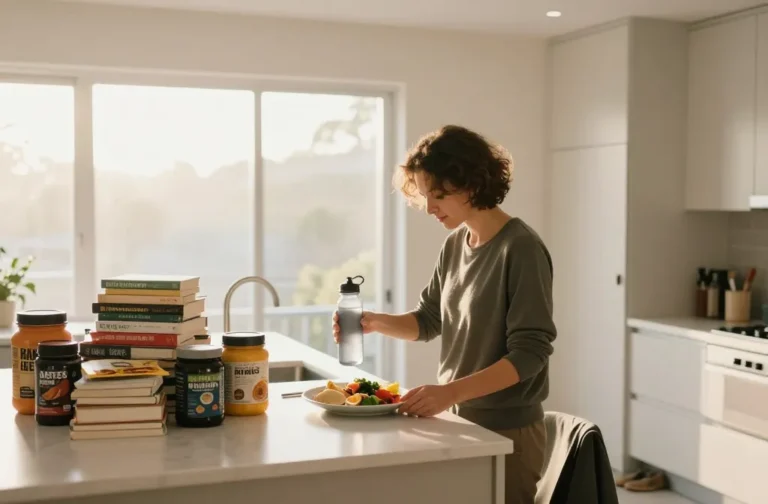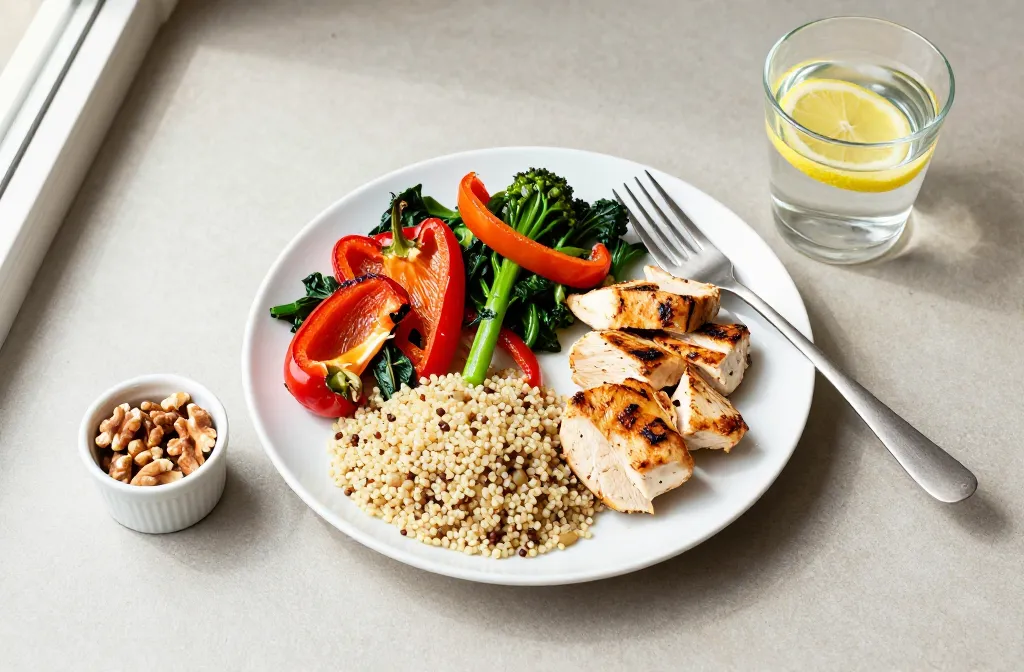
The Secret to How to Stop Overeating Without Counting Calories
You want to stop overeating without obsessing over every gram and calorie? Good. Calorie counting can feel like a part-time job with none of the benefits. Let’s keep your sanity intact, your meals satisfying, and your pants fitting. You’ll learn how to eat enough—without spreadsheets, apps, or guilt trips. Sound nice? Let’s go.
FREE 7-Day Easy Dinner Reset
Get 7 healthy, family-friendly dinners complete with recipes and simple meal plans delivered straight to your inbox.
Start With Hunger (Not the Clock)
You don’t need a food scale—you need a better relationship with your hunger. Eat when you feel actual hunger signals: a gentle empty feeling, a slight dip in energy, maybe a few stomach rumbles. Not boredom. Not awkward social pressure. Not “it’s noon so I must.”
Try this:
- Before you eat, rate your hunger from 1–10. Aim to start eating at around a 3–4 (hungry, not hangry).
- Halfway through, pause for 10 seconds. Rate again. Stop at around 6–7 (comfortably satisfied, not stuffed).
What if you finish and still want more?
Give it 10 minutes. Drink some water or tea. If you still want food, take a small second portion with protein or fiber. Your body isn’t a vending machine; it needs a sec to sync the “I’m good” signals.
Build Plates That Satisfy (So You Don’t Need Seconds)

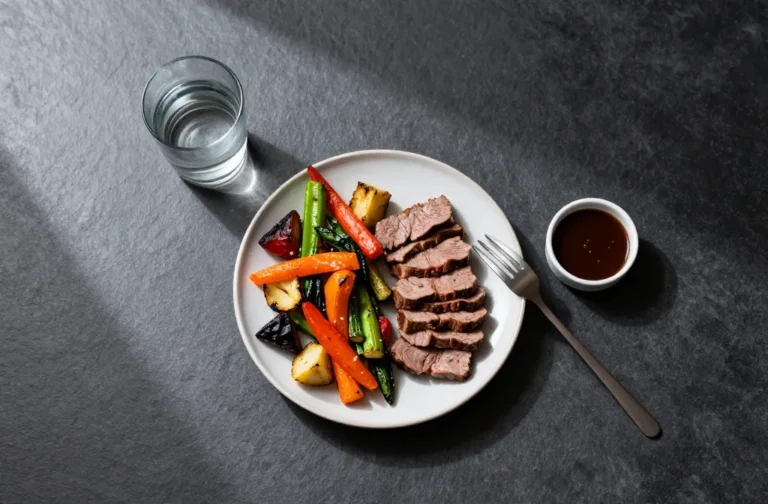
If your lunch looks like rabbit food, your 4 p.m. self will raid the pantry like a pirate. You’ll eat less overall when your meals hit the big three: protein, fiber, and volume.
Use this plate formula (no math, I promise):
- Protein: palm-sized (chicken, tofu, eggs, Greek yogurt, fish, beans)
- Fiber + carbs: fist-sized (whole grains, beans, fruit, starchy veg)
- Volume veg: two fists (leafy greens, broccoli, peppers, etc.)
- Flavor fat: 1–2 thumbs (olive oil, avocado, nuts, dressing)
This combo keeps you full longer, so you stop “foraging” after dinner like a raccoon. IMO, that’s a win.
Quick Swaps That Make a Big Difference
- Swap cereal for Greek yogurt + berries + nuts
- Swap a tiny salad for a big salad with chicken, beans, and olive oil
- Swap chips-only snacks for popcorn + cheese stick or hummus + veggies + pita
Eat Slower Than Your Anxiety
Your fullness hormones need 15–20 minutes to show up to the party. If you inhale food, you’ll miss the “I’m full” memo.
Slow-down cheats:
- Put the fork down between bites. Yes, actually.
- Chew more than your usual 3 chomps. Aim for 8–12.
- Use smaller utensils or a salad plate. It works because brains are weird.
- No screens for the first 5 minutes. Pay attention to taste and texture.
The 80% Rule
Stop when you feel 80% full. If you struggle to gauge that, stop when:
- You can breathe comfortably
- Food still tastes good but less exciting
- You can take a walk after without cursing me
Fix the Snack Trap (Without Going Monk Mode)

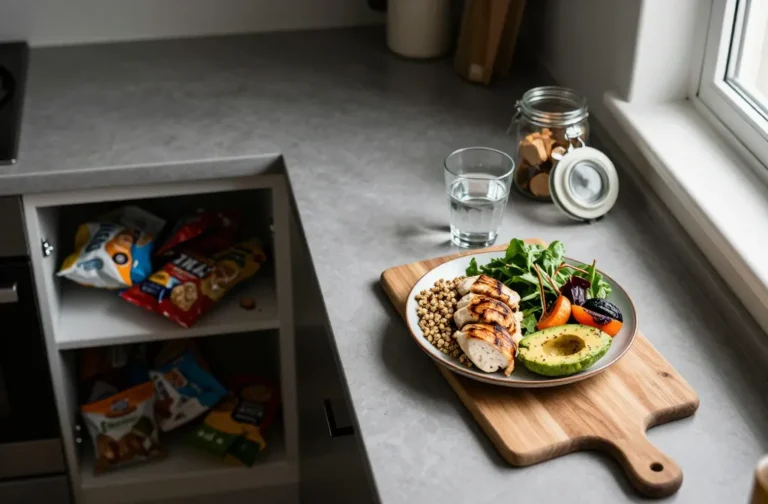
You don’t need to ban snacks. You just need better ones. Grazing on sugar bombs all day guarantees a late-night binge.
Make snacks earn their keep:
- Pair carbs with protein or fat: apple + peanut butter, crackers + tuna, popcorn + nuts
- Keep “fun” snacks portioned: small bowls, single-serve packs, or pre-bag your own
- Front-load protein earlier in the day to reduce night cravings
Environmental Tweaks That Do 80% of the Work
- Keep tempting foods out of sight. Bowl of fruit on the counter, not cookies.
- Plate your snacks. Don’t eat from the bag unless chaos is your hobby.
- Store leftovers before you eat, so “one more bite” stays a rumor.
Master Emotional and Habit Hunger
Sometimes you’re not hungry—you’re stressed, bored, or avoiding emails. FYI: all normal. But you can build better defaults.
Before you eat, ask: What do I actually need—food, a break, water, or a hug?
- If emotions run hot, try a 5-minute pause: walk, stretch, step outside, or text a friend.
- Use a “later” promise: if you still want the cookie after 10 minutes, you can have it. Often, the urge passes.
- Make comfort food intentional: plate it, sit down, enjoy it slowly, zero guilt.
Rituals Beat Willpower
Create small rituals that cut overeating on autopilot:
- Tea or flavored water after dinner = kitchen closed
- Brush teeth right after the last meal
- Set a “log-off and walk” alarm midafternoon to dodge the snack slump
Sleep, Stress, and the Sneaky Hormones

You can’t out-willpower biology. Short sleep and high stress crank up hunger hormones and mute fullness signals. Translation: everything looks like a snack.
Do these, feel human:
Never Wonder What's For Dinner Again
Get 7 healthy, family-friendly dinners complete with recipes, grocery lists, and simple meal plans delivered straight to your inbox.
- Sleep 7–9 hours most nights. Protect it like it pays your rent.
- Protein at breakfast (eggs, yogurt, tofu scramble) to steady cravings.
- Move daily—even 10-minute walks help a lot.
- Plan two “no-thought” meals each week to avoid decision fatigue.
How to Enjoy Treats Without the Spiral
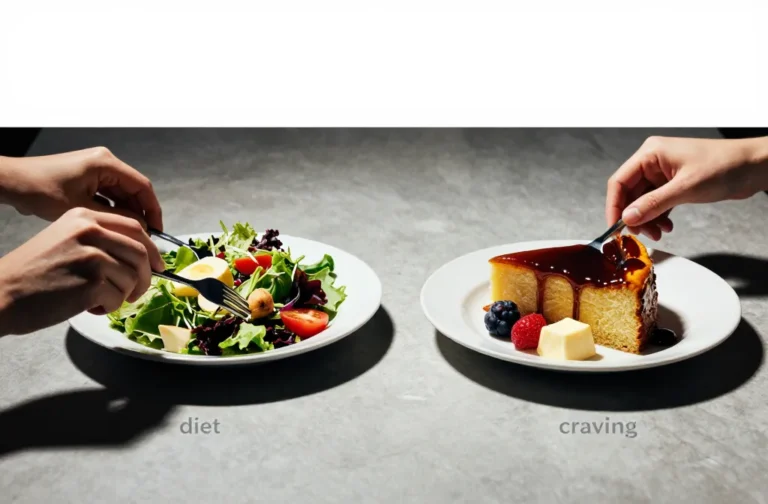
Banning foods backfires. Allow treats, just add structure.
- Choose a portion you’ll truly enjoy. Plate it. Sit down. Savor it.
- Pair sweets with protein/fat (chocolate + nuts) to reduce rebound hunger.
- Use the “three-bite test”: if the third bite doesn’t taste amazing, you’ve had enough for now.
IMO, peace with food beats white-knuckling every day of the week.
FAQ
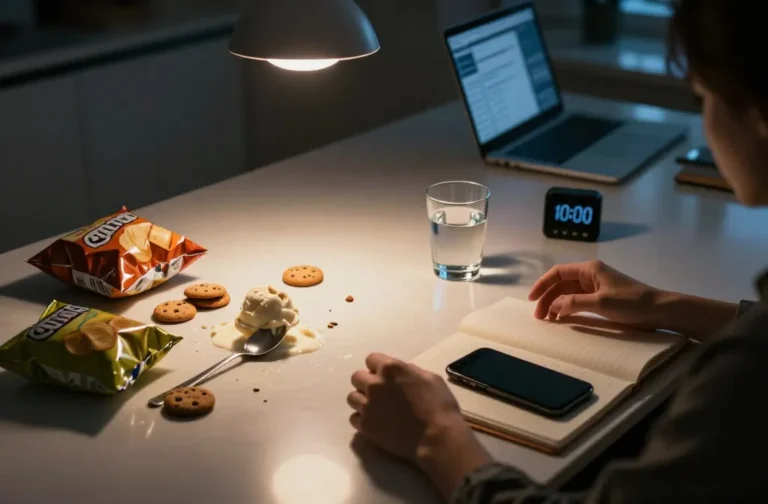
What if I always overeat at night?
Front-load your day with protein and fiber, eat a real lunch, and include carbs at dinner. Many people skimp all day, then arrive at 9 p.m. starving. Create a satisfying evening routine—tea, a walk, a show—so eating isn’t the only entertainment.
Do I need to avoid carbs to stop overeating?
Nope. Carbs help with satisfaction and energy. Focus on quality and pairing: whole grains, fruit, beans, and starchy veg with protein and fat. You’ll feel fuller and snack less.
How do I handle social events without overeating?
Eat a protein-rich snack beforehand, scan the options, and build a plate you love. Pick your favorites, skip your “meh” foods, and chat more between bites. You’re there for people, not a competitive eating title.
Can I still lose weight without counting calories?
Yes. If you consistently eat to comfortable fullness with balanced meals, your overall intake often drops naturally. Track habits (hunger ratings, protein, veggies, sleep) instead of calories for a less annoying, more sustainable path.
What if I get hungry an hour after a meal?
Your meal likely lacked protein, fiber, or volume. Add another 15–20 g of protein and a big serving of veggies next time. In the moment, have a structured snack: yogurt + fruit, cottage cheese + tomatoes, or hummus + crackers.
3 Easy, Satisfying Recipes (No Calorie Counting Required)
1) Big Protein Breakfast Bowl
Scramble 2 eggs with a handful of spinach, top with 1/2 cup black beans, 1/4 avocado, salsa, and a small corn tortilla on the side. Fast, filling, and delicious.
Estimated nutrition per serving (1 bowl):
- Calories: 460
- Total Fat: 24 g
- Total Carbohydrates: 40 g
- Dietary Fiber: 13 g
- Net Carbs: 27 g
- Protein: 26 g
Serving size: 1 bowl (2 large eggs, 1/2 cup canned black beans, 1/4 medium avocado, 1 small corn tortilla, 1 cup spinach, 2 tbsp salsa)
2) Big-Ass Lunch Salad With Chicken
Mix 3 cups mixed greens, 1 cup chopped veggies (cucumber, peppers), 4 oz grilled chicken, 1/2 cup chickpeas, 1 tbsp olive oil, 2 tbsp balsamic. Add feta if you’re feeling fancy.
Estimated nutrition per serving (1 large salad):
- Calories: 520
- Total Fat: 22 g
- Total Carbohydrates: 38 g
- Dietary Fiber: 10 g
- Net Carbs: 28 g
- Protein: 43 g
Serving size: 1 large salad (3 cups greens, 1 cup non-starchy veg, 4 oz cooked chicken breast, 1/2 cup canned chickpeas, 1 tbsp olive oil, 2 tbsp balsamic)
3) One-Pan Salmon, Potatoes, and Broccoli
Roast 6 oz salmon fillet, 1 cup broccoli florets, and 1 cup small diced potatoes with 1 tbsp olive oil, salt, pepper, lemon. Sheet pan = minimal cleanup. Chef’s kiss.
Estimated nutrition per serving (1 pan meal):
- Calories: 610
- Total Fat: 29 g
- Total Carbohydrates: 44 g
- Dietary Fiber: 7 g
- Net Carbs: 37 g
- Protein: 44 g
Serving size: 1 full plate (6 oz raw salmon, 1 cup broccoli, 1 cup potatoes, 1 tbsp olive oil, lemon)
Putting It All Together
You don’t need a tracking app to eat well. You need satisfying meals, slower bites, a little structure around snacks, and habits that don’t fight your biology. Practice the hunger scale, plate the protein, and call it at 80% full. Simple beats perfect—and it actually works, IMO.
Nutrition disclaimer: All nutrition values above are estimates based on standard USDA data for common ingredients. Actual numbers vary with brands, preparation methods, and portion sizes.
Loved This Recipe?
If you're looking for more simple, healthy dinners your family will actually eat, grab my FREE 7-Day Easy Dinner Reset. You'll get 7 easy dinner recipes, simple grocery lists, and a done-for-you plan that takes the stress out of mealtime.