Tempeh & Veggie Protein Buddha Bowl – A Hearty, Balanced Meal
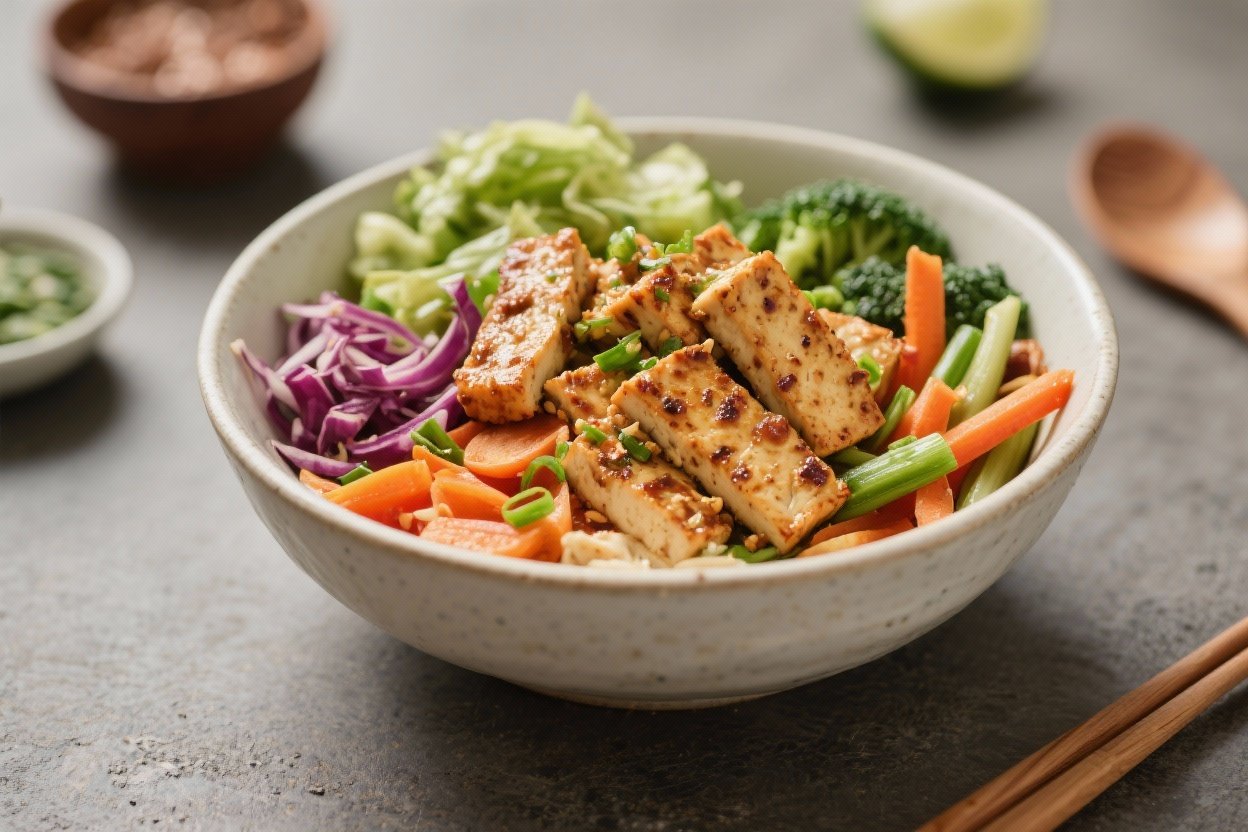
This Tempeh & Veggie Protein Buddha Bowl is a simple, satisfying way to pack your day with plant-based protein and colorful veggies. It’s the kind of meal that tastes fresh, feels nourishing, and comes together without fuss. Think crisp vegetables, warm grains, golden tempeh, and a creamy sauce that ties everything together.
FREE 7-Day Easy Dinner Reset
Get 7 healthy, family-friendly dinners complete with recipes and simple meal plans delivered straight to your inbox.
It’s perfect for lunch meal prep or a quick weeknight dinner. If you like food that’s wholesome and flavorful without being complicated, this bowl will be your new go-to.
Ingredients
Method
- Prep the grain: Cook your rice, quinoa, or farro according to package directions. Fluff with a fork and set aside. Warm or room temperature both work.
- Slice the tempeh: Cut into thin rectangles or bite-size cubes. Thinner pieces brown nicely and soak up more flavor.
- Make the marinade: In a bowl, whisk soy sauce, rice vinegar, maple syrup, sesame oil, ginger, garlic, and chili flakes.
- Marinate: Add tempeh to the bowl and toss to coat. Let it sit 10–20 minutes. If you have time, 30 minutes is even better.
- Prep the veggies: Slice cucumber and bell pepper, shred cabbage and carrots, and wash greens. Slice the avocado last to keep it fresh.
- Make the dressing: Whisk tahini, lime juice, maple syrup, a pinch of salt, and pepper. Add water 1 tablespoon at a time until it’s pourable and creamy.
- Cook the tempeh: Heat oil in a skillet over medium-high. Add tempeh in a single layer. Sear 2–3 minutes per side until golden and slightly crisp. Pour any leftover marinade into the pan in the last minute to glaze.
- Assemble the bowls: Add a scoop of grain to each bowl. Layer on greens, cabbage, carrots, cucumber, bell pepper, and avocado.
- Add protein and toppings: Top with the glazed tempeh. Sprinkle sesame seeds or peanuts, green onions, and cilantro.
- Dress and serve: Drizzle with tahini-lime dressing and finish with a squeeze of lime. Taste and adjust salt or acidity as needed.
Why This Recipe Works

- Balanced macronutrients: You get complete protein from tempeh, complex carbs from grains, and healthy fats from the sauce and toppings.
- Big flavor, simple steps: A quick marinade and a hot pan give tempeh a savory, caramelized crust. Fresh veggies add crunch and brightness.
- Flexible and forgiving: Swap in whatever veggies or grains you have.
The method stays the same, and the flavors still sing.
- Meal-prep friendly: Components keep well, so you can make a few bowls ahead for the week.
- Great texture contrast: Warm, crispy tempeh meets cool, crisp vegetables and a velvety dressing for a satisfying bite every time.
What You’ll Need
- Tempeh: 8–12 oz block, sliced into thin rectangles or cubes.
- Grain base: 2 cups cooked brown rice, quinoa, or farro.
- Vegetables: 1 cup shredded red cabbage, 1 cup baby spinach or mixed greens, 1 cup sliced cucumber, 1 cup shredded carrots, 1 red bell pepper (sliced), 1 small avocado (sliced).
- Marinade for tempeh: 2 tbsp soy sauce or tamari, 1 tbsp rice vinegar or lemon juice, 1 tbsp maple syrup, 1 tsp sesame oil, 1 tsp grated ginger, 1 small garlic clove (minced), pinch of chili flakes (optional).
- Dressing (creamy tahini-lime): 3 tbsp tahini, juice of 1 lime (or half a lemon), 1 tbsp maple syrup, 1–2 tbsp water to thin, pinch of salt, black pepper to taste.
- Toppings: 2 tbsp toasted sesame seeds or chopped peanuts, sliced green onions, fresh cilantro, and a squeeze of lime.
- Cooking oil: 1–2 tbsp avocado or olive oil for searing tempeh.
- Optional add-ins: Edamame, roasted sweet potato, cherry tomatoes, or kimchi for extra flavor.
Instructions

- Prep the grain: Cook your rice, quinoa, or farro according to package directions. Fluff with a fork and set aside. Warm or room temperature both work.
- Slice the tempeh: Cut into thin rectangles or bite-size cubes.
Thinner pieces brown nicely and soak up more flavor.
- Make the marinade: In a bowl, whisk soy sauce, rice vinegar, maple syrup, sesame oil, ginger, garlic, and chili flakes.
- Marinate: Add tempeh to the bowl and toss to coat. Let it sit 10–20 minutes. If you have time, 30 minutes is even better.
- Prep the veggies: Slice cucumber and bell pepper, shred cabbage and carrots, and wash greens.
Slice the avocado last to keep it fresh.
- Make the dressing: Whisk tahini, lime juice, maple syrup, a pinch of salt, and pepper. Add water 1 tablespoon at a time until it’s pourable and creamy.
- Cook the tempeh: Heat oil in a skillet over medium-high. Add tempeh in a single layer.
Sear 2–3 minutes per side until golden and slightly crisp. Pour any leftover marinade into the pan in the last minute to glaze.
- Assemble the bowls: Add a scoop of grain to each bowl. Layer on greens, cabbage, carrots, cucumber, bell pepper, and avocado.
- Add protein and toppings: Top with the glazed tempeh.
Sprinkle sesame seeds or peanuts, green onions, and cilantro.
- Dress and serve: Drizzle with tahini-lime dressing and finish with a squeeze of lime. Taste and adjust salt or acidity as needed.
How to Store
- Store components separately: Keep cooked tempeh, grains, veggies, and dressing in separate containers. This keeps textures fresh.
- Refrigeration: Tempeh and grains keep for 4 days in the fridge.
Fresh veggies are best within 3–4 days. Dressing keeps up to a week.
- Reheating: Warm the grains and tempeh in a skillet or microwave until hot. Add fresh veggies and dressing right before eating.
- Meal prep tip: Assemble bowls without dressing and avocado.
Add both right before serving to avoid discoloration and sogginess.
Health Benefits
- High-quality plant protein: Tempeh is a fermented soy product rich in protein, iron, and probiotics. It’s more digestible than many legumes.
- Fiber-rich: Whole grains and vegetables support digestion and help keep you satisfied.
- Healthy fats: Tahini and avocado provide heart-healthy fats that support hormone and brain health.
- Micronutrient-dense: Colorful veggies deliver vitamins A, C, K, and antioxidants that support immune function and recovery.
- Balanced energy: The mix of protein, complex carbs, and fats helps stabilize blood sugar and sustain energy.
What Not to Do
- Don’t skip the marinade: Tempeh on its own is mild. Marinating builds flavor and helps with caramelization.
- Don’t overcrowd the pan: Crowding steams the tempeh instead of browning it.
Cook in batches if needed.
- Don’t overdress the bowl: A little creamy dressing goes a long way. Add gradually to avoid a heavy, gloopy bowl.
- Don’t use soggy grains: Fluff and let them steam off after cooking so your base stays light.
- Don’t forget acidity: A squeeze of lime or lemon brightens the entire dish. Without it, flavors can taste flat.
Alternatives
- Protein swaps: Tofu, seitan, or crispy chickpeas work well.
For tofu, press and pan-sear. For chickpeas, roast with spices until crisp.
- Grain swaps: Use cauliflower rice for low-carb, or barley and bulgur for a nutty bite. Leftover rice works great, too.
- Dressing ideas: Try a miso-ginger vinaigrette, peanut-lime sauce, or a light sesame-soy dressing.
- Veggie variations: Use what’s in season: roasted broccoli, blistered green beans, sweet corn, or cherry tomatoes.
- Allergy-friendly tweaks: Use tamari or coconut aminos for gluten-free.
Swap peanuts for seeds if nut-free.
FAQ
Do I need to steam tempeh before cooking?
Steaming tempeh for 10 minutes can mellow its slightly bitter edge, especially if you’re new to it. It’s optional, but helpful if you prefer a milder flavor.
Can I bake the tempeh instead of pan-searing?
Never Wonder What's For Dinner Again
Get 7 healthy, family-friendly dinners complete with recipes, grocery lists, and simple meal plans delivered straight to your inbox.
Yes. Toss marinated tempeh with a little oil and bake at 400°F (200°C) for 18–22 minutes, flipping halfway, until golden and crisp at the edges.
How can I add more protein?
Add edamame, hemp seeds, or a larger portion of tempeh.
Quinoa as the base also boosts protein compared to rice.
What if I don’t like tahini?
Use a peanut or almond butter dressing, or a simple soy-ginger vinaigrette. Keep some acidity and a touch of sweetness for balance.
Can I serve this bowl warm?
Absolutely. Warm grains and tempeh with lightly sautéed veggies make a cozy version.
Add the dressing and fresh toppings after heating.
How do I keep avocado from browning?
Slice it right before serving, or toss slices with lime juice and store tightly covered. You can also use mini guacamole packs for meal prep.
Is this bowl good for weight management?
Yes. It’s high in fiber and protein, which support fullness.
Keep an eye on dressing portions and avocado if you’re tracking calories.
Can I make it spicy?
Add chili flakes to the marinade, sriracha to the dressing, or top with sliced jalapeño. Adjust heat to taste.
What’s the best way to toast sesame seeds?
Add them to a dry skillet over medium heat and stir for 2–3 minutes until fragrant and lightly golden. Watch closely—they toast quickly.
Can I use pre-cooked tempeh strips?
Yes, but still marinate and heat them for best flavor.
Pre-cooked products can be dry without a glaze or sauce.
Final Thoughts
This Tempeh & Veggie Protein Buddha Bowl hits that sweet spot between simple and satisfying. It’s easy to build, easy to customize, and packed with nutrients that keep you energized. Once you have the base and dressing down, you can spin endless variations from your fridge and pantry.
Keep it colorful, keep it balanced, and enjoy a bowl that’s as good for your body as it is for your taste buds.
Printable Recipe Card
Want just the essential recipe details without scrolling through the article? Get our printable recipe card with just the ingredients and instructions.
Loved This Recipe?
If you're looking for more simple, healthy dinners your family will actually eat, grab my FREE 7-Day Easy Dinner Reset. You'll get 7 easy dinner recipes, simple grocery lists, and a done-for-you plan that takes the stress out of mealtime.