Thai Peanut Noodle Veggie Bowls – A Fresh, Flavor-Packed Weeknight Favorite
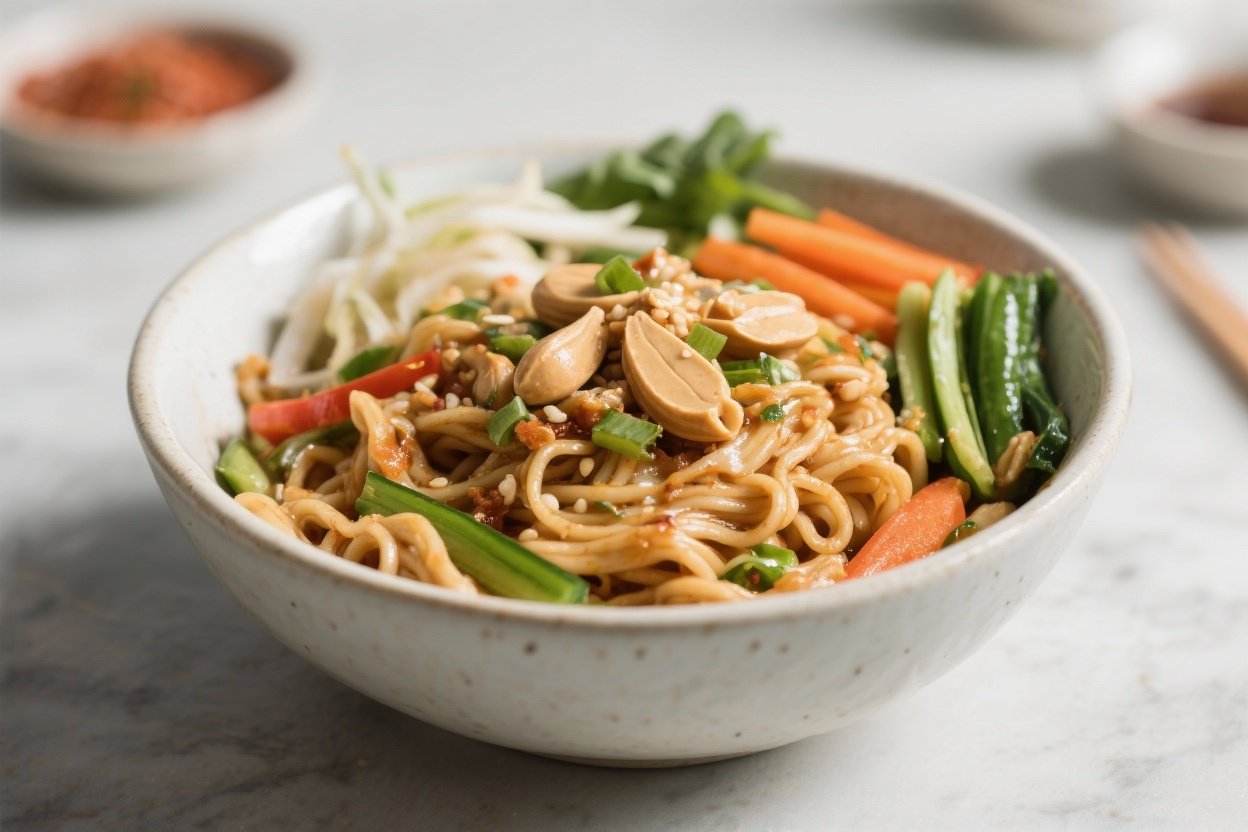
If you love bold flavors and quick meals, these Thai Peanut Noodle Veggie Bowls are going to be a staple in your kitchen. They’re creamy, nutty, a little tangy, and full of crunchy vegetables that make every bite interesting. The sauce is the star: a silky peanut base with lime, soy, and a touch of sweetness.
FREE 7-Day Easy Dinner Reset
Get 7 healthy, family-friendly dinners complete with recipes and simple meal plans delivered straight to your inbox.
Use whatever noodles you have on hand, toss in colorful veggies, and you’ve got dinner in 30 minutes. It’s simple, satisfying, and perfect for meal prep or a last-minute weeknight dinner.
Ingredients
Method
- Cook the noodles: Boil according to package directions until just tender. Drain and rinse briefly under cool water to stop the cooking and prevent sticking.
- Whisk the sauce: In a bowl, whisk peanut butter, soy sauce, lime juice, rice vinegar, maple syrup, sesame oil, ginger, garlic, and chili sauce. Add warm water a little at a time until smooth and pourable.
- Taste and adjust: You’re looking for creamy, salty, tangy, and slightly sweet. Add more lime for brightness, soy for salt, or sweetener for balance.
- Prep the veggies: Slice the bell pepper, shred the cabbage and carrots, and chop the green onions and herbs. If using snap peas, halve them; if using edamame, thaw and drain.
- Toss noodles with sauce: In a large bowl, combine noodles and about two-thirds of the sauce. Toss until well coated.
- Add the vegetables: Fold in cabbage, carrots, bell pepper, snap peas or edamame, and half the herbs. Add more sauce if needed to coat everything lightly.
- Top and serve: Divide into bowls. Garnish with green onions, remaining herbs, chopped peanuts, and sesame seeds. Serve with lime wedges.
- Add protein (optional): Top with cubes of baked tofu, sliced chicken, or sautéed shrimp for a heartier meal.
Why This Recipe Works
- Balanced flavors: Peanut butter adds richness, while lime juice and rice vinegar brighten the whole bowl. A little sweetness rounds it out.
- Flexible and forgiving: Any noodle works—rice noodles, spaghetti, or soba.
Mix and match vegetables based on what’s in your fridge.
- Crunch and cream: Crisp veggies contrast with a velvety sauce for great texture in every bite.
- Quick to make: The sauce comes together in a bowl while the noodles cook. Minimal chopping, maximum payoff.
- Easy to scale: Double the sauce, and you’re set for multiple meals or a crowd.
What You’ll Need
- Noodles: 8–10 oz rice noodles, linguine, spaghetti, or soba
- Vegetables: 2 cups shredded cabbage (red or green), 1 red bell pepper (thinly sliced), 1 cup shredded carrots, 1 cup snap peas or edamame, 3 green onions (sliced), 1 small cucumber (julienned, optional)
- Fresh herbs: 1/2 cup chopped cilantro and/or mint
- Crunchy toppings: 1/3 cup roasted peanuts (roughly chopped), sesame seeds (optional)
- Protein (optional): Baked tofu, rotisserie chicken, shrimp, or tempeh
- For the peanut sauce:
- 1/2 cup creamy peanut butter
- 2–3 tbsp low-sodium soy sauce or tamari
- 1–2 tbsp lime juice (plus more to taste)
- 1 tbsp rice vinegar
- 1–2 tbsp maple syrup or honey
- 1–2 tsp toasted sesame oil
- 1–2 tsp grated fresh ginger
- 1 small garlic clove, grated or minced
- 1/4–1/3 cup warm water to thin
- Chili sauce or red pepper flakes to taste (sriracha, sambal, or gochujang)
- Lime wedges for serving
How to Make It
- Cook the noodles: Boil according to package directions until just tender. Drain and rinse briefly under cool water to stop the cooking and prevent sticking.
- Whisk the sauce: In a bowl, whisk peanut butter, soy sauce, lime juice, rice vinegar, maple syrup, sesame oil, ginger, garlic, and chili sauce.
Add warm water a little at a time until smooth and pourable.
- Taste and adjust: You’re looking for creamy, salty, tangy, and slightly sweet. Add more lime for brightness, soy for salt, or sweetener for balance.
- Prep the veggies: Slice the bell pepper, shred the cabbage and carrots, and chop the green onions and herbs. If using snap peas, halve them; if using edamame, thaw and drain.
- Toss noodles with sauce: In a large bowl, combine noodles and about two-thirds of the sauce.
Toss until well coated.
- Add the vegetables: Fold in cabbage, carrots, bell pepper, snap peas or edamame, and half the herbs. Add more sauce if needed to coat everything lightly.
- Top and serve: Divide into bowls. Garnish with green onions, remaining herbs, chopped peanuts, and sesame seeds.
Serve with lime wedges.
- Add protein (optional): Top with cubes of baked tofu, sliced chicken, or sautéed shrimp for a heartier meal.
How to Store
- Refrigerator: Store the noodle bowls in airtight containers for up to 3–4 days. Keep extra sauce separate if possible.
- Prevent sogginess: If meal prepping, store noodles, veggies, and sauce separately. Toss together right before eating.
- Reheating: These bowls are great cold or at room temperature.
If you prefer warm, gently heat the noodles and protein, then add fresh veggies and sauce.
- Refreshing leftovers: Add a splash of warm water and a squeeze of lime to loosen the sauce and brighten the flavor.
Benefits of This Recipe
- Vegetable-forward: It’s an easy way to eat a rainbow of veggies without feeling like you’re “eating a salad.”
- Protein-friendly: Peanut butter adds plant-based protein. You can layer in tofu, chicken, or shrimp for extra staying power.
- Budget-conscious: Pantry staples and inexpensive vegetables keep costs low while still feeling special.
- Meal-prep ready: The sauce keeps well, and the components store nicely for quick assembly all week.
- Customizable heat: Make it mild for kids, or amp up the spice for a bolder kick.
What Not to Do
- Don’t overcook the noodles: Soft, mushy noodles won’t hold up to the sauce and veggies. Aim for just tender.
- Don’t skip the acid: Lime juice and rice vinegar cut through the richness.
Without them, the sauce tastes flat.
- Don’t add all the sauce at once: Toss with most of it, then add more as needed to avoid a heavy, gluey bowl.
- Don’t ignore texture: The crunch from peanuts and fresh vegetables makes this dish shine. Add something crisp.
- Don’t use cold, stiff sauce: If the sauce thickens, whisk in warm water until smooth and creamy again.
Variations You Can Try
- Gluten-free: Use rice noodles and tamari or coconut aminos instead of regular soy sauce.
- Extra veggie power: Add shredded Brussels sprouts, spiralized zucchini, or sautéed mushrooms.
- Protein swaps: Try crispy baked tofu, grilled chicken, pan-seared salmon, or roasted chickpeas.
- Nut-free: Swap peanut butter for sunflower seed butter or tahini, and use toasted seeds instead of peanuts.
- Warm version: Stir-fry the veggies briefly and toss with hot noodles and sauce for a cozy take.
- Tropical twist: Add mango or pineapple chunks for a sweet contrast to the savory sauce.
FAQ
Can I make the sauce ahead of time?
Yes. Store it in a jar in the fridge for up to one week.
It may thicken; whisk in a splash of warm water and a squeeze of lime before using.
Never Wonder What's For Dinner Again
Get 7 healthy, family-friendly dinners complete with recipes, grocery lists, and simple meal plans delivered straight to your inbox.
What noodles work best?
Rice noodles are classic, but spaghetti or linguine are great and widely available. Soba adds a toasty flavor and extra protein.
Is this dish spicy?
It’s as spicy as you make it. Start with a small amount of chili sauce and add more at the end to taste.
How do I keep noodles from clumping?
Rinse briefly under cool water after cooking, then toss with a little sauce or a drizzle of sesame oil.
Assemble soon after cooking to avoid sticking.
Can I serve this cold?
Absolutely. It’s delicious cold or at room temperature, which makes it ideal for lunches and picnics.
What if I don’t like cilantro?
Use mint, basil, or scallions instead. The herbs are flexible—go with what you enjoy.
Can I add more vegetables?
Yes.
This recipe is a great fridge-clearer. Thinly sliced kale, baby spinach, roasted broccoli, or thin cabbage ribbons all work well.
How do I make it creamier?
Add an extra spoonful of peanut butter and a bit less water. You can also blend the sauce for an ultra-smooth texture.
What can I use instead of lime?
Rice vinegar and a splash of lemon juice will do the job.
Taste and adjust sweetness and salt to keep the balance right.
How much protein should I add?
Aim for about 3–4 ounces per serving if you want a more filling bowl. Cube it small so it mixes evenly with the noodles and veggies.
In Conclusion
Thai Peanut Noodle Veggie Bowls are simple, colorful, and reliably tasty. The creamy peanut sauce brings everything together, and the fresh vegetables keep it light.
Customize the noodles, heat level, and protein to fit your tastes or what you have on hand. Keep a jar of the sauce ready, and you can throw this meal together anytime. It’s the kind of recipe that feels fresh every time you make it.
Printable Recipe Card
Want just the essential recipe details without scrolling through the article? Get our printable recipe card with just the ingredients and instructions.
Loved This Recipe?
If you're looking for more simple, healthy dinners your family will actually eat, grab my FREE 7-Day Easy Dinner Reset. You'll get 7 easy dinner recipes, simple grocery lists, and a done-for-you plan that takes the stress out of mealtime.