Lemon Pepper Chicken Thigh Skillet – Bright, Savory, and Weeknight Easy
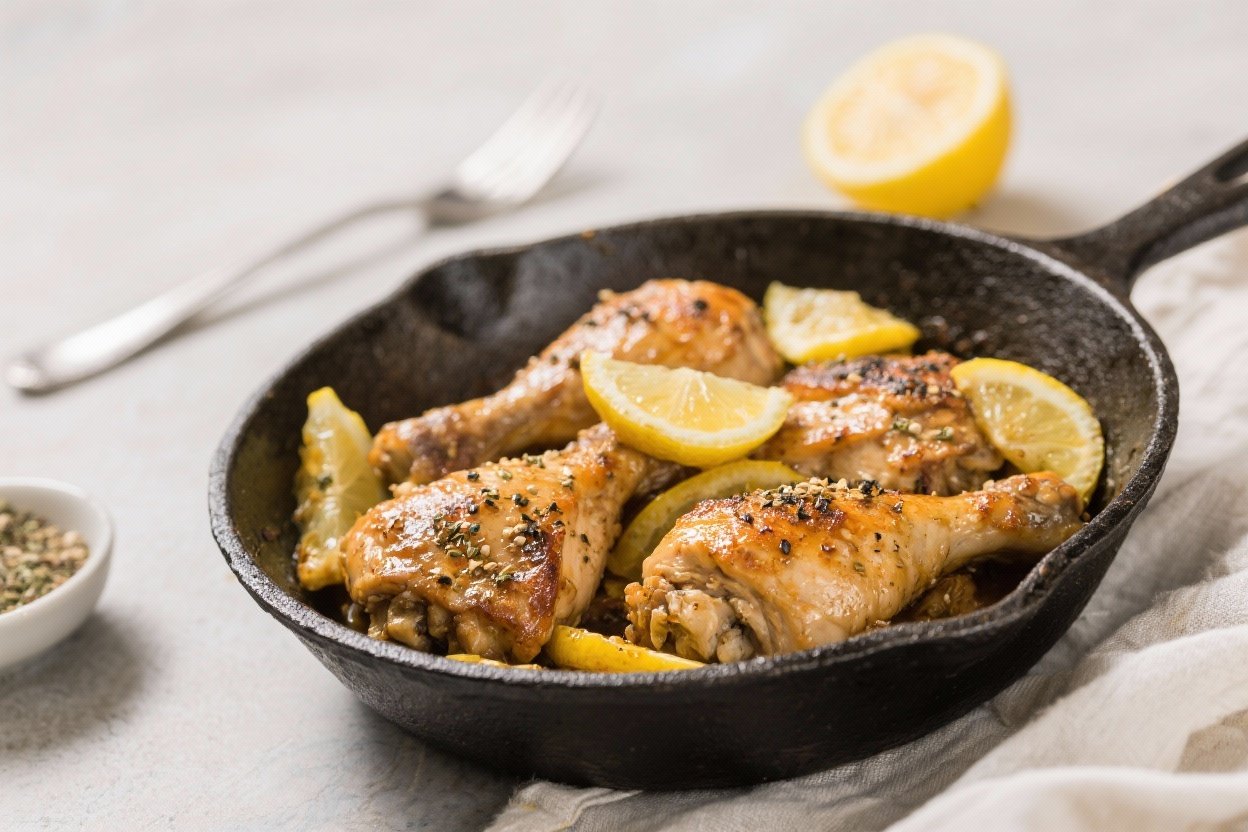
This Lemon Pepper Chicken Thigh Skillet is the kind of dinner that feels special without any fuss. The chicken turns golden and crispy on the outside while staying juicy and tender inside. Fresh lemon and cracked black pepper keep the flavors bright and punchy, and the quick pan sauce brings it all together.
FREE 7-Day Easy Dinner Reset
Get 7 healthy, family-friendly dinners complete with recipes and simple meal plans delivered straight to your inbox.
It’s ideal for busy weeknights but polished enough for company. Serve it with rice, roasted potatoes, or a simple green salad and you’ve got a complete meal with minimal effort.
Ingredients
Method
- Pat dry and season: Pat the chicken thighs very dry with paper towels. Mix salt, black pepper, garlic powder, onion powder, and paprika. Zest one lemon and add half of the zest to the spice mix. Rub the mixture all over the chicken, especially under the skin if possible.
- Preheat the skillet: Set a large heavy skillet (cast iron preferred) over medium-high heat. Add olive oil and let it shimmer.
- Sear skin-side down: Place the thighs skin-side down in the hot skillet. Don’t crowd the pan; work in batches if needed. Cook without moving them for 6 to 8 minutes, until the skin is deep golden and crisp.
- Flip and cook through: Flip the thighs and reduce heat to medium. Cook another 8 to 12 minutes, or until the internal temperature reaches 175°F to 185°F. Transfer chicken to a plate and tent loosely with foil.
- Make the pan sauce: Pour off excess fat, leaving about 1 tablespoon in the skillet. Add butter and minced garlic. Cook 30 seconds until fragrant. Pour in chicken broth, scraping up browned bits. Stir in Dijon, the remaining lemon zest, and the juice of one lemon.
- Simmer and taste: Let the sauce bubble for 2 to 3 minutes to slightly reduce. Taste and season with more salt and pepper if needed. For extra lemon pop, add a squeeze from the second lemon, to taste.
- Return chicken to the pan: Nestle the thighs back into the sauce for 1 to 2 minutes to rewarm and coat.
- Garnish and serve: Sprinkle with chopped parsley and a few thin lemon slices if you like. Spoon sauce over the chicken. Serve hot with your favorite sides.
What Makes This Recipe So Good

- Crispy skin, juicy meat: Bone-in chicken thighs deliver maximum flavor and stay moist during cooking.
- Bold lemon-pepper flavor: Fresh lemon zest, lemon juice, and plenty of cracked pepper give the dish a clean, zippy finish.
- One-pan convenience: Everything cooks in a single skillet, so cleanup is easy and fast.
- Quick pan sauce: A splash of broth and butter turns the browned bits into a glossy, savory sauce.
- Flexible and forgiving: Works with skin-on or skinless thighs, and you can adjust the spice and citrus to taste.
Shopping List
- 6 bone-in, skin-on chicken thighs (about 2 to 2.5 pounds)
- 2 large lemons (for zest and juice)
- 2 to 3 teaspoons freshly cracked black pepper
- 1 ½ teaspoons kosher salt (plus more to taste)
- 1 teaspoon garlic powder
- ½ teaspoon onion powder
- ½ teaspoon paprika (optional, for color)
- 2 tablespoons olive oil (or avocado oil)
- 2 tablespoons unsalted butter
- 3 cloves garlic, minced
- ½ cup low-sodium chicken broth
- 1 teaspoon Dijon mustard (optional, for depth)
- Fresh parsley, chopped (for garnish)
Step-by-Step Instructions

- Pat dry and season: Pat the chicken thighs very dry with paper towels. Mix salt, black pepper, garlic powder, onion powder, and paprika.
Zest one lemon and add half of the zest to the spice mix. Rub the mixture all over the chicken, especially under the skin if possible.
- Preheat the skillet: Set a large heavy skillet (cast iron preferred) over medium-high heat. Add olive oil and let it shimmer.
- Sear skin-side down: Place the thighs skin-side down in the hot skillet.
Don’t crowd the pan; work in batches if needed. Cook without moving them for 6 to 8 minutes, until the skin is deep golden and crisp.
- Flip and cook through: Flip the thighs and reduce heat to medium. Cook another 8 to 12 minutes, or until the internal temperature reaches 175°F to 185°F.
Transfer chicken to a plate and tent loosely with foil.
- Make the pan sauce: Pour off excess fat, leaving about 1 tablespoon in the skillet. Add butter and minced garlic. Cook 30 seconds until fragrant.
Pour in chicken broth, scraping up browned bits. Stir in Dijon, the remaining lemon zest, and the juice of one lemon.
- Simmer and taste: Let the sauce bubble for 2 to 3 minutes to slightly reduce. Taste and season with more salt and pepper if needed.
For extra lemon pop, add a squeeze from the second lemon, to taste.
- Return chicken to the pan: Nestle the thighs back into the sauce for 1 to 2 minutes to rewarm and coat.
- Garnish and serve: Sprinkle with chopped parsley and a few thin lemon slices if you like. Spoon sauce over the chicken. Serve hot with your favorite sides.
Keeping It Fresh
- Storage: Cool completely, then store chicken and sauce together in an airtight container for up to 4 days in the refrigerator.
- Reheating: Warm gently in a covered skillet over low heat with a splash of broth or water until hot.
Avoid microwaving on high, which can toughen the meat.
- Freezing: Freeze in a freezer-safe container for up to 2 months. Thaw overnight in the fridge, then reheat slowly on the stovetop.
- Make-ahead tips: Season the chicken up to 24 hours in advance and keep it refrigerated. The dry brine improves flavor and helps the skin crisp.
Health Benefits
- Protein-rich: Chicken thighs provide high-quality protein for muscle support and satiety.
- Healthy fats: Thighs contain more fat than breasts, but most is monounsaturated and helps keep the meat moist, reducing the need for heavy sauces.
- Vitamin C boost: Fresh lemon adds vitamin C, which supports immune function and iron absorption.
- Lower sodium option: Using low-sodium broth and kosher salt lets you control the salt level without losing flavor.
- Naturally gluten-free: This recipe contains no flour or breading, so it’s a simple fit for gluten-free diets.
What Not to Do
- Don’t skip patting the chicken dry: Moisture on the skin prevents browning and crisping.
- Don’t overcrowd the pan: Cramming the skillet traps steam and leads to pale, flabby skin.
Sear in batches if needed.
- Don’t blast the heat the whole time: Start hot to sear, then reduce to cook through without burning.
- Don’t forget to taste the sauce: Balance is key. Adjust lemon, salt, and pepper at the end for the best flavor.
- Don’t rely only on pre-ground pepper: Freshly cracked black pepper gives a brighter, more aromatic taste.
Recipe Variations
- Creamy lemon pepper: Stir in 2 to 3 tablespoons heavy cream at the end of the sauce for a silky finish.
- Herb-forward: Add fresh thyme or rosemary to the skillet while the sauce simmers. Remove woody stems before serving.
- Spicy kick: Add ¼ to ½ teaspoon red pepper flakes with the garlic for gentle heat.
- Garlic lovers: Increase to 5 cloves of garlic and roast thin lemon slices in the pan for extra citrus depth.
- Skinless thighs: Use skinless thighs if preferred; reduce initial sear time and rely on the sauce for richness.
- Boneless thighs: Cook faster—about 4 to 5 minutes per side—then proceed with the sauce.
- Sheet-pan option: Season thighs, roast at 425°F until crisp and cooked through, then make the sauce separately on the stovetop to pour over.
- Veggie add-ins: After searing, add sliced mushrooms or halved cherry tomatoes to the pan before the broth for extra body and sweetness.
FAQ
Can I use chicken breasts instead of thighs?
Never Wonder What's For Dinner Again
Get 7 healthy, family-friendly dinners complete with recipes, grocery lists, and simple meal plans delivered straight to your inbox.
Yes, but adjust your approach.
Use boneless, skinless breasts, sear lightly, then finish at a lower heat to avoid drying out. Aim for 160°F internal temp, then rest to reach 165°F.
How do I know when the chicken is done?
Use a meat thermometer. Thighs taste best between 175°F and 185°F because the connective tissue breaks down, turning juicy and tender.
Is bottled lemon juice okay?
Fresh lemon is best.
Bottled juice can taste flat or bitter. If you must use it, add a little extra zest or a pinch of sugar to balance.
What should I serve with this?
Try buttered rice, mashed potatoes, or orzo to soak up the sauce. A crisp salad or steamed green beans brings a nice contrast.
Can I make it dairy-free?
Yes.
Swap the butter for olive oil or a dairy-free butter alternative. The sauce will be lighter but still flavorful.
How do I keep the skin crispy?
Sear thoroughly on the first side, avoid overcrowding, and don’t cover the skillet once served. If needed, re-crisp briefly over medium heat before saucing.
Can I scale the recipe?
Absolutely.
Double the seasoning and use two batches for searing. Keep the sauce ratios the same, adding broth as needed so the pan doesn’t dry out.
Why is my sauce too sour?
Balance it with a knob of butter, a splash of broth, or a tiny pinch of sugar. Salt can also round out sharp acidity.
In Conclusion
Lemon Pepper Chicken Thigh Skillet delivers crisp skin, juicy meat, and a bright pan sauce with everyday ingredients.
It’s fast, reliable, and flexible enough to suit different tastes and diets. Keep the steps simple—dry the chicken, sear well, and finish with fresh lemon and pepper. With one skillet and a few pantry staples, dinner feels fresh and satisfying any night of the week.
Printable Recipe Card
Want just the essential recipe details without scrolling through the article? Get our printable recipe card with just the ingredients and instructions.
Loved This Recipe?
If you're looking for more simple, healthy dinners your family will actually eat, grab my FREE 7-Day Easy Dinner Reset. You'll get 7 easy dinner recipes, simple grocery lists, and a done-for-you plan that takes the stress out of mealtime.