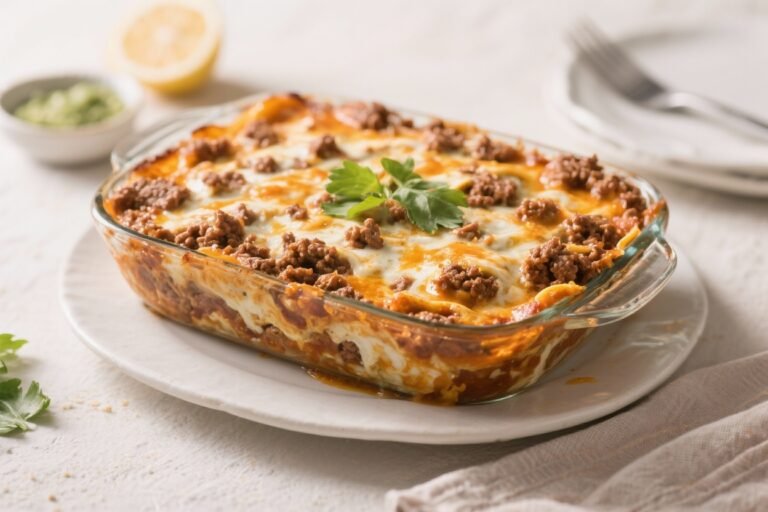
Low-Cal Beef & Veggie Pasta Skillet – A Light, Satisfying Weeknight Dinner
This Low-Cal Beef & Veggie Pasta Skillet has all the cozy comfort of a hearty pasta dish without the heaviness. It’s quick, colorful, and built for weeknights when you want something satisfying but still light. Lean ground beef, plenty of vegetables, and a sensible amount of pasta come together in one pan with bright tomato flavor.
FREE 7-Day Easy Dinner Reset
Get 7 healthy, family-friendly dinners complete with recipes and simple meal plans delivered straight to your inbox.
You’ll get balanced protein, fiber, and carbs in every bite, and the leftovers heat up like a dream. Grab a big skillet and let’s make dinner simple.
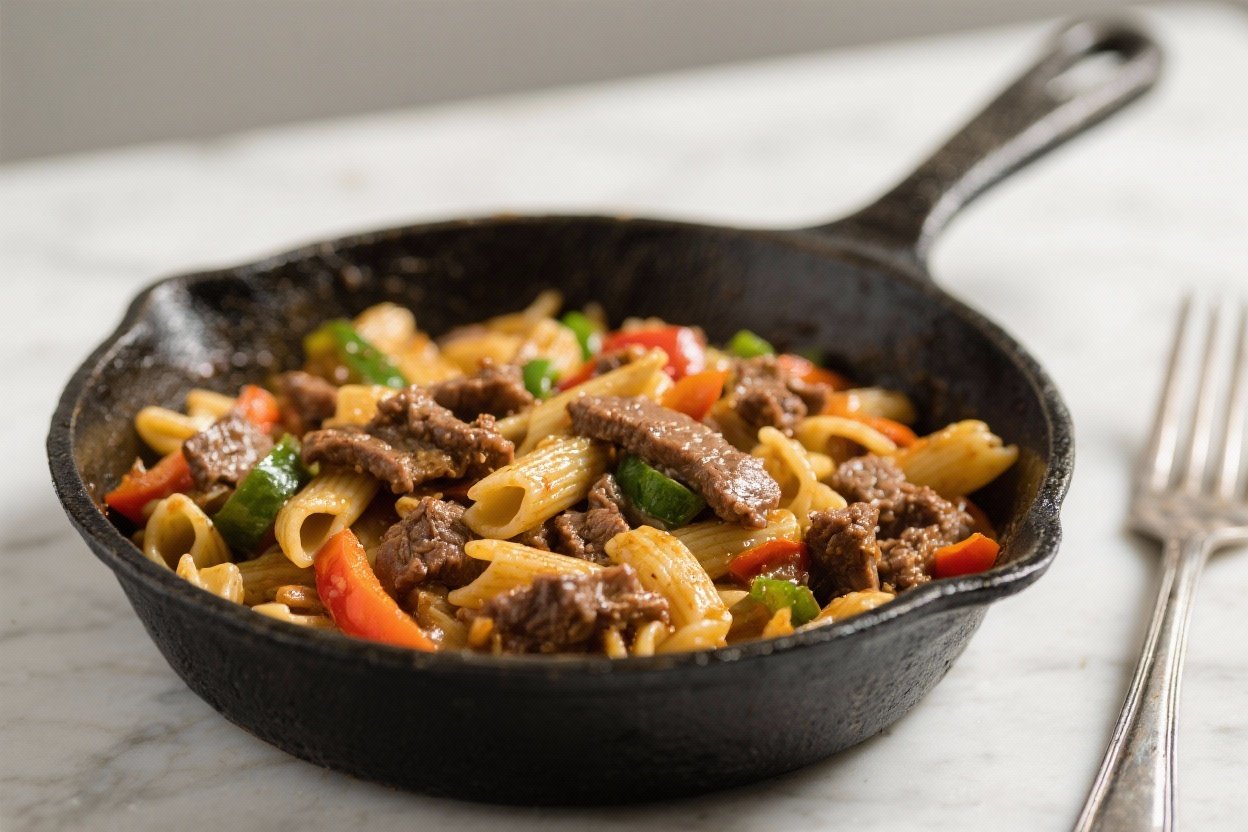
Ingredients
Method
- Preheat and prep: Set a large, deep skillet over medium heat. Have all your vegetables chopped and ready to go for a smooth cook.
- Brown the beef: Add the ground beef to the dry skillet and season with a pinch of salt and pepper. Cook, breaking it up with a spatula, until browned and no longer pink, about 4–5 minutes. If there’s noticeable grease, drain it. Push the beef to one side.
- Sauté the aromatics: Add olive oil to the empty side of the pan, then toss in onion and bell pepper. Cook 3–4 minutes until softened. Stir in zucchini and cook another 2 minutes. Add the garlic and cook 30 seconds until fragrant.
- Build the sauce: Stir the beef and veggies together. Add diced tomatoes with their juices, tomato sauce, Italian seasoning, crushed red pepper, smoked paprika, and a small pinch of salt and pepper. Stir well.
- Add pasta and liquid: Pour in the broth and bring to a lively simmer. Add the pasta, stir, and make sure the noodles are mostly submerged. Reduce heat to medium-low.
- Simmer to tender: Cook 10–12 minutes, stirring occasionally, until the pasta is al dente. If the skillet looks dry before the pasta is done, add splashes of broth or water. You want a loose, saucy consistency.
- Finish with greens: Stir in the spinach and let it wilt, 1–2 minutes. Taste and adjust salt, pepper, and heat. A squeeze of lemon perks up the sauce nicely.
- Serve: Sprinkle with Parmesan and fresh herbs if you like. Serve hot, with extra red pepper flakes on the side.
Why This Recipe Works

- Lean protein plus fiber-rich veggies: Using 90–96% lean ground beef keeps calories in check, while bell peppers, zucchini, and spinach add bulk and nutrition without weighing the dish down.
- One-pan efficiency: Cooking the pasta right in the sauce infuses flavor and eliminates extra pots. It also keeps starch in the pan, which helps the sauce cling to the noodles.
- Balanced flavors: A touch of garlic, Italian herbs, and crushed red pepper offers depth without requiring heavy cream or loads of cheese.
- Flexible and forgiving: You can swap vegetables, change the pasta shape, or adjust the heat level, and the dish still turns out great.
- Portion-friendly: Built to deliver satisfying portions around the 400–500 calorie range, depending on add-ins like cheese.
Ingredients
- 8 ounces whole-wheat or high-fiber pasta (penne, rotini, or shells)
- 12 ounces 90–96% lean ground beef
- 1 tablespoon olive oil
- 1 medium yellow onion, diced
- 1 red bell pepper, diced
- 1 small zucchini, halved lengthwise and sliced
- 2 cups baby spinach, loosely packed
- 3 cloves garlic, minced
- 1 can (14.5 ounces) diced tomatoes, undrained
- 1 can (8 ounces) tomato sauce (no sugar added if possible)
- 2 cups low-sodium chicken or beef broth, plus more as needed
- 1 teaspoon Italian seasoning
- 1/2 teaspoon crushed red pepper flakes (optional)
- 1/2 teaspoon smoked paprika (optional, but adds depth)
- Salt and black pepper to taste
- 1/4 cup grated Parmesan or Pecorino Romano, for serving (optional)
- Fresh basil or parsley, chopped, for garnish (optional)
- Lemon wedge, for finishing squeeze (optional)
Instructions

- Preheat and prep: Set a large, deep skillet over medium heat.
Have all your vegetables chopped and ready to go for a smooth cook.
- Brown the beef: Add the ground beef to the dry skillet and season with a pinch of salt and pepper. Cook, breaking it up with a spatula, until browned and no longer pink, about 4–5 minutes. If there’s noticeable grease, drain it.
Push the beef to one side.
- Sauté the aromatics: Add olive oil to the empty side of the pan, then toss in onion and bell pepper. Cook 3–4 minutes until softened. Stir in zucchini and cook another 2 minutes.
Add the garlic and cook 30 seconds until fragrant.
- Build the sauce: Stir the beef and veggies together. Add diced tomatoes with their juices, tomato sauce, Italian seasoning, crushed red pepper, smoked paprika, and a small pinch of salt and pepper. Stir well.
- Add pasta and liquid: Pour in the broth and bring to a lively simmer.
Add the pasta, stir, and make sure the noodles are mostly submerged. Reduce heat to medium-low.
- Simmer to tender: Cook 10–12 minutes, stirring occasionally, until the pasta is al dente. If the skillet looks dry before the pasta is done, add splashes of broth or water.
You want a loose, saucy consistency.
- Finish with greens: Stir in the spinach and let it wilt, 1–2 minutes. Taste and adjust salt, pepper, and heat. A squeeze of lemon perks up the sauce nicely.
- Serve: Sprinkle with Parmesan and fresh herbs if you like.
Serve hot, with extra red pepper flakes on the side.
Keeping It Fresh
- Storage: Cool completely, then store in airtight containers for up to 4 days in the refrigerator.
- Reheating: Reheat gently on the stove over low heat with a splash of water or broth to loosen the sauce. Microwave on medium power in 45-second bursts, stirring in between.
- Freezing: You can freeze for up to 2 months, though pasta can soften slightly. Reheat from thawed for the best texture.
- Meal prep tip: Keep the cheese and fresh herbs separate, adding them right before serving to keep flavors bright.
Health Benefits
- Lean protein for satiety: Lean beef supplies high-quality protein and iron, helping keep you full and energized.
- Fiber from whole grains and vegetables: Whole-wheat pasta plus vegetables supports digestion and steady energy.
- Lower calories, big volume: Veggies add bulk and texture, allowing for hearty portions with fewer calories.
- Balanced macros: You get smart carbs for fuel, protein for muscle maintenance, and a small amount of healthy fat for flavor and absorption of fat-soluble vitamins.
- Sodium control: Using low-sodium broth and tomato products gives you control over seasoning.
What Not to Do
- Don’t skip seasoning: Low-cal dishes rely on smart seasoning.
Taste at the end and adjust salt, pepper, and acidity.
- Don’t overcook the pasta: Mushy noodles will absorb too much liquid and throw off the sauce. Aim for al dente.
- Don’t drown it in cheese: A sprinkle goes a long way. Too much can push calories higher than you want.
- Don’t use high-fat beef: Extra fat adds calories and can make the dish greasy.
Lean beef keeps the skillet light.
- Don’t forget to stir: Stir occasionally as it simmers so the pasta cooks evenly and doesn’t stick.
Variations You Can Try
- Turkey or chicken swap: Substitute lean ground turkey or chicken for beef to change the flavor and shave a few calories.
- Bean boost: Stir in a can of rinsed cannellini or kidney beans for extra fiber and plant-based protein.
- Mushroom umami: Add 8 ounces sliced mushrooms with the onion for a savory boost without many calories.
- Veggie-heavy version: Reduce pasta to 6 ounces and add extra zucchini or broccoli for a more veggie-forward skillet.
- Spice route: Swap Italian seasoning for chili powder and cumin, and finish with cilantro and lime for a Tex-Mex twist.
- Gluten-free: Use a sturdy gluten-free pasta (brown rice or chickpea). Watch the cooking time and add liquid as needed.
- Dairy-free finish: Skip the cheese and finish with fresh herbs and lemon zest for brightness.
FAQ
How can I keep this dish under 500 calories per serving?
Never Wonder What's For Dinner Again
Get 7 healthy, family-friendly dinners complete with recipes, grocery lists, and simple meal plans delivered straight to your inbox.
Portion the recipe into four servings, use 90–96% lean beef, choose whole-wheat pasta, and keep cheese to a light sprinkle. Load up on spinach and zucchini to add volume with minimal calories.
Can I make it ahead?
Yes.
Cook as directed, cool, and store for up to 4 days. Reheat gently with a splash of broth to loosen the sauce, and add fresh herbs or cheese right before serving.
What pasta shape works best?
Short cuts like rotini, penne, and shells grab the sauce and stand up well to one-pan cooking. They also reheat better than long strands in this style of dish.
Can I use frozen vegetables?
Absolutely.
Add them straight to the skillet without thawing, and cook off any extra moisture before adding the tomatoes and broth. Frozen spinach should be squeezed dry for best texture.
Is there a way to make it spicier?
Increase the crushed red pepper, add a pinch of cayenne, or stir in a chopped chipotle in adobo for smoky heat. Taste as you go so it doesn’t overpower the other flavors.
What if the pasta isn’t tender but the liquid is gone?
Add 1/4 cup broth or water at a time and keep simmering, stirring often.
The goal is a gently saucy consistency and al dente pasta.
How do I avoid greasy results?
Use lean beef and drain any excess fat after browning. If needed, blot lightly with a paper towel before adding the vegetables.
Can I use fresh tomatoes instead of canned?
Yes. Use about 2 cups chopped ripe tomatoes, plus a tablespoon of tomato paste to boost body and flavor.
You may need a bit more broth to maintain a saucy texture.
In Conclusion
This Low-Cal Beef & Veggie Pasta Skillet checks all the boxes: fast, flavorful, and satisfying without the extra heaviness. With lean beef, colorful vegetables, and a smart one-pan method, it’s a dependable dinner you can tweak to suit your taste. Keep the seasoning lively, the pasta al dente, and the portions sensible, and you’ll have a go-to meal that fits right into a balanced routine.
Enjoy it fresh tonight and count on easy, tasty leftovers tomorrow.
Printable Recipe Card
Want just the essential recipe details without scrolling through the article? Get our printable recipe card with just the ingredients and instructions.
Loved This Recipe?
If you're looking for more simple, healthy dinners your family will actually eat, grab my FREE 7-Day Easy Dinner Reset. You'll get 7 easy dinner recipes, simple grocery lists, and a done-for-you plan that takes the stress out of mealtime.