Healthy Chicken Teriyaki Skillet – A Quick, Flavorful Weeknight Dinner
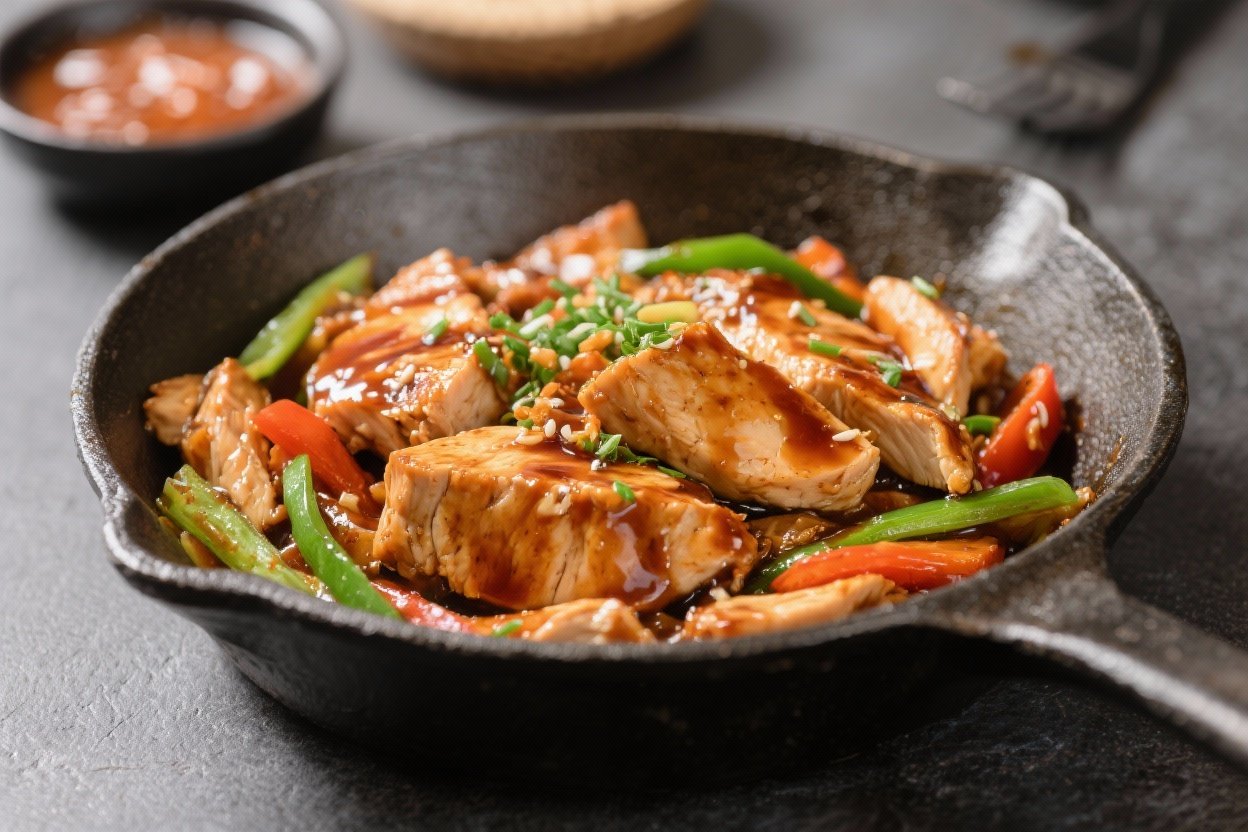
This Healthy Chicken Teriyaki Skillet brings bright, savory-sweet flavor to the table in under 30 minutes. It’s simple to make, uses pantry staples, and doesn’t demand much cleanup. The sauce coats tender chicken and crisp vegetables without being heavy or sticky.
FREE 7-Day Easy Dinner Reset
Get 7 healthy, family-friendly dinners complete with recipes and simple meal plans delivered straight to your inbox.
You’ll get that classic teriyaki taste with a lighter touch and balanced nutrition. It’s the kind of meal you can cook on autopilot after a long day and still feel good about serving.
Ingredients
Method
- Stir together the sauce: In a small bowl, whisk soy sauce, water, honey, rice vinegar, sesame oil, cornstarch, and red pepper flakes. Set aside. The cornstarch will thicken the sauce later.
- Prep the chicken and veggies: Pat the chicken dry with paper towels for better browning. Slice your vegetables and separate the white and green parts of the green onions.
- Heat the skillet: Place a large nonstick or stainless skillet over medium-high heat. Add the oil and let it shimmer.
- Sear the chicken: Add chicken in a single layer with the white parts of the green onions. Season lightly with salt and pepper. Cook 5–6 minutes, flipping once, until golden and nearly cooked through.
- Add aromatics: Reduce heat to medium. Stir in garlic and ginger. Cook 30 seconds until fragrant, stirring so they don’t burn.
- Cook the vegetables: Add broccoli and bell pepper. Cook 2–3 minutes, tossing occasionally. Add snap peas and cook 1–2 minutes until crisp-tender. You want color and a bit of crunch.
- Pour in the sauce: Whisk the sauce again, then pour it into the skillet. Stir continuously for 1–2 minutes until it thickens and coats the chicken and veggies. If it gets too thick, add a splash of water.
- Finish and garnish: Turn off the heat. Sprinkle in the green tops of the onions and sesame seeds. Taste and adjust with a squeeze of lime, a touch more vinegar, or a pinch of red pepper flakes.
- Serve: Spoon over brown rice, quinoa, or cauliflower rice. Serve hot.
Why This Recipe Works

Balanced sauce, lighter sugar: Traditional teriyaki can be very sweet. This version uses a smaller amount of honey or maple syrup, plus fresh aromatics, to keep flavor high and sugar lower.
One-pan efficiency: Cooking everything in a skillet locks in flavor and makes cleanup easy.
The chicken sears well, and veggies stay crisp-tender.
Lean protein, high fiber: Chicken breast paired with broccoli, peppers, and snap peas adds protein and fiber without extra calories. You stay satisfied without feeling weighed down.
Customizable and forgiving: You can swap vegetables, adjust the heat with red pepper flakes, or use tamari for a gluten-free version. It’s adaptable to most diets and preferences.
Ingredients
- 1.25 lbs boneless, skinless chicken breast, cut into 1-inch pieces
- 1 tablespoon avocado or olive oil
- 1 cup broccoli florets
- 1 red bell pepper, sliced
- 1 cup sugar snap peas or snow peas
- 3 green onions, sliced (whites and greens separated)
- 2 cloves garlic, minced
- 1 teaspoon fresh ginger, grated (or 1/4 teaspoon ground ginger)
- Sesame seeds, for garnish (optional)
For the teriyaki sauce:
- 1/3 cup low-sodium soy sauce (or tamari for gluten-free)
- 1/3 cup water
- 1–1.5 tablespoons honey or maple syrup (adjust to taste)
- 1 tablespoon rice vinegar (or apple cider vinegar)
- 1 teaspoon toasted sesame oil
- 1–2 teaspoons cornstarch (or arrowroot for paleo-friendly)
- Pinch red pepper flakes (optional)
To serve (optional):
- Cooked brown rice, quinoa, or cauliflower rice
- Lime wedges for a fresh squeeze
How to Make It

- Stir together the sauce: In a small bowl, whisk soy sauce, water, honey, rice vinegar, sesame oil, cornstarch, and red pepper flakes.
Set aside. The cornstarch will thicken the sauce later.
- Prep the chicken and veggies: Pat the chicken dry with paper towels for better browning. Slice your vegetables and separate the white and green parts of the green onions.
- Heat the skillet: Place a large nonstick or stainless skillet over medium-high heat.
Add the oil and let it shimmer.
- Sear the chicken: Add chicken in a single layer with the white parts of the green onions. Season lightly with salt and pepper. Cook 5–6 minutes, flipping once, until golden and nearly cooked through.
- Add aromatics: Reduce heat to medium.
Stir in garlic and ginger. Cook 30 seconds until fragrant, stirring so they don’t burn.
- Cook the vegetables: Add broccoli and bell pepper. Cook 2–3 minutes, tossing occasionally.
Add snap peas and cook 1–2 minutes until crisp-tender. You want color and a bit of crunch.
- Pour in the sauce: Whisk the sauce again, then pour it into the skillet. Stir continuously for 1–2 minutes until it thickens and coats the chicken and veggies.
If it gets too thick, add a splash of water.
- Finish and garnish: Turn off the heat. Sprinkle in the green tops of the onions and sesame seeds. Taste and adjust with a squeeze of lime, a touch more vinegar, or a pinch of red pepper flakes.
- Serve: Spoon over brown rice, quinoa, or cauliflower rice.
Serve hot.
How to Store
- Refrigerate: Cool completely, then store in an airtight container for up to 4 days.
- Freeze: Portion into freezer-safe containers for up to 2 months. Thaw overnight in the fridge for best texture.
- Reheat: Warm gently in a skillet over medium heat with a splash of water to loosen the sauce. Microwave in short bursts, stirring between intervals, to avoid overcooking the chicken.
- Meal prep tip: Keep rice or grains in a separate container so they don’t soak up too much sauce in storage.
Health Benefits
- Lean protein: Chicken breast supports muscle repair and keeps you full with fewer calories than darker cuts.
- Lower sodium: Using low-sodium soy sauce and balancing with vinegar and aromatics keeps flavor high without extra salt.
- Fiber and antioxidants: Broccoli, peppers, and snap peas provide fiber, vitamin C, vitamin A, and phytonutrients that support immune and heart health.
- Better-for-you fats: A small amount of avocado or olive oil and toasted sesame oil delivers flavor and healthy fats without heaviness.
- Controlled sweetness: Just a bit of honey or maple syrup rounds out the sauce without turning it into candy.
Pitfalls to Watch Out For
Never Wonder What's For Dinner Again
Get 7 healthy, family-friendly dinners complete with recipes, grocery lists, and simple meal plans delivered straight to your inbox.
- Overcrowding the pan: If the chicken steams instead of sears, it won’t brown.
Cook in batches if needed.
- Burning aromatics: Garlic and ginger cook fast. Add them after the chicken browns and lower the heat slightly.
- Too-thick sauce: Cornstarch thickens quickly. If it turns gluey, add water a tablespoon at a time and stir.
- Soggy vegetables: Add snap peas last and keep cook time short.
You want crisp-tender texture.
- Over-salting: Soy sauce is salty. Taste before adding extra salt, and use low-sodium broth or water if you need to thin the sauce.
Alternatives
- Protein swaps: Use chicken thighs for extra juiciness, shrimp for a quick cook (2–3 minutes), or firm tofu pressed and cubed. For tofu, pan-sear until golden before adding the vegetables.
- Vegetable variations: Try zucchini, mushrooms, carrots, green beans, or baby bok choy.
Aim for a mix of colors and textures.
- Grain options: Serve with brown rice, farro, quinoa, or cauliflower rice for lower carbs.
- Gluten-free: Use tamari or coconut aminos and arrowroot in place of cornstarch if you prefer.
- No added sugar: Skip honey and increase vinegar slightly. Add more ginger for brightness and a splash of orange juice for natural sweetness.
- Spicy twist: Add sriracha or a teaspoon of gochujang to the sauce for heat.
FAQ
Can I make the sauce ahead of time?
Yes. Mix the sauce and refrigerate for up to 4 days.
Whisk before using because the cornstarch settles. If it thickens in the fridge, add a splash of water.
What’s the best pan for this recipe?
A large nonstick skillet or well-seasoned stainless steel pan works well. You want high heat for a good sear and enough surface area to avoid overcrowding.
How do I keep the chicken tender?
Don’t overcook it.
Cut into even pieces, sear over medium-high heat, and pull it off once it’s just cooked through. The sauce finishes it gently without drying it out.
Can I use frozen vegetables?
Yes, but cook them briefly from frozen and expect a slightly softer texture. If possible, thaw and pat dry first to avoid watering down the sauce.
Is there a way to make it lower in sodium?
Use low-sodium soy sauce or tamari, and thin the sauce with water or low-sodium broth.
Add more ginger, garlic, and vinegar to keep the flavor lively without extra salt.
What if I don’t have rice vinegar?
Use apple cider vinegar or lime juice. Start with slightly less and add to taste since acidity levels vary.
Can I add more vegetables?
Absolutely. Just keep the total volume in check so the skillet isn’t crowded, or cook in batches.
Harder vegetables like carrots and green beans need a couple extra minutes.
Final Thoughts
This Healthy Chicken Teriyaki Skillet delivers big flavor, weeknight speed, and real nutrition. The lightened-up sauce still satisfies, and the one-pan approach makes it practical. Keep a few core ingredients on hand and you’ll have a reliable, go-to dinner that adapts to whatever vegetables you’ve got.
It’s simple, colorful, and consistently delicious—exactly what a weeknight meal should be.
Printable Recipe Card
Want just the essential recipe details without scrolling through the article? Get our printable recipe card with just the ingredients and instructions.
Loved This Recipe?
If you're looking for more simple, healthy dinners your family will actually eat, grab my FREE 7-Day Easy Dinner Reset. You'll get 7 easy dinner recipes, simple grocery lists, and a done-for-you plan that takes the stress out of mealtime.