Healthy Low Calorie Veggie Loaded Chicken Stir Fry – Quick, Colorful, and Satisfying
This stir fry is the kind of weeknight dinner you’ll actually look forward to. It’s bright, full of crunchy vegetables, and gets dinner on the table fast without weighing you down. The chicken stays tender, the sauce is light yet savory, and everything cooks in one pan.
FREE 7-Day Easy Dinner Reset
Get 7 healthy, family-friendly dinners complete with recipes and simple meal plans delivered straight to your inbox.
It’s also highly flexible, so you can swap veggies based on what you have. If you want something fresh, healthy, and filling without a lot of fuss, this checks every box.
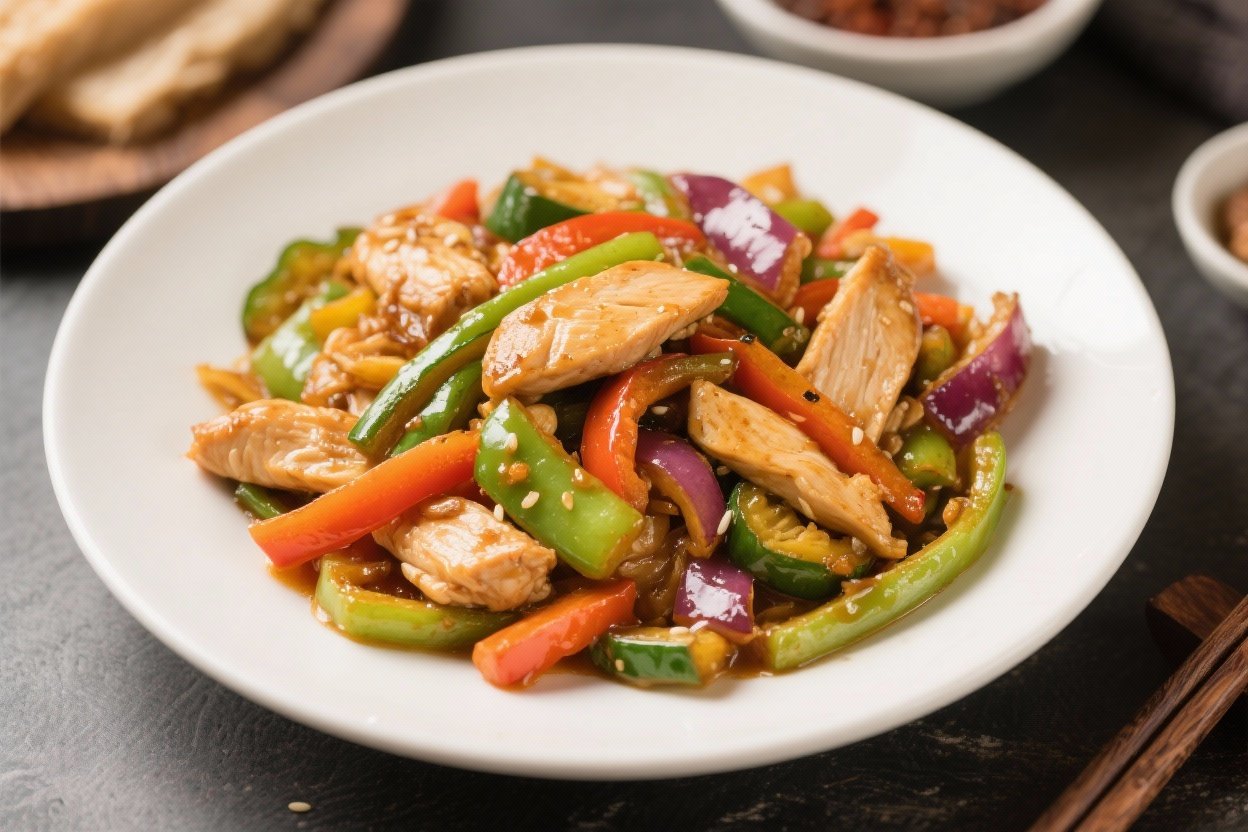
Healthy Low Calorie Veggie Loaded Chicken Stir Fry - Quick, Colorful, and Satisfying
Ingredients
Method
- Prep first. Slice the chicken thinly against the grain. Chop all vegetables into bite-size pieces. Mince the garlic and grate the ginger. Stir fries move fast, so have everything ready.
- Make the sauce. In a small bowl, whisk soy sauce, rice vinegar, oyster sauce (if using), honey, sesame oil, broth, cornstarch, and a pinch of red pepper flakes. Set aside.
- Heat the pan. Place a large nonstick skillet or wok over medium-high to high heat. Add 1 tsp oil and swirl to coat. The pan should be hot but not smoking.
- Cook the chicken. Add the chicken in a single layer. Season with a small pinch of salt and pepper. Stir-fry for 3–4 minutes until just cooked through and lightly golden. Transfer to a plate.
- Sauté aromatics. Add the remaining oil if needed. Toss in garlic and ginger for 20–30 seconds until fragrant, stirring constantly so they don’t burn.
- Stir-fry the veggies. Add firmer vegetables first—broccoli, carrots, and onion. Cook for 2 minutes, stirring often. Then add bell pepper, zucchini, and snap peas. Cook 2–3 more minutes until crisp-tender.
- Bring it together. Return the chicken to the pan. Add cabbage and spinach. Give the sauce a quick stir and pour it in. Toss everything for 1–2 minutes until the sauce lightly thickens and coats the ingredients.
- Taste and finish. Adjust salt, soy, or chili to taste. Sprinkle sesame seeds and fresh cilantro. Serve hot over cauliflower rice for a low-calorie base, or a small scoop of brown rice for extra fiber.
What Makes This Special

This stir fry keeps calories low while still feeling hearty and satisfying. It uses lean chicken breast, plenty of fiber-rich vegetables, and a simple sauce that leans on aromatics and umami rather than heavy oils or sugar.
Everything cooks quickly over high heat for crisp-tender texture and vibrant color. You’ll get balanced protein, carbs, and healthy fats in one dish, with no need for complicated techniques. It’s a great way to pack in vegetables without sacrificing flavor.
Shopping List
- Chicken: 1 lb (450 g) boneless, skinless chicken breast, thinly sliced
- Vegetables:
- 1 red bell pepper, sliced
- 1 small zucchini, halved and sliced
- 1 cup broccoli florets
- 1 cup snap peas or snow peas
- 1 small carrot, thinly sliced
- 1 small red onion or 4 green onions, sliced
- 2 cups shredded cabbage or coleslaw mix
- 2 cups baby spinach (optional, wilts at the end)
- Aromatics: 3 cloves garlic (minced), 1 tbsp fresh ginger (grated)
- Sauce:
- 3 tbsp low-sodium soy sauce or tamari
- 1 tbsp rice vinegar or lime juice
- 1 tbsp oyster sauce or hoisin (optional for extra depth)
- 1–2 tsp honey or maple syrup (optional)
- 1 tsp toasted sesame oil
- 1/3 cup low-sodium chicken broth or water
- 1 tsp cornstarch (for light thickening)
- Red pepper flakes or sriracha to taste
- Cooking: 1–2 tsp neutral oil (avocado, canola, or light olive)
- Garnish: Sesame seeds, fresh cilantro, lime wedges
- Optional base: Cauliflower rice, brown rice, or zucchini noodles
Instructions

- Prep first. Slice the chicken thinly against the grain.
Chop all vegetables into bite-size pieces. Mince the garlic and grate the ginger. Stir fries move fast, so have everything ready.
- Make the sauce. In a small bowl, whisk soy sauce, rice vinegar, oyster sauce (if using), honey, sesame oil, broth, cornstarch, and a pinch of red pepper flakes.
Set aside.
- Heat the pan. Place a large nonstick skillet or wok over medium-high to high heat. Add 1 tsp oil and swirl to coat. The pan should be hot but not smoking.
- Cook the chicken. Add the chicken in a single layer.
Season with a small pinch of salt and pepper. Stir-fry for 3–4 minutes until just cooked through and lightly golden. Transfer to a plate.
- Sauté aromatics. Add the remaining oil if needed.
Toss in garlic and ginger for 20–30 seconds until fragrant, stirring constantly so they don’t burn.
- Stir-fry the veggies. Add firmer vegetables first—broccoli, carrots, and onion. Cook for 2 minutes, stirring often. Then add bell pepper, zucchini, and snap peas.
Cook 2–3 more minutes until crisp-tender.
- Bring it together. Return the chicken to the pan. Add cabbage and spinach. Give the sauce a quick stir and pour it in.
Toss everything for 1–2 minutes until the sauce lightly thickens and coats the ingredients.
- Taste and finish. Adjust salt, soy, or chili to taste. Sprinkle sesame seeds and fresh cilantro. Serve hot over cauliflower rice for a low-calorie base, or a small scoop of brown rice for extra fiber.
Keeping It Fresh
Stir fry is all about high heat and short cooking time.
That’s how you get tender chicken and crisp, colorful vegetables. Use a large pan so ingredients don’t steam. Work in batches if needed to avoid overcrowding.
If you plan to make it ahead, store the sauce separately and lightly undercook the veggies so they reheat well without going mushy.
Health Benefits
- High protein, low calorie: Lean chicken breast delivers plenty of protein to keep you full with minimal fat.
- Fiber-rich vegetables: Broccoli, cabbage, peppers, and snap peas support digestion and steady energy.
- Balanced nutrition: A mix of protein, complex carbs (if served with brown rice), and healthy fats from sesame oil supports satiety.
- Lower sodium and sugar: Using low-sodium soy sauce and just a touch of honey keeps the sauce lighter and heart-friendly.
- Micronutrient boost: Vitamin C from peppers, vitamin K from cabbage and spinach, and a range of antioxidants help overall wellness.
Common Mistakes to Avoid
- Overcrowding the pan: This causes steaming and soggy vegetables. Cook in batches if your pan is small.
- Overcooking the chicken: Thin slices cook fast. Remove them once done and add back at the end to stay tender.
- Skipping prep: Have everything chopped before heating the pan.
Stir fries move quickly.
- Heavy oil or sauce: Stick to measured amounts. A little sesame oil and a light cornstarch slurry go a long way.
- Ignoring heat: Use medium-high to high heat for caramelization and crisp-tender veggies.
Recipe Variations
- Spicy Garlic: Add extra chili flakes or a teaspoon of sriracha and double the garlic.
- Lemon-Ginger: Swap rice vinegar for fresh lemon juice and add lemon zest for brightness.
- Teriyaki-Lite: Use 2 tsp honey and a splash of pineapple juice, keep soy low-sodium, and simmer briefly to thicken.
- Peanut Crunch: Stir in 1 tbsp powdered peanut butter or 1 tsp natural peanut butter and garnish with chopped peanuts.
- Veggie Swap: Use mushrooms, asparagus, baby corn, or bok choy based on what’s in season.
- Low-carb base: Serve over cauliflower rice or shirataki noodles to keep calories especially low.
- Gluten-free: Use tamari and gluten-free oyster sauce or skip oyster sauce and add extra umami with a splash of fish sauce.
Never Wonder What's For Dinner Again
Get 7 healthy, family-friendly dinners complete with recipes, grocery lists, and simple meal plans delivered straight to your inbox.
FAQ
How many calories are in a serving?
With lean chicken, minimal oil, and lots of vegetables, a typical serving lands around 300–380 calories without rice, depending on portions and sauce additions. Using cauliflower rice keeps the meal lower in calories.
Can I use chicken thighs instead of breast?
Yes.
Thighs are slightly higher in fat but very tender and forgiving. Trim excess fat and slice thinly. Cook until just done to keep them juicy.
What if I don’t have a wok?
A large nonstick or stainless-steel skillet works fine.
The key is heat and space. If your skillet is smaller, cook in batches to avoid steaming.
How do I keep the vegetables crisp?
Cut them uniformly, cook over high heat, and add firmer vegetables first. Stop cooking when they’re just tender with a little bite.
They’ll continue softening slightly from residual heat.
Can I meal prep this?
Absolutely. Portion into airtight containers for up to 4 days in the fridge. For best texture, undercook the vegetables slightly and reheat quickly in a hot pan or microwave.
What can I use instead of cornstarch?
Use arrowroot powder in the same amount, or skip thickener entirely for an ultra-light sauce.
It won’t be glossy but will still taste great.
Is there a vegetarian option?
Swap chicken for extra-firm tofu or tempeh. Press tofu for 15–20 minutes, then pan-sear until golden before adding the vegetables. Use vegetable broth and soy or tamari for the sauce.
How spicy is this?
It’s mild unless you add chili.
Adjust with red pepper flakes or sriracha to your liking. You can also serve chili oil on the side so everyone can customize heat.
In Conclusion
Healthy Low Calorie Veggie Loaded Chicken Stir Fry is a fast, colorful way to eat well without feeling deprived. It’s flexible, easy to prep, and full of fresh textures and flavors.
Keep the heat high, the sauce light, and the veggies plentiful, and you’ll have a reliable go-to meal for busy nights. Serve it over your favorite base, garnish with a squeeze of lime, and enjoy a satisfying dinner that’s good for you and great on taste.
Printable Recipe Card
Want just the essential recipe details without scrolling through the article? Get our printable recipe card with just the ingredients and instructions.
Loved This Recipe?
If you're looking for more simple, healthy dinners your family will actually eat, grab my FREE 7-Day Easy Dinner Reset. You'll get 7 easy dinner recipes, simple grocery lists, and a done-for-you plan that takes the stress out of mealtime.