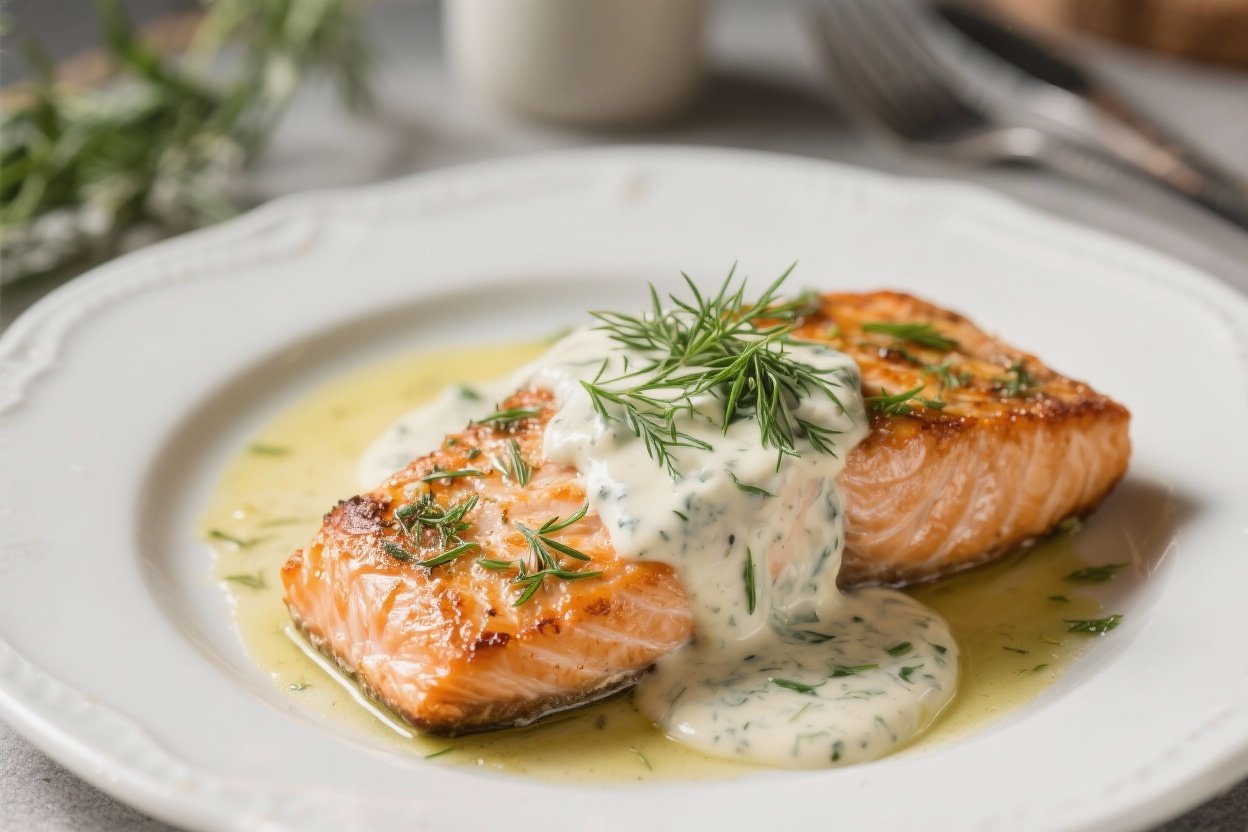
Baked Salmon with Creamy Dill Sauce: The 25-Minute Dinner That Makes You Look Like a Pro
Skip the takeout app. This is the dish you make when you want applause without breaking a sweat. Crisp-edged salmon, silky dill sauce, and a clean-up situation so easy you’ll consider inviting people over just to brag.
It’s rich but not heavy, classy but not fussy, and frankly, easier than boiling pasta. If you can squeeze a lemon and stir a bowl, you can win dinner tonight.
Overeating is a pattern. This helps you fix that problem. A quick reset for cravings, snacking, and “I’ll start tomorrow” moments.
Built for busy home cooks who want real-life structure. Simple steps that fit meal prep, family dinners, and late-night snack attacks.
What Makes This Recipe So Good
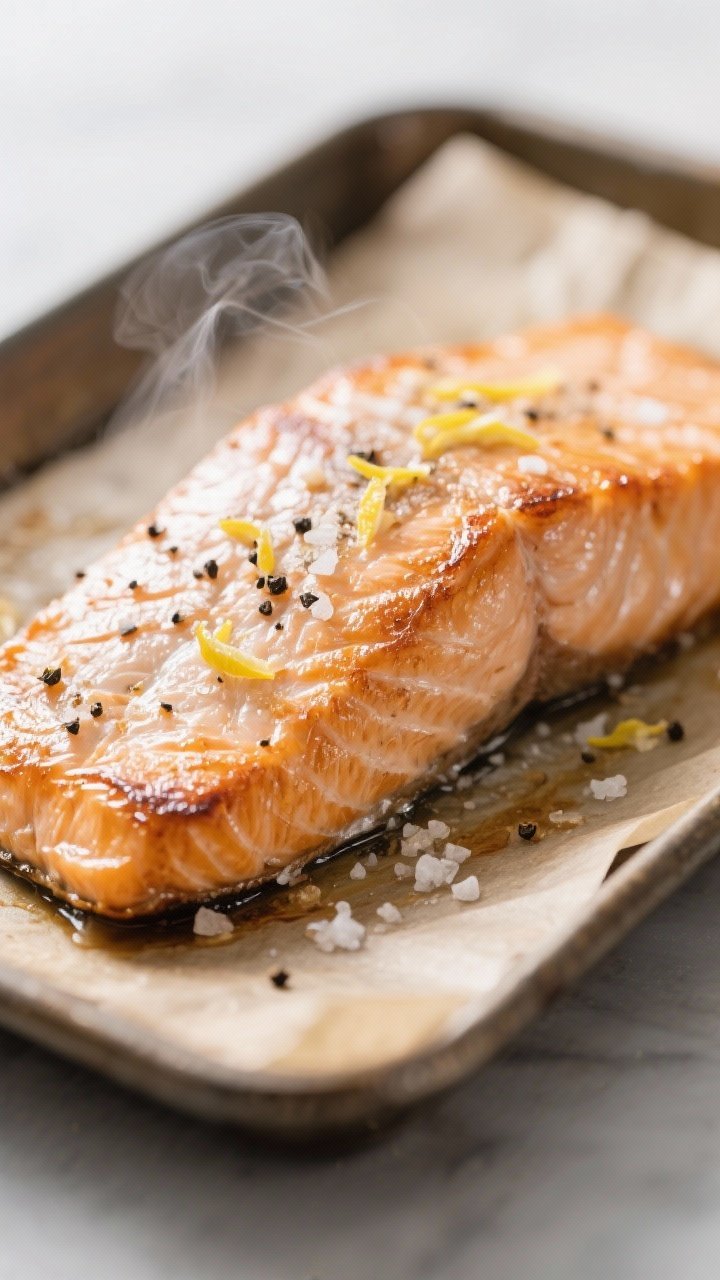
Balanced flavors, zero stress. The salmon is baked for dependable results—juicy inside, lightly caramelized at the edges—while a tangy dill sauce cuts through with brightness and freshness.
One bowl, one pan, done. You’ll line the sheet pan, mix the sauce in a small bowl, and call it a day. Minimal dishes, maximum win.
Customizable and forgiving. Farmed or wild?
Skin on or off? Lemon or no lemon? This recipe doesn’t throw tantrums if you tweak it.
Restaurant vibes at home. The creamy dill sauce tastes like it wandered out of a fancy bistro.
But it’s built with pantry staples and takes two minutes.
What You’ll Need (Ingredients)
- Salmon fillets: 4 pieces (about 6 oz/170 g each), skin-on preferred
- Olive oil: 1–2 tablespoons
- Kosher salt: 1–1.5 teaspoons (to taste)
- Freshly ground black pepper: 1/2 teaspoon
- Garlic powder: 1/2 teaspoon
- Lemon: 1 whole, zested and halved
- Fresh dill: 1/4 cup, finely chopped (plus extra for garnish)
- Greek yogurt: 3/4 cup (whole milk preferred)
- Mayonnaise: 2 tablespoons (adds silkiness)
- Dijon mustard: 1–2 teaspoons
- Honey or maple syrup: 1 teaspoon (optional, balances acidity)
- Capers: 1 tablespoon, chopped (optional but excellent)
- Extra lemon juice: 1–2 tablespoons, to taste
- Optional sides: roasted potatoes, asparagus, rice, or mixed greens
Cooking Instructions
- Preheat and prep. Heat your oven to 400°F (205°C). Line a rimmed baking sheet with parchment for easy cleanup.
- Season the salmon. Pat fillets dry. Rub with olive oil, then sprinkle salt, pepper, and garlic powder.
Add lemon zest over the top. Place skin-side down on the sheet.
- Roast to tender perfection. Bake 10–14 minutes depending on thickness and desired doneness. Aim for medium: internal temp ~125°F (52°C), or flakes easily but stays glossy in the center.
- Make the creamy dill sauce. In a bowl, combine Greek yogurt, mayonnaise, Dijon, lemon juice, chopped dill, and capers.
Stir in a small squeeze of honey if you like balance. Taste and adjust salt, pepper, and lemon.
- Finish with lemon. When salmon is done, rest 2 minutes. Squeeze fresh lemon over the top.
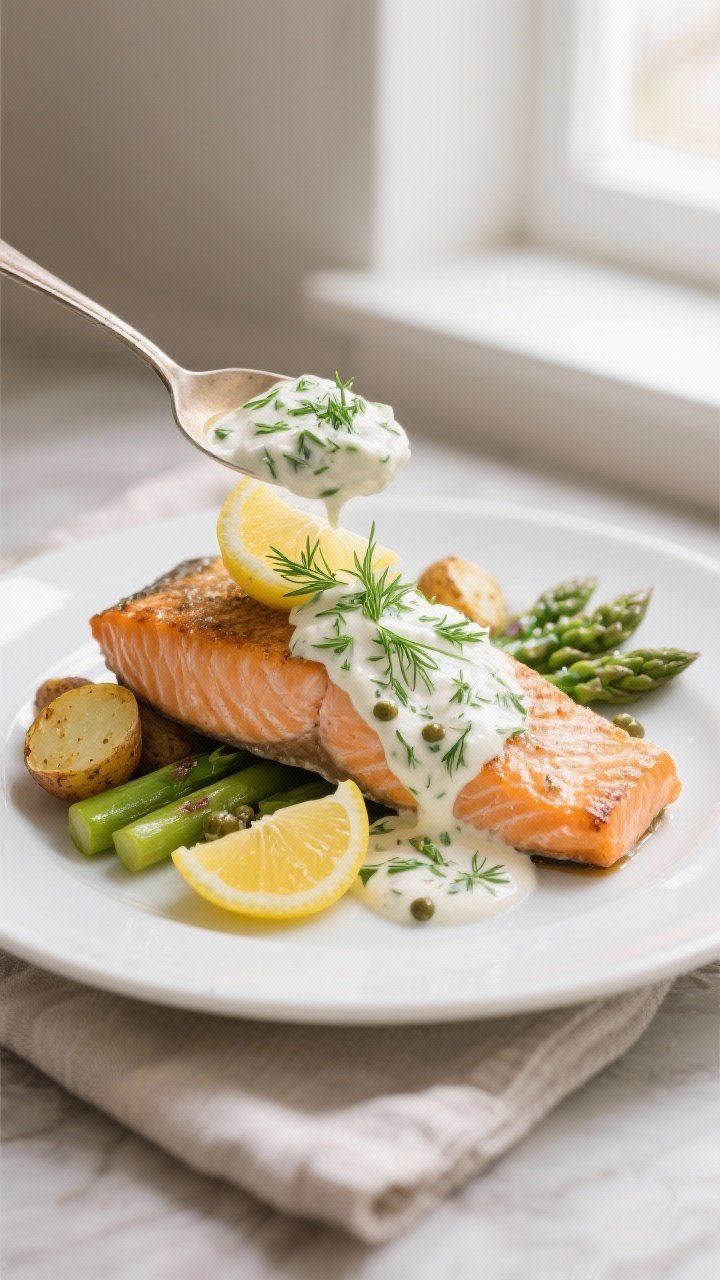
- Serve like you mean it. Spoon sauce generously over salmon, garnish with extra dill, and plate with your side of choice.
Take a picture. You’ve earned it.
Storage Tips
- Refrigerator: Store cooked salmon and sauce separately in airtight containers for up to 3 days. The sauce may thicken; loosen with a splash of lemon or water.
- Freezer: Salmon can be frozen up to 2 months.
Thaw in the fridge overnight. The yogurt-based sauce doesn’t freeze well—make it fresh.
- Reheating: Low and slow to keep it moist: 275°F (135°C) for 10–12 minutes, or gently in a covered skillet over low heat. Microwave?
Short bursts, 50% power. Don’t overdo it unless you enjoy salmon confetti.

Nutritional Perks
- Protein powerhouse: About 30–35g protein per 6-oz serving to keep you full and energized.
- Omega-3s for the win: Salmon delivers EPA and DHA that support heart, brain, and joint health. Your body says thank you.
- Smart fats, smart sauce: Yogurt-based sauce brings probiotics and tang with fewer calories than heavy cream.
Mayonnaise adds just enough silkiness.
- Low-carb friendly: Works for low-carb and Mediterranean-style eating. Pair with veggies or salad for a light, satisfying plate.
Avoid These Mistakes
- Overcooking the salmon. Dry fish is a crime. Pull it when the center is slightly translucent and the temp is around 125°F (52°C); it will carryover cook.
- Skipping the pat-dry step. Moisture on the surface blocks browning.
Paper towels are your friend.
- Heavy-handed lemon in the sauce. You want bright, not sour. Add citrus gradually and taste as you go—IMO, 1 tablespoon first, then adjust.
- Using only low-fat yogurt. Zero-fat can taste chalky. Whole-milk yogurt gives the sauce that restaurant-level creaminess.
- Cold salmon into a hot oven. If it’s ice-cold, the outside cooks before the inside.
Let it sit at room temp 10–15 minutes before baking.
Different Ways to Make This
- Herb swap: Try tarragon, chives, or parsley instead of dill, or mix them for a green goddess vibe.
- Spice it up: Add a pinch of cayenne or Aleppo pepper to the seasoning. Smoked paprika also plays nicely.
- Pan-seared finish: Sear salmon skin-side down in a hot skillet for 3–4 minutes, flip, then finish in a 375°F (190°C) oven for 4–6 minutes. Ultra-crisp skin flex.
- Grill game: Oil grates well and grill over medium-high, 3–4 minutes per side.
Serve with the same sauce, extra lemon, and maybe grilled asparagus because you’re fancy.
- Dairy-free sauce: Use a thick dairy-free yogurt (coconut or almond), swap mayo for olive oil, and boost acidity with a touch more lemon plus Dijon.
- Meal-prep bowls: Flake salmon over rice or quinoa, add cucumbers, cherry tomatoes, and drizzle dill sauce. Lunches for days—FYI, it’s excellent cold.
FAQ
How do I know when the salmon is done without a thermometer?
Press gently with a fork at the thickest part. If it flakes easily but the center still looks slightly glossy, it’s ready.
Also, white albumin (the white stuff that can ooze out) is a sign you’re edging toward overdone—pull it sooner next time.
Can I use dried dill?
Yes, but use less: about 1 to 1.5 teaspoons dried dill for 1/4 cup fresh. Let the sauce rest 10 minutes so the dried herbs hydrate. Fresh dill is brighter, but dried works in a pinch.
Is skin-on or skin-off better?
Skin-on helps insulate the fillet and keeps it moist.
It also releases more cleanly from the pan. You can eat the skin if it’s crisped (delicious) or slide it off after baking—your call.
What if my salmon is frozen?
Thaw in the fridge overnight or under cold running water (sealed) for 30–45 minutes. Pat dry very well before seasoning.
If cooking from frozen, add 5–8 minutes and expect less browning.
Can I make the sauce ahead?
Yes—up to 3 days in advance. Keep it chilled and stir before serving. Add a splash of lemon or water if it thickens too much.
Which sides pair best?
Roasted baby potatoes, lemony asparagus, garlicky green beans, rice pilaf, or a simple arugula salad with olive oil and salt.
The sauce also moonlights as a killer salad dressing, just saying.
What type of salmon should I buy?
For richer flavor, choose farmed Atlantic or sustainably farmed options; for a leaner, more pronounced taste, go wild (like sockeye or coho). Thicker fillets are more forgiving. Aim for firm, moist flesh and a fresh, ocean-clean smell.
Wrapping Up
Baked Salmon with Creamy Dill Sauce lands in that magical zone where effort is minimal and results look suspiciously impressive.
It’s weeknight-fast, dinner-party-worthy, and ridiculously adaptable. Keep salmon in the freezer, dill in the fridge, and you’ve got a reliable ace up your sleeve. Make it once, and it becomes your “Oh, this old thing?” signature move.
Printable Recipe Card
Want just the essential recipe details without scrolling through the article? Get our printable recipe card with just the ingredients and instructions.