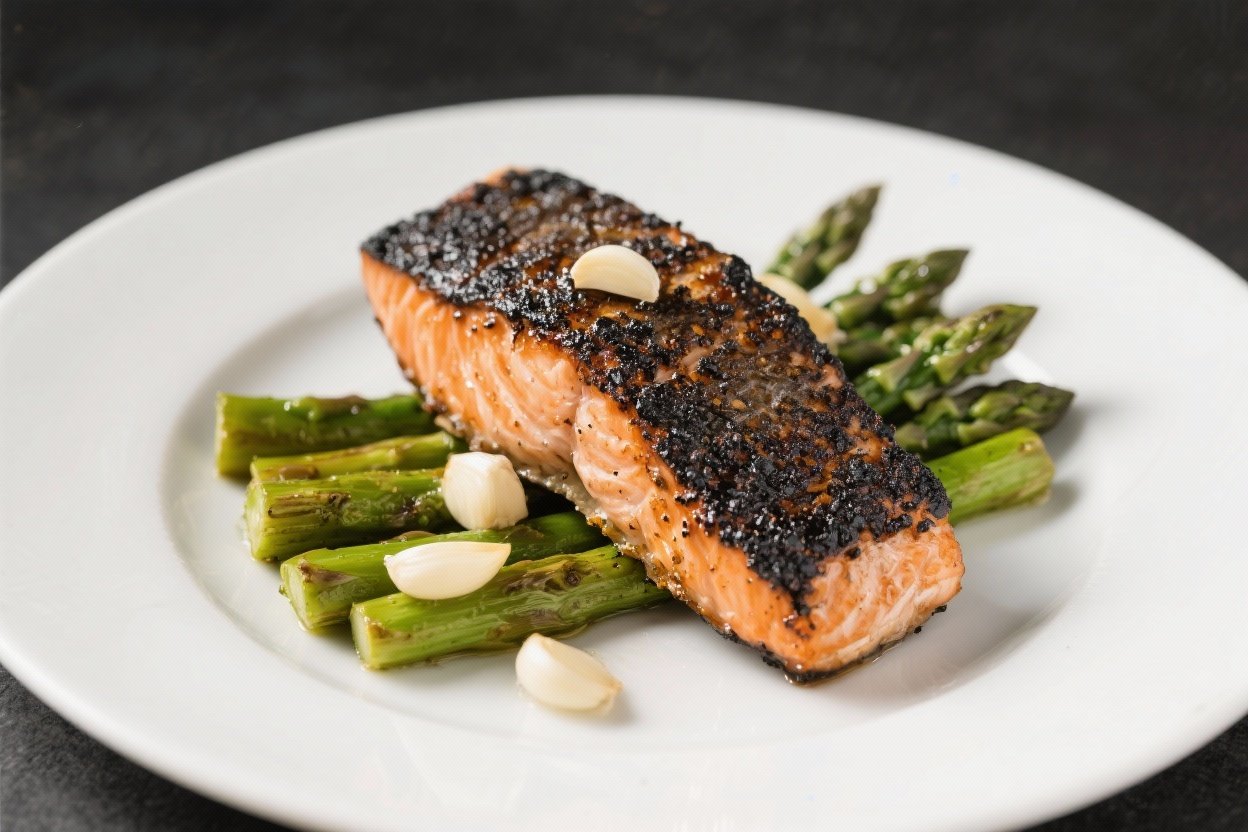
Blackened Salmon with Garlic Asparagus: The 20-Minute Power Dinner That Tastes Like a Weekend Flex
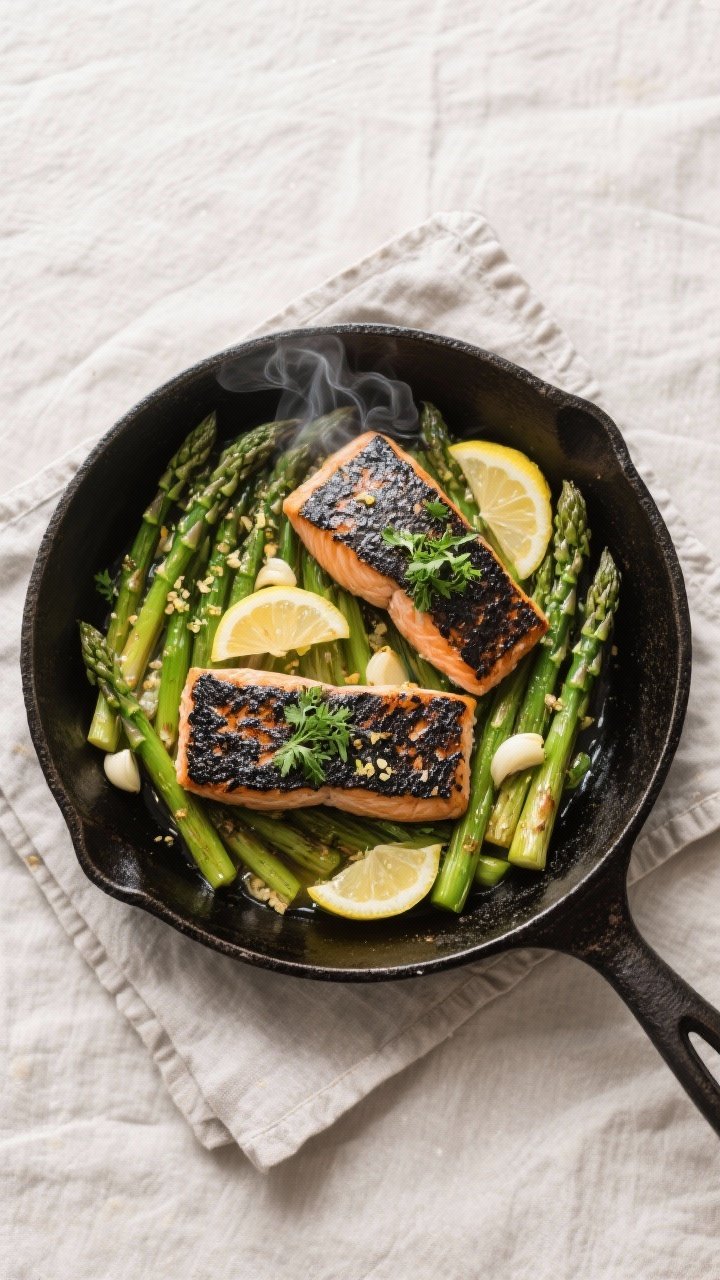
You want a dinner that looks fancy, slaps with flavor, and doesn’t chew up your evening? This is that move. Blackened salmon brings the smoke, the spice, and the restaurant-level crust, while garlicky asparagus keeps it bright and clean.
It’s a high-protein, low-hassle combo that feels like a reward, not a chore. You’ll spend more time enjoying it than making it—and that’s the point.
Overeating is a pattern. This helps you fix that problem. A quick reset for cravings, snacking, and “I’ll start tomorrow” moments.
Built for busy home cooks who want real-life structure. Simple steps that fit meal prep, family dinners, and late-night snack attacks.
Why This Recipe Works

Heat meets speed: Blackening spices sear fast and build a crispy crust in minutes. The salmon stays juicy inside while the outside gets bold and smoky.
One pan, two wins: Cook the salmon first, then toss the asparagus in the same skillet.
All those flavorful drippings? They season the veg for free.
Balanced flavors: Spice from paprika and cayenne, sweetness from salmon, brightness from lemon, and a garlic punch to wake everything up.
Weeknight-proof: No marinating, no weird tools, no culinary drama. Just heat, season, sear, eat.
Ingredients Breakdown
- Salmon fillets (4, 6 oz each, skin-on preferred): Skin protects the flesh and helps it cook evenly.
Fresh or previously frozen is fine.
- Asparagus (1 lb, trimmed): Medium-thick spears hold up best to a quick sauté.
- Olive oil (2–3 tbsp): For high-heat searing and flavor. Avocado oil also works.
- Unsalted butter (1 tbsp): Finishes the asparagus and adds richness.
- Garlic (3–4 cloves, minced): Big flavor in little time.
- Lemon (1, zested and juiced): Brightens the dish and cuts through the richness.
- Fresh parsley (2 tbsp, chopped): Optional, but adds freshness and color.
Blackening Spice Mix:
- Smoked paprika (2 tsp): Essential for color and smoky depth.
- Brown sugar (1 tsp): Helps caramelize the crust without making it sweet.
- Garlic powder (1 tsp) and onion powder (1 tsp): Savory backbone.
- Cayenne (1/4–1/2 tsp): Adjust heat level to your vibe.
- Dried thyme (1/2 tsp) and dried oregano (1/2 tsp): Herbal notes.
- Kosher salt (1–1.5 tsp) and black pepper (1 tsp): Don’t be shy—this seasons the crust.
How to Make It – Instructions
- Mix the spice blend: In a small bowl, combine smoked paprika, brown sugar, garlic powder, onion powder, cayenne, thyme, oregano, salt, and pepper. Set aside.
- Prep the salmon: Pat fillets dry with paper towels.
Moisture is the enemy of crust. Lightly oil both sides, then coat the flesh side generously with the spice mix. Press to adhere.
- Heat the pan: Use a large cast-iron or heavy skillet.
Add 1–2 tbsp oil and heat over medium-high until shimmering. You want it hot, not smoking like a tire fire.
- Sear the salmon: Place fillets flesh side down first. Cook 2–3 minutes until a dark crust forms.
Flip carefully, reduce heat to medium, and cook 3–5 minutes more, skin side down, until just cooked through (125–130°F for medium). Transfer to a plate; tent with foil.
- Cook the asparagus: In the same skillet, add a touch more oil if needed. Toss in asparagus and a pinch of salt and pepper.
Sauté 3–5 minutes, stirring occasionally, until crisp-tender and lightly blistered.
- Garlic + butter finish: Push asparagus to the side, add butter and garlic. Cook 30 seconds until fragrant, then toss everything together. Add lemon zest and a squeeze of juice.
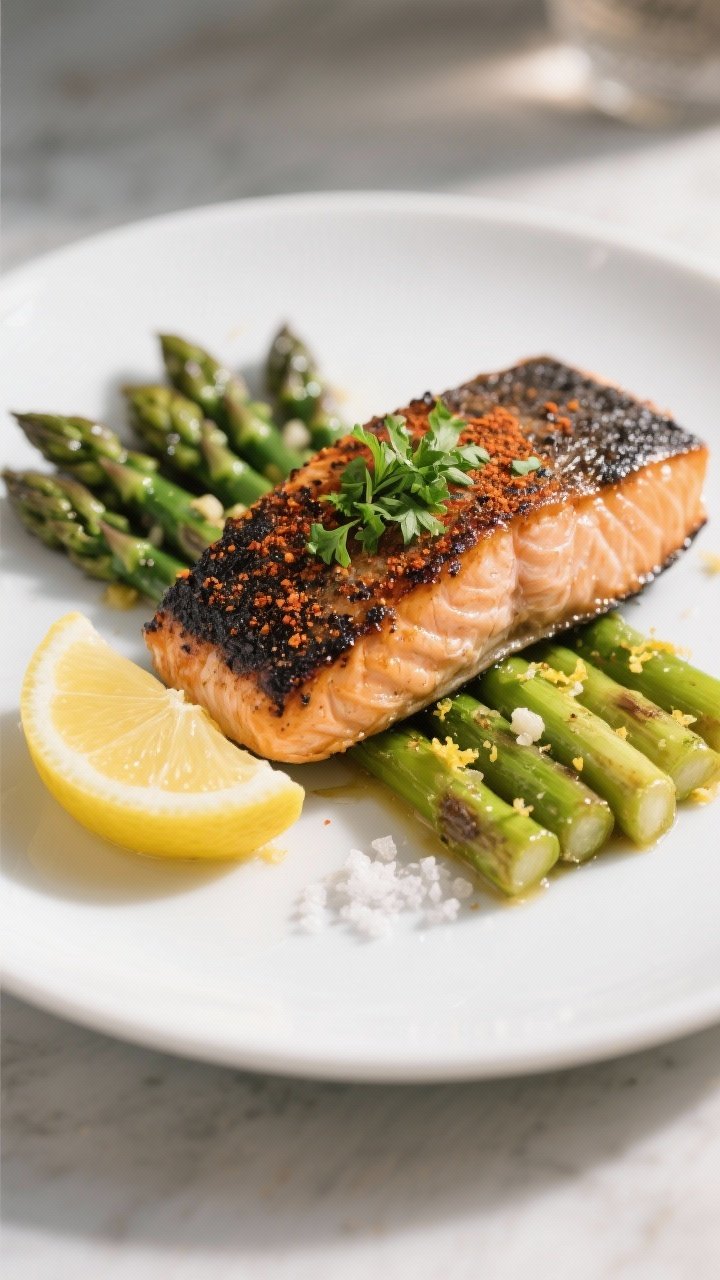
- Plate it: Divide asparagus among plates, top with salmon, and finish with more lemon juice and chopped parsley.
Optional: a final dusting of smoked paprika for flair. Serve immediately.
Storage Tips
- Fridge: Store salmon and asparagus in separate airtight containers for up to 2 days. Reheat gently to avoid overcooking.
- Reheating: Warm salmon in a 275°F oven for 8–10 minutes or in a covered skillet over low heat with a splash of water.
Asparagus reheats well in a hot pan for 1–2 minutes.
- Freezer: Cooked salmon can be frozen up to 2 months. Thaw in the fridge overnight. Asparagus doesn’t freeze great—expect softer texture.
- Meal prep tip: Flake leftover salmon over salad or rice bowls.
Add a fresh squeeze of lemon to revive the flavors.
Why This is Good for You
- Omega-3s on deck: Salmon is loaded with heart-healthy fats that support brain function and reduce inflammation.
- Protein power: Around 34–40g per serving (depending on fillet size) to keep you full and energized.
- Veg that actually slaps: Asparagus brings fiber, folate, and antioxidants—aka things your body loves even if your taste buds are here for the garlic.
- Low-carb, high-flavor: Big payoff, minimal sugar and starch. Great for balanced eating without the bland.

Avoid These Mistakes
- Skipping the pat-dry: Wet salmon steams. Dry salmon sears.
Choose wisely.
- Pan too cool or too crowded: You want space and sizzle. Work in batches if needed.
- Overcooking: Salmon goes from perfect to chalky fast. Pull it at 125–130°F; it’ll carryover cook.
- Burning the garlic: Add garlic at the end with butter.
Burnt garlic = bitterness and sadness, IMO.
- Under-seasoning: The blackening blend is the star. Be generous so the crust actually tastes like something.
Alternatives
- Fish swaps: Try steelhead trout, Arctic char, or thick cod. Adjust cooking time; cod needs a bit longer.
- Veg swaps: Use green beans, broccolini, or zucchini.
Cook times vary—keep it crisp-tender.
- Spice variations: Swap smoked paprika for regular plus a pinch of chipotle powder. For mild heat, cut cayenne in half.
- Dairy-free: Skip butter; finish asparagus with olive oil and extra lemon.
- No cast-iron? Use stainless steel. Nonstick works in a pinch but won’t crust as aggressively.
- Add a sauce: Quick lemon yogurt (Greek yogurt + lemon + salt) or hot honey drizzle for sweet-heat vibes.
FAQ
How do I know when the salmon is done without a thermometer?
Press gently on the thickest part—if it flakes easily but still looks slightly translucent in the center, it’s ready.
Another clue: the albumin (white protein) starts to show, which means you’re at the finish line.
Can I use skinless salmon?
Yes, but be extra careful with heat and timing. The skin acts like a safety net, so without it, reduce sear time slightly and avoid moving the fillet until the crust sets.
Is this too spicy for kids?
Dial the cayenne down to a pinch and keep the brown sugar as written. You’ll get more smoky-sweet, less fire-breathing dragon.
FYI, lemon at the end helps mellow the heat.
Can I bake instead of pan-sear?
You can. Bake at 425°F for 8–12 minutes depending on thickness. For a crust, broil the top for 1–2 minutes at the end, watching closely.
What wine pairs well with this?
A zesty Sauvignon Blanc, lightly oaked Chardonnay, or a dry rosé cuts through the spice and complements the lemon and garlic.
If beer’s your lane, go with a crisp pilsner.
How do I trim asparagus the right way?
Bend one spear until it snaps naturally, then line it up as a guide and slice the rest to match. It removes the woody ends without wasting the good stuff.
Can I make the spice blend in bulk?
Absolutely. Multiply by 4, store in an airtight jar for up to 3 months.
Shake before using—spices like to settle and it’s not a snow globe.
The Bottom Line
Blackened Salmon with Garlic Asparagus is the rare dinner that’s fast, bold, and genuinely impressive. You get crispy, spicy salmon and a garlicky green side without dirtying half your kitchen. Keep the heat high, the timing tight, and the lemon flowing.
That’s how you turn a Tuesday into a victory lap.
Printable Recipe Card
Want just the essential recipe details without scrolling through the article? Get our printable recipe card with just the ingredients and instructions.