Chicken and Veggie Stir-Fry (Low-Calorie) – Fast, Fresh, and Flavorful
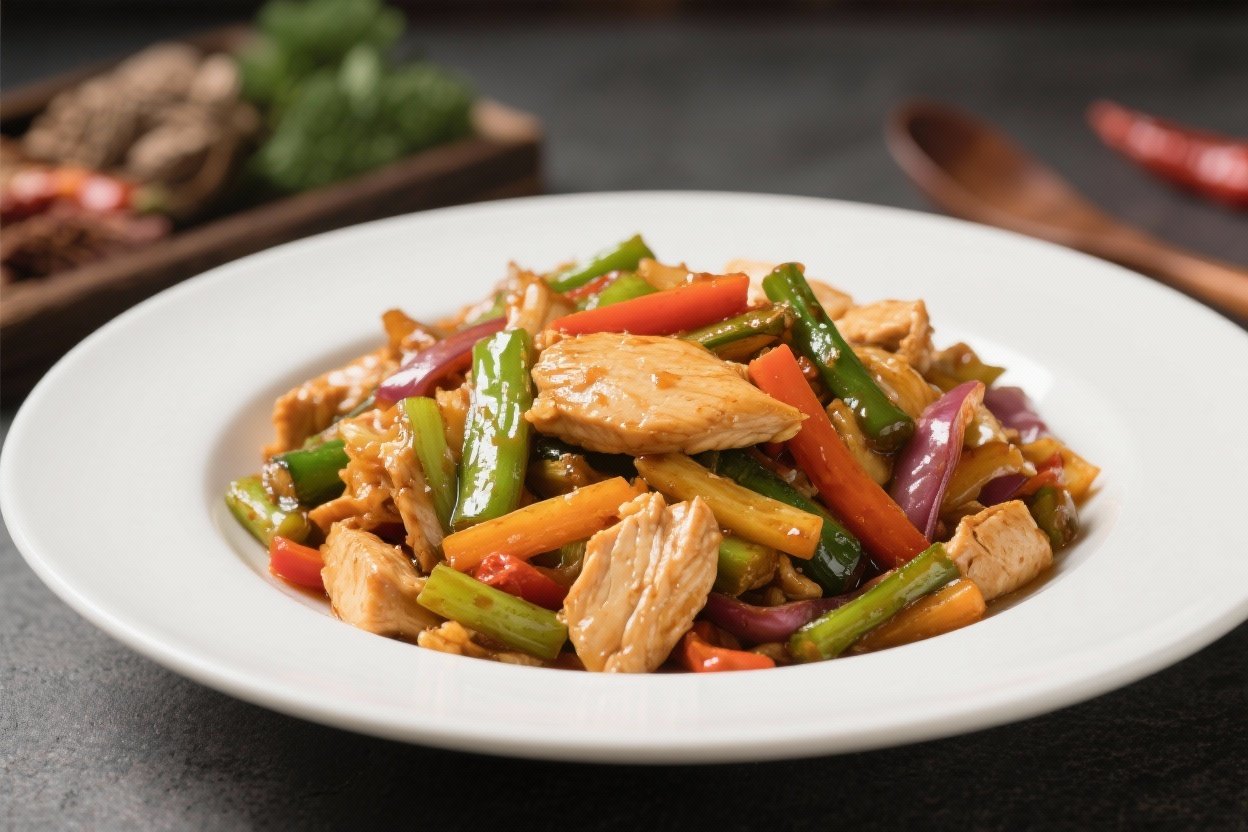
This chicken and veggie stir-fry is the kind of dinner you can make on a busy weeknight without thinking twice. It’s fast, colorful, and packed with crisp vegetables and tender chicken. The sauce is light yet savory, so you get all the flavor without a heavy calorie load.
You don’t need fancy skills or special gear, just a hot pan and a few simple ingredients. It’s fresh, flexible, and easy to love.
Ingredients
Method
- Prep the chicken: Pat the chicken dry and slice it thinly across the grain. This helps it cook fast and stay tender.
- Mix the sauce: In a small bowl, whisk soy sauce, oyster sauce, vinegar, honey, sesame oil, broth, cornstarch, and red pepper flakes. Set aside.
- Heat the pan: Place a large skillet or wok over medium-high to high heat. Add 1 tablespoon of oil and let it shimmer.
- Sear the chicken: Add the chicken in a single layer. Season lightly with salt and pepper. Cook 3–4 minutes, stirring once or twice, until just cooked through. Remove to a plate.
- Cook sturdy veggies first: Add a little more oil if needed. Toss in broccoli, carrots, and onion. Stir-fry 2–3 minutes.
- Add quick-cooking veggies: Add bell pepper and snow peas. Stir-fry another 2 minutes until bright and crisp-tender.
- Add aromatics: Push veggies to the sides. Add garlic and ginger to the center and stir for 30 seconds until fragrant.
- Combine and sauce: Return chicken and any juices to the pan. Give the sauce a stir and pour it in. Toss everything for 1–2 minutes until the sauce lightly thickens and coats the stir-fry.
- Taste and adjust: Add a splash more soy for salt, vinegar for brightness, or heat if you like it spicy.
- Serve: Top with green onions and sesame seeds. Serve over cauliflower rice to keep it low-calorie, or a small scoop of brown rice for extra fiber.
Overeating is a pattern. This helps you fix that problem. A quick reset for cravings, snacking, and “I’ll start tomorrow” moments.
Built for busy home cooks who want real-life structure. Simple steps that fit meal prep, family dinners, and late-night snack attacks.
Why This Recipe Works
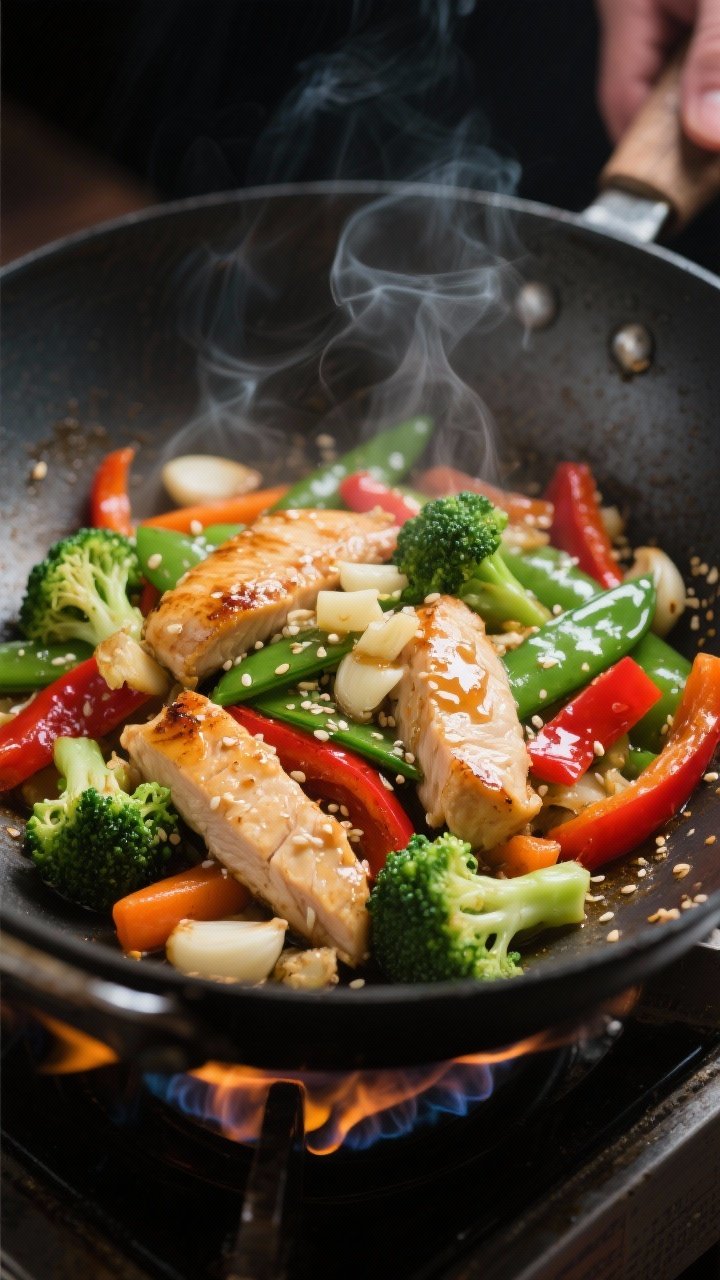
- High heat, quick cooking: Searing the chicken and veggies at high heat keeps the vegetables crisp-tender and the chicken juicy.
- Balanced, light sauce: A simple mix of low-sodium soy sauce, garlic, ginger, and a touch of honey gives depth without excess calories.
- Smart veggie mix: Using fiber-rich vegetables (like broccoli and bell peppers) adds volume and texture, helping you feel full longer.
- Lean protein: Chicken breast keeps the dish light while delivering solid protein for a satisfying meal.
- Flexible and budget-friendly: You can swap vegetables based on what’s in your fridge, so it’s practical and reduces waste.
What You’ll Need
- Chicken: 1 lb (450 g) boneless, skinless chicken breast, thinly sliced
- Broccoli: 2 cups small florets
- Bell pepper: 1 large (any color), sliced
- Carrot: 1 medium, thinly sliced on a bias
- Snow peas or snap peas: 1 cup, trimmed
- Onion: 1 small, thinly sliced
- Garlic: 3 cloves, minced
- Fresh ginger: 1 tablespoon, minced
- Green onions: 2, sliced (optional for garnish)
- Neutral oil: 1–2 tablespoons (avocado, canola, or grapeseed)
For the sauce:
- 3 tablespoons low-sodium soy sauce or tamari
- 1 tablespoon oyster sauce (optional but tasty)
- 1 tablespoon rice vinegar or lime juice
- 1–2 teaspoons honey or maple syrup
- 1/2 teaspoon toasted sesame oil
- 1/4 cup low-sodium chicken broth or water
- 1 teaspoon cornstarch (for light thickening)
- Red pepper flakes or a dash of hot sauce (optional, to taste)
To serve (optional):
- Cauliflower rice, steamed rice, or a small portion of brown rice
- Sesame seeds and extra lime wedges
How to Make It
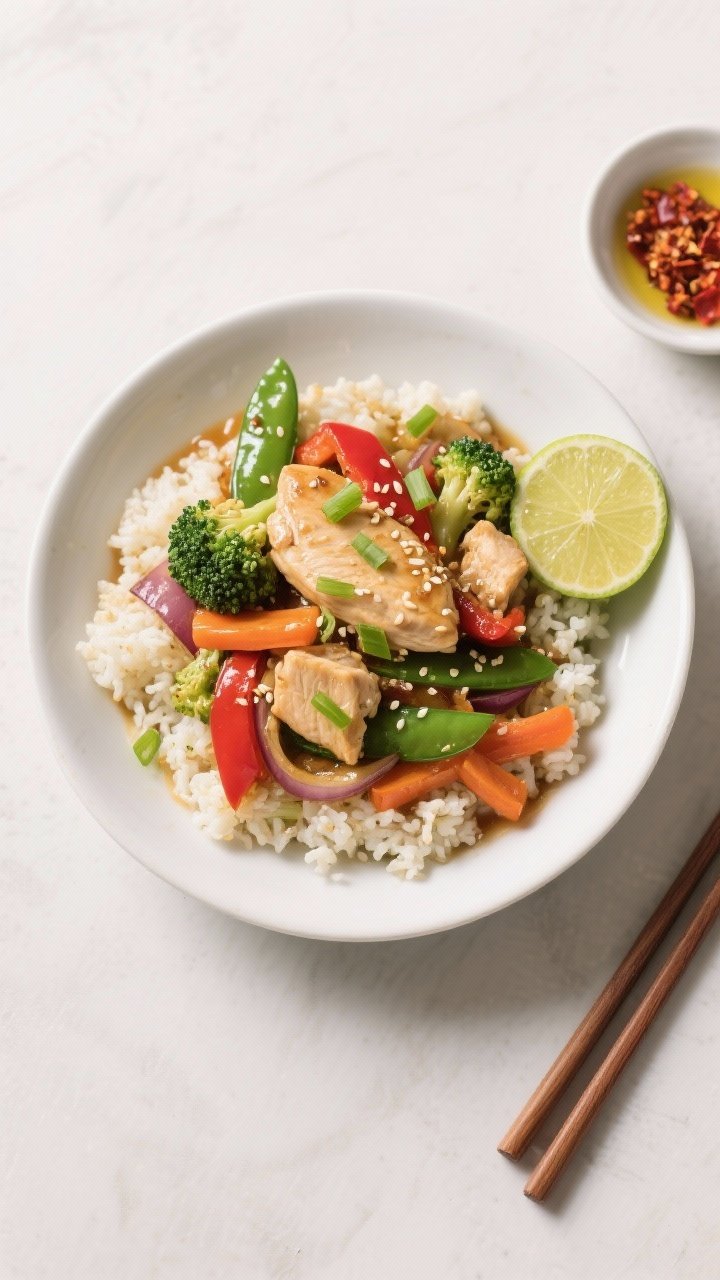
- Prep the chicken: Pat the chicken dry and slice it thinly across the grain. This helps it cook fast and stay tender.
- Mix the sauce: In a small bowl, whisk soy sauce, oyster sauce, vinegar, honey, sesame oil, broth, cornstarch, and red pepper flakes.
Set aside.
- Heat the pan: Place a large skillet or wok over medium-high to high heat. Add 1 tablespoon of oil and let it shimmer.
- Sear the chicken: Add the chicken in a single layer. Season lightly with salt and pepper.
Cook 3–4 minutes, stirring once or twice, until just cooked through. Remove to a plate.
- Cook sturdy veggies first: Add a little more oil if needed. Toss in broccoli, carrots, and onion.
Stir-fry 2–3 minutes.
- Add quick-cooking veggies: Add bell pepper and snow peas. Stir-fry another 2 minutes until bright and crisp-tender.
- Add aromatics: Push veggies to the sides. Add garlic and ginger to the center and stir for 30 seconds until fragrant.
- Combine and sauce: Return chicken and any juices to the pan.
Give the sauce a stir and pour it in. Toss everything for 1–2 minutes until the sauce lightly thickens and coats the stir-fry.
- Taste and adjust: Add a splash more soy for salt, vinegar for brightness, or heat if you like it spicy.
- Serve: Top with green onions and sesame seeds. Serve over cauliflower rice to keep it low-calorie, or a small scoop of brown rice for extra fiber.
Storage Instructions
- Fridge: Store leftovers in an airtight container for 3–4 days.
- Reheating: Warm gently in a skillet over medium heat with a splash of water to loosen the sauce.
Microwave in 45-second bursts, stirring between, to avoid overcooking.
- Freezer: You can freeze for up to 2 months, but veggies may soften. Freeze flat in a zip-top bag for quick thawing.
- Meal prep tip: Keep the sauce separate until reheating for the best texture if you plan to meal prep.
Benefits of This Recipe
- Low-calorie, high satisfaction: Lean protein and high-volume veggies help you stay full without a calorie-heavy sauce.
- Nutrient-dense: Broccoli, peppers, and carrots bring fiber, vitamins A and C, and antioxidants.
- Quick and weeknight-friendly: From start to finish in about 25 minutes with minimal cleanup.
- Customizable: Works with many vegetables and proteins. Easy to tailor to dietary needs.
- Gluten-free option: Use tamari and a gluten-free oyster sauce or skip oyster sauce entirely.
What Not to Do
- Don’t overcrowd the pan: Overcrowding steams the ingredients and makes them soggy.
Cook in batches if needed.
- Don’t skip drying the chicken: Moisture prevents browning. Pat it dry for a better sear and texture.
- Don’t overcook the veggies: You want crisp-tender, not limp. Keep them moving and watch the timing.
- Don’t pour the sauce without stirring: Cornstarch settles.
Give it a quick stir so it thickens evenly.
- Don’t use too much oil: A little goes a long way in a hot pan, keeping calories in check.
Variations You Can Try
- Spicy garlic version: Add extra chili flakes or a spoon of chili-garlic sauce. Finish with a squeeze of lime.
- Citrus-ginger twist: Add orange zest and 2 tablespoons of orange juice to the sauce for a fresh, bright note.
- Mushroom medley: Swap some broccoli for shiitake or cremini mushrooms. Sear them well for a meaty bite.
- Tofu or shrimp swap: Use firm tofu (pressed and cubed) or shrimp.
Shrimp cooks in 2–3 minutes; don’t overdo it.
- Lower carb base: Serve over cauliflower rice or steamed zucchini noodles for an extra-light meal.
- Peanut crunch: Stir in 1–2 tablespoons crushed peanuts or a drizzle of peanut butter in the sauce for a satay vibe (adds calories but big flavor).
FAQ
How do I keep the chicken tender?
Slice it thinly and cook it quickly over high heat. Don’t crowd the pan, and pull it off the heat as soon as it’s just cooked through. You can also briefly marinate it in 1 teaspoon cornstarch and 1 teaspoon soy sauce for extra softness.
Can I make this without cornstarch?
Yes.
The sauce will be thinner, but still tasty. If you want a gentle thickening without cornstarch, simmer the sauce a bit longer or use arrowroot starch.
What’s the best oil for stir-frying?
Use a neutral, high-heat oil like avocado, canola, or grapeseed. Save extra-virgin olive oil for low-heat cooking or finishing.
How can I lower the sodium?
Use low-sodium soy sauce, reduce the amount slightly, and add more citrus or vinegar to keep flavor bright.
You can also increase the fresh ginger and garlic for punch without salt.
Do I need a wok?
No. A large, heavy skillet works well. Just make sure it’s hot and avoid overcrowding so you get good browning.
What veggies work best for meal prep?
Sturdier ones like broccoli, carrots, green beans, and bell peppers hold up well.
Leafy greens can wilt, so add them at the end if using.
How many calories are in a serving?
Exact numbers vary with portions and sides, but a serving of the stir-fry alone typically lands around 250–320 calories, depending on oil and sauce amounts. Serving it over cauliflower rice keeps it very low-calorie.
Can I make it ahead?
Yes. Prep and slice everything in advance and mix the sauce.
Cook when you’re ready. If fully cooking ahead, keep the sauce separate until reheating for the best texture.
Final Thoughts
This Chicken and Veggie Stir-Fry is simple, fast, and genuinely satisfying. It keeps calories in check without sacrificing flavor or texture.
With a little prep and a hot pan, you’ll have a colorful, wholesome dinner on the table in minutes. Make it your own with the veggies and spice level you like, and enjoy a fresh, feel-good meal any night of the week.
Printable Recipe Card
Want just the essential recipe details without scrolling through the article? Get our printable recipe card with just the ingredients and instructions.