Grilled Salmon With Lemon Dill Sauce – Bright, Fresh, And Weeknight Easy
Salmon on the grill is one of those meals that feels special without being fussy. The outside gets lightly charred, the inside stays tender, and the whole thing comes together in minutes. Add a cool, tangy lemon dill sauce and you’ve got a restaurant-level dinner at home.
This is the kind of recipe you can pull off on a busy weeknight or serve to guests on the weekend. It’s simple, fresh, and reliably delicious.
Ingredients
Method
- Prep the salmon: Pat the fillets dry with paper towels so they sear instead of steam. Season both sides with salt and pepper. Brush lightly with olive oil.
- Heat the grill: Preheat a gas grill to medium-high or prepare a charcoal grill for medium-hot direct heat. Clean the grates and oil them well. A hot, oiled grate helps prevent sticking.
- Make the lemon dill sauce: In a small bowl, combine Greek yogurt, mayonnaise, lemon zest, 2–3 tablespoons lemon juice, chopped dill, minced garlic, Dijon, honey (if using), a pinch of salt, and black pepper. Stir until smooth. Taste and adjust: add more lemon for brightness, more salt for balance, or more dill for herbiness.
- Optional quick marinade: If you have 10 minutes, drizzle the salmon with 1 tablespoon lemon juice and a sprinkle of dill before grilling. Don’t marinate longer—acid can start to “cook” the fish.
- Grill skin-side down first: Place salmon skin-side down on the grill. Close the lid and cook 4–6 minutes, depending on thickness. The skin will crisp and help the fish release easily.
- Flip carefully: Slide a thin metal spatula between the flesh and the grate to flip. Grill another 2–4 minutes, until the fish is just opaque and flakes with gentle pressure. Aim for medium: about 125–130°F in the center.
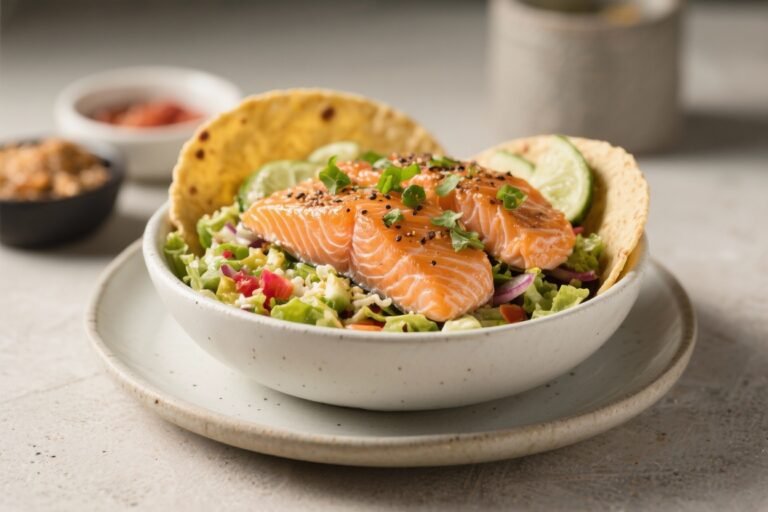
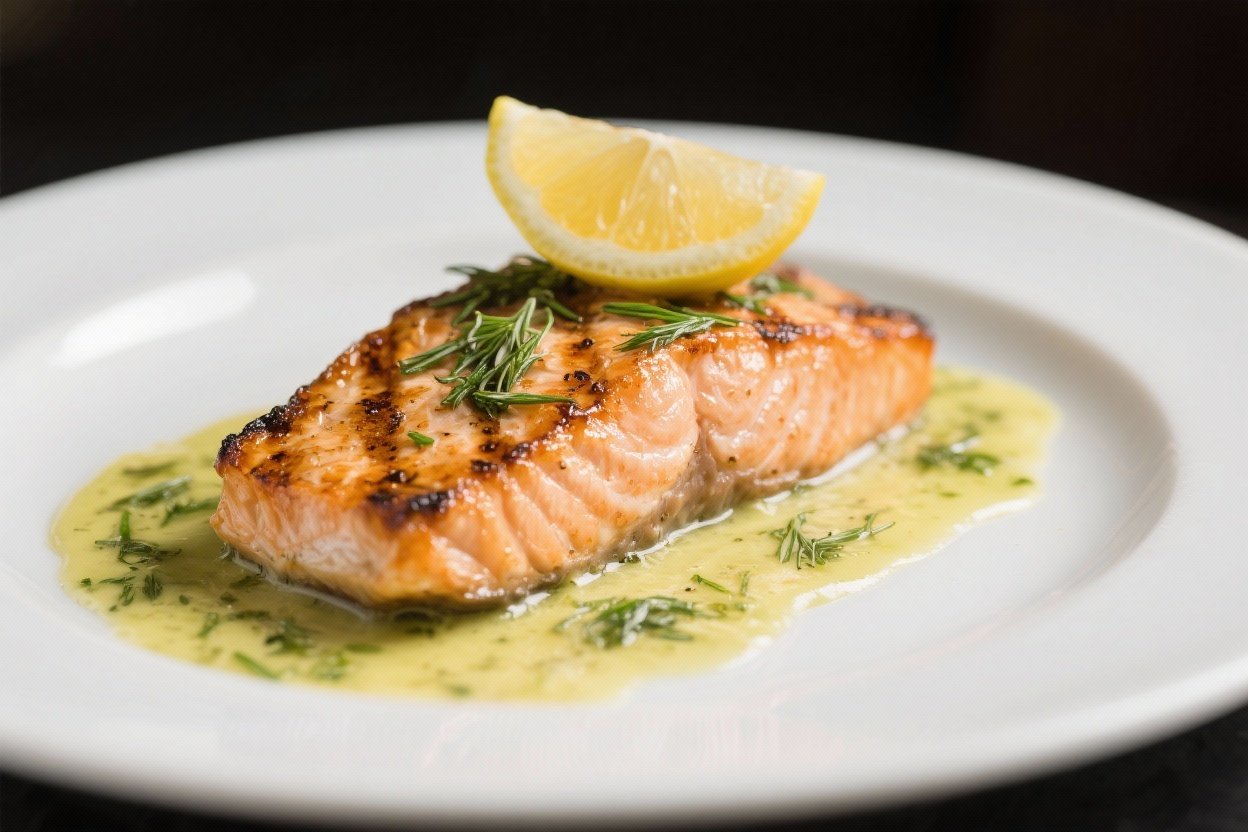
- Rest and sauce: Transfer the salmon to a plate and rest for 2–3 minutes. Spoon lemon dill sauce over the top or serve it on the side. Finish with a squeeze of fresh lemon and a few dill fronds.
- Serve with simple sides: Think grilled asparagus, steamed green beans, roasted potatoes, or a cucumber salad. The sauce is great as a dip for veggies too.
Overeating is a pattern. This helps you fix that problem. A quick reset for cravings, snacking, and “I’ll start tomorrow” moments.
Built for busy home cooks who want real-life structure. Simple steps that fit meal prep, family dinners, and late-night snack attacks.
What Makes This Special
This recipe balances rich, buttery salmon with a bright, herby sauce that cuts through the richness in the best way. The grill adds a smoky edge and crisp surface, while the sauce brings lemon, garlic, and dill to wake everything up.
You don’t need any fancy equipment—just a hot grill or grill pan and a bowl. It’s also flexible: use any salmon cut you like, swap the herbs if needed, and adjust the tang to taste.
Best of all, the sauce doubles as a drizzle and a dip, so the flavor is front and center without extra steps. You’ll make this once and likely add it to your regular rotation.
Shopping List
- Salmon: 4 fillets (about 6 ounces each), skin-on if possible
- Olive oil: For brushing the fish and the grill
- Lemon: 2 fresh lemons (zest and juice)
- Fresh dill: About 1/2 cup, finely chopped
- Garlic: 1–2 cloves, minced
- Greek yogurt: 3/4 cup (full-fat or 2%)
- Mayonnaise: 2 tablespoons (for extra silkiness)
- Dijon mustard: 1 teaspoon
- Honey: 1 teaspoon (optional, to balance the lemon)
- Kosher salt and black pepper: To season
- Crushed red pepper flakes: Pinch (optional, for gentle heat)
Step-by-Step Instructions
- Prep the salmon: Pat the fillets dry with paper towels so they sear instead of steam.
Season both sides with salt and pepper. Brush lightly with olive oil.
- Heat the grill: Preheat a gas grill to medium-high or prepare a charcoal grill for medium-hot direct heat. Clean the grates and oil them well.
A hot, oiled grate helps prevent sticking.
- Make the lemon dill sauce: In a small bowl, combine Greek yogurt, mayonnaise, lemon zest, 2–3 tablespoons lemon juice, chopped dill, minced garlic, Dijon, honey (if using), a pinch of salt, and black pepper. Stir until smooth. Taste and adjust: add more lemon for brightness, more salt for balance, or more dill for herbiness.
- Optional quick marinade: If you have 10 minutes, drizzle the salmon with 1 tablespoon lemon juice and a sprinkle of dill before grilling.
Don’t marinate longer—acid can start to “cook” the fish.
- Grill skin-side down first: Place salmon skin-side down on the grill. Close the lid and cook 4–6 minutes, depending on thickness. The skin will crisp and help the fish release easily.
- Flip carefully: Slide a thin metal spatula between the flesh and the grate to flip.
Grill another 2–4 minutes, until the fish is just opaque and flakes with gentle pressure. Aim for medium: about 125–130°F in the center.
- Rest and sauce: Transfer the salmon to a plate and rest for 2–3 minutes. Spoon lemon dill sauce over the top or serve it on the side. Finish with a squeeze of fresh lemon and a few dill fronds.
- Serve with simple sides: Think grilled asparagus, steamed green beans, roasted potatoes, or a cucumber salad.
The sauce is great as a dip for veggies too.
Keeping It Fresh
Use fresh, high-quality salmon if you can. Look for firm, moist flesh with no fishy smell. If using frozen, thaw in the fridge overnight and pat dry before cooking.
Store leftovers in an airtight container for up to 2 days.
Keep the sauce separate. To reheat salmon, warm it gently in a low oven (275°F) for 10–12 minutes or enjoy it cold over greens.
Refresh the sauce with an extra squeeze of lemon and a pinch of salt right before serving. Herbs can mellow as they sit, so a sprinkle of fresh dill on top helps.

Why This is Good for You
Salmon is rich in omega-3 fatty acids, which support heart health and may reduce inflammation.
It’s also a great source of high-quality protein, plus B vitamins and selenium. Grilling keeps added fat low while delivering a lot of flavor.
The sauce leans on Greek yogurt for creaminess and protein, with dill and lemon adding antioxidants and brightness. It’s a lighter alternative to heavy cream sauces and still tastes luxurious.
Pitfalls to Watch Out For
- Overcooking: Dry salmon is the most common mistake.
Pull it when it’s just opaque and flaky, or when it hits 125–130°F in the center.
- Sticking to the grill: Start with clean, hot, well-oiled grates, and oil the fish. Don’t move the salmon too soon; it releases when it’s ready.
- Too much lemon in the sauce: Lemon should lift, not overwhelm. Add juice gradually and taste as you go.
- Watery sauce: If the yogurt is thin, strain it for 10 minutes or use thicker Greek yogurt.
Stir just until combined.
- Uneven fillets: Pieces with very thin tails cook faster. Tuck thin ends under or buy center-cut fillets for even cooking.
Alternatives
- Fish swaps: Try Arctic char, steelhead trout, or halibut. Cooking times may vary slightly but the sauce works with all of them.
- Herb swaps: Use parsley, chives, or tarragon if dill isn’t your thing.
Basil can work, but keep the lemon light to avoid clashing.
- Dairy-free sauce: Use a thick dairy-free yogurt (coconut or almond-based) and skip the mayo or use a vegan mayo.
- Pan or oven method: For indoor cooking, sear in a hot skillet with a little oil, 3–4 minutes per side. Or bake at 400°F for 10–12 minutes.
- Spice twist: Add a pinch of smoked paprika or cumin to the fish. For a kick, mix a bit of prepared horseradish into the sauce.
FAQ
Should I leave the skin on?
Yes.
The skin protects the flesh from direct heat and helps prevent sticking. You can slide it off easily after cooking if you prefer not to eat it.
How do I know when the salmon is done?
Look for flesh that turns opaque and flakes with gentle pressure from a fork. For accuracy, use an instant-read thermometer and pull at 125–130°F for medium.
Can I make the sauce ahead?
Yes.
Make it up to 24 hours in advance and keep it chilled. Stir and adjust with a squeeze of lemon and a pinch of salt before serving.
What if I don’t have a grill?
Use a grill pan or a cast-iron skillet on the stove, or roast in the oven at 400°F. Broiling also works—place the rack 6 inches from the heat and watch closely.
What sides go best with this?
Light, crisp sides are ideal: grilled asparagus, roasted baby potatoes, a simple green salad, or quinoa with cucumbers and herbs.
The sauce ties everything together.
Can I use dried dill?
Fresh dill is best for flavor and texture. If you must use dried, use about one-third the amount and let the sauce sit 10–15 minutes to bloom.
How do I prevent a fishy taste?
Buy the freshest salmon you can and use it promptly. Rinsing is not necessary; just pat dry.
Bright flavors like lemon and dill help highlight the fish’s natural sweetness.
Final Thoughts
Grilled Salmon with Lemon Dill Sauce is a simple formula that never gets old: great fish, clean heat, and a sauce that brings it all together. With a few smart steps—drying the fish, heating and oiling the grill, and pulling at the right temperature—you’ll get juicy, flavorful salmon every time. Keep this recipe in your back pocket, and you’ll always have a fresh, crowd-pleasing dinner ready in minutes.
Printable Recipe Card
Want just the essential recipe details without scrolling through the article? Get our printable recipe card with just the ingredients and instructions.