Healthy High Protein Salmon Power Plates – A Simple, Satisfying Meal Prep Staple
Salmon power plates are the kind of meal that make eating well feel easy. You get tender, flavorful salmon, hearty grains, and colorful veggies all in one plate—balanced, filling, and ready in under an hour. This is the kind of dish you can cook once and enjoy all week, whether for lunch at your desk or a speedy dinner.
The best part is how flexible it is: swap the grains, rotate the greens, and keep it interesting without much effort. If you want a high-protein meal that actually tastes great, this is a solid go-to.
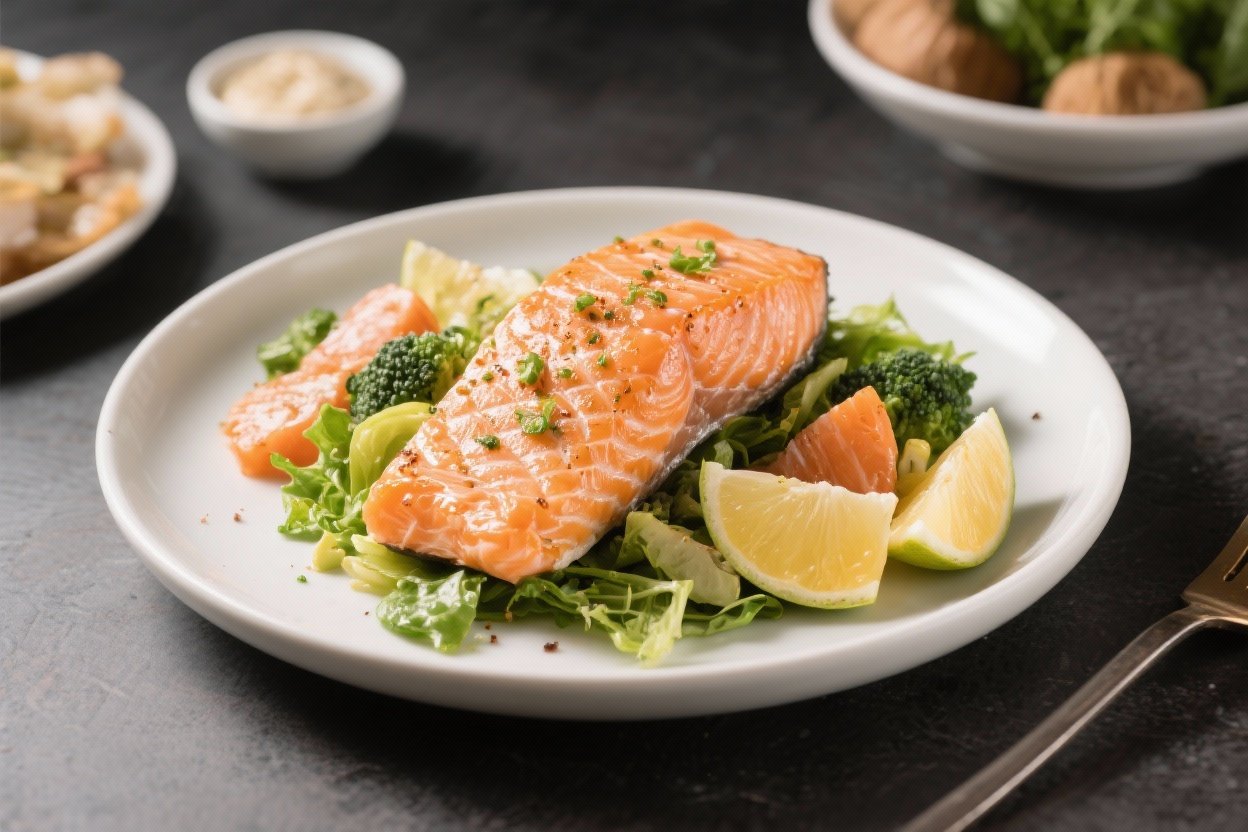
Healthy High Protein Salmon Power Plates - A Simple, Satisfying Meal Prep Staple
Ingredients
Method
- Preheat and prep: Heat the oven to 425°F (220°C). Line a large sheet pan with parchment for easy cleanup. Rinse your grains and start cooking according to package directions.
- Season the salmon: Pat salmon dry. In a small bowl, mix 1 tablespoon olive oil, lemon zest, half the lemon juice, garlic, smoked paprika, oregano, dill, salt, and pepper. Rub evenly over the salmon and set aside.
- Prep the vegetables: Toss broccoli, bell pepper, zucchini, and red onion with 2 tablespoons olive oil, cumin, a pinch of salt, and pepper. If using chickpeas, add them here too.
- Roast the veggies: Spread vegetables on the sheet pan. Roast for 15 minutes.
- Add the salmon: Push the vegetables to the sides and place the salmon in the center, skin-side down. Roast another 10–12 minutes, or until the salmon flakes easily and is just cooked through. Aim for moist, slightly translucent in the center.
- Make the sauce: While the salmon roasts, whisk the Greek yogurt, tahini, lemon juice, honey, and a pinch of salt until smooth. Adjust acidity or sweetness to taste.
- Fluff the grains: Once the grains are done, fluff with a fork. Squeeze in a bit of lemon juice and a pinch of salt for brightness.
- Assemble the plates: Add a handful of baby spinach to each bowl or container. Top with a scoop of grains, a pile of roasted vegetables, and a piece of salmon. Spoon over the yogurt-tahini sauce and finish with chopped parsley or dill.
- Serve or store: Enjoy warm, or let cool before sealing for meal prep.
Overeating is a pattern. This helps you fix that problem. A quick reset for cravings, snacking, and “I’ll start tomorrow” moments.
Built for busy home cooks who want real-life structure. Simple steps that fit meal prep, family dinners, and late-night snack attacks.
Why This Recipe Works

- High protein, balanced macros: Salmon delivers lean protein and omega-3s, paired with fiber-rich grains and vegetables for long-lasting energy.
- Meal prep friendly: Components cook on one sheet pan and a pot, then portion easily into containers.
- Simple seasoning, big flavor: A quick rub of lemon, garlic, olive oil, and herbs enhances the salmon without overpowering it.
- Customizable base: Use quinoa, brown rice, or farro; swap roasted veggies based on the season.
- Fresh and satisfying: A bright yogurt-tahini or lemon herb sauce pulls everything together without heavy calories.
What You’ll Need
- Salmon: 1.5 to 2 pounds skin-on salmon fillets (about 4 portions)
- Grain base: 1.5 cups dry quinoa, brown rice, or farro (yields about 4 cups cooked)
- Vegetables: 3 cups broccoli florets, 1 red bell pepper (sliced), 1 medium zucchini (sliced), 1 small red onion (wedges)
- Leafy greens: 4 cups baby spinach or arugula
- Chickpeas (optional): 1 can (15 oz), drained and rinsed, for extra protein and fiber
- Olive oil: 3 tablespoons, divided
- Lemon: Zest and juice of 1 large lemon
- Garlic: 3 cloves, minced
- Spices and herbs: 1 teaspoon smoked paprika, 1 teaspoon dried oregano, 1 teaspoon dried dill (or 1 tablespoon fresh), 1/2 teaspoon ground cumin
- Salt and pepper: 1 to 1.5 teaspoons kosher salt, 1/2 teaspoon black pepper (adjust to taste)
- Yogurt sauce (optional but recommended): 3/4 cup plain Greek yogurt, 1 tablespoon tahini, 1 tablespoon lemon juice, 1 teaspoon honey or maple syrup, pinch of salt
- Fresh herbs for finish: Chopped parsley or dill
Step-by-Step Instructions

- Preheat and prep: Heat the oven to 425°F (220°C). Line a large sheet pan with parchment for easy cleanup.
Rinse your grains and start cooking according to package directions.
- Season the salmon: Pat salmon dry. In a small bowl, mix 1 tablespoon olive oil, lemon zest, half the lemon juice, garlic, smoked paprika, oregano, dill, salt, and pepper. Rub evenly over the salmon and set aside.
- Prep the vegetables: Toss broccoli, bell pepper, zucchini, and red onion with 2 tablespoons olive oil, cumin, a pinch of salt, and pepper.
If using chickpeas, add them here too.
- Roast the veggies: Spread vegetables on the sheet pan. Roast for 15 minutes.
- Add the salmon: Push the vegetables to the sides and place the salmon in the center, skin-side down. Roast another 10–12 minutes, or until the salmon flakes easily and is just cooked through.
Aim for moist, slightly translucent in the center.
- Make the sauce: While the salmon roasts, whisk the Greek yogurt, tahini, lemon juice, honey, and a pinch of salt until smooth. Adjust acidity or sweetness to taste.
- Fluff the grains: Once the grains are done, fluff with a fork. Squeeze in a bit of lemon juice and a pinch of salt for brightness.
- Assemble the plates: Add a handful of baby spinach to each bowl or container.
Top with a scoop of grains, a pile of roasted vegetables, and a piece of salmon. Spoon over the yogurt-tahini sauce and finish with chopped parsley or dill.
- Serve or store: Enjoy warm, or let cool before sealing for meal prep.
Storage Instructions
- Refrigerator: Store assembled plates in airtight containers for up to 3 days. Keep the sauce in a separate small container for best texture.
- Freezer: Freeze salmon and grains (without fresh greens or sauce) for up to 2 months.
Thaw overnight in the fridge.
- Reheating: Warm salmon and grains gently in the microwave at 50–60% power to avoid drying out. Add fresh greens and sauce after reheating.
- Meal prep tip: Layer greens at the top or pack separately so they stay crisp.
Why This is Good for You
- Protein power: Salmon packs around 22–25 grams of protein per 4-ounce serving, helping with muscle repair and satiety.
- Omega-3 fats: Salmon’s EPA and DHA support heart, brain, and joint health.
- Fiber and micronutrients: Whole grains and vegetables bring fiber, vitamin C, potassium, and antioxidants that support digestion and immunity.
- Balanced energy: The mix of protein, complex carbs, and healthy fats helps keep blood sugar steadier than a carb-heavy meal.
- Lower sodium and sugar: Homemade seasoning and sauce let you control the salt and sweetness.
What Not to Do
- Don’t overcook the salmon: Dry salmon is the fastest way to ruin this plate. Pull it as soon as it flakes and looks slightly glossy inside.
- Don’t overcrowd the pan: Crowding traps steam and makes mushy veggies.
Use a large sheet pan or two smaller ones.
- Don’t skip drying the fish: Moisture prevents browning and good texture.
- Don’t sauce too early for storage: Add sauce just before eating to keep everything fresh.
- Don’t forget seasoning the grains: A pinch of salt and lemon juice makes a big difference.
Variations You Can Try
- Mediterranean: Use farro, cherry tomatoes, olives, cucumbers, and a lemon-oregano vinaigrette. Add feta if you like.
- Spicy harissa: Whisk harissa paste into the olive oil and lemon rub. Pair with couscous and roasted carrots.
- Ginger miso: Swap spices for white miso, grated ginger, and a touch of soy or tamari.
Serve with brown rice, edamame, and steamed bok choy.
- Cajun style: Rub salmon with Cajun seasoning and smoked paprika. Serve with quinoa, corn, and sautéed kale.
- Low-carb option: Replace grains with cauliflower rice or extra greens and roasted veggies.
- Extra protein: Add a hard-boiled egg or sprinkle hemp seeds for a boost without much effort.
FAQ
Can I use frozen salmon?
Yes. Thaw it in the fridge overnight or under cold running water in sealed packaging.
Pat it dry very well before seasoning and roasting.
What if I don’t like quinoa?
Use brown rice, farro, barley, or a wild rice blend. Choose what you enjoy and what fits your texture preference.
How do I know when the salmon is done?
It should flake easily with a fork and look moist in the center. If you use a thermometer, aim for 125–130°F for medium.
It will carryover-cook slightly after you take it out.
Can I make it dairy-free?
Yes. Swap the yogurt sauce for tahini whisked with lemon juice, warm water, garlic, and a pinch of salt, or use a dairy-free yogurt.
Is skin-on or skinless better?
Skin-on helps keep the fillet juicy and protects it during roasting. You can slide the skin off easily after cooking if you prefer not to eat it.
What vegetables roast best here?
Broccoli, bell peppers, onions, zucchini, carrots, and Brussels sprouts all work well.
Cut them into similar sizes so they cook evenly.
How can I add more flavor without extra calories?
Use fresh herbs, citrus zest, spices, and a squeeze of lemon at the end. A little acid brightens the whole plate.
Wrapping Up
Healthy High Protein Salmon Power Plates deliver everything you want in a weeknight or meal-prep recipe: solid protein, smart carbs, colorful veggies, and clean, bright flavor. The steps are simple, the ingredients are flexible, and the results feel restaurant-level without the fuss.
Make a batch on Sunday, mix up the variations through the week, and enjoy a plate that leaves you full, energized, and ready to go.
Printable Recipe Card
Want just the essential recipe details without scrolling through the article? Get our printable recipe card with just the ingredients and instructions.