High Protein Teriyaki Chicken Rice Bowls – Simple, Satisfying, and Meal-Prep Friendly
These bowls are the kind of weeknight dinner that feels both comforting and fresh. Tender chicken, glossy teriyaki sauce, warm rice, and a rainbow of vegetables—it’s a complete meal in one bowl. You’ll get a generous dose of protein without the fuss or long prep time.
This recipe also scales well for meal prep, so you can cook once and eat well for days. If you want something quick, tasty, and balanced, this is it.
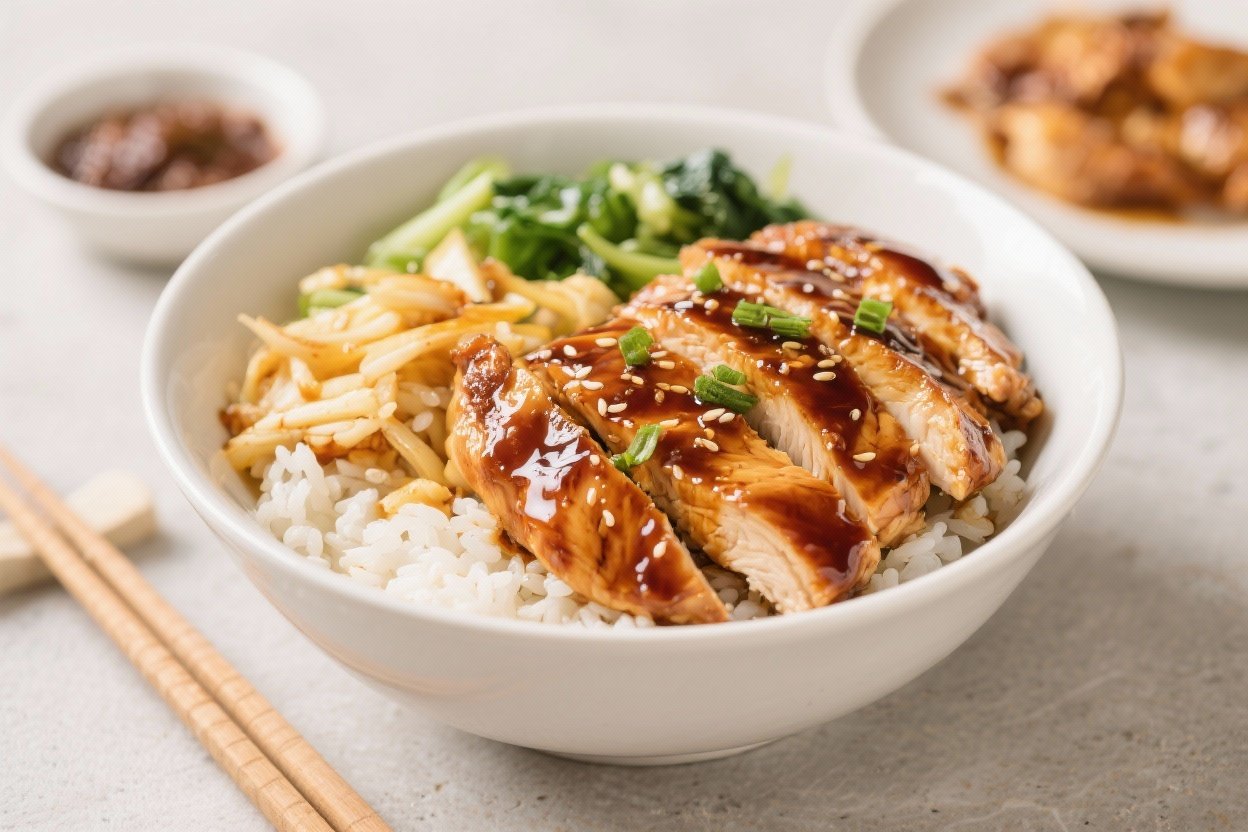
High Protein Teriyaki Chicken Rice Bowls - Simple, Satisfying, and Meal-Prep Friendly
Ingredients
Method
- Cook the rice: Prepare your rice according to package directions. Keep warm. For added flavor, stir in a pinch of salt while it steams.
- Prep the sauce: In a bowl, whisk soy sauce, water, honey, rice vinegar, sesame oil, garlic, and ginger. In a separate small cup, mix the cornstarch with cold water to make a smooth slurry. Set both aside.
- Season the chicken: Pat the chicken dry with paper towels. Toss with salt and pepper so it browns nicely and doesn’t steam in the pan.
- Sear the chicken: Heat the oil in a large skillet over medium-high heat. Add chicken in a single layer and cook 5–7 minutes, stirring once or twice, until golden and cooked through. Work in batches if needed. Remove chicken to a plate.
- Thicken the sauce: Reduce heat to medium. Pour the teriyaki mixture into the skillet and bring to a gentle simmer. Whisk in the cornstarch slurry and simmer 1–2 minutes until glossy and thick enough to coat a spoon.
- Coat the chicken: Return the cooked chicken and any juices to the skillet. Toss to coat in the sauce and heat through for 1 minute. Taste and adjust—add a splash of water if too thick, or a touch of honey if you want sweeter.
- Cook the veggies: While the sauce thickens, steam or sauté your vegetables until crisp-tender. Season with a pinch of salt. Keep them vibrant for texture and color.
- Assemble the bowls: Add a scoop of rice to each bowl. Top with teriyaki chicken, vegetables, and a spoonful of extra sauce from the pan.
- Finish with toppings: Sprinkle with green onions and sesame seeds. Add optional toppings like edamame, cucumber, or chili flakes for heat.
- Serve: Enjoy hot, with lime wedges on the side if you like a bright finish.
Overeating is a pattern. This helps you fix that problem. A quick reset for cravings, snacking, and “I’ll start tomorrow” moments.
Built for busy home cooks who want real-life structure. Simple steps that fit meal prep, family dinners, and late-night snack attacks.
What Makes This Special

- High protein without being heavy: Lean chicken breast packs plenty of protein while keeping the dish light and clean.
- Homemade teriyaki sauce: It’s glossy, garlicky, and just sweet enough. You control the sodium and sugar.
- Perfect for meal prep: It reheats well and stays flavorful for days.
Great for work lunches or busy evenings.
- Flexible base and toppings: Use white or brown rice, swap in quinoa or cauliflower rice, and add any vegetables you like.
- Quick and approachable: Minimal chopping, simple steps, and pantry-friendly ingredients.
Ingredients
- For the chicken:
- 1.5 pounds boneless, skinless chicken breast (or thighs), cut into bite-size pieces
- 1 tablespoon neutral oil (avocado, canola, or light olive oil)
- 1/2 teaspoon kosher salt
- 1/2 teaspoon black pepper
- For the teriyaki sauce:
- 1/3 cup low-sodium soy sauce (or tamari for gluten-free)
- 1/4 cup water
- 2 tablespoons honey or maple syrup
- 1 tablespoon rice vinegar
- 1 teaspoon toasted sesame oil
- 2 cloves garlic, minced
- 1 teaspoon fresh grated ginger (or 1/4 teaspoon ground)
- 1 tablespoon cornstarch mixed with 2 tablespoons cold water (slurry)
- For the bowls:
- 3 cups cooked rice (jasmine, basmati, or brown)
- 2 cups steamed or sautéed vegetables (broccoli, carrots, bell peppers, snap peas)
- 2 green onions, thinly sliced
- 1 tablespoon toasted sesame seeds (optional)
- Optional add-ons: cucumber ribbons, edamame, shredded cabbage, chili flakes, lime wedges
Step-by-Step Instructions

- Cook the rice: Prepare your rice according to package directions. Keep warm. For added flavor, stir in a pinch of salt while it steams.
- Prep the sauce: In a bowl, whisk soy sauce, water, honey, rice vinegar, sesame oil, garlic, and ginger.
In a separate small cup, mix the cornstarch with cold water to make a smooth slurry. Set both aside.
- Season the chicken: Pat the chicken dry with paper towels. Toss with salt and pepper so it browns nicely and doesn’t steam in the pan.
- Sear the chicken: Heat the oil in a large skillet over medium-high heat.
Add chicken in a single layer and cook 5–7 minutes, stirring once or twice, until golden and cooked through. Work in batches if needed. Remove chicken to a plate.
- Thicken the sauce: Reduce heat to medium.
Pour the teriyaki mixture into the skillet and bring to a gentle simmer. Whisk in the cornstarch slurry and simmer 1–2 minutes until glossy and thick enough to coat a spoon.
- Coat the chicken: Return the cooked chicken and any juices to the skillet. Toss to coat in the sauce and heat through for 1 minute.
Taste and adjust—add a splash of water if too thick, or a touch of honey if you want sweeter.
- Cook the veggies: While the sauce thickens, steam or sauté your vegetables until crisp-tender. Season with a pinch of salt. Keep them vibrant for texture and color.
- Assemble the bowls: Add a scoop of rice to each bowl.
Top with teriyaki chicken, vegetables, and a spoonful of extra sauce from the pan.
- Finish with toppings: Sprinkle with green onions and sesame seeds. Add optional toppings like edamame, cucumber, or chili flakes for heat.
- Serve: Enjoy hot, with lime wedges on the side if you like a bright finish.
Storage Instructions
- Refrigerator: Store chicken, rice, and vegetables in airtight containers for up to 4 days. Keep sauce-coated chicken separate from rice if you prefer the rice to stay fluffy.
- Freezer: Freeze chicken and rice (without delicate fresh veggies) for up to 2 months.
Thaw overnight in the fridge.
- Reheating: Microwave in 45–60 second bursts, stirring between rounds. Add a splash of water to loosen the sauce and keep the rice soft.
Health Benefits
- High-quality protein: Chicken breast offers lean protein to support muscle repair, satiety, and everyday energy.
- Balanced macros: Rice provides satisfying carbs, while the sauce and a touch of sesame oil add a small amount of fat for flavor and absorption.
- Micronutrient boost: Broccoli, peppers, and snap peas bring fiber, vitamin C, folate, and antioxidants that support overall health.
- Manageable sodium and sugar: Making your own sauce lets you control the soy sauce and sweetener, keeping it lighter than many takeout options.
What Not to Do
- Don’t overcrowd the pan: Crowding steams the chicken and prevents browning. Cook in batches for better texture.
- Don’t skip the slurry: Adding cornstarch directly to hot liquid causes clumps.
Always mix it with cold water first.
- Don’t overcook the veggies: Soft, mushy vegetables lose color and nutrients. Aim for crisp-tender.
- Don’t rely on high heat only: Sear on medium-high, then lower the heat to thicken the sauce without burning the sugars.
- Don’t forget to taste: Adjust sweetness, salt, and acidity at the end. A squeeze of lime or a splash more vinegar can wake up the flavors.
Recipe Variations
- Extra-high protein: Add steamed edamame or scrambled egg whites to the bowl.
Swap in chicken thighs if you want more richness.
- Low carb: Use cauliflower rice and add extra non-starchy vegetables like zucchini and mushrooms.
- Gluten-free: Use tamari instead of soy sauce and confirm your cornstarch and vinegar are certified gluten-free if needed.
- Spicy teriyaki: Stir in 1–2 teaspoons sriracha or chili-garlic sauce. Chili flakes on top add quick heat.
- Pineapple twist: Add pineapple chunks to the pan in the last minute of cooking for a sweet-sour pop.
- Quinoa base: Swap rice for quinoa for extra protein and a nutty flavor.
- Vegetarian option: Use firm tofu or tempeh. Press tofu, cube it, and sear until crisp before adding the sauce.
FAQ
Can I use store-bought teriyaki sauce?
Yes.
If you’re short on time, use your favorite brand. To keep the protein high and the dish balanced, check the label for sodium and sugar, and add water to thin if it’s very thick.
What’s the best cut of chicken for this?
Chicken breast gives a lean, high-protein result. Chicken thighs are juicier and more forgiving if you’re worried about overcooking.
Both work well.
How do I keep the chicken tender?
Cut even-sized pieces, pat them dry, and avoid overcooking. Pull the chicken when it reaches 165°F. A quick rest in the sauce over low heat helps keep it moist.
Can I make this without cornstarch?
Yes.
Use arrowroot starch for a similar thickness, or simmer the sauce longer to reduce it. Just note that arrowroot can turn a bit glossy if overheated—add it at the end.
Is this good for meal prep?
Absolutely. Portion into containers with rice, chicken, and veggies.
Keep some extra sauce on the side to add after reheating for fresh flavor.
What vegetables work best?
Broccoli, snap peas, carrots, bell peppers, and edamame are great. Anything crisp and colorful pairs well with the sweet-savory sauce.
Can I air fry the chicken?
Yes. Toss chicken with oil, salt, and pepper, then air fry at 400°F for 8–12 minutes, shaking halfway.
Coat with the stovetop teriyaki sauce after cooking.
In Conclusion
High Protein Teriyaki Chicken Rice Bowls bring together simple ingredients for a meal that’s hearty, flavorful, and easy to customize. With a quick homemade sauce and a smart balance of protein, carbs, and veggies, it checks all the boxes for weeknights and meal prep. Keep the steps simple, adjust the seasoning to your taste, and enjoy a bowl that feels as good as it tastes.
Printable Recipe Card
Want just the essential recipe details without scrolling through the article? Get our printable recipe card with just the ingredients and instructions.