Honey Sriracha Salmon Bowls That Slap: Sticky, Spicy, 20-Minute Weeknight Flex
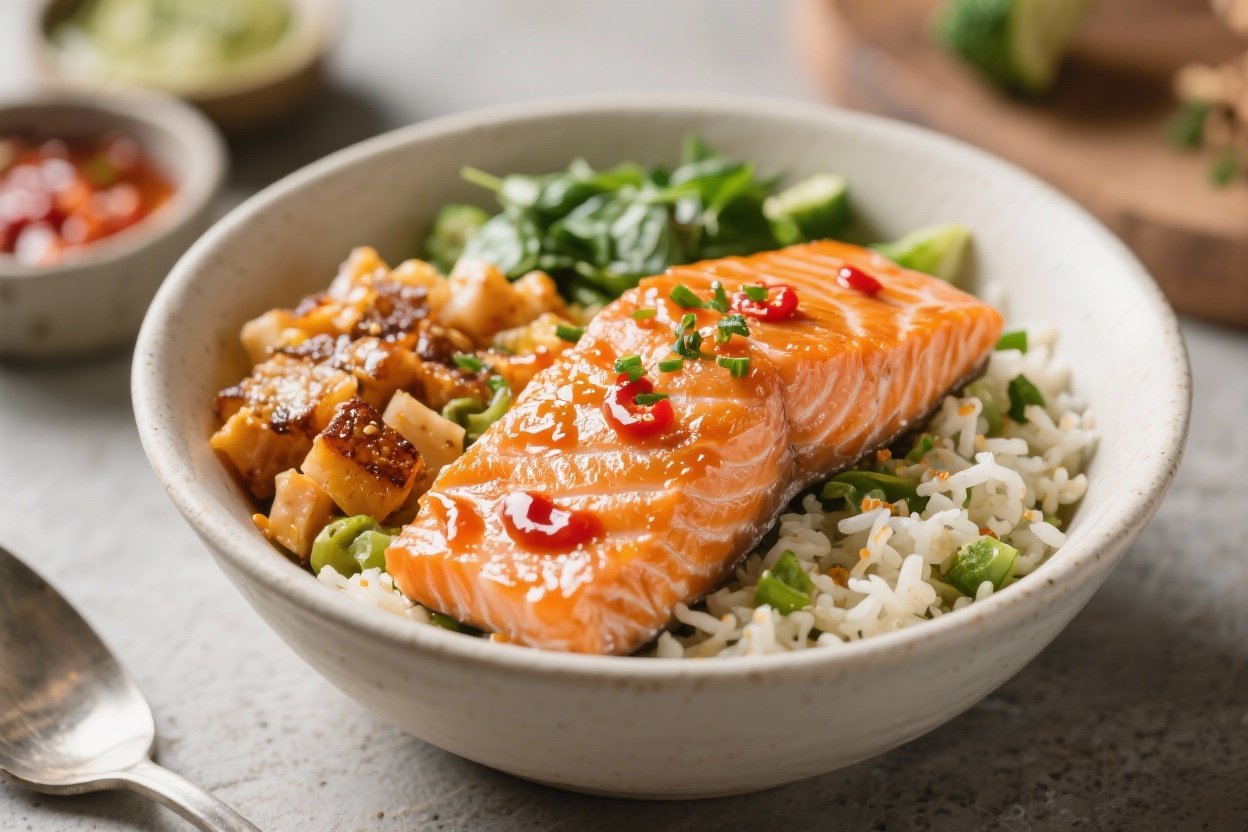
You want meals that taste like a $25 takeout bowl without the price tag, the waiting, or the mystery oil. This is that move. Honey Sriracha Salmon Bowls hit all the buttons—sweet, spicy, tangy, and just enough heat to make you feel alive on a Tuesday.
It’s fast, it’s flashy, and it makes you look like you planned ahead even if you didn’t. The sauce is addictive, the salmon is buttery, and the bowl eats like a reward you didn’t have to earn.
Overeating is a pattern. This helps you fix that problem. A quick reset for cravings, snacking, and “I’ll start tomorrow” moments.
Built for busy home cooks who want real-life structure. Simple steps that fit meal prep, family dinners, and late-night snack attacks.
What Makes This Recipe Awesome
- Big flavor, tiny effort: A 5-ingredient sauce turns basic salmon into a sticky, caramelized masterpiece.
- Weeknight-friendly: Cooks in 10–12 minutes. Sauce doubles as a drizzle for rice and veg.
- Balanced heat: Honey cools the Sriracha fire, while lime and soy add tang and umami.
- Meal prep gold: Holds up for days, reheats like a champ, and keeps texture if you follow the rules.
- Customizable: Swap rice, change veg, tweak spice levels—zero fuss.
Ingredients
- Salmon: 1.5 lbs salmon fillets, skin-on or skinless, cut into 4 portions
- Neutral oil: 1–2 tbsp (avocado or canola)
- Kosher salt & black pepper: to season
- Cooked rice: 3–4 cups (jasmine, brown, or sushi rice)
- Vegetables: 2 cups steamed or sautéed broccoli, snap peas, or bok choy
- Avocado: 1, sliced (optional but elite)
- Cucumber: 1 small, thinly sliced
- Scallions: 3, thinly sliced
- Sesame seeds: 1 tbsp, for garnish
Honey Sriracha Sauce
- Honey: 3 tbsp
- Sriracha: 2–3 tbsp (start at 2 if you’re heat-shy)
- Soy sauce: 2 tbsp (or tamari for gluten-free)
- Rice vinegar: 1 tbsp
- Lime juice: 1 tbsp, plus extra wedges for serving
- Garlic: 2 cloves, minced
- Fresh ginger: 1 tsp, grated (optional but recommended)
- Butter: 1 tbsp, to finish the sauce glossy
Instructions
- Make the sauce: In a small bowl, whisk honey, Sriracha, soy, rice vinegar, lime juice, garlic, and ginger until smooth.
Set aside.
- Prep the salmon: Pat salmon dry. Season both sides with salt and pepper. Dry fish browns better—paper towels are your friend.
- Heat the pan: Preheat a large nonstick or cast-iron skillet over medium-high.
Add oil and swirl to coat.
- Sear the salmon: Place salmon skin-side down (if skin-on). Cook 4–5 minutes until most of the flesh turns opaque and the skin is crisp.
- Flip and glaze: Flip the salmon. Pour in the sauce and reduce heat to medium.
Spoon the sauce over the salmon as it bubbles and thickens, 2–3 minutes.
- Finish the sauce: When the salmon is just cooked (medium, slightly translucent in the center), remove pieces to a plate. Whisk the butter into the sauce until glossy. Return salmon briefly and coat.
- Assemble bowls: Add rice to bowls, top with vegetables, salmon, avocado, cucumber, and scallions.
Spoon extra sauce over everything. Sprinkle sesame seeds and add lime wedges.
- Serve hot: Eat immediately while the edges are sticky and the rice drinks the sauce like it’s a podcast sponsor.
Storage Instructions
- Refrigerate: Store salmon, rice, and veggies separately in airtight containers for up to 3 days.
- Reheat: Warm salmon gently in a skillet over low heat with a splash of water to loosen the sauce, or microwave at 50% power in 30-second bursts. Don’t nuke it on high unless you like salmon erasers.
- Freeze: Cooked salmon freezes up to 2 months.
Thaw overnight in the fridge. Reheat low and slow.
- Sauce: Extra sauce keeps 1 week in the fridge. Rewarm to loosen.
What’s Great About This
- Macronutrient balance: Protein from salmon, carbs from rice, fiber from veggies—your coach would approve.
- Omega-3s: Salmon brings brain-boosting fats.
You’ll feel clever while meal prepping.
- Sauce efficiency: One pan, one sauce, triple duty: glaze, bowl drizzle, meal-prep hero.
- Restaurant quality: The glossy finish and caramelized edges make it feel luxe without chef-level effort.
Don’t Make These Errors
- Overcooking the salmon: Pull at 120–125°F for medium. It will carryover cook. Dry salmon = culinary sadness.
- Skipping the pat-dry step: Moisture kills sear.
You want sizzle, not steam.
- Drowning the pan early: Add the sauce after the flip; otherwise, the sugars burn before the fish cooks.
- Using too high heat with the sauce: Reduce to medium so the honey thickens instead of scorches.
- Forgetting acid: Lime at the end wakes everything up. Without it, the bowl tastes flat. Don’t be that person.
Mix It Up
- Grain swap: Use quinoa, farro, cauliflower rice, or soba noodles.
- Veg variations: Roasted Brussels, charred corn, sautéed mushrooms, or pickled red onions for tang.
- Spice levels: Add red pepper flakes or gochugaru for extra heat; cut Sriracha and add more honey for mild.
- Citrus twist: Swap lime for yuzu or orange juice + zest for a brighter, slightly sweeter profile.
- Protein change-up: Try shrimp (4–5 minutes total), tofu (press and sear), or chicken thighs (cook through before saucing).
- Crunch factor: Add toasted peanuts, crispy shallots, or wonton strips.
Texture = satisfaction, FYI.
FAQ
Can I bake the salmon instead of pan-searing?
Yes. Bake at 400°F for 8–10 minutes, then brush with sauce and broil 1–2 minutes to caramelize. Heat the remaining sauce in a saucepan with butter and drizzle on bowls.
How spicy is this?
Medium heat.
Two tablespoons of Sriracha gives a warm kick; three is a sweatband situation. Adjust honey to balance spice without losing flavor.
Skin-on or skinless salmon?
Either works. Skin-on gives you a crispy base and protects the fish during sear.
If skinless, be gentle when flipping and rely on a good nonstick pan.
Can I use frozen salmon?
Absolutely. Thaw in the fridge overnight or under cold running water in the package. Pat very dry before seasoning to get that proper sear.
What if I don’t have rice vinegar?
Use apple cider vinegar or white wine vinegar at a slightly smaller amount (start with 2 teaspoons).
You want brightness, not a vinegar punch.
How do I know when the salmon is done?
It flakes easily with a fork and is slightly translucent in the center. An instant-read thermometer at 120–125°F hits juicy, restaurant-style doneness.
Can I make it gluten-free?
Yes—use tamari or coconut aminos instead of soy sauce and confirm your Sriracha brand is gluten-free. Everything else is naturally GF.
What vegetables pair best?
Anything crisp-tender or with char: broccoli, snap peas, carrots, baby bok choy, or edamame.
The sweetness and heat love green veg.
Does this work for meal prep?
Totally. Portion rice, veg, and salmon with a little sauce on top. Keep extra sauce separate to add after reheating so the bowl stays glossy and flavorful.
Can I air-fry the salmon?
Yes.
Air-fry at 390°F for 6–8 minutes depending on thickness. Warm the sauce separately, then toss or brush at the end to avoid burning sugars.
My Take
This is the kind of recipe that turns a weeknight into a flex. The sauce carries the whole dish—simple ingredients, big return, zero drama.
If you’re the “I don’t cook fish at home” person, this will convert you in 10 minutes flat. It’s sticky, spicy, slightly sweet, and it feels special without being high-maintenance. IMO, keep the lime wedges and scallions non-negotiable; they’re the difference between “good” and “where has this been all my life.”
Printable Recipe Card
Want just the essential recipe details without scrolling through the article? Get our printable recipe card with just the ingredients and instructions.