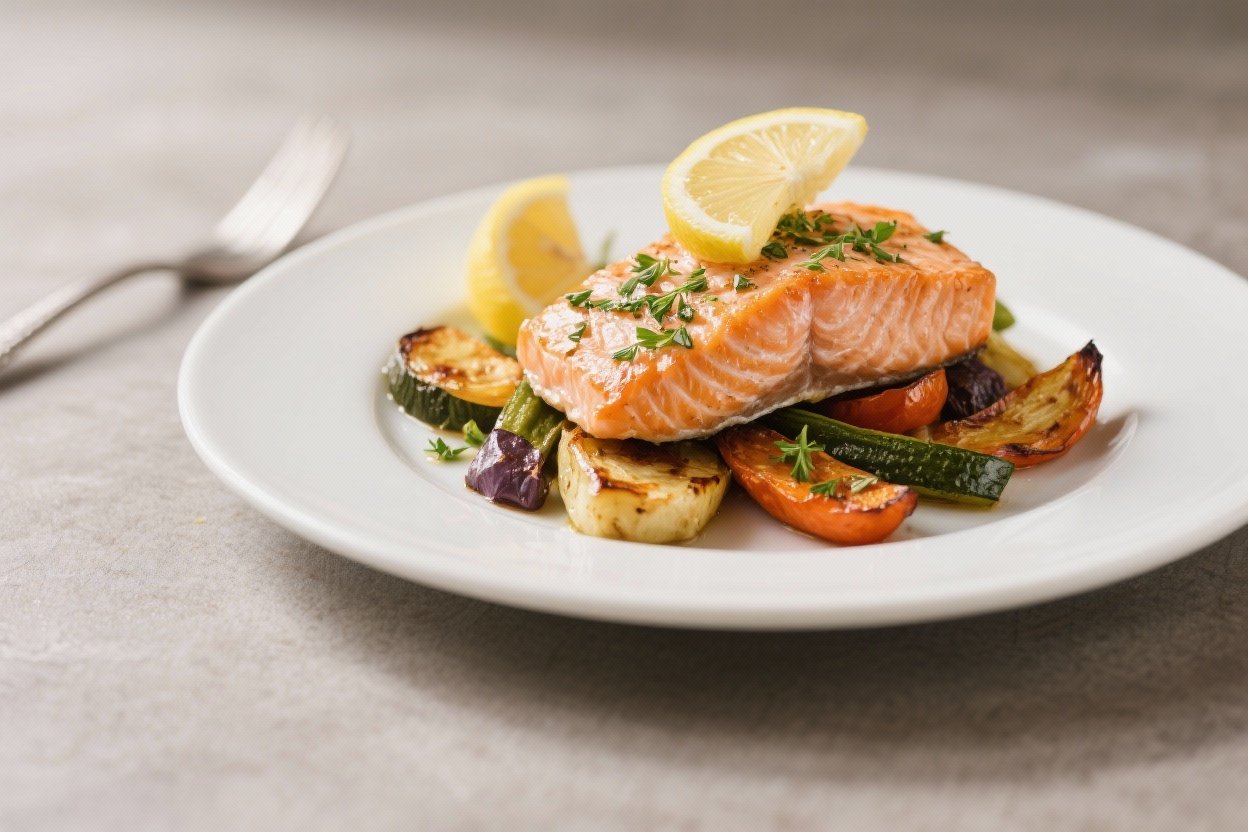
“Lemon Herb Salmon with Roasted Vegetables” That Tastes Like a $40 Entrée (But You Made It in 30 Minutes)
You want a dinner that looks chef-y, tastes incredible, and doesn’t hijack your evening. This Lemon Herb Salmon with Roasted Vegetables checks every box: fast, bold, fresh, and low-effort. It’s the weeknight flex meal that makes your kitchen smell like victory.
Crisp-edged vegetables, juicy salmon, and a punchy lemon-herb finish—tell me that’s not exactly what your Tuesday needed. And the best part? You’ll spend more time eating than cooking.
Overeating is a pattern. This helps you fix that problem. A quick reset for cravings, snacking, and “I’ll start tomorrow” moments.
Built for busy home cooks who want real-life structure. Simple steps that fit meal prep, family dinners, and late-night snack attacks.
What Makes This Recipe So Good

- Balanced flavors: Bright lemon and fresh herbs cut through the rich salmon for a clean, craveable bite.
- One-pan efficiency: Everything roasts together, which means fewer dishes and more time to chill.
- Texture magic: Tender, flaky salmon meets caramelized, crispy vegetables.
It’s a contrast thing, and it works.
- Healthy without trying: Omega-3s, loads of fiber, and zero weird ingredients—just real food that delivers.
- Totally adaptable: Swap vegetables, change herbs, use butter or olive oil—this recipe is forgiving and customizable.
Ingredients
- Salmon: 4 salmon fillets (5–6 oz each), skin-on preferred
- Lemon: Zest of 1 lemon + 1 lemon cut into wedges
- Fresh herbs: 2 tbsp chopped parsley, 1 tbsp chopped dill, 1 tbsp chopped chives (or use thyme/rosemary if that’s what you’ve got)
- Garlic: 2–3 cloves, finely minced
- Olive oil: 3 tbsp, divided
- Vegetables: 2 cups broccoli florets, 1 red bell pepper (sliced), 1 small red onion (wedges), 1 cup baby carrots (halved), 1 small zucchini (half-moons)
- Seasoning: 1 tsp kosher salt (plus more to taste), 1/2 tsp black pepper, 1/2 tsp smoked paprika, 1/4 tsp red pepper flakes (optional)
- Butter (optional but amazing): 1 tbsp, melted, for drizzling
- Capers (optional): 1 tbsp for garnish
Cooking Instructions

- Heat the oven: Preheat to 425°F (220°C). Place a large sheet pan inside to heat up—this helps the veggies crisp.
- Mix the herb blend: In a small bowl, combine lemon zest, parsley, dill, chives, garlic, 2 tbsp olive oil, 1/2 tsp salt, and a few grinds of pepper. This is your flavor bomb.
- Prep the vegetables: In a large bowl, toss broccoli, bell pepper, onion, carrots, and zucchini with 1 tbsp olive oil, 1/2 tsp salt, pepper, and smoked paprika.
If using red pepper flakes, add them now.
- Roast the vegetables: Carefully pull out the hot sheet pan, spread the vegetables in an even layer, and roast for 12–15 minutes until edges start to caramelize.
- Season the salmon: Pat the fillets dry. Rub 2/3 of the herb mixture over the top and sides. Keep the rest for finishing.
- Add salmon to the pan: Push vegetables to make room and nestle salmon fillets skin-side down.
Return pan to oven and roast 8–10 minutes, depending on thickness.
- Check doneness: Salmon is done when it flakes easily and reads 125–130°F in the thickest part for medium. If you like it more done, go to 135°F. Don’t overcook—dry salmon is a buzzkill.
- Finish with zing: Drizzle with the remaining herb mixture, squeeze lemon over everything, and, if you’re feeling it, drizzle the melted butter.
Scatter capers on top.
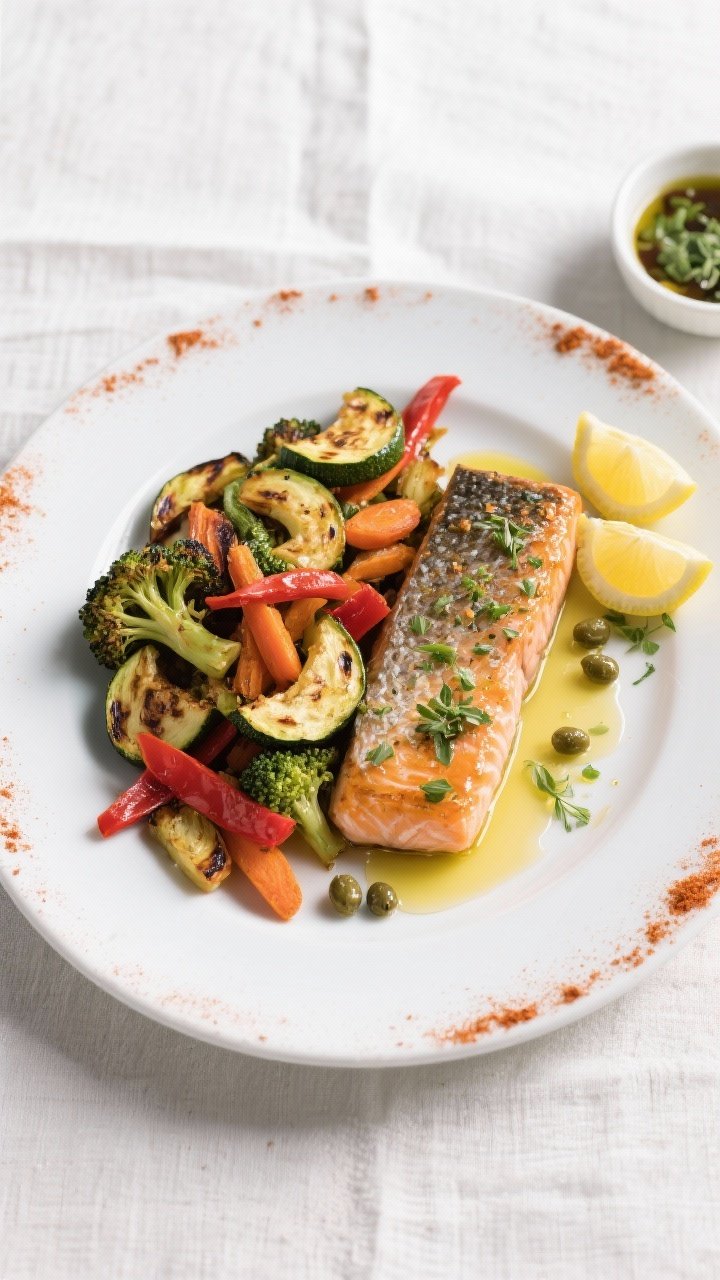
- Serve: Plate salmon with a generous pile of roasted veg. Add extra lemon wedges. Snap a pic if that’s your thing—this one’s camera-friendly.
Preservation Guide
- Fridge: Store leftovers in an airtight container for up to 3 days.
Keep salmon and veggies side-by-side, not stacked, to maintain texture.
- Reheat: Warm at 275°F (135°C) for 10–12 minutes or until just heated through. Microwave on 50% power in 30-second bursts if you must—cover with a damp paper towel to prevent dryness.
- Freezer: Salmon can be frozen up to 2 months, but texture may soften slightly. Wrap tightly and thaw overnight in the fridge.
Veggies are best fresh—freezing can make them mushy.
- Meal prep tip: Roast a double batch of vegetables now; use the extras with eggs, grains, or bowls later in the week.
Nutritional Perks
- Omega-3 powerhouse: Salmon delivers EPA and DHA, which support heart and brain health. Your future self says thanks.
- Protein-dense: About 30–35g protein per fillet keeps you full and supports recovery after workouts—FYI, it’s a great post-gym dinner.
- Micronutrient-rich veggies: Broccoli and peppers bring vitamin C, carrots add beta-carotene, and onions offer antioxidants with flair.
- Lower-carb, high-fiber: You get steady energy without the crash. Add quinoa or potatoes if you want more carbs—no drama.
- Real-food fats: Olive oil and optional butter provide flavor and satiety.
We’re not afraid of well-used fats here.
Avoid These Mistakes
- Skipping the pat-dry step: Wet salmon won’t brown. Paper towel it like you mean it.
- Crowding the pan: Piled veggies steam instead of roast. Use a big sheet pan or split into two.
- Overcooking: Salmon goes from perfect to parched fast.
Start checking at 8 minutes—set a timer, seriously.
- Forgetting acid: The lemon isn’t optional; it’s the flavor accelerator. Without it, the dish tastes flat.
- Using old herbs: Sad, wilty herbs = sad flavor. If fresh isn’t available, use dried wisely (see Alternatives).
Alternatives
- Fish swaps: Try trout, Arctic char, or cod.
For cod, add 2–3 extra minutes and brush with a touch more oil.
- Herb variations: Use thyme and rosemary for a woodsy vibe, or cilantro and parsley with a lime twist for a brighter profile.
- Dried herbs: Use 1 tsp dried dill + 1 tsp dried parsley if fresh is MIA. Mix with lemon zest and olive oil to rehydrate flavors.
- Veggie mix-ups: Brussels sprouts, green beans, cherry tomatoes, or sweet potatoes work great. Adjust timing—dense veg like sweet potatoes need an extra 10 minutes.
- Dairy-free or richer: Skip butter for dairy-free, or add a dollop of Greek yogurt mixed with lemon and dill for serving.
- Spice it up: Add harissa or a pinch of cayenne to the herb mix if you like a little chaos.
FAQ
Should I use skin-on or skinless salmon?
Skin-on is best.
It protects the fish from overcooking and helps keep it juicy. After roasting, the flesh lifts right off the skin if you prefer not to eat it.
How do I know when my salmon is done without a thermometer?
Press the top gently with a fork. If it flakes easily and is just opaque in the center with a slight gloss, it’s ready.
If it looks dry and flakes aggressively, you went too far.
Can I make this on the stovetop?
Yes. Sear salmon skin-side down in a hot skillet for 4–5 minutes, flip for 1–2 minutes, and sauté the veggies separately. Or sear salmon and finish in a 400°F oven for 5–7 minutes.
What if I only have frozen salmon?
Thaw it overnight in the fridge or under cold running water while sealed.
Pat very dry before seasoning. Frozen works fine as long as you don’t skip the drying step.
How can I make this meal more filling?
Serve with quinoa, roasted potatoes, couscous, or a garlicky rice pilaf. A simple side salad with a lemon vinaigrette also keeps the vibe light but complete.
Is this recipe kid-friendly?
Usually yes.
Skip the red pepper flakes and keep lemon on the side. The roasted veggies tend to win, especially the sweet carrots and peppers.
Can I meal prep this for the week?
Absolutely. Portion salmon and veggies into containers with a grain.
Reheat gently to avoid drying out, and add fresh lemon or a yogurt sauce at serving time.
Wrapping Up
This Lemon Herb Salmon with Roasted Vegetables hits that sweet spot: simple steps, gourmet flavor, and zero culinary drama. It’s the kind of dinner that upgrades your week without wrecking your schedule. Keep the lemon bright, the herbs fresh, and the timing tight—then enjoy a plate that looks like a flex and tastes like a win.
Now go claim your 30-minute dinner trophy.
Printable Recipe Card
Want just the essential recipe details without scrolling through the article? Get our printable recipe card with just the ingredients and instructions.