Miso-Glazed Eggplant With Sesame Rice – Savory, Comforting, and Weeknight-Friendly
If you love bold flavor with minimal effort, this dish hits the sweet spot. Tender roasted eggplant gets brushed with a glossy miso glaze that’s salty, sweet, and a little sticky in the best way. Paired with warm sesame rice, it tastes like a cozy bowl you’d get at your favorite neighborhood spot.
The ingredients are simple, the method is straightforward, and the payoff is big. It’s a great option for meatless nights without feeling like you’re missing anything.
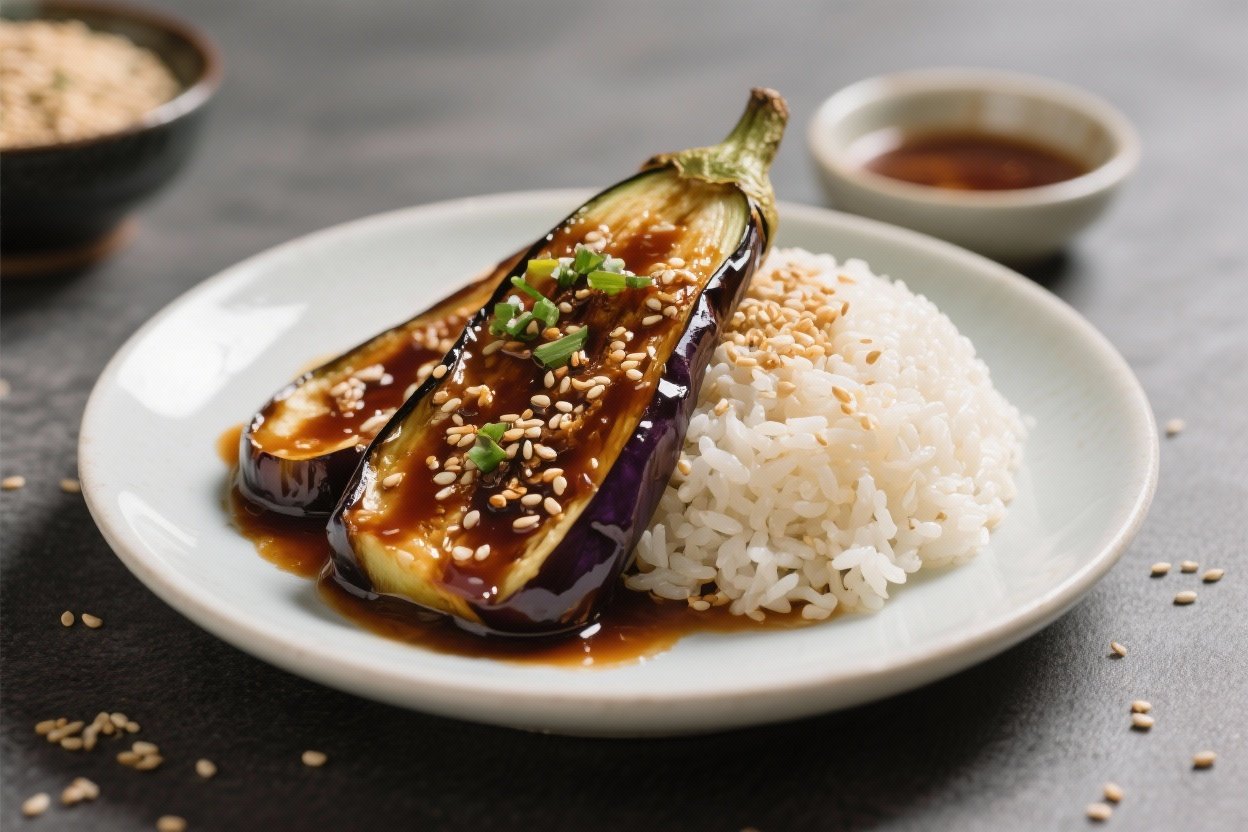
Miso-Glazed Eggplant With Sesame Rice - Savory, Comforting, and Weeknight-Friendly
Ingredients
Method
- Heat the oven. Set your oven to 425°F (220°C). Line a sheet pan with parchment for easier cleanup.
- Prep the eggplant. Trim the ends and slice lengthwise into halves (or quarters if large). Score the cut side in a crosshatch pattern about ½ inch deep, taking care not to cut through the skin. This helps the eggplant roast evenly and soak up the glaze.
- Season and oil. Brush the cut sides with neutral oil and sprinkle with salt and pepper. Lay them cut side down on the pan.
- Roast until tender. Roast for 20–25 minutes, or until the eggplant is soft and the skin looks slightly wrinkled. Flip them cut side up for the last 5 minutes to dry the surface slightly.
- Make the glaze. In a small bowl, whisk together miso, soy sauce, honey (or maple), rice vinegar, 1 teaspoon sesame oil, garlic, and ginger. The mixture should be thick but spreadable. If it’s stiff, add a teaspoon of water to loosen.
- Glaze generously. Remove the eggplant from the oven and brush the cut sides with the miso glaze. Get into the scored areas so it seeps in.
- Broil for caramelization. Turn the oven to broil. Broil the glazed eggplant for 2–4 minutes until the tops bubble and lightly char at the edges. Watch closely—miso burns fast.
- Toast the sesame seeds. While the eggplant broils, lightly toast sesame seeds in a dry skillet over medium heat for 1–2 minutes. Shake the pan often; they’re done when fragrant.
- Season the rice. Add the cooked rice to a bowl. Mix in the remaining 1 teaspoon sesame oil, most of the toasted sesame seeds, and half the scallions. Add a pinch of salt if needed. Fluff with a fork.
- Plate it up. Spoon sesame rice into bowls, top with miso-glazed eggplant, and finish with the remaining scallions, sesame seeds, and a sprinkle of chili flakes if you like. A squeeze of lime or lemon brightens the whole dish.
Overeating is a pattern. This helps you fix that problem. A quick reset for cravings, snacking, and “I’ll start tomorrow” moments.
Built for busy home cooks who want real-life structure. Simple steps that fit meal prep, family dinners, and late-night snack attacks.
What Makes This Special

This recipe balances texture and flavor beautifully. The eggplant turns silky inside with lightly caramelized edges, while the glaze adds umami and a gentle sweetness.
Sesame rice brings nutty depth and a toasty aroma that ties everything together. It’s also flexible: you can add greens, tofu, or a fried egg, and it still works. Plus, most of the heavy lifting happens in the oven, which makes cleanup easy.
What You’ll Need
- Eggplant: 2 medium globe eggplants or 4–5 small Japanese eggplants
- Neutral oil: Avocado, canola, or grapeseed, for roasting
- Salt and pepper: To season the eggplant
- White miso paste: 3 tablespoons (yellow miso also works)
- Soy sauce or tamari: 1 tablespoon
- Honey or maple syrup: 1½ tablespoons
- Rice vinegar: 1 tablespoon
- Toasted sesame oil: 1–2 teaspoons, divided
- Garlic: 1 clove, finely grated
- Fresh ginger: ½ teaspoon, finely grated (optional but great)
- Cooked rice: 3 cups (jasmine or short-grain white; brown works too)
- Sesame seeds: 1–2 tablespoons, lightly toasted
- Scallions: 2–3, thinly sliced
- Chili flakes or togarashi: A pinch for heat (optional)
- Lime or lemon: 1, for a final squeeze (optional)
Instructions

- Heat the oven. Set your oven to 425°F (220°C).
Line a sheet pan with parchment for easier cleanup.
- Prep the eggplant. Trim the ends and slice lengthwise into halves (or quarters if large). Score the cut side in a crosshatch pattern about ½ inch deep, taking care not to cut through the skin. This helps the eggplant roast evenly and soak up the glaze.
- Season and oil. Brush the cut sides with neutral oil and sprinkle with salt and pepper.
Lay them cut side down on the pan.
- Roast until tender. Roast for 20–25 minutes, or until the eggplant is soft and the skin looks slightly wrinkled. Flip them cut side up for the last 5 minutes to dry the surface slightly.
- Make the glaze. In a small bowl, whisk together miso, soy sauce, honey (or maple), rice vinegar, 1 teaspoon sesame oil, garlic, and ginger. The mixture should be thick but spreadable.
If it’s stiff, add a teaspoon of water to loosen.
- Glaze generously. Remove the eggplant from the oven and brush the cut sides with the miso glaze. Get into the scored areas so it seeps in.
- Broil for caramelization. Turn the oven to broil. Broil the glazed eggplant for 2–4 minutes until the tops bubble and lightly char at the edges.
Watch closely—miso burns fast.
- Toast the sesame seeds. While the eggplant broils, lightly toast sesame seeds in a dry skillet over medium heat for 1–2 minutes. Shake the pan often; they’re done when fragrant.
- Season the rice. Add the cooked rice to a bowl. Mix in the remaining 1 teaspoon sesame oil, most of the toasted sesame seeds, and half the scallions.
Add a pinch of salt if needed. Fluff with a fork.
- Plate it up. Spoon sesame rice into bowls, top with miso-glazed eggplant, and finish with the remaining scallions, sesame seeds, and a sprinkle of chili flakes if you like. A squeeze of lime or lemon brightens the whole dish.
Keeping It Fresh
Cooked glazed eggplant is best the day it’s made, but leftovers still taste great.
Store eggplant and rice separately in airtight containers for up to 3 days. Reheat the eggplant in a hot oven or air fryer so it stays caramelized and not soggy. If the rice firms up, sprinkle with a bit of water and microwave covered.
Add a fresh drizzle of sesame oil and a few new scallions to wake up the flavors.

Health Benefits
- Plant-powered: Eggplant brings fiber and antioxidants, especially nasunin in the skin, which supports cell health.
- Balanced umami: Miso is a fermented food that adds depth and can support gut health with its beneficial compounds.
- Better fats: Sesame oil and seeds provide heart-friendly fats and minerals like calcium and iron.
- Customizable carbs: Use brown rice or quinoa for more fiber and sustained energy.
- Low effort, high satisfaction: Big flavor can make it easier to stick with wholesome cooking at home.
What Not to Do
- Don’t skip scoring the eggplant. It won’t absorb the glaze as well and can roast unevenly.
- Don’t drown it in oil. Eggplant is a sponge. Too much oil makes it greasy instead of silky.
- Don’t broil unattended. The glaze can go from caramelized to burnt in seconds.
- Don’t use very dark miso without adjusting. Red miso is stronger and saltier. Reduce soy sauce or add more sweetener to balance.
- Don’t forget acid. A small squeeze of citrus at the end lifts the whole dish.
Alternatives
- Different grains: Swap the rice for brown rice, quinoa, or cauliflower rice for a lighter base.
- Added protein: Top with crispy tofu, a jammy egg, or shredded rotisserie chicken if you want more protein.
- Veggie add-ins: Roast broccoli, bok choy, or mushrooms on the same tray to make it a full meal.
- Gluten-free: Use tamari or coconut aminos instead of soy sauce.
- Sugar swaps: Maple syrup, agave, or even mirin works in place of honey.
- Spice lovers: Add gochujang or a dash of chili crisp to the glaze for heat.
- Grilled version: In warm weather, grill the eggplant until tender, then brush with glaze for a smoky twist.
FAQ
What type of eggplant works best?
Japanese or Chinese eggplants are ideal because they’re tender and cook quickly.
Globe eggplants work too—just cut them into smaller wedges or halves and roast a bit longer until fully soft.
Can I make this ahead?
You can roast the eggplant in advance and refrigerate it, then glaze and broil right before serving. The rice can be cooked a day ahead as well. Keep the glaze in the fridge and stir before using.
How do I keep the eggplant from getting soggy?
Roast at a high temperature, avoid too much oil, and finish under the broiler to caramelize the glaze.
Serving immediately helps keep the texture at its best.
Is miso very salty?
Miso is salty but also brings rich umami. Start with white or yellow miso for a milder flavor. If you’re salt-sensitive, reduce the soy sauce a little and taste as you go.
Can I make it spicy?
Yes.
Add chili flakes, a spoon of gochujang, or a drizzle of chili oil to the glaze. You can also finish the dish with togarashi for a citrusy heat.
What if I don’t have sesame seeds?
Skip them or replace with chopped peanuts, cashews, or even crispy shallots for texture. The sesame oil will still give you that nutty flavor.
Will brown rice change the flavor?
Brown rice adds a toastier, more robust flavor and a chewier texture.
It pairs well with the sweet-savory glaze and keeps you full longer.
Can I use an air fryer?
Yes. Air-fry the oiled, seasoned eggplant at 375–390°F until tender, then brush with glaze and air-fry for 1–2 more minutes to caramelize. Watch closely to prevent burning.
In Conclusion
Miso-Glazed Eggplant with Sesame Rice is the kind of recipe that feels restaurant-worthy but fits into a busy weeknight.
It’s satisfying, flexible, and relies on pantry staples to deliver big flavor. Keep the method simple, finish with fresh scallions and citrus, and you’ll have a dish that earns a place in your regular rotation. Make it once, and you’ll probably memorize it without trying.
Printable Recipe Card
Want just the essential recipe details without scrolling through the article? Get our printable recipe card with just the ingredients and instructions.


