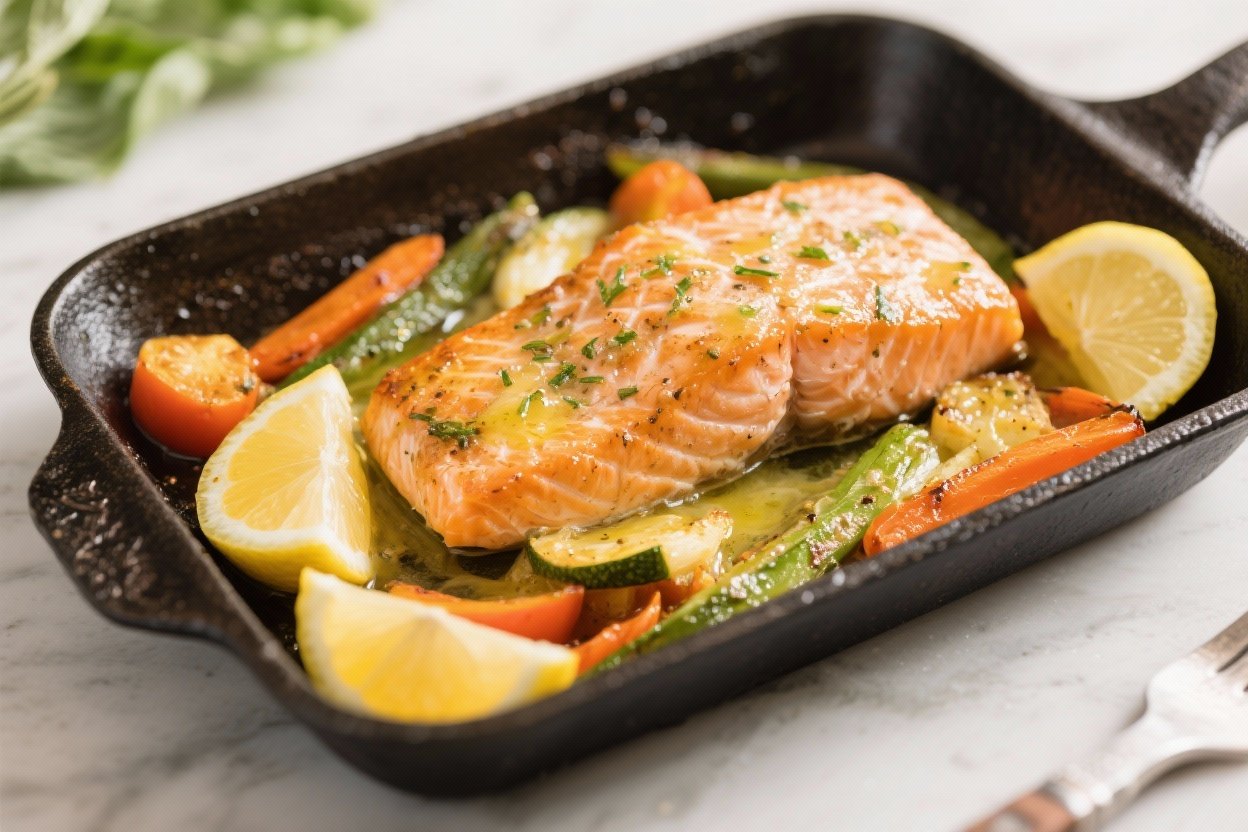
One-Pan Lemon Butter Salmon with Veggies: The 25-Minute Weeknight Upgrade You’ll Brag About
You don’t need a culinary degree to cook like you own a bistro. You need one pan, a lemon, and a plan that doesn’t wreck your kitchen or your budget. This One-Pan Lemon Butter Salmon with Veggies is the fast, fancy, and foolproof dinner that makes takeout look lazy.
Crisp-tender vegetables, silky lemon-butter sauce, and flaky salmon? That’s a win. Bonus: it’s pretty enough for guests but easy enough for your Tuesday night energy levels.
Overeating is a pattern. This helps you fix that problem. A quick reset for cravings, snacking, and “I’ll start tomorrow” moments.
Built for busy home cooks who want real-life structure. Simple steps that fit meal prep, family dinners, and late-night snack attacks.
The Secret Behind This Recipe

The magic is in the lemon-butter emulsion that forms right on the pan.
Butter adds richness, lemon brings brightness, and a touch of honey rounds it out without turning sweet. When that sauce mingles with salmon drippings and roasted veggie edges, you get restaurant-level flavor—without 14 pots. We also leverage high heat for caramelization.
The veggies go in first for a head start, then the salmon joins for a quick, juicy finish. The trick? Even sizing and spacing so everything roasts, not steams.
Shopping List – Ingredients
- 4 salmon fillets (about 6 oz each), skin-on or skinless
- 1 lb baby potatoes, halved (or fingerlings, halved lengthwise)
- 1 bunch asparagus, woody ends trimmed (or green beans, trimmed)
- 1 red bell pepper, sliced into strips
- 1 small red onion, cut into wedges
- 3 tbsp unsalted butter, melted
- 2 tbsp extra-virgin olive oil
- 2 lemons: 1 zested and juiced, 1 sliced into rounds
- 2–3 garlic cloves, minced
- 1 tbsp honey (or maple syrup)
- 1 tsp Dijon mustard
- 1 tsp smoked paprika
- 1 tsp dried oregano (or Italian seasoning)
- Fresh parsley or dill, chopped (for garnish)
- Kosher salt and freshly ground black pepper
- Optional heat: 1/4 tsp red pepper flakes
Let’s Get Cooking – Instructions

- Preheat and prep the pan. Heat oven to 425°F (220°C). Line a large sheet pan with parchment for easy cleanup and less sticking.
- Par-cook the sturdy veggies. Toss potatoes and red onion with 1 tbsp olive oil, 1/2 tsp salt, and pepper.
Spread on the pan, cut sides down. Roast for 12 minutes until edges start to color.
- Make the lemon-butter magic. In a bowl, whisk melted butter, remaining 1 tbsp olive oil, lemon zest, 2 tbsp lemon juice, garlic, honey, Dijon, smoked paprika, oregano, and a pinch of salt and pepper. If you like a kick, add red pepper flakes.
- Season the salmon. Pat fillets dry.
Sprinkle with 1/2 tsp salt and pepper. Dry salmon = better sear and fewer sad, watery bites.
- Add quick-cooking veggies. Pull the pan, add asparagus and bell pepper. Drizzle 1–2 tbsp of the lemon-butter sauce over all the veggies, toss gently, then push them to make room.
- Nestle the salmon. Place the salmon fillets skin-side down (if skin-on) between the veggies.
Spoon some sauce over each piece. Tuck lemon slices around and on the salmon.
- Roast to flaky perfection. Return pan to the oven for 9–12 minutes, depending on thickness. Target 125–130°F (52–54°C) internal temp for moist, medium doneness.
The fish should flake with gentle pressure.
- Broil for color (optional). For crispy edges, broil 1–2 minutes at the end. Keep an eye on it—nobody likes “Cajun” salmon by accident.
- Finish and serve. Spoon any pan juices over everything. Squeeze the remaining lemon juice over the top.
Scatter chopped parsley or dill. Serve hot, with extra sauce drippings as your “chef’s secret.”
Preservation Guide
- Fridge: Store leftovers in an airtight container for up to 2 days. Salmon dries out fast, so keep it with the saucy veggies.
- Reheat: Low and slow.
Warm at 275°F (135°C) for 8–10 minutes or microwave at 50% power in short bursts. A splash of water or lemon juice helps keep it moist.
- Freezer: Cooked salmon isn’t ideal to freeze with veggies (texture suffers), but if you must, freeze portions for up to 1 month. Thaw overnight in the fridge and reheat gently.
- Make-ahead: Mix the lemon-butter sauce up to 3 days ahead.
Chop veggies the day before and store separately. Easy weeknight win.

Nutritional Perks
- Omega-3 power: Salmon packs EPA and DHA for brain, heart, and joint support. Great for mood and focus—yes, even on Mondays.
- Protein with benefits: Roughly 25–30g protein per 6 oz serving.
Satiating, muscle-friendly, and not boring.
- Veggie fiber + micronutrients: Asparagus, peppers, and onions bring fiber, vitamin C, folate, and antioxidants. Color = nutrients, FYI.
- Smarter fats: Olive oil and butter in moderation deliver flavor and fat-soluble vitamin absorption. The lemon cuts richness without needing heavy cream.
Pitfalls to Watch Out For
- Overcooking the salmon: The difference between buttery and chalky is about 2 minutes.
Use a thermometer or check early.
- Crowding the pan: If your veggies touch shoulder-to-shoulder, they’ll steam. Use an XL sheet pan or split into two.
- Skipping the potato head start: Potatoes need more time than salmon. Give them the 12-minute runway.
- Watery veggies: Wet asparagus equals soggy results.
Pat dry before roasting.
- Too much sauce too early: Don’t drown the veggies at the start or they’ll soften without browning. Add just enough, save the rest for the fish and finish.
Different Ways to Make This
- Herb swap: Use dill + lemon zest for Scandi vibes, or basil + parsley for Mediterranean flair.
- Veggie remix: Try broccolini, zucchini, cherry tomatoes, or green beans. Keep sizes consistent for even roasting.
- Spice it up: Add harissa to the sauce, or swap paprika for chili powder.
Craving smoky? A pinch of cumin works wonders.
- Dairy-free: Replace butter with 3 tbsp olive oil or ghee. You’ll still get a lush sauce.
- Grain add-on: Serve over couscous, quinoa, or garlic rice to soak up every drop of sauce.
Carb-haters, avert your eyes.
- Pan-sear finish: For extra-crispy salmon skin, sear fillets skin-side down in a hot skillet for 3–4 minutes, then transfer to the sheet pan with veggies to finish roasting.
FAQ
Can I use frozen salmon?
Yes—thaw it overnight in the fridge, then pat very dry. If you cook from frozen, the fish will release extra moisture and the texture won’t be as buttery.
What if I don’t like asparagus?
Swap in green beans, broccolini, or zucchini spears. Keep pieces similar in size and add them when the asparagus would go in.
How do I know when the salmon is done without a thermometer?
Press gently with a fork at the thickest spot.
If it flakes easily and the center turns from translucent to opaque, you’re good. Slight translucence is fine if you like medium.
Is skin-on or skinless better?
Skin-on helps keep moisture and offers a crispy edge if broiled. Skinless is easier to eat.
Flavor-wise, both are great—pick your preference.
Can I make the sauce ahead?
Absolutely. Mix it up to 3 days in advance and refrigerate. Re-whisk before using as the butter may firm up slightly.
How do I keep the veggies from burning while the salmon cooks?
Give potatoes a head start, then add quicker-cooking vegetables later.
If edges get too dark, tent a small piece of foil over that section—no need to cover the whole pan.
What wine pairs well with this dish?
A bright Sauvignon Blanc, a crisp Vermentino, or a lightly oaked Chardonnay. If you’re going non-alcoholic, try sparkling water with a squeeze of lemon and a pinch of sea salt—trust me, elevated vibes.
Final Thoughts
This One-Pan Lemon Butter Salmon with Veggies proves that fast doesn’t have to mean bland. You get caramelized veggies, flaky salmon, and a zesty sauce that tastes like you planned ahead—even if you didn’t.
Keep this in your weeknight rotation and you’ll spend more time eating and less time scrubbing. Efficient, delicious, and repeat-worthy—exactly how dinner should be.
Printable Recipe Card
Want just the essential recipe details without scrolling through the article? Get our printable recipe card with just the ingredients and instructions.