Salmon & Avocado Power Bowl – Fresh, Satisfying, and Full of Good Energy
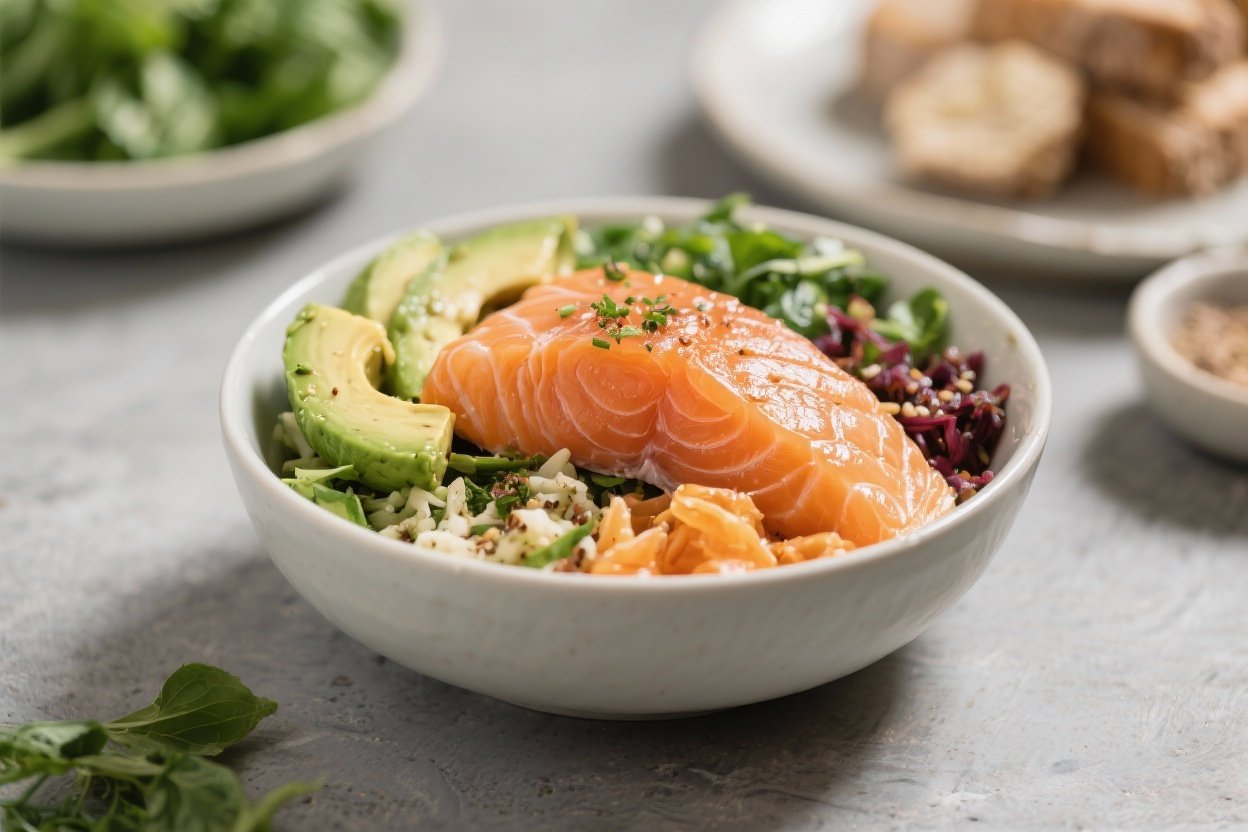
This Salmon & Avocado Power Bowl is a simple, colorful meal that feels as good as it tastes. You get tender, flaky salmon, creamy avocado, crunchy veggies, and a bright sauce that ties it all together. It’s the kind of bowl you can throw together on a weeknight yet still feel like you’re eating something special.
Whether you’re fueling up for the day or winding down after a workout, this bowl delivers a balanced plate without fuss.
Ingredients
Method
- Cook your base. Make brown rice, quinoa, or cauliflower rice according to package directions. Fluff and keep warm. For extra flavor, season with a pinch of salt and a drizzle of olive oil.
- Preheat and prep the salmon. Heat your oven to 400°F (200°C) or set a skillet over medium-high. Pat the salmon dry. Mix smoked paprika, garlic powder, salt, and pepper with 1 tablespoon olive oil. Rub evenly over the salmon.
- Cook the salmon. Oven: Place fillets on a lined sheet, skin-side down. Roast 9–12 minutes until just opaque and flakes easily. Skillet: Sear skin-side down in 1 tablespoon oil for 4–5 minutes, then flip and cook 2–3 minutes more. Do not overcook—you want it moist and tender.
- Make the sauce. Whisk your chosen sauce ingredients in a small bowl. Add water to thin if needed. Taste and adjust salt, acid, or sweetness.
- Prep the veggies and avocado. Halve the tomatoes, slice the cucumber, shave the carrot, and thinly slice red onion if using. Slice the avocado just before serving and squeeze a little lemon over it to keep it bright.
- Assemble the bowls. Divide the rice or quinoa between two bowls. Add spinach or greens, then arrange tomatoes, cucumber, carrot, and avocado on top. Nestle the salmon in the center, flaked or as a full fillet.
- Finish with flavor. Drizzle your sauce over the bowl. Add fresh herbs, a squeeze of lemon, and a sprinkle of sesame seeds or pepitas. Taste and adjust with a pinch of salt or extra lemon if needed.
- Serve right away. The contrast of warm salmon and grains with cool crisp veggies is the magic here.
Overeating is a pattern. This helps you fix that problem. A quick reset for cravings, snacking, and “I’ll start tomorrow” moments.
Built for busy home cooks who want real-life structure. Simple steps that fit meal prep, family dinners, and late-night snack attacks.
Why This Recipe Works
This bowl balances protein, healthy fats, and fiber, so you’ll feel satisfied, not sluggish. The salmon is roasted or pan-seared with simple seasonings, letting its natural flavor shine. Creamy avocado pairs with crisp veggies and a zesty sauce for contrast in both taste and texture.
A base of rice or grains grounds the bowl, and a squeeze of lemon wakes up everything on the plate.
What You’ll Need
- Salmon fillets: 2 skin-on fillets (about 5–6 oz each)
- Avocado: 1 ripe, sliced
- Cooked base: 2 cups cooked brown rice, quinoa, or cauliflower rice
- Fresh veggies: 1 cup cherry tomatoes (halved), 1 small cucumber (sliced), 1 cup baby spinach or mixed greens, 1 small carrot (shaved or grated)
- Red onion: A few thin slices for bite (optional)
- Herbs: Fresh cilantro, parsley, or dill (a small handful, chopped)
- Lemon: 1, cut into wedges
- Olive oil: 2–3 tablespoons, divided
- Spices for salmon: 1 teaspoon smoked paprika, 1/2 teaspoon garlic powder, 1/2 teaspoon kosher salt, 1/4 teaspoon black pepper
- Crunchy toppings: Toasted sesame seeds, pepitas, or chopped almonds (optional)
- Sauce (choose one):
- Lemon-tahini: 2 tbsp tahini, 1 tbsp lemon juice, 1 tsp honey or maple, 1–2 tbsp warm water, pinch of salt
- Garlic-yogurt: 1/3 cup Greek yogurt, 1 tsp lemon juice, 1 small garlic clove (grated), pinch of salt
- Soy-ginger: 1 tbsp low-sodium soy sauce or tamari, 1 tsp rice vinegar, 1 tsp honey, 1/2 tsp grated ginger, 1 tsp sesame oil
Step-by-Step Instructions
- Cook your base. Make brown rice, quinoa, or cauliflower rice according to package directions. Fluff and keep warm. For extra flavor, season with a pinch of salt and a drizzle of olive oil.
- Preheat and prep the salmon. Heat your oven to 400°F (200°C) or set a skillet over medium-high.
Pat the salmon dry. Mix smoked paprika, garlic powder, salt, and pepper with 1 tablespoon olive oil. Rub evenly over the salmon.
- Cook the salmon. Oven: Place fillets on a lined sheet, skin-side down.
Roast 9–12 minutes until just opaque and flakes easily. Skillet: Sear skin-side down in 1 tablespoon oil for 4–5 minutes, then flip and cook 2–3 minutes more. Do not overcook—you want it moist and tender.
- Make the sauce. Whisk your chosen sauce ingredients in a small bowl. Add water to thin if needed.
Taste and adjust salt, acid, or sweetness.
- Prep the veggies and avocado. Halve the tomatoes, slice the cucumber, shave the carrot, and thinly slice red onion if using. Slice the avocado just before serving and squeeze a little lemon over it to keep it bright.
- Assemble the bowls. Divide the rice or quinoa between two bowls. Add spinach or greens, then arrange tomatoes, cucumber, carrot, and avocado on top.
Nestle the salmon in the center, flaked or as a full fillet.
- Finish with flavor. Drizzle your sauce over the bowl. Add fresh herbs, a squeeze of lemon, and a sprinkle of sesame seeds or pepitas. Taste and adjust with a pinch of salt or extra lemon if needed.
- Serve right away. The contrast of warm salmon and grains with cool crisp veggies is the magic here.
Storage Instructions
Store components separately for best texture. Keep cooked salmon in an airtight container in the fridge for up to 2 days.
Refrigerate grains for 3–4 days. Cut veggies and herbs can last 2–3 days; slice avocado fresh when serving. Sauces keep in the fridge for 3–5 days.
Reheat grains and salmon gently—either in the microwave at 50–60% power or on the stovetop with a splash of water.
Assemble bowls just before eating so everything stays crisp and bright.
Benefits of This Recipe
- Balanced nutrition: Protein-rich salmon, healthy fats from avocado, and fiber from veggies and whole grains keep you satisfied.
- Omega-3 boost: Salmon delivers DHA and EPA, which support heart and brain health.
- Simple, flexible prep: Swap grains, sauces, or veggies based on what you have.
- Weeknight-friendly: Cooks in about 30 minutes, and components can be prepped ahead.
- Great for meal prep: Make a batch of grains and sauce, then cook salmon fresh for fast bowls.
What Not to Do
- Don’t overcook the salmon. Dry salmon ruins the bowl. Remove from heat when it flakes but is still moist.
- Don’t skip seasoning. A little salt, lemon, and spices make a big difference in flavor.
- Don’t drown it in sauce. Use enough to coat lightly; you want to taste the salmon and veggies.
- Don’t assemble too early. Avocado browns and greens wilt if dressed too far in advance.
- Don’t forget texture. Add something crunchy—seeds, nuts, or crisp veggies—to keep each bite interesting.
Recipe Variations
- Spicy gochujang bowl: Whisk 1 tsp gochujang into the soy-ginger sauce and add kimchi and scallions. Use sesame oil to finish.
- Mediterranean twist: Use lemon-tahini sauce, add olives and chopped cucumber, and swap quinoa for rice.
Finish with dill and feta.
- Southwest style: Season salmon with chili powder and cumin. Add corn, black beans, and a squeeze of lime. Top with cilantro and a spoon of salsa.
- Greens-forward: Skip grains and load up on kale or arugula.
Massage tougher greens with a little olive oil and lemon.
- No-cook lunch: Use canned wild salmon, drained and flaked, with pre-cooked microwaveable grains and a quick yogurt or tahini dressing.
- Low-carb option: Use cauliflower rice and extra veggies. Add crunchy cucumbers and radishes for volume.
FAQ
Can I use frozen salmon?
Yes. Thaw it overnight in the fridge or under cold running water in a sealed bag.
Pat it very dry before seasoning so you get better browning and flavor.
What’s the best way to tell if salmon is done?
Press the thickest part with a fork—if it flakes easily and is just opaque, it’s ready. An instant-read thermometer should read around 125–130°F (52–54°C) for moist, medium salmon.
Can I make this dairy-free and gluten-free?
Absolutely. Use the lemon-tahini or soy-ginger sauce with tamari or coconut aminos for gluten-free, and avoid feta or yogurt toppings if keeping it dairy-free.
What if I don’t like raw onion?
Soak sliced red onion in cold water for 10 minutes to mellow the bite, or skip it and add scallions for a gentler flavor.
Which grain works best?
Brown rice is hearty and familiar, quinoa is fluffy and high in protein, and farro adds chew (contains gluten).
For a lighter bowl, cauliflower rice is a great swap.
Can I air-fry the salmon?
Yes. Air-fry at 380°F (193°C) for 7–9 minutes depending on thickness. Check early to avoid overcooking.
How can I make it kid-friendly?
Use a mild seasoning on the salmon, serve sauce on the side, and cut veggies into smaller pieces.
A little honey in the sauce can also soften sharper flavors.
Final Thoughts
This Salmon & Avocado Power Bowl is the kind of recipe that earns a permanent spot in your rotation. It’s fresh, quick, and endlessly adaptable to what you have on hand. With a few smart touches—good seasoning, a bright sauce, and plenty of texture—you’ll have a bowl that feels both healthy and satisfying.
Make it once, and you’ll know exactly how you like to tweak it the next time.
Printable Recipe Card
Want just the essential recipe details without scrolling through the article? Get our printable recipe card with just the ingredients and instructions.