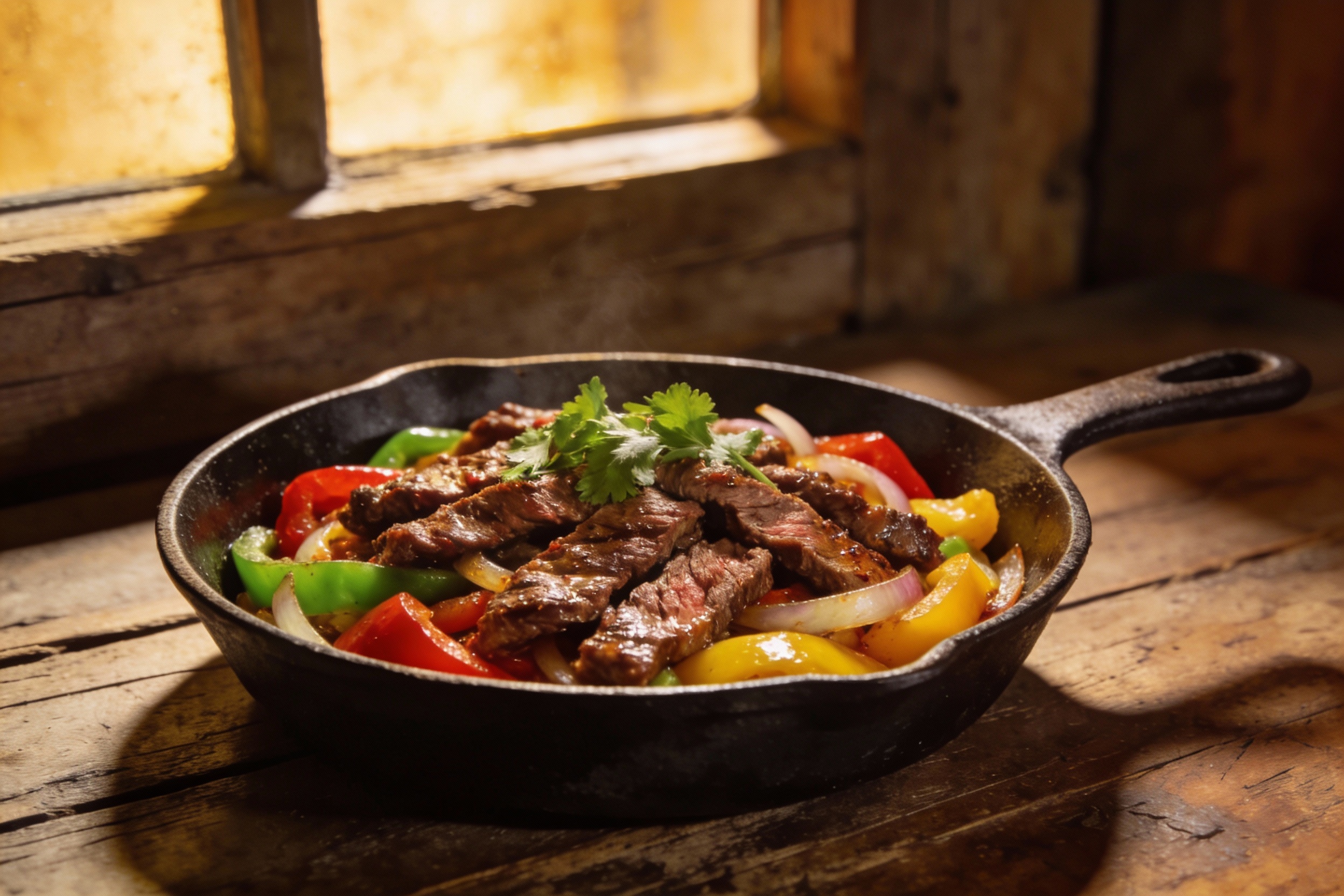
Steak Fajita Skillet
Steak fajita skillet night means minimal dishes, maximum flavor, and that glorious sizzle that makes you feel like you know what you’re doing. You cook everything in one pan, and dinner hits the table fast. It’s crowd-pleasing, customizable, and yes, you can make it taste like your favorite restaurant—without the bill that makes you weep.
Why a Skillet Fajita Beats Takeout
You control the sear, the seasoning, and the heat level. No soggy peppers from a steamy takeout container. Plus, you can make it exactly how you like it—more lime? More char? Extra onions because you’re a reasonable person? Done.
Also, you’ll save time. One skillet, quick marinade, fast cook. Clean-up doesn’t require a support group.
Overeating is a pattern. This helps you fix that problem. A quick reset for cravings, snacking, and “I’ll start tomorrow” moments.
Built for busy home cooks who want real-life structure. Simple steps that fit meal prep, family dinners, and late-night snack attacks.
The Cut: Choosing the Right Steak
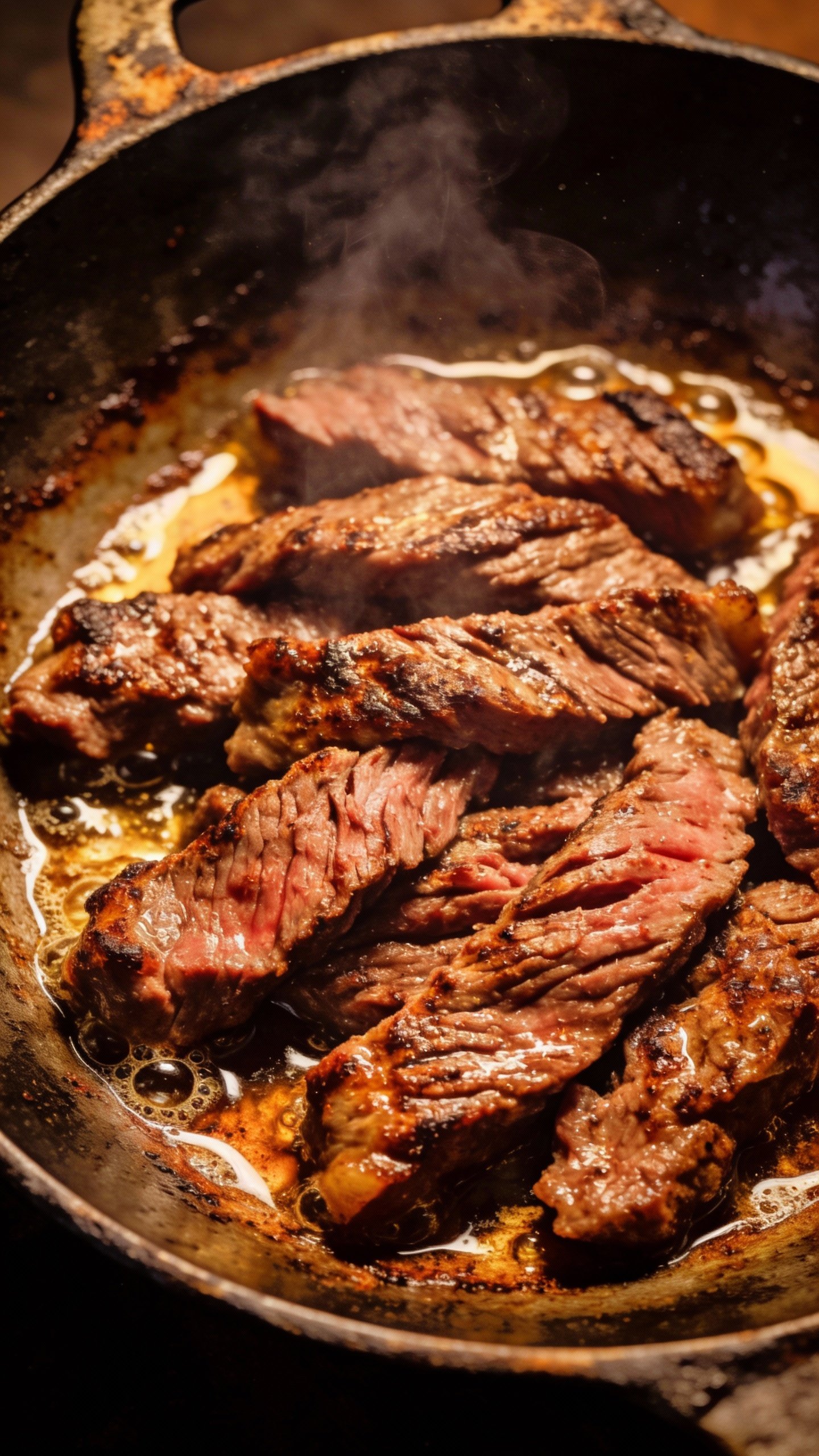
You’ve got options, and they all work with this method. The secret lies in slicing and marinating.
- Skirt steak: Classic fajita cut. Thin, intensely beefy, and takes on a sear beautifully.
- Flank steak: Leaner than skirt, slightly thicker, still awesome. Slice thin against the grain or it’ll chew back.
- Sirloin: Budget-friendly and dependable. Good flavor, easy to cook, and less fussy.
Pro tip: Whatever you choose, chill the steak 15 minutes before slicing. You’ll get cleaner, thinner slices and better browning.
Slice Like You Mean It
Cut against the grain into 1/4-inch strips. If the steak’s thick, halve it lengthwise first. Long strips give you that fajita feel, but don’t go too thick or you’ll miss the quick-cook magic.
The Marinade That Actually Matters
We’re going for punchy, citrusy, and savory. The marinade does the heavy lifting while you get the skillet hot.
- Acid: Lime juice (must), splash of orange juice (optional but elite).
- Fat: Neutral oil—avocado or canola—to help sear.
- Salt: Kosher salt. Don’t be shy.
- Spices: Chili powder, cumin, smoked paprika, black pepper.
- Aromatics: Garlic (grated), a little soy sauce or Worcestershire for umami.
Whisk it up and toss with the steak. Marinate 20–40 minutes. Longer isn’t better here; the acid can toughen thin cuts. FYI, if you pre-slice, you’ll get faster uptake of flavor.
Quick Seasoning Mix (No Marinade? No Problem.)
If you skipped the marinade, mix:
- 2 tsp chili powder
- 1 tsp cumin
- 1 tsp smoked paprika
- 1 tsp kosher salt
- 1/2 tsp garlic powder
- 1/4 tsp black pepper
Toss onto the steak right before cooking. Easy win.
Veg Game: Peppers and Onions, But Better
Classic trio: red, yellow, or orange bell peppers plus white or yellow onion. Aim for 1/3-inch slices so they char without turning to mush.
Want to zhuzh it?
- Poblanos for a gentle kick and smoky vibe.
- Red onion for color and a sweeter bite.
- Jalapeño slivers for heat seekers.
Salt your veggies right when they hit the pan. That pulls out moisture and amps the char.
Skillet Strategy: Hot, Fast, and Loud
You need real heat. Cast iron works best. Stainless can do it. Nonstick? It’ll survive, but you won’t get the same sear.
- Preheat the skillet over medium-high until it’s smoking lightly. Add a tablespoon of oil.
- Cook the steak first. Spread in a single layer. Don’t crowd. Work in batches if needed. Sear 1–2 minutes per side until nicely browned but still pink inside. Remove to a plate.
- Veggies next. Add a bit more oil. Toss peppers and onions. Let them blister undisturbed for a minute, then stir. Cook 4–6 minutes until tender-crisp with charred edges.
- Bring it together. Return steak to the pan. Splash of lime juice, a sprinkle of the seasoning mix if needed, and a quick toss. Turn off the heat. Finish with fresh cilantro.
Don’t Overcook the Steak
Aim for medium-rare to medium. It’ll keep cooking a little when you toss it back with the veggies. Dry fajitas are a hate crime, IMO.
Tortillas, Toppings, and the Fun Part
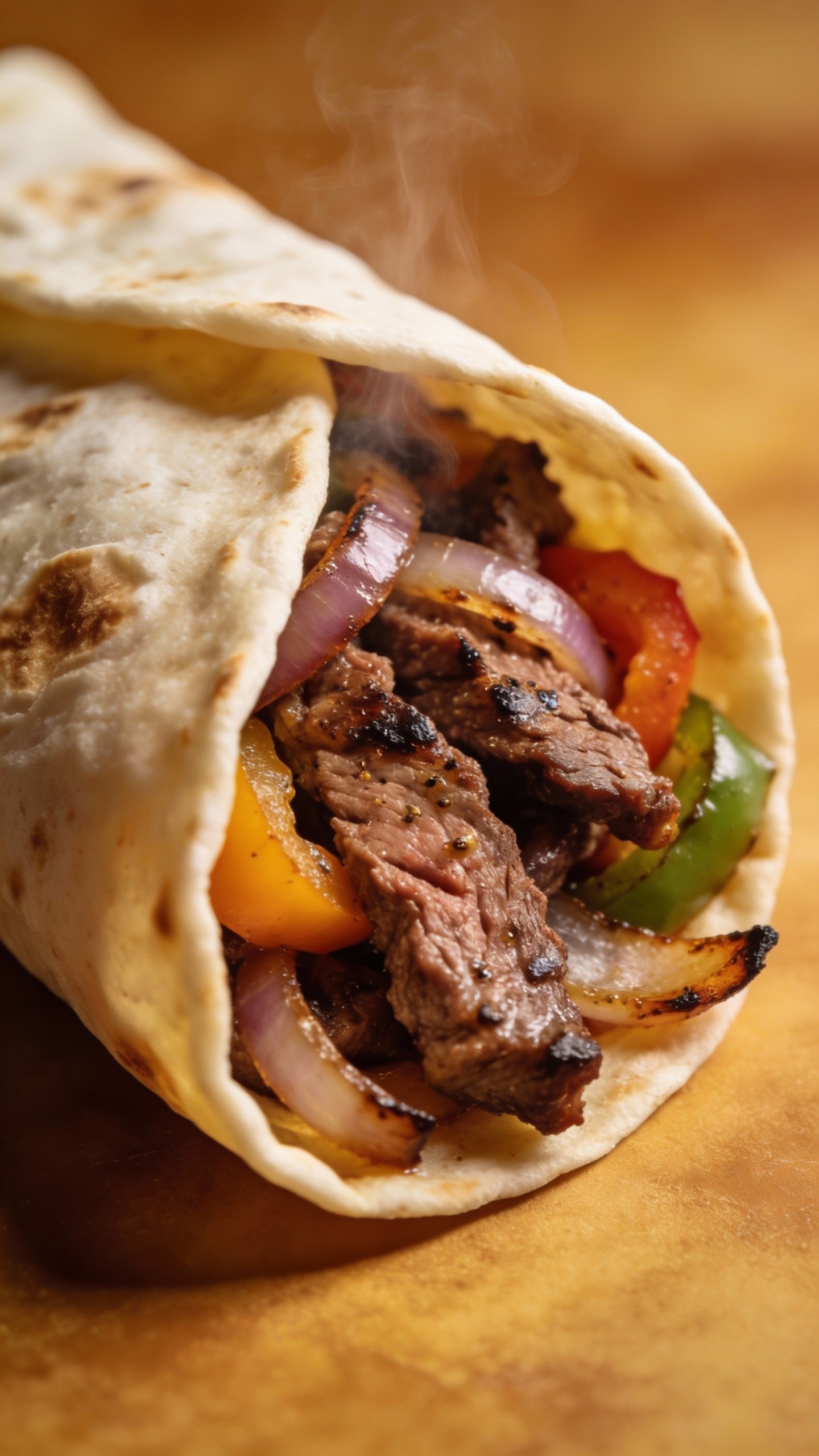
Warm your tortillas while the steak rests. Use a dry skillet or wrap them in foil and throw them in a low oven.
- Corn tortillas for a toasty, traditional vibe.
- Flour tortillas for soft, flexible wraps that hold all the things.
Toppings worth inviting to the party:
- Guacamole or sliced avocado for creaminess
- Pico de gallo or a bright salsa
- Queso fresco or cotija
- Sour cream or Greek yogurt
- Pickled red onions for tangy crunch
- Fresh jalapeño, thinly sliced
Pro move: A final drizzle of hot honey over the skillet. Sweet heat against the smoky steak? Yes, chef.
Make It Work for You
Don’t want steak? Don’t worry. The formula stays the same, the protein just changes.
- Chicken: Use thighs, sliced thin. Cook a smidge longer.
- Shrimp: Marinate briefly (10 minutes), cook super fast, then toss with veggies at the end.
- Mushrooms + black beans: For a hearty plant-based option. Crank the heat to drive out moisture.
- Tofu: Press, slice, and sear until golden; toss with the seasoning mix.
Low-Carb or Meal-Prep Friendly?
Serve over cauliflower rice or crisp shredded lettuce. Pack the steak and veggies separately from toppings so nothing turns soggy. This reheats like a champ in a skillet, IMO.
Timing and Prep: The Fast Lane
Want dinner in 25 minutes? Front-load the prep.
- Slice steak and veggies in the morning. Store separately.
- Mix dry seasoning in a jar so you can sprinkle and go.
- Marinate the steak for 20–40 minutes right before cooking (or season dry if you’re in a rush).
- Pre-warm tortillas while veggies cook. Multitasking = faster fajitas.
Common Mistakes (And How to Dodge Them)
- Crowding the pan: Steam kills the sear. Cook in batches.
- Over-marinating: Acid turns meat mushy. Keep it under 1 hour.
- Weak heat: Lukewarm pans produce sad fajitas. Preheat until the oil shimmers aggressively.
- Skipping the finish: Lime and salt at the end wake everything up. Don’t forget.
FAQ
Can I use frozen bell peppers?
Yes, but cook them from frozen over high heat and expect a softer texture. They won’t char as nicely as fresh, but they still taste great. Add a smidge more seasoning to compensate.
What’s the best oil for high-heat searing?
Use neutral, high-smoke-point oils like avocado, canola, or grapeseed. Olive oil works in a pinch, but it smokes earlier and can taste bitter if overheated. Save extra virgin for drizzling at the end.
How do I keep tortillas warm for serving?
Stack them, wrap in a clean kitchen towel, and tuck into a low oven (200°F) while you cook. Or use a tortilla warmer if you have one. Don’t skip warming—cold tortillas crack and break your fajita dreams.
Can I make this dairy-free or gluten-free?
Absolutely. Use corn tortillas for gluten-free and skip any flour-based thickeners (you won’t need them anyway). For dairy-free, stick to salsas, avocado, and pickled onions instead of sour cream or cheese.
Do I need a cast-iron skillet?
It’s ideal, but not mandatory. Stainless steel can deliver similar results if you preheat properly and don’t fuss with the meat. Nonstick works in a pinch, though you’ll get less char.
How spicy should I make it?
Totally your call. Start mild with chili powder and smoked paprika. Add jalapeño, chipotle powder, or a drizzle of hot sauce at the end if you want more heat. Spice level = choose your own adventure.
Conclusion
A steak fajita skillet gives you loud flavor, quick cooking, and zero drama. You’ll nail the sear, tame the veggies, and build your perfect bite with lime, cilantro, and just enough heat. Keep it simple, keep it hot, and enjoy that sizzle—your weeknight dinner just leveled up.