Low Calorie Meal Prep Teriyaki Salmon Bowls – Easy, Fresh, and Flavor-Packed
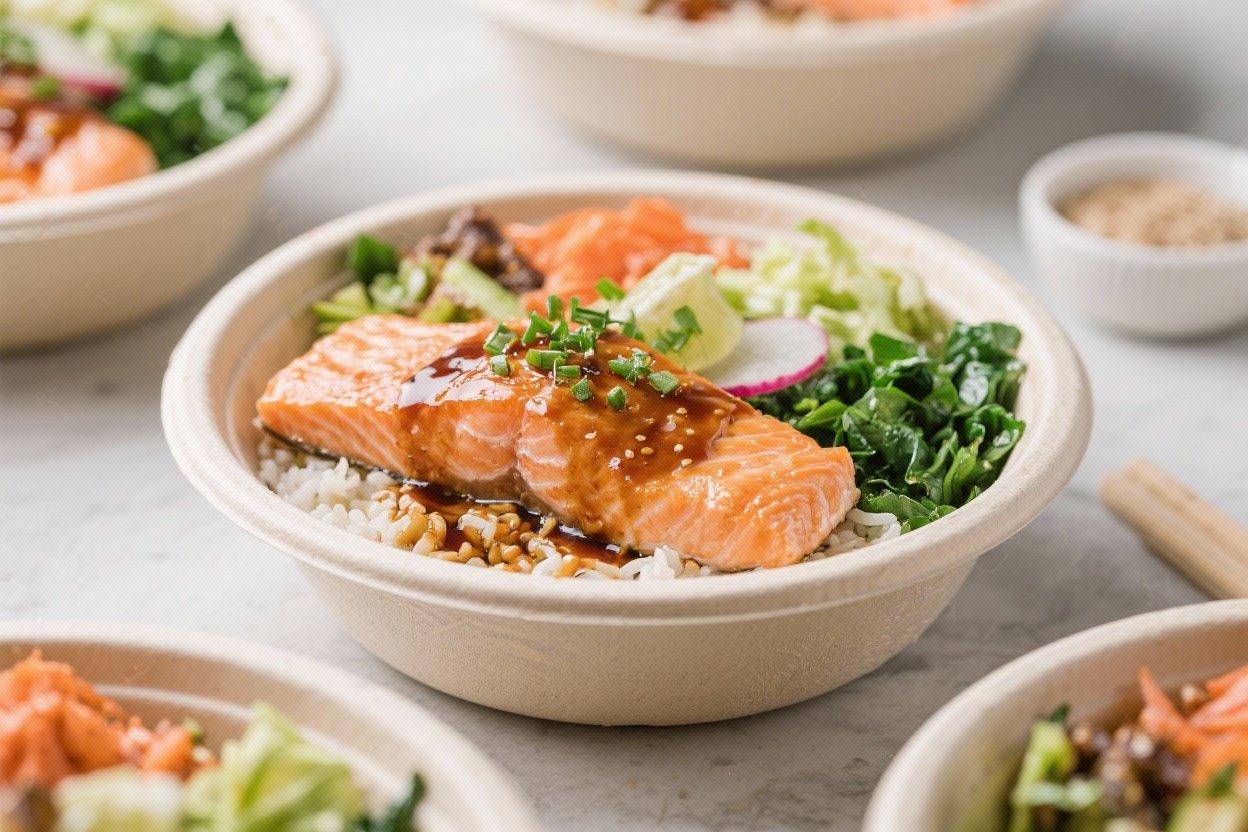
A good meal prep should taste great on day one and just as good on day three. These Low Calorie Meal Prep Teriyaki Salmon Bowls deliver that balance: bold flavor, fresh textures, and light, clean ingredients. The sweet-savory teriyaki glaze coats tender salmon and pairs with crisp veggies and fluffy rice or cauliflower rice.
FREE 7-Day Easy Dinner Reset
Get 7 healthy, family-friendly dinners complete with recipes and simple meal plans delivered straight to your inbox.
It’s simple to put together, easy to customize, and perfect for busy weeks. If you’re aiming for satisfying meals without the heavy calories, this bowl checks all the boxes.
Low Calorie Meal Prep Teriyaki Salmon Bowls - Easy, Fresh, and Flavor-Packed
Ingredients
Method
- Cook your base: Make brown rice according to package directions, or sauté riced cauliflower in a nonstick pan with a touch of oil and salt until tender, 5–7 minutes.
- Prep the veggies: Thinly slice cucumber and red bell pepper. Peel carrots and either shred or ribbon them. Steam broccoli until crisp-tender, about 3–4 minutes, then rinse briefly with cold water to stop cooking.
- Make the teriyaki glaze: In a small bowl, whisk 1/3 cup low-sodium soy sauce, 2 tablespoons rice vinegar, 1–2 tablespoons honey or maple syrup (to taste), 1 teaspoon toasted sesame oil, 1 minced garlic clove, and 1 teaspoon grated ginger. In another small cup, mix 1 teaspoon cornstarch with 2 teaspoons water.
- Thicken the sauce: Add the soy mixture to a small saucepan over medium heat. When it simmers, whisk in the cornstarch slurry. Cook 30–60 seconds until glossy and slightly thickened. Remove from heat. Taste and adjust sweetness or acidity as needed.
- Season the salmon: Pat fillets dry. Sprinkle with salt and pepper. Brush a thin layer of teriyaki glaze on top.
- Cook the salmon: Heat a nonstick skillet over medium-high with a small drizzle of oil. Place salmon skin-side down and cook 3–4 minutes. Flip and cook 2–3 minutes more, depending on thickness, until just opaque and flaky. Alternatively, bake at 400°F (205°C) for 10–12 minutes.
- Glaze and rest: Brush salmon with another spoonful of teriyaki and let rest 2–3 minutes off heat. This helps it stay juicy.
- Assemble the bowls: Divide rice or cauliflower rice among 4 meal prep containers. Add broccoli, cucumber, carrots, and bell pepper. Top each with a salmon fillet.
- Finish with flavor: Drizzle remaining teriyaki over the bowls. Add sesame seeds, chopped green onions, a squeeze of lime, or a light sriracha drizzle if you like heat.
- Cool before sealing: Let everything come to room temperature for 15–20 minutes before closing lids. This prevents condensation and soggy textures.
Why This Recipe Works

- Balanced flavors: A light teriyaki glaze brings umami and sweetness without loads of sugar or oil.
- Lean protein: Salmon is rich, filling, and naturally high in omega-3s, which support heart and brain health.
- Smart carbs: Choose brown rice for fiber or cauliflower rice to cut calories while keeping volume.
- Meal prep friendly: The glaze holds up well, veggies stay crisp-tender, and everything reheats beautifully.
- Quick cook time: Salmon cooks in minutes, so you can prep several servings fast.
Shopping List
- Salmon: 1.5–2 pounds skin-on salmon fillets (cut into 4 portions)
- Rice: 2 cups cooked brown rice or 4 cups cooked cauliflower rice
- Vegetables: 1 small cucumber, 1 red bell pepper, 1–2 cups steamed broccoli florets, 2 medium carrots
- Aromatics: 2 garlic cloves, 1-inch piece fresh ginger
- Teriyaki sauce ingredients: Low-sodium soy sauce or tamari, rice vinegar, honey or maple syrup, toasted sesame oil, cornstarch
- Optional add-ins: Green onions, sesame seeds, lime, sriracha or chili flakes, pickled ginger
- Pantry basics: Olive or avocado oil, salt, black pepper
Step-by-Step Instructions

- Cook your base: Make brown rice according to package directions, or sauté riced cauliflower in a nonstick pan with a touch of oil and salt until tender, 5–7 minutes.
- Prep the veggies: Thinly slice cucumber and red bell pepper. Peel carrots and either shred or ribbon them.
Steam broccoli until crisp-tender, about 3–4 minutes, then rinse briefly with cold water to stop cooking.
- Make the teriyaki glaze: In a small bowl, whisk 1/3 cup low-sodium soy sauce, 2 tablespoons rice vinegar, 1–2 tablespoons honey or maple syrup (to taste), 1 teaspoon toasted sesame oil, 1 minced garlic clove, and 1 teaspoon grated ginger. In another small cup, mix 1 teaspoon cornstarch with 2 teaspoons water.
- Thicken the sauce: Add the soy mixture to a small saucepan over medium heat. When it simmers, whisk in the cornstarch slurry.
Cook 30–60 seconds until glossy and slightly thickened. Remove from heat. Taste and adjust sweetness or acidity as needed.
- Season the salmon: Pat fillets dry.
Sprinkle with salt and pepper. Brush a thin layer of teriyaki glaze on top.
- Cook the salmon: Heat a nonstick skillet over medium-high with a small drizzle of oil. Place salmon skin-side down and cook 3–4 minutes.
Flip and cook 2–3 minutes more, depending on thickness, until just opaque and flaky. Alternatively, bake at 400°F (205°C) for 10–12 minutes.
- Glaze and rest: Brush salmon with another spoonful of teriyaki and let rest 2–3 minutes off heat. This helps it stay juicy.
- Assemble the bowls: Divide rice or cauliflower rice among 4 meal prep containers.
Add broccoli, cucumber, carrots, and bell pepper. Top each with a salmon fillet.
- Finish with flavor: Drizzle remaining teriyaki over the bowls. Add sesame seeds, chopped green onions, a squeeze of lime, or a light sriracha drizzle if you like heat.
- Cool before sealing: Let everything come to room temperature for 15–20 minutes before closing lids.
This prevents condensation and soggy textures.
How to Store
- Refrigerate: Store in airtight containers for up to 3 days. Keep sauce on the side if you want the veggies extra crisp.
- Reheat: Microwave 60–90 seconds, just until warm. Avoid overheating the salmon to keep it tender.
- Freezer tips: You can freeze cooked salmon and rice separately for up to 2 months.
Fresh raw veggies don’t freeze well; add them after thawing.
- Meal prep trick: If using cauliflower rice, reheat it in a separate container to avoid overcooking the salmon.
Why This is Good for You
- High protein, lower calorie: Salmon provides quality protein that keeps you full without a heavy calorie load.
- Healthy fats: Omega-3s may support heart health and fight inflammation.
- Fiber-rich veggies: Broccoli, carrots, and peppers add vitamins, minerals, and fiber for steady energy.
- Controlled sodium and sugar: Using low-sodium soy sauce and a modest amount of honey keeps the sauce lighter than store-bought versions.
- Portion smart: Building bowls helps you control portions while keeping meals satisfying and colorful.
Pitfalls to Watch Out For
- Overcooking salmon: Dry salmon is easy to avoid. Pull it from heat when it flakes but still looks slightly glossy inside.
- Watery cauliflower rice: Cook off excess moisture. A quick sauté over medium heat helps keep bowls from getting soggy.
- Too much sauce: Teriyaki is flavorful.
Start light, then add more to taste to keep calories in check.
- Soggy veggies: Steam broccoli lightly and cool it quickly. Raw or barely cooked veggies stay crisp through the week.
- Skipping rest time: If you seal hot food, condensation builds and textures suffer. Cool before lidding.
Alternatives
- Protein swaps: Try tofu, shrimp, or chicken breast.
Tofu and shrimp cook fast and soak up sauce well.
- Base options: Quinoa, jasmine rice, or mixed greens work. For very low calorie, go half rice and half cauliflower rice.
- Sauce tweaks: Use coconut aminos for a sweeter, lower-sodium base. Swap honey for a zero-calorie sweetener if needed.
- Veggie variety: Edamame, snap peas, shredded cabbage, or zucchini ribbons add crunch and color.
- Spice it up: Add chili crisp, wasabi mayo made light with Greek yogurt, or extra ginger for a kick.
FAQ
Never Wonder What's For Dinner Again
Get 7 healthy, family-friendly dinners complete with recipes, grocery lists, and simple meal plans delivered straight to your inbox.
How many calories are in a bowl?
A typical bowl with 4 ounces of salmon, 1/2 cup cooked brown rice, and plenty of veggies lands roughly between 350–500 calories, depending on how much sauce you use.
Choosing cauliflower rice instead of brown rice can drop the total by 100–150 calories.
Can I use store-bought teriyaki sauce?
Yes, but check the label. Many store-bought sauces are high in sugar and sodium. If you use one, dilute with a splash of water and add a little fresh ginger or lime juice to brighten it up.
What if I only have frozen salmon?
That’s fine.
Thaw in the fridge overnight or under cold running water in sealed packaging. Pat dry thoroughly before seasoning to get good browning and better texture.
How do I keep the salmon from sticking to the pan?
Use a well-heated nonstick skillet and a small amount of oil. Place salmon skin-side down first and avoid moving it for the first few minutes so a crust can form.
A fish spatula helps with a clean flip.
Can I make this gluten-free?
Yes. Use tamari or coconut aminos instead of soy sauce, and make sure your cornstarch and any add-ins are certified gluten-free.
Is there a way to lower the sodium further?
Use low-sodium soy sauce, stretch the sauce with water or unsalted stock, and finish with a squeeze of lime to boost flavor without more salt. Loading up on fresh veggies also balances the overall profile.
How long does cooked salmon last in the fridge?
Cooked salmon is best within 3 days when stored in airtight containers.
If you need longer, freeze portions and thaw overnight before reheating.
In Conclusion
Low Calorie Meal Prep Teriyaki Salmon Bowls make healthy eating straightforward and satisfying. You get a balanced plate of protein, veggies, and a light yet punchy sauce that stays tasty all week. Keep the steps simple, watch your portions, and customize the bowl to your needs.
With a bit of planning, you’ll have fresh, flavorful meals ready to go whenever you are.
Printable Recipe Card
Want just the essential recipe details without scrolling through the article? Get our printable recipe card with just the ingredients and instructions.
Loved This Recipe?
If you're looking for more simple, healthy dinners your family will actually eat, grab my FREE 7-Day Easy Dinner Reset. You'll get 7 easy dinner recipes, simple grocery lists, and a done-for-you plan that takes the stress out of mealtime.