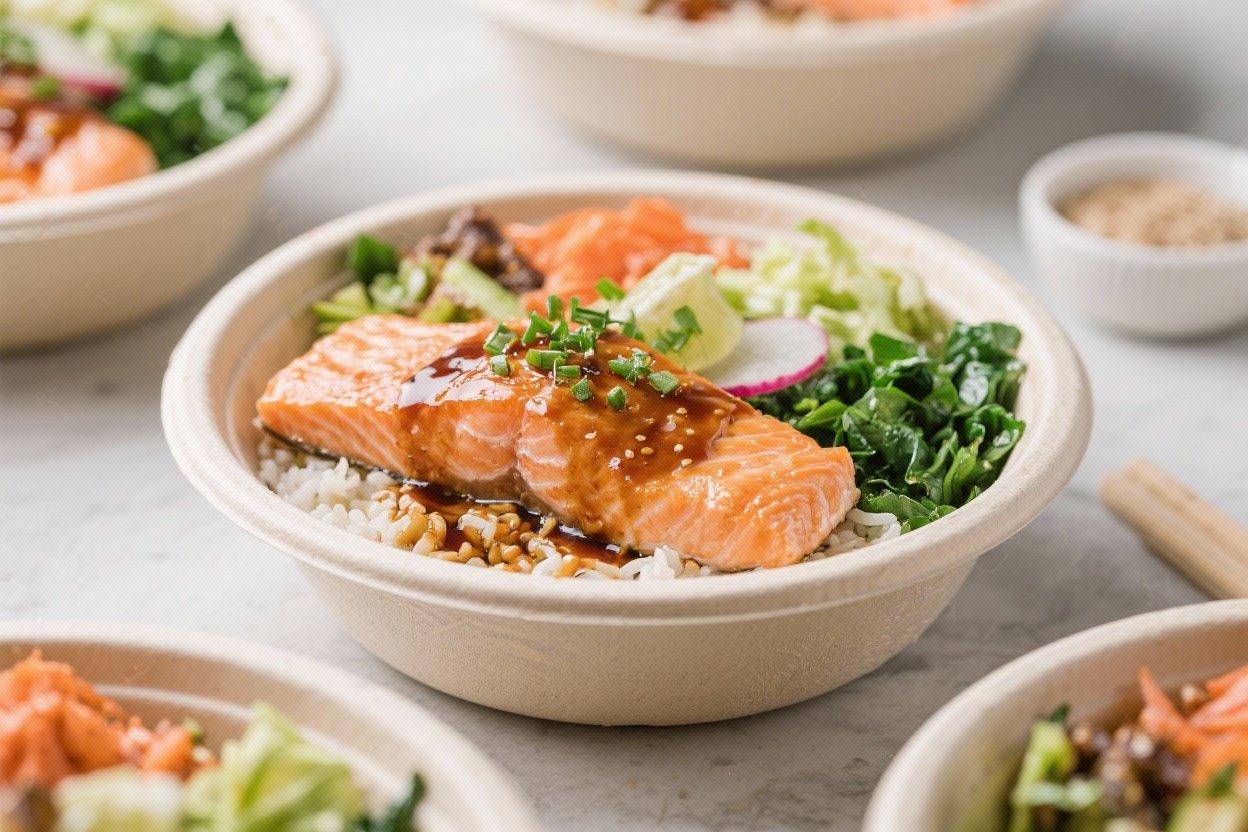
Cook your base: Make brown rice according to package directions, or sauté riced cauliflower in a nonstick pan with a touch of oil and salt until tender, 5–7 minutes.
Prep the veggies: Thinly slice cucumber and red bell pepper. Peel carrots and either shred or ribbon them.
Steam broccoli until crisp-tender, about 3–4 minutes, then rinse briefly with cold water to stop cooking.
Make the teriyaki glaze: In a small bowl, whisk 1/3 cup low-sodium soy sauce, 2 tablespoons rice vinegar, 1–2 tablespoons honey or maple syrup (to taste), 1 teaspoon toasted sesame oil, 1 minced garlic clove, and 1 teaspoon grated ginger. In another small cup, mix 1 teaspoon cornstarch with 2 teaspoons water.
Thicken the sauce: Add the soy mixture to a small saucepan over medium heat. When it simmers, whisk in the cornstarch slurry.
Cook 30–60 seconds until glossy and slightly thickened. Remove from heat. Taste and adjust sweetness or acidity as needed.
Season the salmon: Pat fillets dry.
Sprinkle with salt and pepper. Brush a thin layer of teriyaki glaze on top.
Cook the salmon: Heat a nonstick skillet over medium-high with a small drizzle of oil. Place salmon skin-side down and cook 3–4 minutes.
Flip and cook 2–3 minutes more, depending on thickness, until just opaque and flaky. Alternatively, bake at 400°F (205°C) for 10–12 minutes.
Glaze and rest: Brush salmon with another spoonful of teriyaki and let rest 2–3 minutes off heat. This helps it stay juicy.
Assemble the bowls: Divide rice or cauliflower rice among 4 meal prep containers.
Add broccoli, cucumber, carrots, and bell pepper. Top each with a salmon fillet.
Finish with flavor: Drizzle remaining teriyaki over the bowls. Add sesame seeds, chopped green onions, a squeeze of lime, or a light sriracha drizzle if you like heat.
Cool before sealing: Let everything come to room temperature for 15–20 minutes before closing lids.
This prevents condensation and soggy textures.