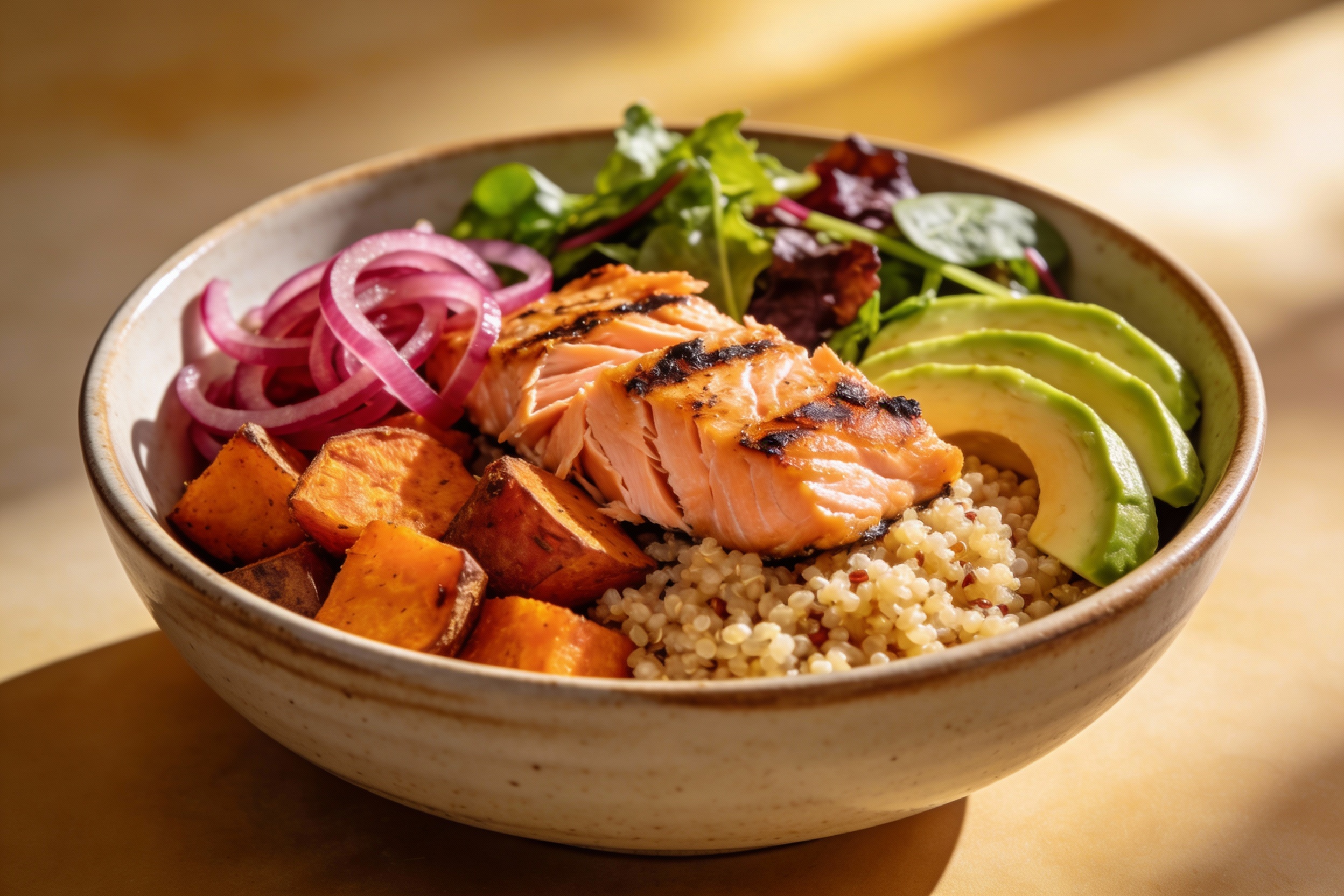
Salmon Power Bowl
Salmon Power Bowls don’t mess around. They look gorgeous, taste like a cheat meal, and secretly deliver a full-body high-five of nutrition. If you want a meal that hits protein goals, keeps you energized, and still lets you feel fancy on a Tuesday, this is it. Let’s build one that actually lives up to the “power” in the name.
FREE 7-Day Easy Dinner Reset
Get 7 healthy, family-friendly dinners complete with recipes and simple meal plans delivered straight to your inbox.
What Makes a Bowl “Power”?
Power bowls earn the title with a smart combo: protein, complex carbs, healthy fats, and a rainbow of veggies. Salmon nails the protein and fat piece in one fell swoop. Add a hearty base and crisp toppings, and you’ve got a dinner that fuels workouts, spreadsheets, and, yes, doomscrolling.
Here’s the quick anatomy:
- Protein: Salmon brings complete protein and omega-3s.
- Carbs: Whole grains or roasted tubers keep you full longer.
- Fats: Avocado, nuts, or tahini for brain-friendly goodness.
- Veggies: Raw and cooked for texture + micronutrients.
- Sauce: The glue that makes everything taste like a restaurant menu item.
The Salmon: Your Star Player

You can’t call it a Salmon Power Bowl and then treat the fish like a side character. Choose salmon that looks bright and smells clean. Skin-on works best because it protects the fish and crisps up like a dream.
Seasoning That Doesn’t Try Too Hard
You don’t need a spice cabinet flex. Keep it simple:
- Base: Salt, pepper, garlic powder, a squeeze of lemon.
- Zing: Smoked paprika or chili flakes if you like heat.
- Sweet: A drizzle of maple or honey for caramelized edges.
FYI: If the salmon is high-quality, let it shine. Don’t bury it under a dozen spices.
Cooking Options (Choose Your Adventure)
- Pan-seared: Medium-high heat, oil, skin-side down 4–5 minutes, flip for 1–2. Crispy skin = win.
- Oven-baked: 400°F/200°C for 10–12 minutes. Easy and hands-off.
- Air fryer: 390°F/200°C for 8–10 minutes. Weeknight lifesaver.
- Grilled: Smoky flavor and pretty grill marks for the ‘gram, IMO.
Pick Your Base: Carbs That Work Hard
We love a bowl that keeps you satisfied without a food coma. Choose one of these and you’re golden:
- Quinoa: Fluffy, protein-rich, and done in 15 minutes.
- Brown rice: Reliable with a nutty chew.
- Farro: Hearty and great for meal prep because it doesn’t go mushy.
- Sweet potatoes: Roast for caramelized edges and a hint of sweetness.
- Cauliflower rice: Low-carb option if you want volume without heaviness.
Flavor Boosters for the Base
Cook grains in broth instead of water. Stir in lemon zest, chopped herbs, or a splash of olive oil at the end. Small tweaks, big payoff.
Toppings That Bring the Crunch (and Color)

This is where your bowl becomes a show-off. Aim for a mix of raw and cooked, soft and crunchy, mild and tangy. Texture makes you feel like you’re eating something special rather than “meal prep again, sigh.”
- Crunch: Shaved radishes, cucumbers, shredded cabbage, toasted almonds, pumpkin seeds.
- Creamy: Avocado slices, a dollop of Greek yogurt, or a smear of hummus.
- Roasted veg: Broccoli, Brussels sprouts, carrots, or peppers. Roast with olive oil and salt until caramelized.
- Herbs: Cilantro, dill, parsley, or green onion for freshness.
- Pickled something: Quick-pickled red onions or jalapeños for a punchy bite.
- Bonus umami: Nori strips, sesame seeds, or a sprinkle of furikake.
Sauces: The Deal-Maker
Sauce decides if your bowl feels gourmet or “healthy but meh.” Build one you love and you’ll crave this bowl on repeat.
Creamy Lemon-Tahini
- 1/4 cup tahini
- 1 lemon (zest + juice)
- 1–2 tbsp water to thin
- 1 tsp honey or maple
- Salt, pepper, pinch of cumin
Whisk until silky. If it seizes, add water little by little. It’ll calm down.
Soy-Ginger Drizzle
- 2 tbsp low-sodium soy sauce or tamari
- 1 tbsp rice vinegar
- 1 tsp sesame oil
- 1 tsp honey
- Grated ginger and garlic
Perfect if you’re leaning into sesame seeds, cucumbers, and avocado.
Green Goddess Yogurt
Blend Greek yogurt with basil, parsley, lemon, olive oil, and a clove of garlic. Bright, herby, and protein-friendly.
Build It: Step-by-Step

You’ve got options, but here’s a simple game plan that works every time.
Never Wonder What's For Dinner Again
Get 7 healthy, family-friendly dinners complete with recipes, grocery lists, and simple meal plans delivered straight to your inbox.
- Cook the base: Quinoa or brown rice in broth. Keep warm.
- Roast something: Toss broccoli and carrots in olive oil, salt, pepper. Roast at 425°F/220°C until browned.
- Prep fresh elements: Slice cucumbers, radishes, and avocado. Chop herbs.
- Cook salmon: Season, then sear or bake until just cooked and flaky.
- Make sauce: Whisk tahini-lemon or soy-ginger.
- Assemble: Base first, then veg, then salmon. Drizzle sauce. Add crunchy toppings.
Portion tip: Aim for roughly 4–6 oz salmon, 1 cup cooked grains, 1–2 cups mixed veg, and 1–2 tbsp sauce. Adjust based on hunger and goals.
Nutrition Perks You’ll Actually Feel
Let’s talk benefits without going full science textbook.
- Protein power: Salmon supports muscle repair and keeps you full longer.
- Omega-3s: Heart and brain support, plus they help tame inflammation.
- Fiber squad: Whole grains and veggies keep digestion happy and energy steady.
- Micros matter: Potassium, B vitamins, selenium, and antioxidants add up.
IMO, this hits the sweet spot of “eating for health” and “tastes like a treat.”
Make-Ahead Magic
Want weekday sanity? Batch it.
Prep Strategy
- Cook grains in bulk and portion into containers.
- Roast a tray of mixed veggies for easy assembly.
- Whisk a big batch of sauce and store in a jar.
- Salmon timing: Cook salmon same day for best texture. Or cook once and eat within 2 days.
Storage and Reheating
- Grains/veggies: 4 days in the fridge.
- Salmon: 2–3 days in the fridge. Reheat gently or flake cold over warm grains.
- Sauces: Tahini or yogurt-based: 4–5 days. Soy-ginger: up to a week.
FYI: Cold salmon on a warm bowl tastes luxe. Don’t knock it till you try it.
Flavor Variations (So You Don’t Get Bored)
- Mediterranean: Farro, cherry tomatoes, cucumber, olives, dill, feta, lemon-tahini.
- Pacific Rim: Brown rice, edamame, avocado, pickled ginger, nori, soy-ginger sauce.
- Southwest: Quinoa, charred corn, black beans, roasted peppers, cilantro-lime yogurt.
- Scandi Vibes: Roasted potatoes, shaved fennel, dill, capers, mustard-yogurt sauce.
- Spicy Maple: Sweet potato base, roasted Brussels, spicy maple-glazed salmon, pepitas.
Swap herbs and sauces and you’ve got a whole personality shift without extra effort.
FAQs
What kind of salmon should I buy?
Look for bright, firm fillets with clean smell. Wild salmon often tastes leaner and cooks faster. Farmed offers more fat and tenderness. Either works—just avoid anything dull, mushy, or fishy-smelling.
How do I know when the salmon is done?
The flesh turns opaque and flakes easily with a fork. Aim for medium—still slightly glossy in the center. If you use a thermometer, pull it around 125–130°F (52–54°C). It’ll finish cooking off heat.
Can I make this without grains?
Totally. Use mixed greens, cauliflower rice, or roasted veggies as the base. Add extra healthy fats like avocado or nuts to keep it satisfying.
What sauce works best if I’m dairy-free?
Go for lemon-tahini or soy-ginger. Both bring big flavor without dairy. Add a spoon of chili crisp if you want heat and drama.
Can I use canned salmon?
Yes, especially for budget or speed. Drain it well, flake it, and mix with lemon, dill, and a little olive oil. It won’t have crispy edges, but it’ll still deliver protein and omega-3s.
How do I pack this for lunch without sogginess?
Layer smart: grains and roasted veg on the bottom, salmon and crunchy veg on top, sauce on the side. Add avocado and herbs right before eating.
Conclusion
A Salmon Power Bowl doesn’t need a culinary degree or a two-hour window. Pick a solid base, cook the salmon right, pile on colorful veg, and drizzle a killer sauce. You’ll get a meal that tastes like a reward and performs like a pro—no sad desk lunch energy here. IMO, once you nail your favorite combo, this becomes a weekly ritual you actually look forward to.
Loved This Recipe?
If you're looking for more simple, healthy dinners your family will actually eat, grab my FREE 7-Day Easy Dinner Reset. You'll get 7 easy dinner recipes, simple grocery lists, and a done-for-you plan that takes the stress out of mealtime.