Why You Sabotage Your Progress with Food and Stop It
You promise yourself you’ll “be good,” then suddenly you’re inhaling snacks like a Dyson. You’re not broken or weak—you’re human, and food is sneaky. It solves problems, creates new ones, and whispers lies at 9 p.m. Let’s call out the usual suspects and make a plan you can actually live with.
FREE 7-Day Easy Dinner Reset
Get 7 healthy, family-friendly dinners complete with recipes and simple meal plans delivered straight to your inbox.
It’s Not Willpower—It’s Wiring
Your brain loves quick wins. Food—especially sweet, salty, and creamy stuff—delivers a dopamine hit fast. That chemistry overrides your long-term goals like a bulldozer over a sandcastle.
Translation: You don’t need “more discipline.” You need to remove friction for the habits you want and add friction to the ones you don’t.
– Keep tempting foods out of sight.
– Pre-portion snacks.
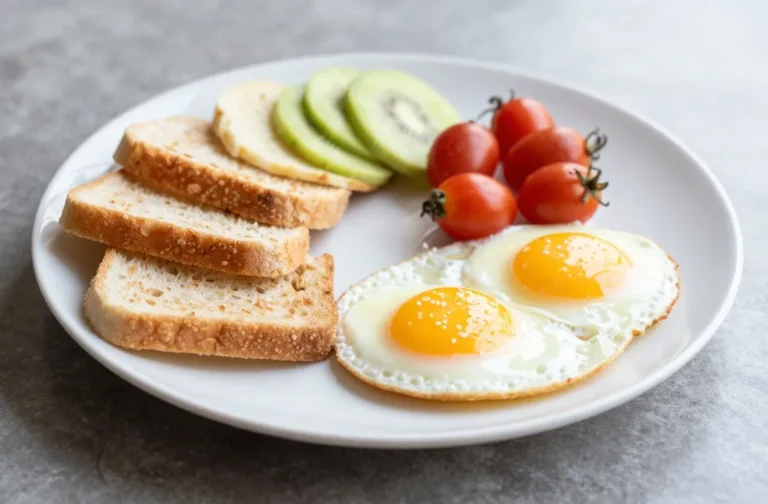
– Eat real meals so you don’t arrive at dinner ravenous.
The Hunger-Hormone Chaos
Sleep-debt and stress crank up ghrelin (the “I’m hungry” hormone) and lower leptin (the “I’m full” signal). You’ll feel hungrier and less satisfied. Not ideal.
Fix it: Prioritize 7–9 hours of sleep, eat protein at every meal, and don’t skip breakfast if it makes you snacky later.
You Confuse “Tired, Bored, Stressed” With “Hungry”

We eat to change how we feel—calm nerves, squash boredom, reward ourselves. That’s normal. But if food becomes your only tool, it turns into a boomerang.
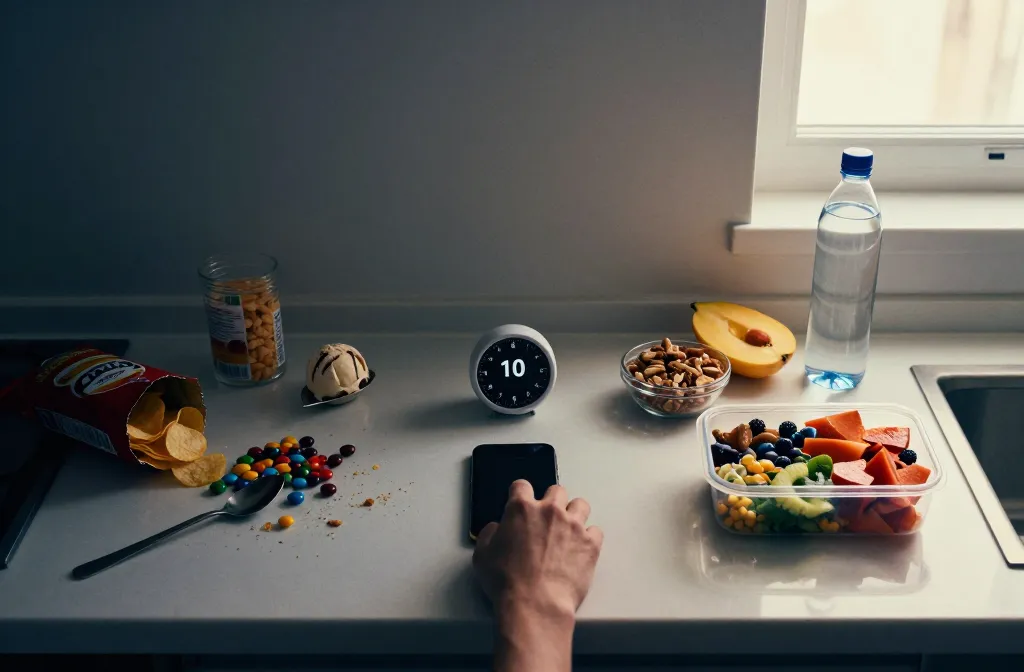
Try a 10-minute delay rule:
– Ask: What do I need right now—energy, comfort, or a break?
– If it’s comfort, take a walk, do 10 push-ups (or 3, chill), call a friend, or make tea.
– After 10 minutes, if you still want the food, eat it slowly and enjoy it on a plate.
The “Snackertainment” Trap
Screens + snacks = mindless refills.
– Eat at a table, not the couch.
– Put your portion in a bowl.
– Watch how fast your cravings lose power when you actually pay attention to your food.
All-Or-Nothing Thinking Keeps Winning
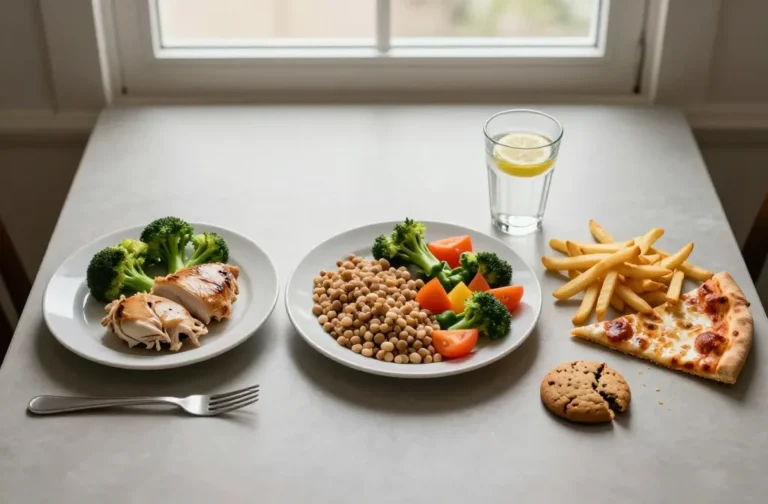
You go “perfect” for three days, then faceplant into pizza and declare the week ruined. That swing causes more damage than any single meal.
Adopt “Mostly, Not Perfect.”
– Aim for 80/20: mostly nutrient-dense foods, some fun foods.
– Use “and” instead of “or”: “I’ll eat pizza and a big salad.”
– If you overdo it, move on. Next meal = normal. No penance workouts required.
The Cheat-Day Illusion
Cheat days often turn into binge days because your brain anticipates scarcity.
Better: plan “flex meals.” One or two meals each week for whatever you want, eaten mindfully. Zero guilt, zero spirals.
Your Environment Makes the Choices For You

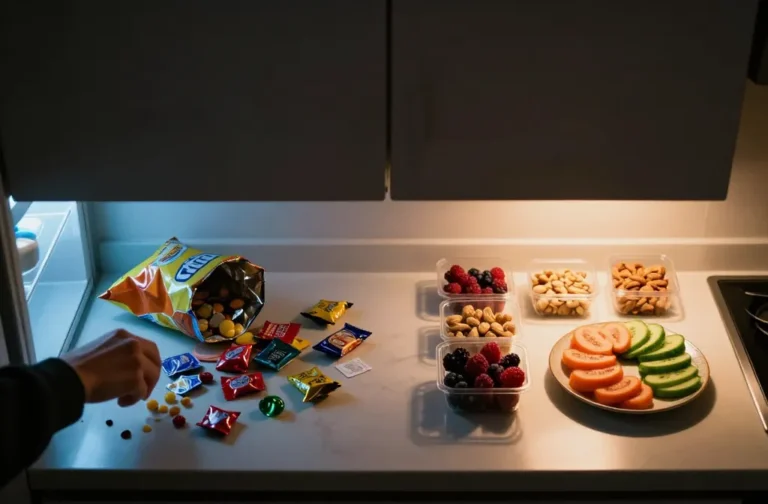
If your kitchen looks like a snack aisle, your future self already lost. Your surroundings beat motivation every time.
Engineer your defaults:
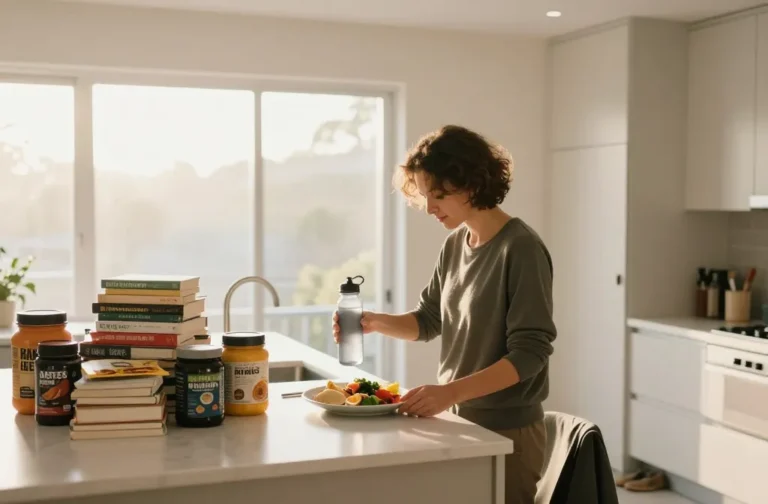
– Keep fruit, Greek yogurt, pre-cut veggies, and nuts at eye level.
– Hide the party snacks or stop buying them “for guests you never have.”
– Prep 2–3 proteins each week: chicken, tofu, hard-boiled eggs.
– Stock easy carbs: microwavable rice, potatoes, whole-grain wraps.
Portable Proteins You’ll Actually Eat
– Jerky or meat sticks
– String cheese or Babybel
– Edamame packs
– Protein yogurt cups
– Roasted chickpeas
Diet Culture Turned Food Into Math and Morality
When you label foods as “good” or “bad,” you give simple items big emotional jobs. Then you rebel. Because obviously.
Neutralize the drama: Food has consequences, not morals.
– You can eat cookies and still reach goals if your week balances out.
– You don’t “start over Monday.” You continue now.
– A higher-calorie meal doesn’t erase your progress; a pattern does.
You Don’t Eat Enough (Yes, Really)

Under-eating backfires. Low calories trigger cravings, low energy, and slow progress. Then you binge and think you failed. FYI: your plan failed you.
Build real meals:
– Protein (palm-sized)
– Vegetables (big handful)
– Carbs (cupped hand)
– Fats (thumb or two)
– Add flavor you love so you don’t “accidentally” order nachos later.
Quick Plate Templates
– Breakfast: Greek yogurt + berries + granola + peanut butter
– Lunch: Chicken wrap + hummus + veggies
– Dinner: Salmon + rice + roasted broccoli + olive oil
Emotions Need Skills, Not Snacks
Food can’t fix your boss, your inbox, or your loneliness. It can numb for 15 minutes—and leave you with the same problems plus heartburn.
Build a tiny coping menu:
- 5-minute walk outside
- Box breathing (4-4-4-4)
- Text one friend “got 2 minutes?”
- Hot shower or tea ritual
- Journal 5 lines: “I feel… I need…”
Pick one before you hit the pantry. IMO, this single habit changes everything.
Never Wonder What's For Dinner Again
Get 7 healthy, family-friendly dinners complete with recipes, grocery lists, and simple meal plans delivered straight to your inbox.
FAQ
Should I cut out sugar completely?
You can, but you don’t have to. Extreme restrictions usually snap back. Try crowding in protein, fiber, and water first. Cravings usually drop 30–50% when you’re nourished.
Is snacking “bad” for fat loss?
Not if it fits your calories and helps control hunger. Smart snacks with protein and fiber keep you from raiding the kitchen at night. Think apple + peanut butter or yogurt + nuts.
How do I stop late-night eating?
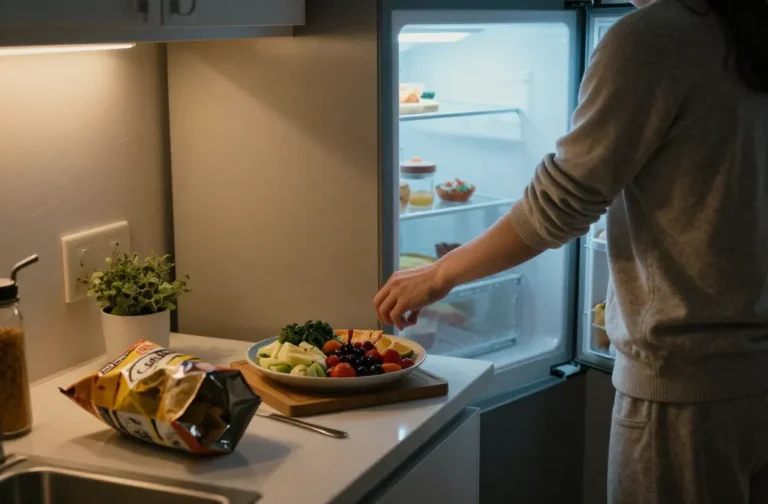
Eat enough during the day, especially protein at dinner. Set a kitchen “close” time, brush your teeth, and switch environments. If you’re actually hungry, have a planned snack like cottage cheese and berries.
What if I ate everything this weekend?
Hydrate, walk, eat a normal protein-forward breakfast, and move on. One weekend doesn’t decide your future. Your next five choices do.
Do I need to track calories?
It helps some people, annoys others. If tracking spikes anxiety, use hand-portion guides and build consistent meals. Consistency beats precision when precision makes you quit.
Simple Recipes + Estimated Nutrition
Serving sizes noted; if not provided, I estimated reasonable portions. Values are estimates based on standard USDA data.
1) Greek Yogurt Parfait
Ingredients (1 serving):
– 3/4 cup (170 g) nonfat Greek yogurt
– 1/2 cup (75 g) mixed berries
– 1/4 cup (30 g) granola
– 1 tbsp (16 g) peanut butter
Serving size: 1 parfait (about 300 g)
Estimated nutrition per serving:
– Calories: 360
– Total Fat: 12 g
– Total Carbohydrates: 46 g
– Dietary Fiber: 6 g
– Net Carbs: 40 g
– Protein: 23 g
2) Chicken Veggie Wrap
Ingredients (1 serving):
– 1 large whole-wheat tortilla (60 g)
– 3 oz (85 g) cooked chicken breast
– 2 tbsp (30 g) hummus
– 1/2 cup (35 g) mixed greens + 1/4 cup (30 g) sliced cucumbers
– 1 tbsp (15 g) feta
Serving size: 1 wrap
Estimated nutrition per serving:
– Calories: 360
– Total Fat: 11 g
– Total Carbohydrates: 40 g
– Dietary Fiber: 8 g
– Net Carbs: 32 g
– Protein: 27 g
3) Salmon, Rice, and Broccoli Bowl
Ingredients (1 serving):
– 5 oz (142 g) baked salmon
– 3/4 cup cooked jasmine rice (120 g)
– 1 cup roasted broccoli (90 g)
– 1 tsp olive oil (5 g) drizzled on broccoli
– Lemon, salt, pepper
Serving size: 1 bowl
Estimated nutrition per serving:
– Calories: 520
– Total Fat: 20 g
– Total Carbohydrates: 38 g
– Dietary Fiber: 4 g
– Net Carbs: 34 g
– Protein: 45 g
4) Cottage Cheese and Berry Bowl
Ingredients (1 serving):
– 3/4 cup (170 g) low-fat cottage cheese (2%)
– 1/2 cup (75 g) blueberries
– 1 tsp (7 g) honey
– 1 tbsp (10 g) sliced almonds
Serving size: 1 bowl
Estimated nutrition per serving:
– Calories: 220
– Total Fat: 7 g
– Total Carbohydrates: 22 g
– Dietary Fiber: 3 g
– Net Carbs: 19 g
– Protein: 20 g
5) Roasted Chickpeas Snack
Ingredients (makes 2 servings):
– 1 can chickpeas, drained and rinsed (240 g drained)
– 2 tsp olive oil (10 g)
– Spices: salt, paprika, garlic powder
Serving size: 1/2 batch (about 120 g)
Estimated nutrition per serving:
– Calories: 230
– Total Fat: 6 g
– Total Carbohydrates: 32 g
– Dietary Fiber: 9 g
– Net Carbs: 23 g
– Protein: 10 g
Disclaimer: Nutrition values are estimates based on standard USDA ingredient data and typical brands. Actual values may vary due to specific products, cooking methods, and portion sizes.
Bottom Line
You don’t sabotage your progress because you lack grit. You just run a human brain in a snack-filled world. Make the easy choice the healthy one, eat enough real food, add a few coping tools, and ditch the all-or-nothing script. Do that “mostly” and, FYI, your results will look suspiciously like magic.
Loved This Recipe?
If you're looking for more simple, healthy dinners your family will actually eat, grab my FREE 7-Day Easy Dinner Reset. You'll get 7 easy dinner recipes, simple grocery lists, and a done-for-you plan that takes the stress out of mealtime.