How to Stop Overeating in 7 Days and Actually Enjoy It
You want to stop overeating this week, not next year. Good. You don’t need a 300-page manual or a monk’s discipline. You need a simple plan, clear guardrails, and a tiny bit of swagger. Give me seven days. You’ll get your appetite under control, your energy up, and your cravings turned down.
FREE 7-Day Easy Dinner Reset
Get 7 healthy, family-friendly dinners complete with recipes and simple meal plans delivered straight to your inbox.
Why You Overeat (And Why It’s Not Your Fault)
Your body loves quick energy and comfort. Ultra-processed foods hit your brain like a slot machine and hijack hunger cues. Stress and sleep drama crank up hunger hormones, so your “willpower” never stands a chance.
FYI: You don’t need to “eat clean forever” to stop overeating. You just need to lower the noise—less trigger food, more structure, kinder self-talk. That’s it.
The 7-Day Reset: Simple, Doable, Zero Shame

You’ll follow the same basic rhythm each day. No perfection required—just consistency.
- Eat 3 solid meals (and 1 planned snack if needed). Keep it protein-forward with fiber and healthy fats.
- Close the kitchen after dinner. Give your brain a clear “we’re done” signal.
- Drink 2–3 liters of water and sip something warm after meals to slow down the urge to graze.
- Sleep 7–8 hours. Sleep debt = snack debt.
- Move daily for 20–30 minutes. Walks count. So does dancing badly in your kitchen.
What a Day Looks Like
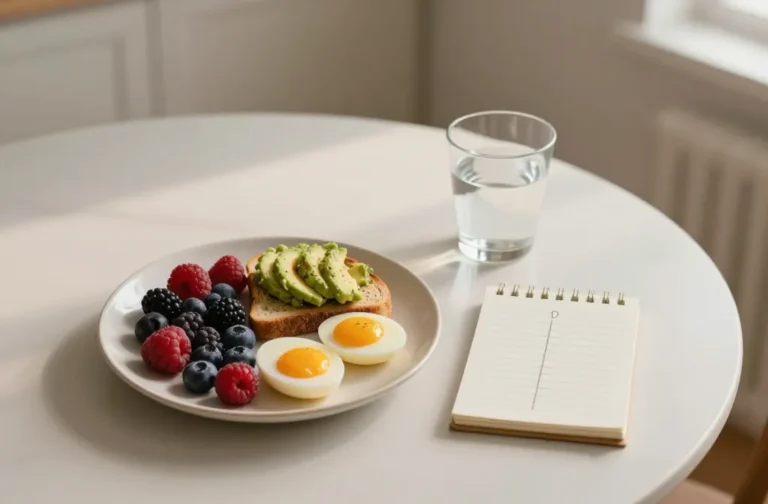
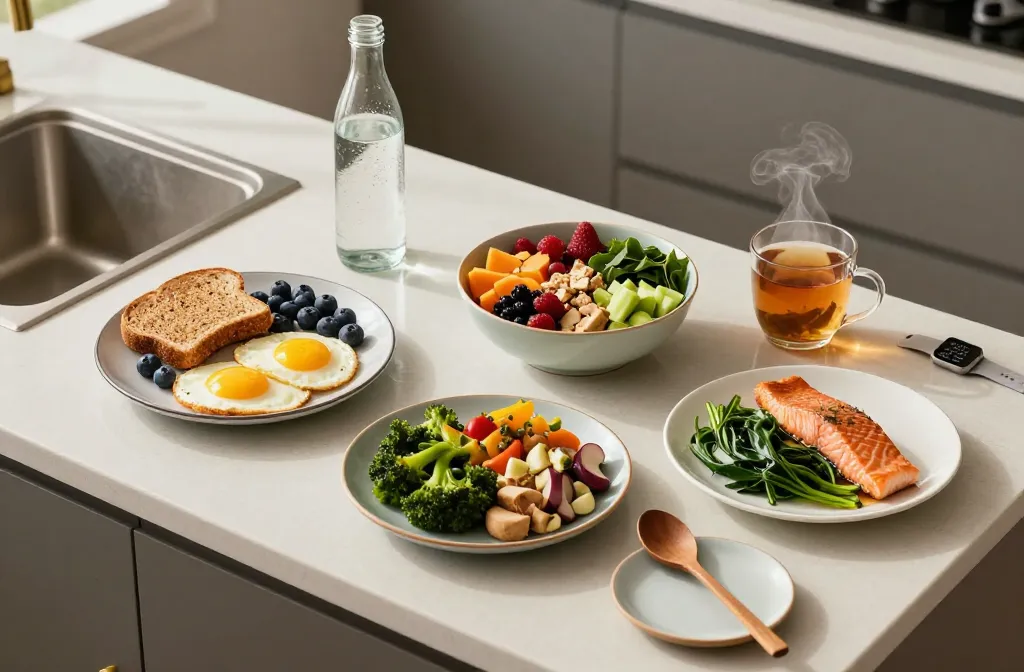
– Breakfast: Eggs + whole grain toast + berries
– Lunch: Chicken, rice, big salad, olive oil
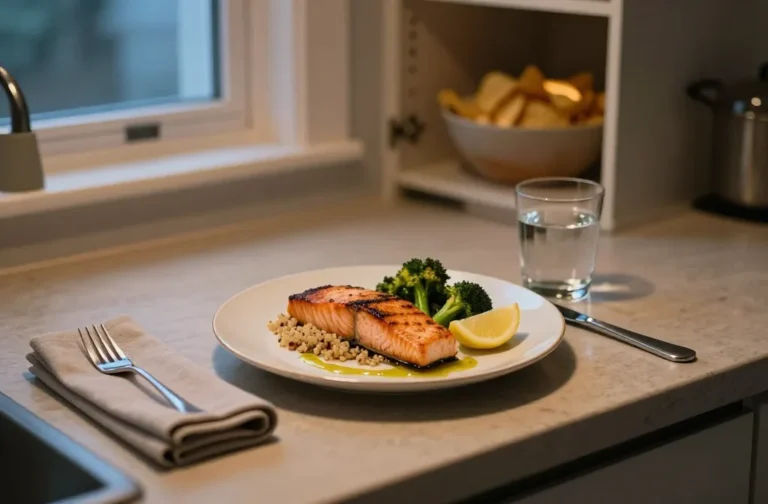
– Dinner: Salmon, roasted potatoes, veg
– Snack (optional): Greek yogurt + nuts, or an apple + cheese
Hunger Games: Master Your Cues
We eat for lots of reasons besides hunger. Bored? Stressed? Procrastinating? Same. Let’s sort the signals.
- Real hunger: builds slowly, any food sounds good, feels in the stomach
- Cravings: hit fast, fixate on one food, usually after triggers (ads, stress, fatigue)
- Emotional eating: shows up with feelings first, not stomach first
The 10-Minute Pause
When a craving hits, set a 10-minute timer. Drink water or tea. Stand up, walk, or do a chore. If you still want it after, have a reasonable portion—on a plate, sitting down. You didn’t “fail.” You practiced control.
Build Meals That Actually Keep You Full

Balance matters. You want meals that stabilize blood sugar and keep you satisfied for hours.
Use this formula (IMO it’s foolproof):
– Protein: 25–40 g per meal (chicken, fish, eggs, Greek yogurt, tofu)
– Fiber: 8–12 g per meal (veggies, beans, berries, whole grains)
– Fat: 10–20 g (olive oil, nuts, avocado)
– Smart carbs: 1–2 fists (rice, potatoes, quinoa, fruit)
Portion Cheat Sheet (No Scale Required)
– Protein: palm size (women 1, men 1–2)
– Carbs: cupped hand (1–2)
– Fats: thumb (1–2)
– Veggies: 2 fists (always)
Make Your Kitchen Boring (In a Good Way)
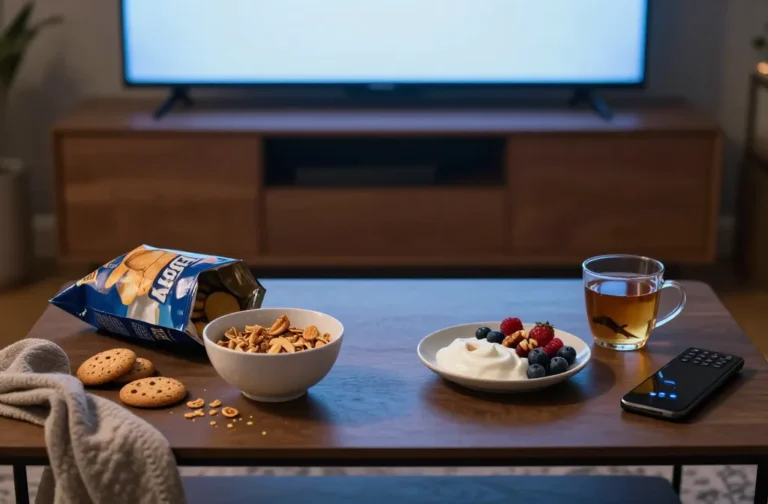
If your pantry looks like a snack aisle, of course you overeat. Environment beats willpower every time.
Do this today:
- Move trigger foods out of sight or out of the house (no shame; just strategy).
- Prep easy defaults: grilled chicken, washed greens, chopped veggies, microwave rice, frozen berries.
- Pre-plate snacks. No eating from the bag or jar—ever.
- Use smaller plates and bowls. You’ll eat less and feel just as satisfied. Brains are weird.
Stress Less, Snack Less

Cortisol screams “eat now.” You can’t white-knuckle stress forever, so add micro-relief daily.
Five-minute options that work:
- Box breathing: 4 seconds in, hold 4, out 4, hold 4 (repeat 5 times).
- Walk around the block without your phone.
- Hot shower or face splash—resets your nervous system fast.
- Journal one page: “What do I feel? What do I need?”
Rules That Don’t Suck (Just for One Week)
Think of these like bumpers at the bowling alley. You can’t gutter-ball your day.
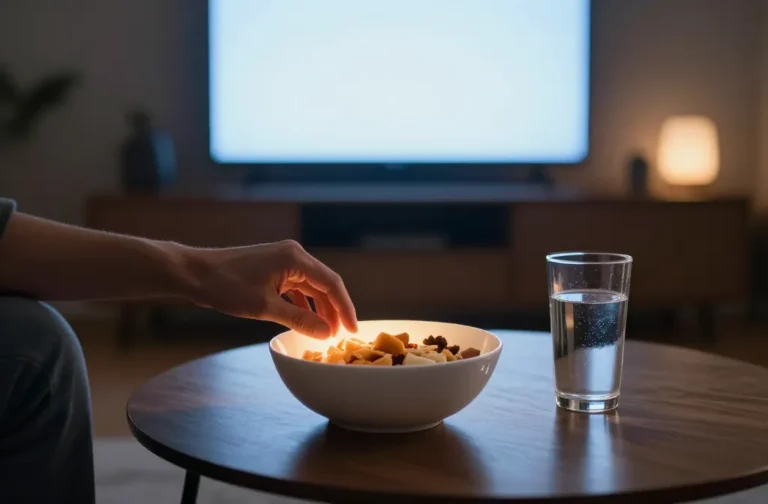
- No screens while eating. If you scroll, you overeat. It’s science… and also experience.
- Plate everything. Standing with the fridge door open does not count as dinner.
- Eat slowly for 12–15 minutes minimum. Put the fork down between bites.
- Stop at “satisfied,” not stuffed. On a scale of 1–10 hunger/fullness, aim to stop around 7.
Never Wonder What's For Dinner Again
Get 7 healthy, family-friendly dinners complete with recipes, grocery lists, and simple meal plans delivered straight to your inbox.
Three Easy Recipes to Power Your 7 Days
Each recipe includes estimated nutrition per serving (based on standard USDA data). Serving sizes noted below.
1) High-Protein Greek Yogurt Bowl
Ingredients (1 serving):
– 3/4 cup (170 g) plain nonfat Greek yogurt
– 1/2 cup mixed berries (75 g)
– 1 tablespoon honey (21 g)
– 1 tablespoon chopped almonds (9 g)
– 1 tablespoon chia seeds (12 g)
Why it works: Protein, fiber, and healthy fats keep you full and tame cravings.
Estimated nutrition per serving (about 285 g):
– Calories: 330
– Total Fat: 10 g
– Total Carbohydrates: 45 g
– Dietary Fiber: 10 g
– Net Carbs: 35 g
– Protein: 24 g
2) Sheet-Pan Lemon Herb Chicken and Veg
Serves: 4 (approx. 400 g per serving)
Ingredients:
– 1.5 lb (680 g) boneless skinless chicken breast
– 1 lb (454 g) baby potatoes, halved
– 1 large zucchini (200 g), chopped
– 1 red bell pepper (150 g), sliced
– 2 tbsp olive oil (28 g)
– Juice of 1 lemon (48 g) + zest
– 2 tsp dried Italian seasoning, 1 tsp garlic powder, 1 tsp salt
Method: Toss everything with oil/seasoning; roast at 425°F (220°C) for 25–30 minutes.
Estimated nutrition per serving (about 400 g):
– Calories: 420
– Total Fat: 12 g
– Total Carbohydrates: 36 g
– Dietary Fiber: 6 g
– Net Carbs: 30 g
– Protein: 43 g
3) Salmon, Rice, and Greens Bowl
Serves: 2 (approx. 450 g per serving)
Ingredients:
– 10 oz (284 g) salmon fillet, baked
– 1 cup cooked brown rice (195 g)
– 2 cups steamed broccoli (156 g)
– 1 tbsp olive oil (14 g)
– 1 tbsp low-sodium soy sauce (15 g)
– Lemon wedge, pepper, chili flakes
Method: Flake salmon, assemble over rice with broccoli; drizzle oil and soy, squeeze lemon.
Estimated nutrition per serving (about 450 g):
– Calories: 540
– Total Fat: 22 g
– Total Carbohydrates: 44 g
– Dietary Fiber: 6 g
– Net Carbs: 38 g
– Protein: 41 g
Disclaimer: Nutrition values are estimates based on standard USDA ingredient data and common brands. Actual values vary by product, preparation, and portion size.
Your 7-Day Game Plan
Day 1–2: Clean the environment, prep defaults, nail the 3-meal structure.
Day 3–4: Practice the 10-minute pause, slow your meals, track hunger/fullness once per day.
Day 5–6: Add one more veggie at lunch and dinner, walk after dinner, keep kitchen closed after.
Day 7: Review wins, note trigger times, plan next week’s grocery list.
Pro tip: If you “mess up,” you didn’t break anything. Resume at the next meal. That’s the whole trick.
FAQ
What if I’m still hungry after dinner?
Have a structured, protein-forward snack: Greek yogurt, cottage cheese, or a protein shake with berries. If you feel hungry again 30 minutes after, it’s likely a craving or habit. Try tea, a walk, or brushing your teeth.
Can I eat dessert?
Yes—on purpose. Pick one dessert, plate it, sit down, enjoy it slowly. No mindless nibbling from the pan. IMO, planned pleasure beats chaotic snacking every time.
Do I need to count calories?
Not this week. Focus on structure and quality. If progress stalls later, tracking for a few days can help calibrate, but it’s optional.
What about intermittent fasting?
If it helps you simplify mornings, cool. But don’t use fasting to justify overeating later. Priority remains balanced meals and stopping at satisfied.
How do I handle social events?
Eat a protein-rich snack before, scan the table for your plate (protein + veg + carb), enjoy 1–2 favorites, and keep a drink in your hand. Socialize away from the food table. You’re there for people, not pretzels.
What if stress triggers everything?
Pair a boundary with a swap. Boundary: no eating from containers. Swap: tea, a 5-minute walk, or a hot shower before any snack. You interrupt the loop without needing superhuman willpower.
The Bottom Line
You don’t need perfection. You need a week of clear structure, balanced meals, and simple rules that protect your energy and attention. Do that, and overeating loses its grip. Keep the parts that work for you, drop the rest, and remember: progress > perfection. Now go make your kitchen boring and your meals satisfying. Your future self says thanks.
Loved This Recipe?
If you're looking for more simple, healthy dinners your family will actually eat, grab my FREE 7-Day Easy Dinner Reset. You'll get 7 easy dinner recipes, simple grocery lists, and a done-for-you plan that takes the stress out of mealtime.