Healthy Sesame Ginger Salmon – A Bright, Flavor-Packed Weeknight Dinner
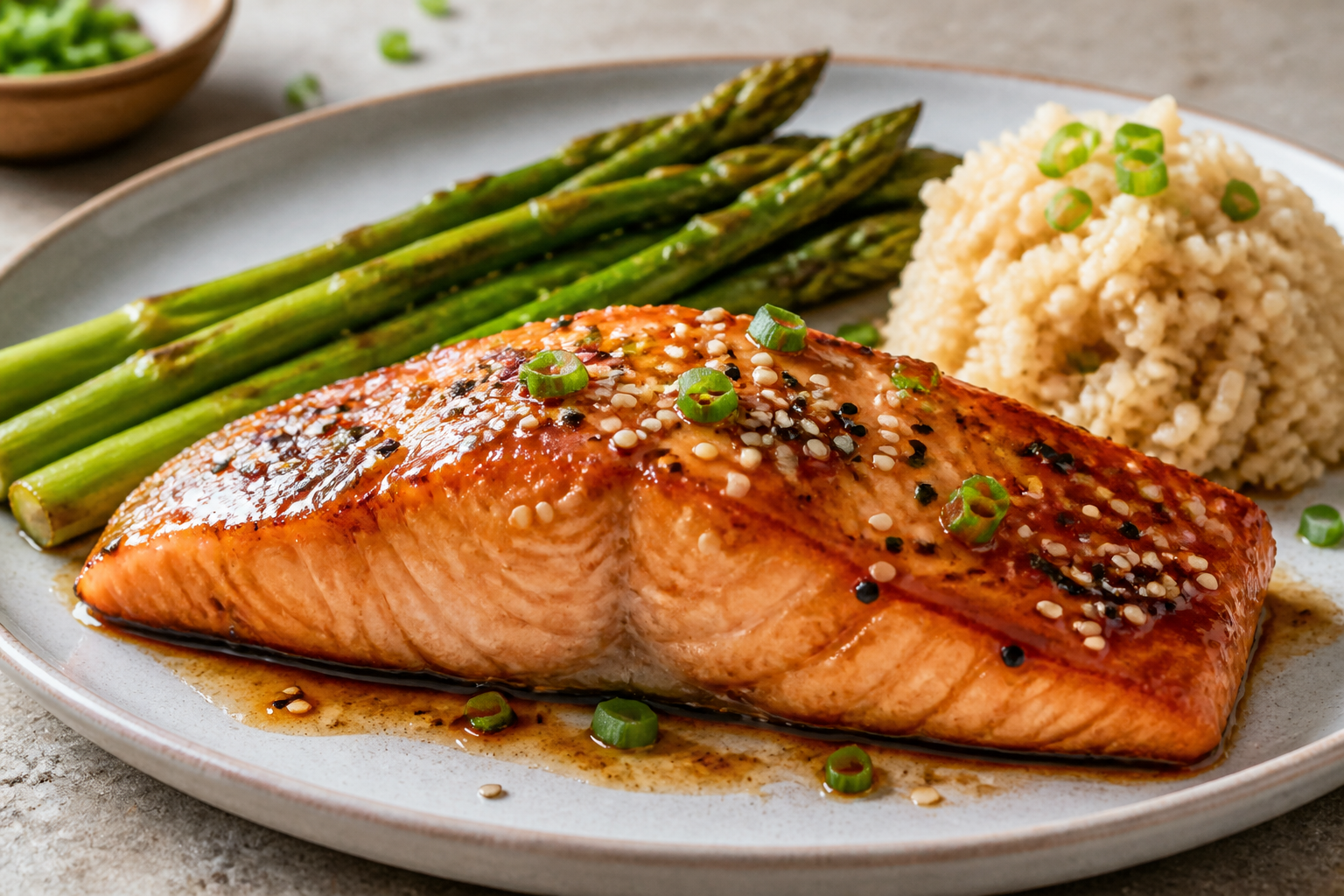
This sesame ginger salmon hits that sweet spot: quick to make, big on flavor, and good for you. It’s the kind of meal you can pull together on a busy night and still feel proud to serve. The marinade is simple—fresh ginger, garlic, sesame, and a hint of sweetness—yet it tastes like something from your favorite restaurant.
FREE 7-Day Easy Dinner Reset
Get 7 healthy, family-friendly dinners complete with recipes and simple meal plans delivered straight to your inbox.
Pair it with rice, quinoa, or a crisp salad, and you’ve got a complete, satisfying dinner without fuss.
Ingredients
Method
- Preheat and prep: Heat the oven to 400°F (200°C). Line a baking sheet with parchment for easy cleanup, or lightly oil a baking dish.
- Make the marinade: In a small bowl, whisk the soy sauce, rice vinegar, honey, sesame oil, ginger, garlic, sriracha (if using), lime juice, and sesame seeds until smooth.
- Season the salmon: Pat the fillets dry with paper towels. Place them on the prepared sheet, skin side down if using skin-on. Sprinkle with a little black pepper.
- Marinate briefly: Spoon about two-thirds of the marinade over the salmon, coating evenly. Let it sit for 10–15 minutes while the oven finishes heating. Reserve the remaining sauce for glazing.
- Bake: Bake for 10–12 minutes for thinner fillets or 12–15 minutes for thicker ones, until the salmon is nearly opaque and flakes easily with a fork.
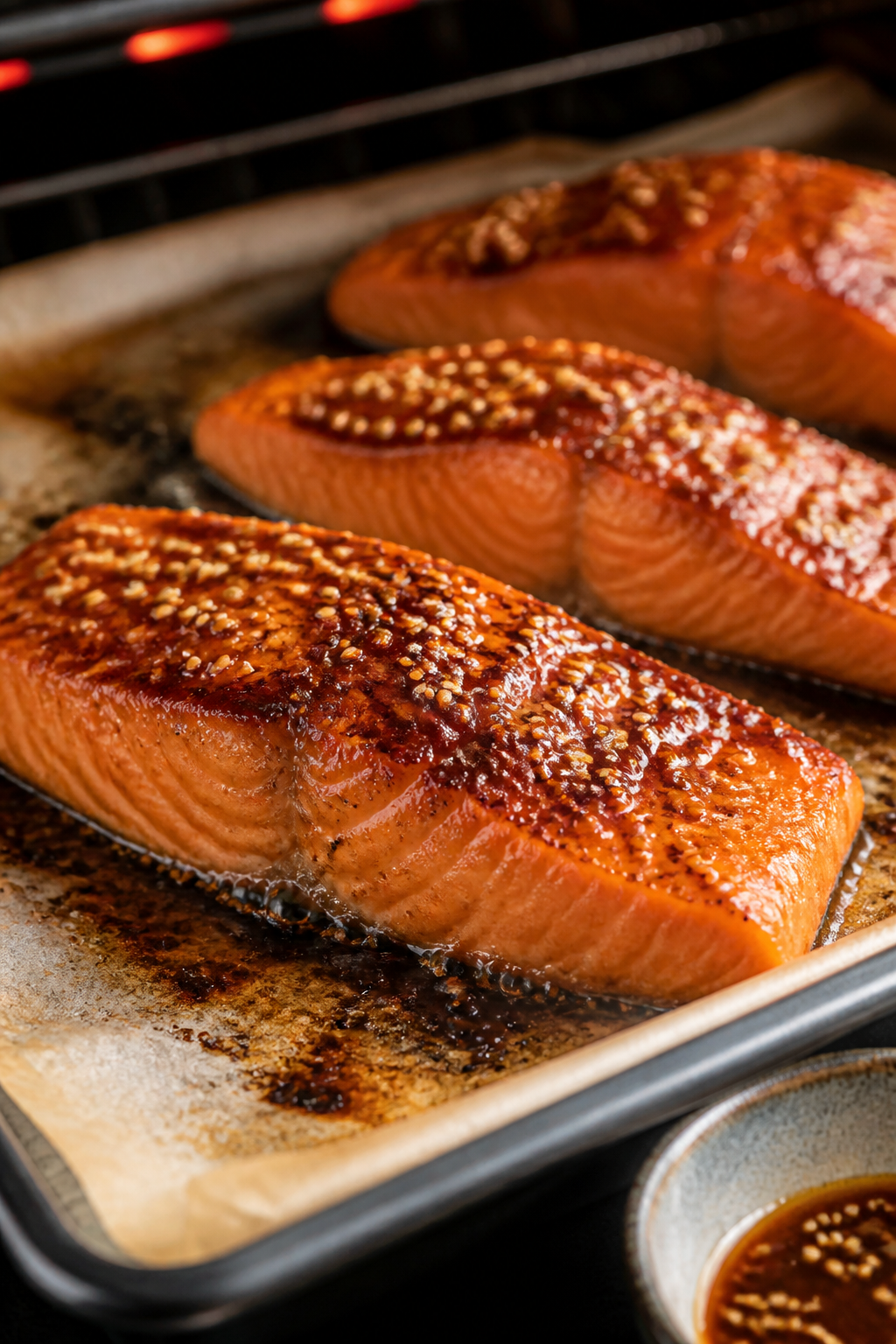
- Glaze and broil: Switch the oven to broil. Brush the salmon with the reserved marinade and broil for 1–2 minutes, just until the top is lightly caramelized and glossy. Don’t walk away—this goes fast.
- Finish and serve: Sprinkle with extra sesame seeds and sliced green onions. Serve with steamed rice, quinoa, or sautéed greens. Spoon any pan juices over the top.
Why This Recipe Works
Great salmon recipes are all about balance. This one nails it with a mix of savory soy, bright ginger, nutty sesame, and a little sweetness to round things out. The marinade doubles as a glaze, so you get deep flavor without extra steps.
Baking keeps the fish moist, while a quick broil at the end caramelizes the sauce for a glossy finish. It’s simple, consistent, and easy to tweak to your taste.
Ingredients
- 4 salmon fillets (about 5–6 ounces each), skin on or off
- 3 tablespoons low-sodium soy sauce or tamari
- 1 tablespoon rice vinegar (unseasoned)
- 1 tablespoon honey or pure maple syrup
- 1 tablespoon toasted sesame oil
- 1 tablespoon fresh ginger, finely grated
- 2 cloves garlic, minced
- 1 teaspoon sriracha or chili-garlic sauce (optional, for heat)
- 1 tablespoon lime juice (or lemon juice)
- 2 teaspoons sesame seeds, plus more for garnish
- 2 green onions, thinly sliced, for garnish
- 1 tablespoon neutral oil (avocado or olive oil), for the pan
- Pinch of black pepper
How to Make It
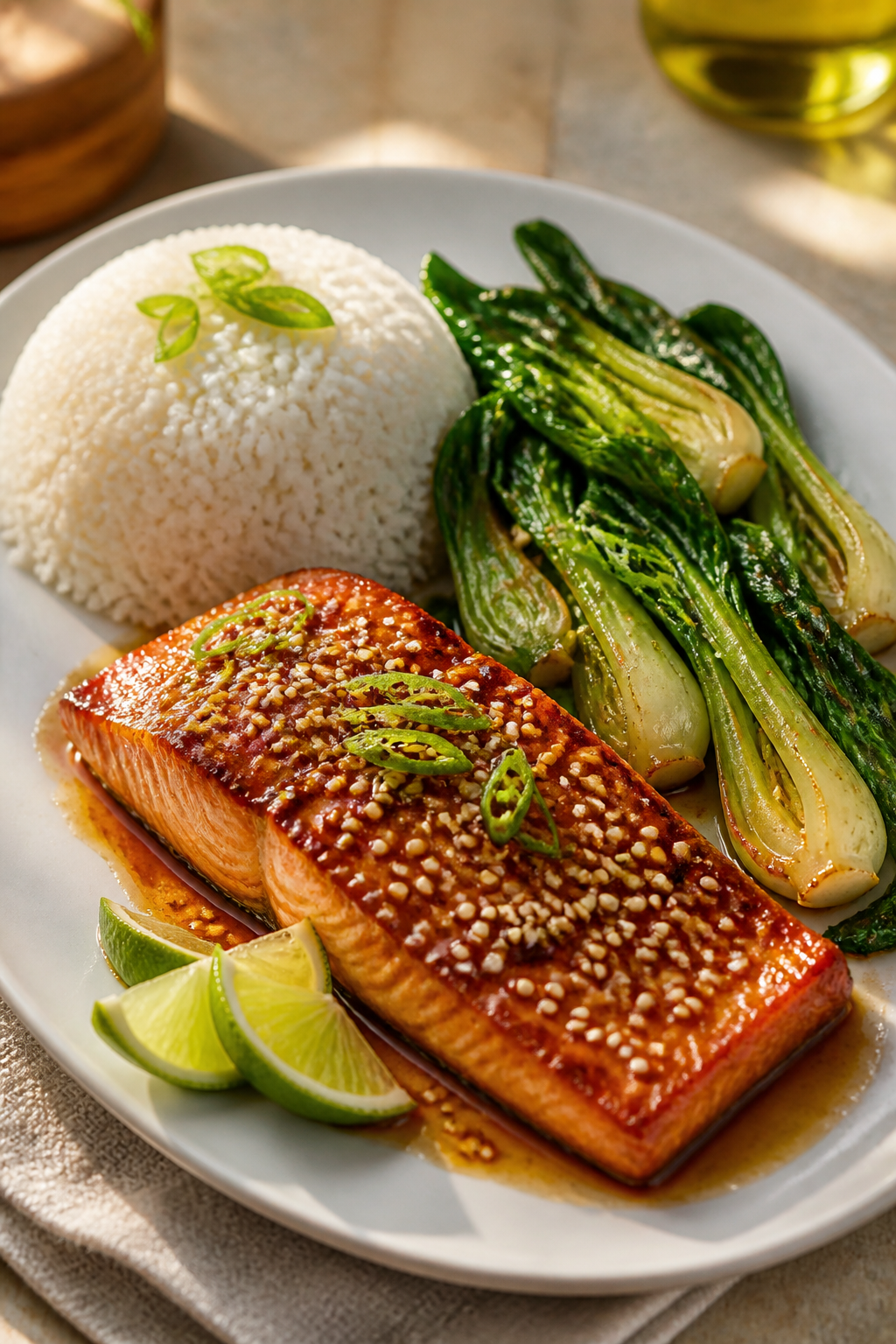
- Preheat and prep: Heat the oven to 400°F (200°C). Line a baking sheet with parchment for easy cleanup, or lightly oil a baking dish.
- Make the marinade: In a small bowl, whisk the soy sauce, rice vinegar, honey, sesame oil, ginger, garlic, sriracha (if using), lime juice, and sesame seeds until smooth.
- Season the salmon: Pat the fillets dry with paper towels.
Place them on the prepared sheet, skin side down if using skin-on. Sprinkle with a little black pepper.
- Marinate briefly: Spoon about two-thirds of the marinade over the salmon, coating evenly. Let it sit for 10–15 minutes while the oven finishes heating.
Reserve the remaining sauce for glazing.
- Bake: Bake for 10–12 minutes for thinner fillets or 12–15 minutes for thicker ones, until the salmon is nearly opaque and flakes easily with a fork.
- Glaze and broil: Switch the oven to broil. Brush the salmon with the reserved marinade and broil for 1–2 minutes, just until the top is lightly caramelized and glossy. Don’t walk away—this goes fast.
- Finish and serve: Sprinkle with extra sesame seeds and sliced green onions.
Serve with steamed rice, quinoa, or sautéed greens. Spoon any pan juices over the top.
Keeping It Fresh
Cooked salmon is best the day it’s made, but leftovers can be great. Store in an airtight container in the fridge for up to 2 days.
Reheat gently—low and slow—so it doesn’t dry out. A covered skillet over low heat or a quick zap in the microwave at 50% power works well.
Want to meal-prep? Marinate the salmon up to 12 hours ahead and keep it chilled until baking. You can also make the sauce 2–3 days in advance and store it separately.
For freezing, cook the salmon, cool completely, wrap tightly, and freeze up to 2 months. Thaw overnight in the fridge and warm gently.
Health Benefits
- Rich in omega-3s: Salmon provides EPA and DHA, which support heart health, brain function, and reduce inflammation.
- High-quality protein: Each fillet delivers satisfying protein to help with muscle repair and steady energy.
- Lower-sodium smart swaps: Using low-sodium soy sauce keeps salt in check without losing flavor.
- Antioxidant boost: Ginger and garlic add anti-inflammatory and immune-supportive compounds.
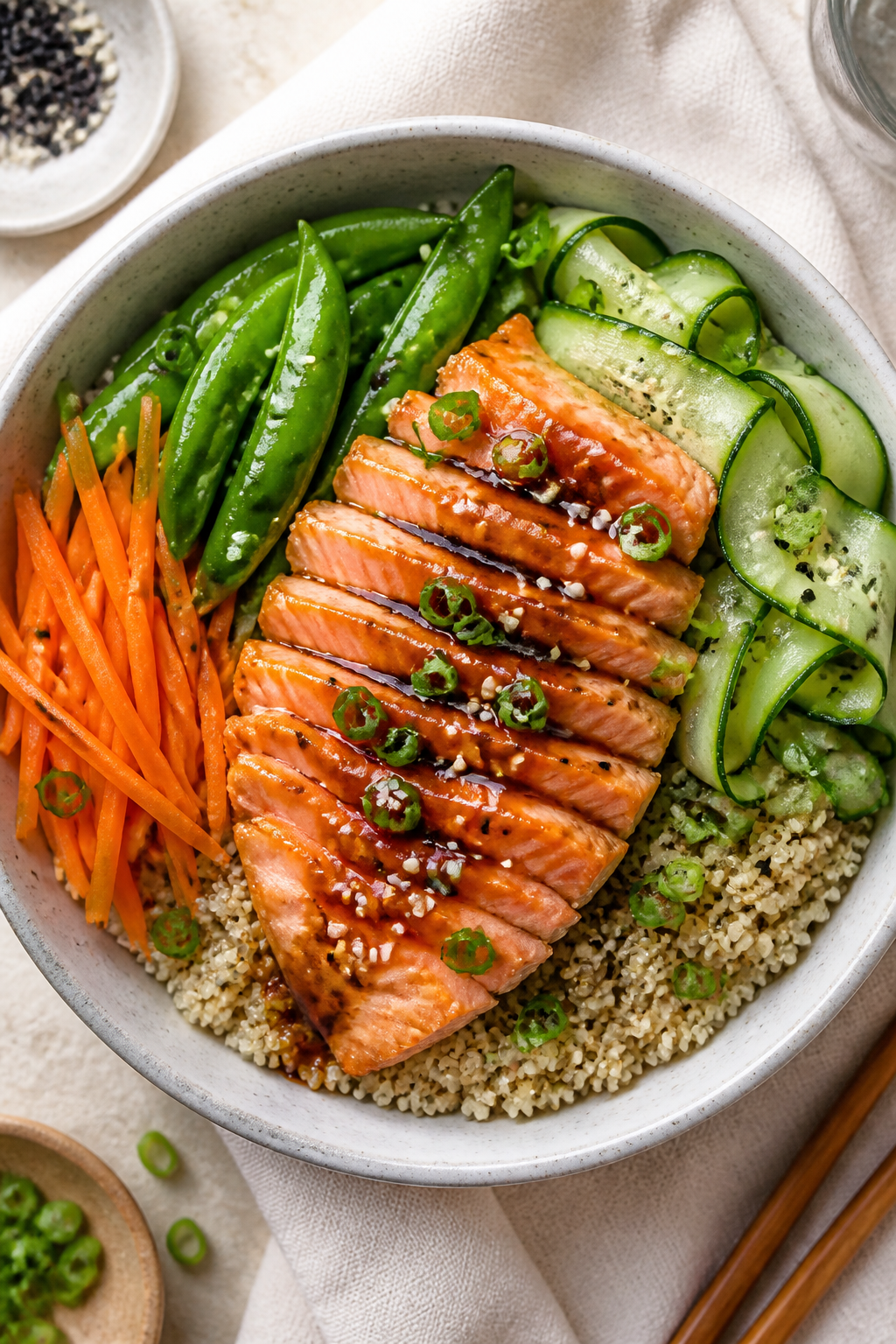
- Balanced meal potential: Pair with fiber-rich sides like brown rice, quinoa, or veggies for a complete plate.
Common Mistakes to Avoid
- Overbaking the salmon: Dry salmon is the fastest way to ruin it. Start checking a few minutes early.
It should flake easily and still look slightly glossy inside.
- Skipping the pat-dry step: Moisture on the surface prevents the glaze from sticking and caramelizing nicely.
- Using too much sweetener: A little honey goes a long way. Too much makes the glaze burn under the broiler.
- Marinating too long in acid: The vinegar and citrus can start to “cook” the fish. Keep marinating to 15 minutes on the counter or up to 12 hours in the fridge with less citrus.
- Not reserving sauce for glazing: Save some for the end.
It intensifies flavor and gives that glossy finish.
Variations You Can Try
Never Wonder What's For Dinner Again
Get 7 healthy, family-friendly dinners complete with recipes, grocery lists, and simple meal plans delivered straight to your inbox.
- Sheet-pan dinner: Add broccoli florets and thinly sliced carrots to the pan. Toss with a little oil and salt. Roast the veggies for 10 minutes, then add the salmon and finish cooking together.
- Air fryer: Cook at 390°F (200°C) for 8–10 minutes, brushing with extra marinade at the end.
Great for crisp edges.
- Grilled: Place salmon on a well-oiled grill over medium heat, 4–5 minutes per side. Brush with glaze during the last minute.
- Coconut twist: Swap rice vinegar for lime juice and add 1–2 tablespoons light coconut milk to the marinade. Serve with jasmine rice and cucumber.
- Gluten-free: Use tamari or coconut aminos instead of regular soy sauce.
- No-sugar option: Replace honey with a few drops of liquid stevia or a small splash of orange juice for subtle sweetness.
FAQ
Can I use frozen salmon?
Yes.
Thaw it overnight in the fridge or under cold running water in its packaging. Pat very dry before marinating so the glaze sticks and the fish browns nicely.
How do I know when the salmon is done?
Look for flakes that separate easily with a fork and a slightly translucent center. If you use a thermometer, aim for 125–130°F in the thickest part for moist, medium doneness; it will rise a few degrees as it rests.
What sides go best with sesame ginger salmon?
Steamed rice or quinoa, roasted broccoli, bok choy, sugar snap peas, or a simple cucumber salad all work well.
The clean, fresh flavors balance the savory glaze.
Can I make this with skin-on salmon?
Absolutely. Bake skin-side down. The skin helps keep the fish moist and lifts off easily after cooking.
If you like crispy skin, try a quick sear in a hot skillet before finishing in the oven.
Is there a way to cut the sodium even more?
Use low-sodium tamari and add a tablespoon of water to the marinade. Brighten with extra lime juice instead of more soy if you feel it needs a boost.
What if I don’t have fresh ginger?
Use 1/2 teaspoon ground ginger in a pinch. The flavor is milder and a bit different, but it still works.
Add a splash of extra lime for brightness.
Can I cook this ahead for meal prep?
Yes, but keep in mind salmon is best fresh. Cook it slightly under, chill promptly, and reheat gently. Or pack it cold over a grain bowl with veggies and a drizzle of extra sauce for a no-heat lunch.
Final Thoughts
Healthy Sesame Ginger Salmon is one of those dependable recipes that makes weeknights easier and a lot tastier.
It’s fast, flexible, and loaded with fresh, bold flavors. With a few pantry staples and a quick broil, you get a polished, nourishing meal that feels special without much effort. Keep this one in your rotation—you’ll use it again and again.
Printable Recipe Card
Want just the essential recipe details without scrolling through the article? Get our printable recipe card with just the ingredients and instructions.
Loved This Recipe?
If you're looking for more simple, healthy dinners your family will actually eat, grab my FREE 7-Day Easy Dinner Reset. You'll get 7 easy dinner recipes, simple grocery lists, and a done-for-you plan that takes the stress out of mealtime.