Sheet Pan Teriyaki Salmon Dinner – Simple, Saucy, and Weeknight-Friendly
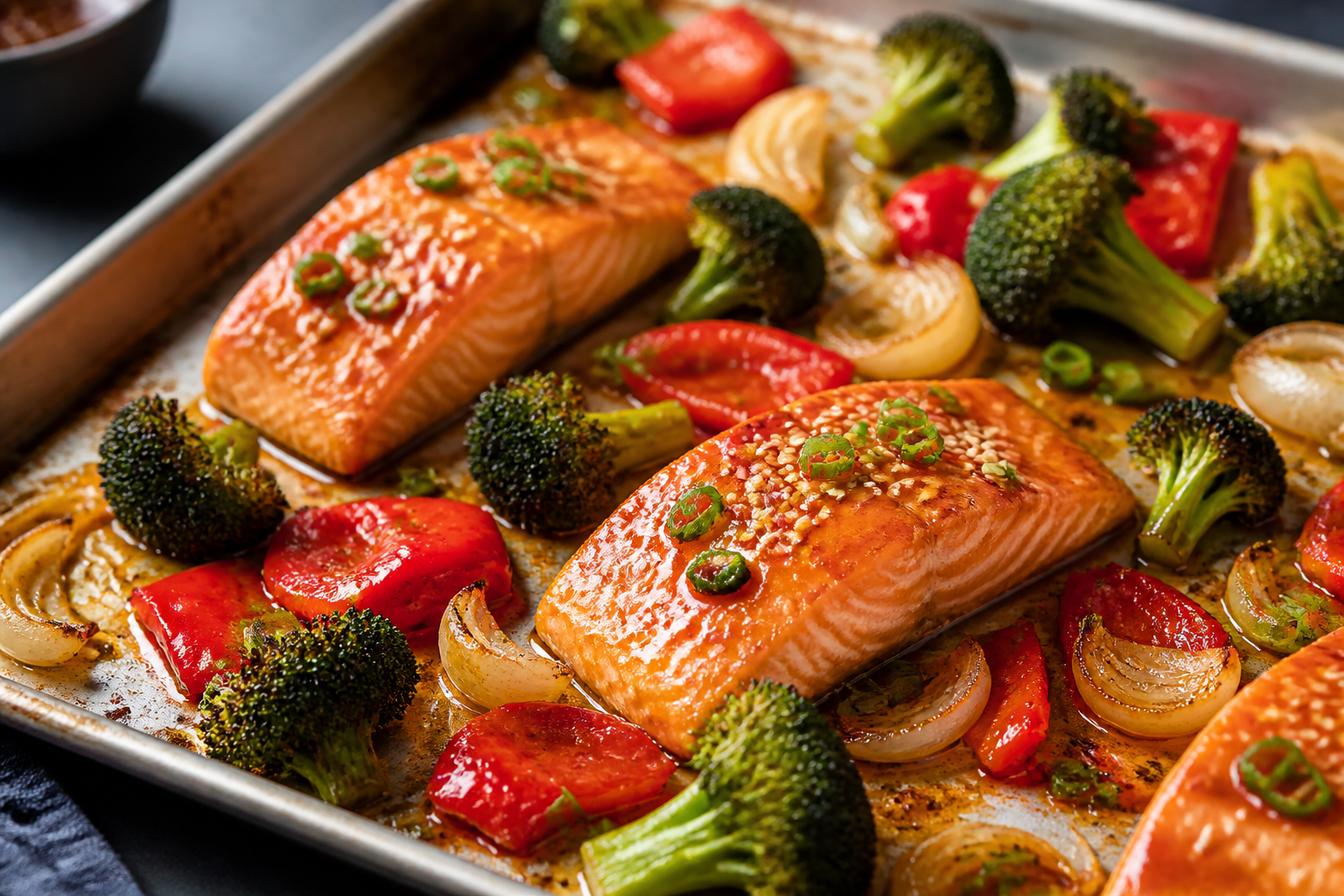
A sheet pan dinner that tastes like takeout but cooks in under 30 minutes? That’s the kind of weeknight magic everyone can get behind. This Sheet Pan Teriyaki Salmon Dinner delivers tender, flaky salmon with glossy, savory-sweet sauce and caramelized vegetables all on one pan.
FREE 7-Day Easy Dinner Reset
Get 7 healthy, family-friendly dinners complete with recipes and simple meal plans delivered straight to your inbox.
It’s fast, colorful, and seriously satisfying. Even better, cleanup is minimal, thanks to one pan and a quick homemade sauce that beats bottled versions. If you’re craving bold flavor without much effort, this is your new go-to.
Ingredients
Method
- Preheat and prep the pan. Heat the oven to 425°F (220°C). Line a large rimmed sheet pan with parchment or foil for easy cleanup.
- Make the teriyaki sauce. In a small saucepan, whisk the soy sauce, honey, rice vinegar, sesame oil, garlic, ginger, and 1/3 cup of the water. Bring to a gentle simmer over medium heat.
- Thicken it. In a cup, whisk the cornstarch with the remaining water to make a slurry. Slowly whisk it into the simmering sauce. Cook 1–2 minutes until glossy and slightly thick. Remove from heat. Reserve about 1/4 cup for serving.
- Toss the vegetables. On the sheet pan, combine broccoli, bell pepper, red onion, snap peas, and carrot with the neutral oil and a pinch of salt. Spread into an even layer. Roast for 8–10 minutes to give them a head start.
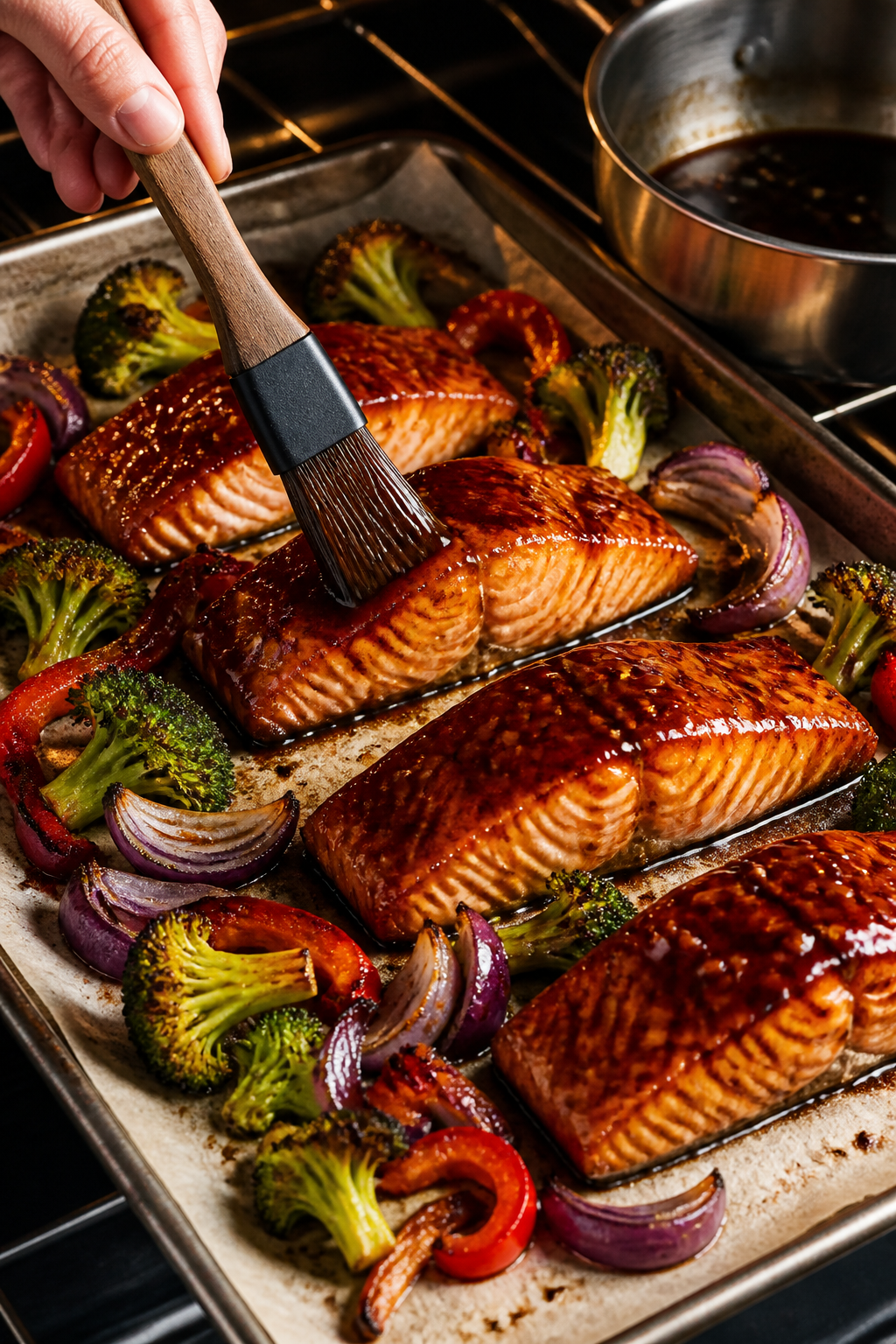
- Add the salmon. Pat the salmon dry and place the fillets skin-side down among the vegetables. Brush generously with teriyaki sauce. Spoon some sauce over the veggies too.
- Roast until just done. Return the pan to the oven and cook 8–12 minutes, depending on thickness. The salmon should flake easily and read about 125–130°F (52–54°C) in the thickest part for medium.
- Broil for gloss (optional). If you want a stickier finish, switch to broil for 1–2 minutes. Keep a close eye—sugars can burn fast.
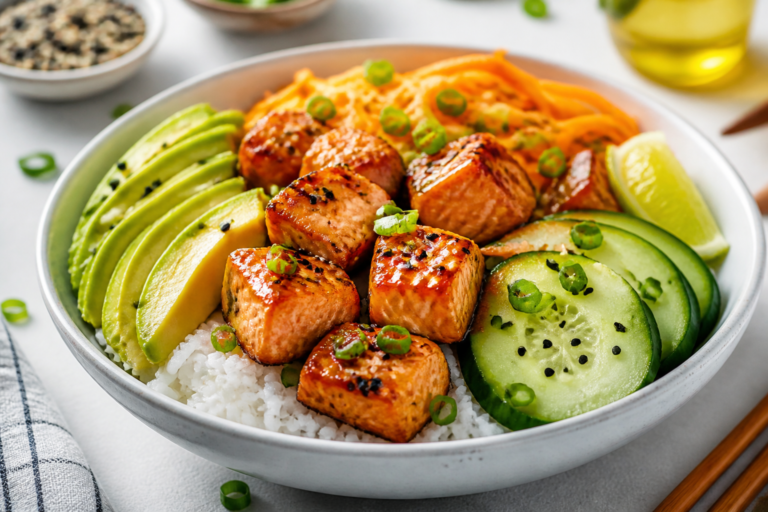
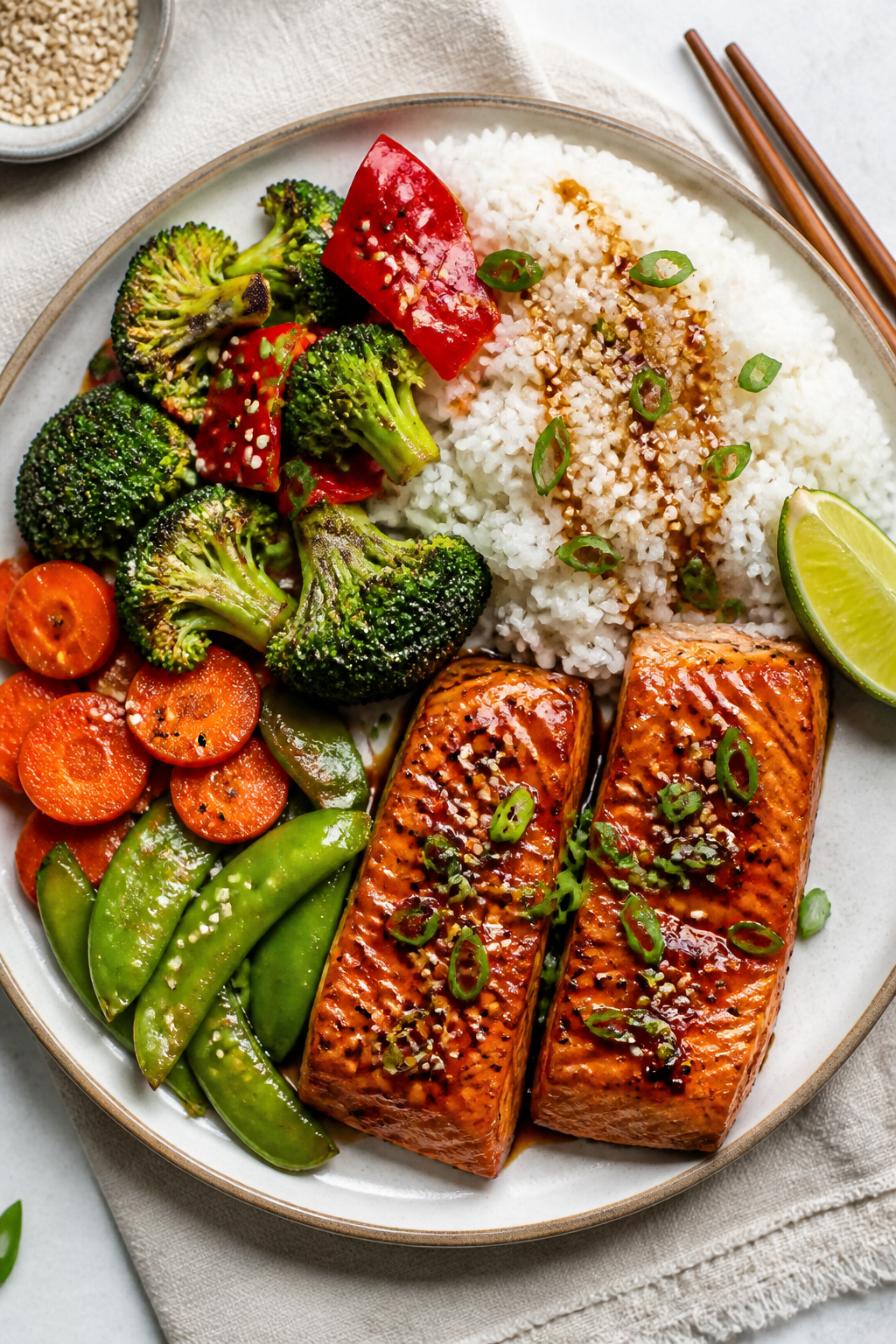
- Finish and serve. Drizzle the reserved teriyaki sauce over the salmon. Sprinkle with sesame seeds and green onions. Serve with steamed rice or quinoa and a squeeze of lime.
What Makes This Special
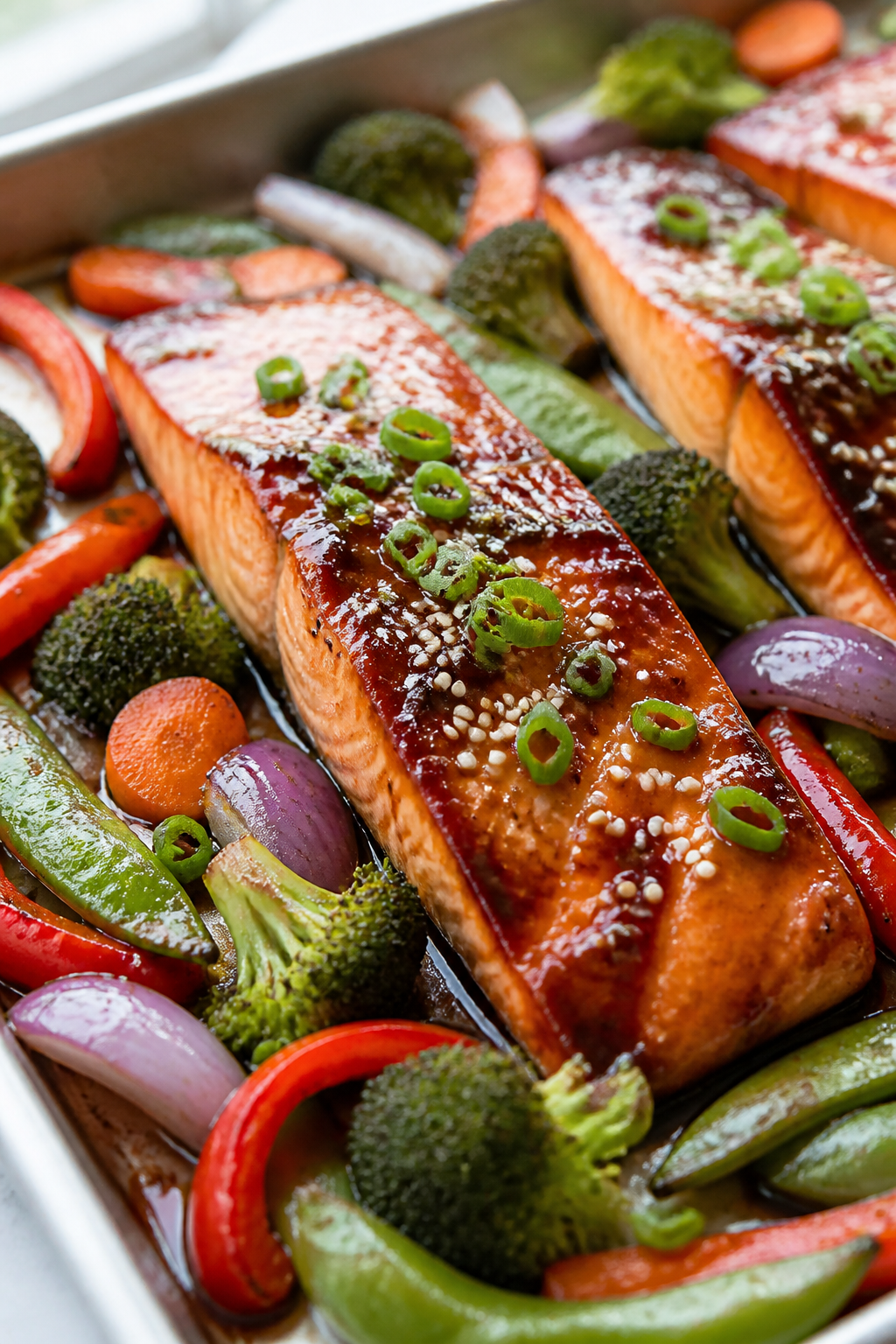
This dinner hits that sweet spot of being both practical and special.
The teriyaki sauce is made from pantry staples, but it tastes rich and restaurant-worthy. It coats the salmon as it bakes, turning sticky and glossy while the vegetables pick up those savory drippings. Everything cooks together so the flavors mingle beautifully.
And because it’s a sheet pan meal, you can scale it up or down easily for meal prep or a quick dinner for two.
What You’ll Need
- Salmon: 4 skin-on fillets (about 5–6 oz each)
- Vegetables:
- 1 small broccoli crown, cut into florets
- 1 red bell pepper, sliced
- 1 small red onion, sliced into wedges
- 1 cup snap peas or green beans
- 1 medium carrot, thinly sliced on a bias
- Teriyaki Sauce:
- 1/3 cup low-sodium soy sauce or tamari
- 3 tablespoons honey or maple syrup
- 2 tablespoons rice vinegar
- 1 tablespoon toasted sesame oil
- 2 cloves garlic, finely minced
- 1 teaspoon fresh ginger, grated (or 1/2 teaspoon ground ginger)
- 1/2 cup water
- 2 teaspoons cornstarch
- To Finish:
- 1 tablespoon neutral oil (for the veggies)
- Sesame seeds
- Sliced green onions
- Lime wedges (optional)
- Cooked rice or quinoa, for serving
- Equipment: Large rimmed sheet pan, parchment paper or foil, small saucepan, whisk
How to Make It
- Preheat and prep the pan. Heat the oven to 425°F (220°C). Line a large rimmed sheet pan with parchment or foil for easy cleanup.
- Make the teriyaki sauce. In a small saucepan, whisk the soy sauce, honey, rice vinegar, sesame oil, garlic, ginger, and 1/3 cup of the water. Bring to a gentle simmer over medium heat.
- Thicken it. In a cup, whisk the cornstarch with the remaining water to make a slurry.
Slowly whisk it into the simmering sauce. Cook 1–2 minutes until glossy and slightly thick. Remove from heat.
Reserve about 1/4 cup for serving.
- Toss the vegetables. On the sheet pan, combine broccoli, bell pepper, red onion, snap peas, and carrot with the neutral oil and a pinch of salt. Spread into an even layer. Roast for 8–10 minutes to give them a head start.
- Add the salmon. Pat the salmon dry and place the fillets skin-side down among the vegetables.
Brush generously with teriyaki sauce. Spoon some sauce over the veggies too.
- Roast until just done. Return the pan to the oven and cook 8–12 minutes, depending on thickness. The salmon should flake easily and read about 125–130°F (52–54°C) in the thickest part for medium.
- Broil for gloss (optional). If you want a stickier finish, switch to broil for 1–2 minutes.
Keep a close eye—sugars can burn fast.
- Finish and serve. Drizzle the reserved teriyaki sauce over the salmon. Sprinkle with sesame seeds and green onions. Serve with steamed rice or quinoa and a squeeze of lime.
How to Store
- Refrigerate: Store leftovers in an airtight container for up to 2 days.
Keep salmon and rice separate for best texture.
- Reheat: Warm gently in a skillet over low heat with a splash of water, or microwave at 50% power in short bursts. Avoid overheating to keep the salmon tender.
- Freeze: You can freeze the cooked salmon (without veggies) for up to 2 months. Thaw overnight in the fridge and reheat gently.
- Make-ahead tip: The teriyaki sauce can be made 3–4 days in advance and kept chilled.
Benefits of This Recipe
- One-pan simplicity: Minimal prep, minimal dishes, and a balanced meal in one go.
- Nutritious and satisfying: Salmon brings protein and omega-3s; veggies add fiber and color.
- Fast and flexible: From start to finish, it’s on the table in about 30 minutes and adapts to what you have.
- Better-than-bottled flavor: Fresh ginger and garlic make the sauce shine without being fussy.
What Not to Do
- Don’t overcook the salmon. It turns dry quickly.
Pull it when it’s just opaque and flakes easily.
- Don’t skip the veggie head start. Salmon cooks fast; without that pre-roast, your veggies may be underdone.
- Don’t drown everything in sauce. A brush or light spooning is enough for baking. Save extra for finishing.
- Don’t crowd the pan too much. Overcrowding leads to steaming instead of roasting. Use two pans if needed.
- Don’t forget to line the pan. Teriyaki can get sticky.
Lining saves you from scrubbing.
Variations You Can Try
- Spicy kick: Add 1–2 teaspoons sriracha or gochujang to the sauce, or sprinkle red pepper flakes before roasting.
- Citrus twist: Stir 1–2 teaspoons orange zest into the sauce and finish with orange wedges.
- Veggie swap: Use asparagus, zucchini, mushrooms, or cauliflower. Adjust roasting time as needed.
- No soy option: Use coconut aminos in place of soy sauce and reduce the honey slightly since aminos are sweeter.
- Different protein: Try cod or trout (similar timing) or chicken thighs (start chicken 10–15 minutes earlier, then add veggies, then sauce near the end).
- Gluten-free: Use tamari and confirm your cornstarch is gluten-free.
- Garnish upgrades: Add chopped cilantro, crushed roasted peanuts, or a drizzle of chili crisp before serving.
Never Wonder What's For Dinner Again
Get 7 healthy, family-friendly dinners complete with recipes, grocery lists, and simple meal plans delivered straight to your inbox.
FAQ
Can I use frozen salmon?
Yes. Thaw fully in the refrigerator overnight, then pat dry before roasting.
Frozen fillets release extra moisture, so drying them helps the sauce stick and prevents sogginess.
What if I don’t have cornstarch?
You can use arrowroot or potato starch. Mix it the same way with cool water and add it off the heat to avoid clumping. If you skip thickener entirely, simmer the sauce longer to reduce, though it will be thinner.
How do I know when the salmon is done?
Look for flakes that separate easily with a fork and an internal temperature around 125–130°F (52–54°C) for medium.
The color should be opaque on the outside with a slightly translucent center.
Can I cook this on two pans?
Absolutely. If you’re feeding a crowd, split the veggies and salmon between two pans for better browning. Rotate the pans halfway through for even cooking.
Is the sauce very sweet?
It’s balanced—savory with gentle sweetness.
For a less sweet sauce, reduce honey to 2 tablespoons. For a sweeter, stickier glaze, add 1 extra tablespoon.
What sides go well with this?
Steamed jasmine rice, brown rice, or quinoa are perfect. You can also serve with soba noodles or a crisp cucumber salad for contrast.
Can I marinate the salmon first?
Yes, for 15–30 minutes in a portion of the sauce before baking.
Pat lightly and brush with fresh sauce on the pan. Don’t reuse marinade unless you boil it first.
How do I keep the veggies from getting soggy?
Dry them well, give them space on the pan, and roast at high heat. A brief pre-roast before adding salmon helps them caramelize instead of steam.
In Conclusion
This Sheet Pan Teriyaki Salmon Dinner brings big flavor with very little fuss.
You get tender salmon, saucy vegetables, and a glossy finish in about half an hour, all on one pan. It’s flexible, fast, and friendly to weeknights, but polished enough for guests. Keep the sauce ingredients on hand, and you’ll always have a quick path to a healthy, satisfying meal.
One pan, one sauce, and dinner is done—no takeout required.
Printable Recipe Card
Want just the essential recipe details without scrolling through the article? Get our printable recipe card with just the ingredients and instructions.
Loved This Recipe?
If you're looking for more simple, healthy dinners your family will actually eat, grab my FREE 7-Day Easy Dinner Reset. You'll get 7 easy dinner recipes, simple grocery lists, and a done-for-you plan that takes the stress out of mealtime.