Healthy Low Calorie Sheet Pan Salmon & Asparagus – Simple, Fresh, and Fast
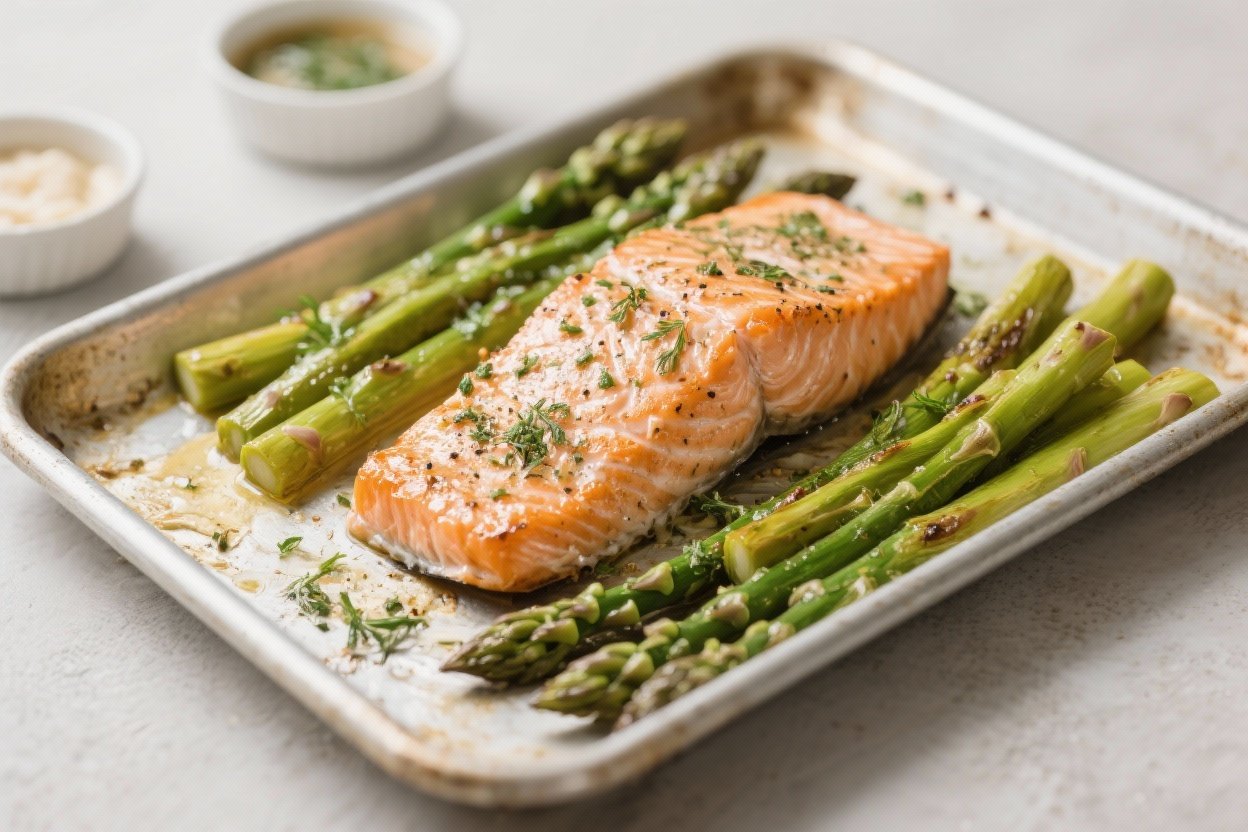
Weeknights call for something quick, healthy, and tasty. This sheet pan salmon and asparagus checks every box without making a mess or blowing your calorie budget. You get tender, flaky salmon, crisp-tender asparagus, and bright lemon-garlic flavors from just one pan.
FREE 7-Day Easy Dinner Reset
Get 7 healthy, family-friendly dinners complete with recipes and simple meal plans delivered straight to your inbox.
It’s a no-fuss dinner you can pull together in under 30 minutes with basic ingredients. Whether you’re eating lighter or just want a clean, satisfying meal, this one’s a keeper.
Ingredients
Method
- Preheat the oven: Set to 425°F (220°C). Line a large sheet pan with parchment or lightly coat with cooking spray.
- Prep the asparagus: Snap off the woody ends. Toss spears with 1 teaspoon olive oil, a pinch of salt, and pepper. Spread them on one side of the sheet pan in a single layer.
- Season the salmon: Pat fillets dry with paper towels. Place them skin-side down on the other side of the pan. Brush or rub each piece with 1–2 teaspoons olive oil.
- Make the lemon-garlic mix: In a small bowl, combine lemon zest, 1 tablespoon lemon juice, minced garlic, 1/4 teaspoon salt, and a few grinds of pepper. Add a pinch of red pepper flakes if you like heat.
- Top and arrange: Spoon the lemon-garlic mixture over the salmon. Scatter any remaining over the asparagus. Add a few thin lemon slices on top of the fish for extra brightness.
- Roast: Cook for 10–12 minutes, depending on thickness. Salmon is done when it flakes easily and reaches 125–130°F in the center for medium (go to 135°F for more doneness).
- Broil for a minute (optional): If you want lightly browned edges, switch to broil for 1–2 minutes. Watch closely to avoid overcooking.
- Finish and serve: Squeeze the remaining lemon juice over everything. Sprinkle with chopped parsley or dill. Serve as is, or add a light side like quinoa, brown rice, or a small baked potato.
Why This Recipe Works

This recipe relies on a few fresh ingredients and smart seasoning to deliver big flavor with minimal effort. Roasting salmon and asparagus together means everything cooks evenly and finishes at the same time.
Lemon, garlic, and olive oil build a clean flavor base that complements the natural richness of salmon without extra calories. A quick blast of heat gives you crispy edges and a juicy center, and the whole thing happens on one pan for easy cleanup.
What You’ll Need
- Salmon fillets (4 fillets, 4–6 oz each), skin-on or skinless
- Asparagus (1 pound), woody ends trimmed
- Olive oil (1–2 tablespoons)
- Lemon (1 large), zested and juiced, plus extra slices for garnish
- Garlic (2–3 cloves), minced
- Salt (kosher or sea salt)
- Black pepper, freshly ground
- Crushed red pepper flakes (optional, for a little heat)
- Fresh herbs like parsley or dill (optional, for serving)
- Cooking spray or parchment paper (to line the pan)
How to Make It

- Preheat the oven: Set to 425°F (220°C). Line a large sheet pan with parchment or lightly coat with cooking spray.
- Prep the asparagus: Snap off the woody ends.
Toss spears with 1 teaspoon olive oil, a pinch of salt, and pepper. Spread them on one side of the sheet pan in a single layer.
- Season the salmon: Pat fillets dry with paper towels. Place them skin-side down on the other side of the pan.
Brush or rub each piece with 1–2 teaspoons olive oil.
- Make the lemon-garlic mix: In a small bowl, combine lemon zest, 1 tablespoon lemon juice, minced garlic, 1/4 teaspoon salt, and a few grinds of pepper. Add a pinch of red pepper flakes if you like heat.
- Top and arrange: Spoon the lemon-garlic mixture over the salmon. Scatter any remaining over the asparagus.
Add a few thin lemon slices on top of the fish for extra brightness.
- Roast: Cook for 10–12 minutes, depending on thickness. Salmon is done when it flakes easily and reaches 125–130°F in the center for medium (go to 135°F for more doneness).
- Broil for a minute (optional): If you want lightly browned edges, switch to broil for 1–2 minutes. Watch closely to avoid overcooking.
- Finish and serve: Squeeze the remaining lemon juice over everything.
Sprinkle with chopped parsley or dill. Serve as is, or add a light side like quinoa, brown rice, or a small baked potato.
How to Store
- Refrigerator: Store leftovers in an airtight container for up to 2 days. Keep salmon and asparagus separate if you can to maintain texture.
- Reheat: Warm gently at 275°F (135°C) for 8–10 minutes or until just heated through.
Avoid the microwave if possible; it can dry out the fish. If you must microwave, use 50% power in short bursts.
- Freezer: Cooked salmon can be frozen for up to 2 months. Asparagus does not freeze well once cooked—it tends to get mushy.
Health Benefits
- High-quality protein: Salmon provides complete protein to help keep you full and support muscle repair.
- Heart-healthy fats: Rich in omega-3s (EPA and DHA), salmon supports heart and brain health and may help reduce inflammation.
- Low calorie, nutrient-dense: Asparagus is low in calories and high in fiber, folate, and vitamins A, C, and K.
- Balanced meal: Protein, healthy fats, and fiber work together to support steady energy and satiety.
- Lower sodium and sugar: Homemade seasoning keeps things clean and simple, with no hidden sugars or heavy sauces.
What Not to Do
- Don’t overcook the salmon: Dry, chalky fish is the biggest risk.
Pull it at 125–130°F and let it rest for a couple of minutes.
- Don’t crowd the pan: Overlapping pieces steam instead of roast. Use a large pan or two smaller pans if needed.
- Don’t skip drying the fish: Patting the salmon dry helps the seasoning stick and promotes better browning.
- Don’t drown it in oil: A light coating is enough. Extra oil adds calories without improving flavor or texture.
- Don’t add asparagus too early if it’s thin: Very thin spears cook fast.
If yours are pencil-thin, add them halfway through to avoid overcooking.
Alternatives
- Different veggies: Swap asparagus for broccoli florets, green beans, or zucchini. Adjust timing—broccoli and green beans may need an extra 3–5 minutes.
- Flavor twists: Use a Dijon mustard and honey drizzle (go light for lower calories), or a sprinkle of smoked paprika and cumin for a savory vibe.
- Herb options: Dill, chives, basil, or thyme all work well. Add fresh herbs after roasting to keep their flavor bright.
- Citrus swap: Orange or lime zest and juice can replace lemon for a different citrus note.
- Protein swap: Trout or arctic char cook similarly.
For chicken, use thin cutlets and roast 15–18 minutes (add asparagus halfway through).
- Gluten-free and dairy-free: The base recipe is naturally both. Just check your spices and add-ins.
FAQ
How many calories are in a serving?
Never Wonder What's For Dinner Again
Get 7 healthy, family-friendly dinners complete with recipes, grocery lists, and simple meal plans delivered straight to your inbox.
With a standard 5-ounce salmon fillet, 1 teaspoon olive oil per portion, and a generous serving of asparagus, you’re looking at roughly 350–420 calories per plate. Portions and add-ons will change the total, but it stays comfortably in a low-calorie range for a full meal.
Can I use frozen salmon?
Yes, but thaw it fully first.
Pat dry very well to remove excess moisture, then season and cook as directed. Frozen salmon may release more liquid, so make sure the pan isn’t crowded.
Do I need to remove the skin?
No. Leaving the skin on helps the fish stay moist and makes it easier to handle.
After roasting, the flesh will lift off the skin with a spatula.
What if my asparagus is really thick?
Thicker spears take longer. Start the asparagus alone for 5 minutes, then add the salmon and continue roasting until everything is done.
How do I know when salmon is done without a thermometer?
Press the top gently with a fork. It should flake easily and look opaque but still moist in the center.
If it’s dry and crumbles, it’s overcooked.
Can I meal prep this?
Yes. Roast as directed, cool, and portion into containers with lemon wedges on the side. It reheats best at low heat in the oven.
For fresh texture, add a handful of arugula or a squeeze of lemon after reheating.
What can I serve with it?
Great sides include a small portion of quinoa, couscous, or brown rice; a simple mixed greens salad; or roasted baby potatoes. Keep portions modest if you’re watching calories.
Is farmed or wild salmon better for this?
Both work. Wild salmon is leaner and may cook slightly faster.
Farmed salmon is richer and a bit more forgiving. Adjust time based on thickness and check doneness early.
Final Thoughts
This Healthy Low Calorie Sheet Pan Salmon & Asparagus proves that simple ingredients can deliver big flavor. With bright citrus, a hint of garlic, and a perfectly roasted finish, you’ll have a balanced dinner on the table in minutes.
It’s easy enough for weeknights and polished enough for guests. Keep this one in your rotation and make it your own with herbs, spices, and seasonal veggies.
Printable Recipe Card
Want just the essential recipe details without scrolling through the article? Get our printable recipe card with just the ingredients and instructions.
Loved This Recipe?
If you're looking for more simple, healthy dinners your family will actually eat, grab my FREE 7-Day Easy Dinner Reset. You'll get 7 easy dinner recipes, simple grocery lists, and a done-for-you plan that takes the stress out of mealtime.