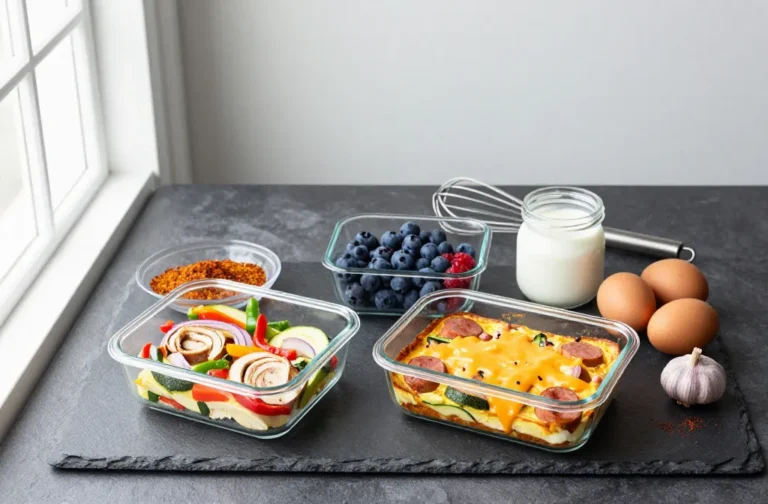
Healthy High Protein Salmon Teriyaki Bowls – Fast, Flavorful, and Satisfying
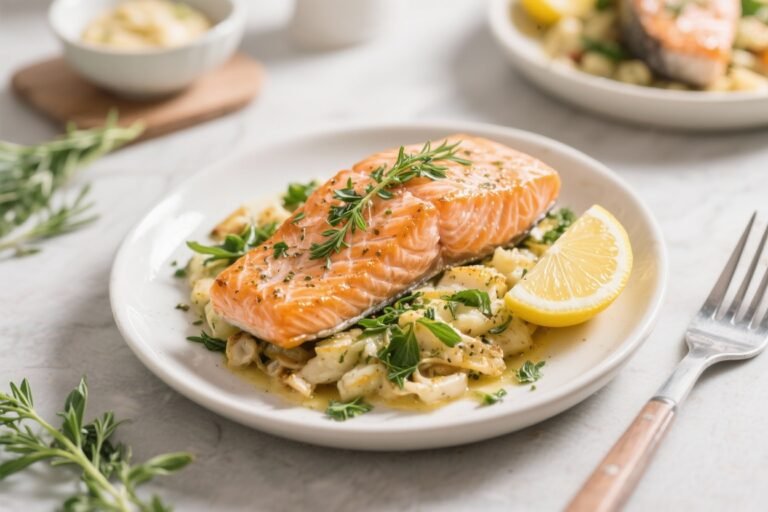
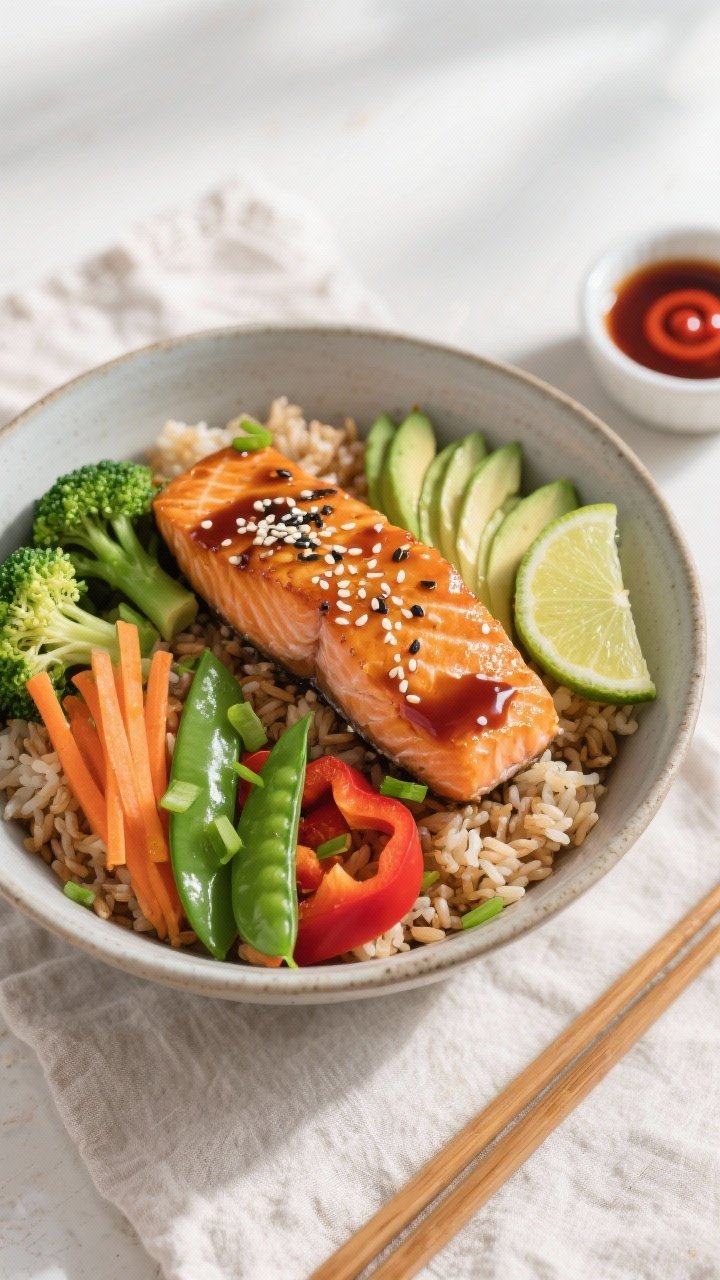
These salmon teriyaki bowls pack bold flavor and serious nutrition without feeling heavy. You get sweet-savory glazed salmon, crisp veggies, and fluffy rice in every bite. It’s the kind of meal that feels special but comes together on a busy weeknight.
The best part: it’s rich in protein and omega-3s, and you can customize it to whatever you have on hand. If you like meal prep, this one holds up well for lunches too.
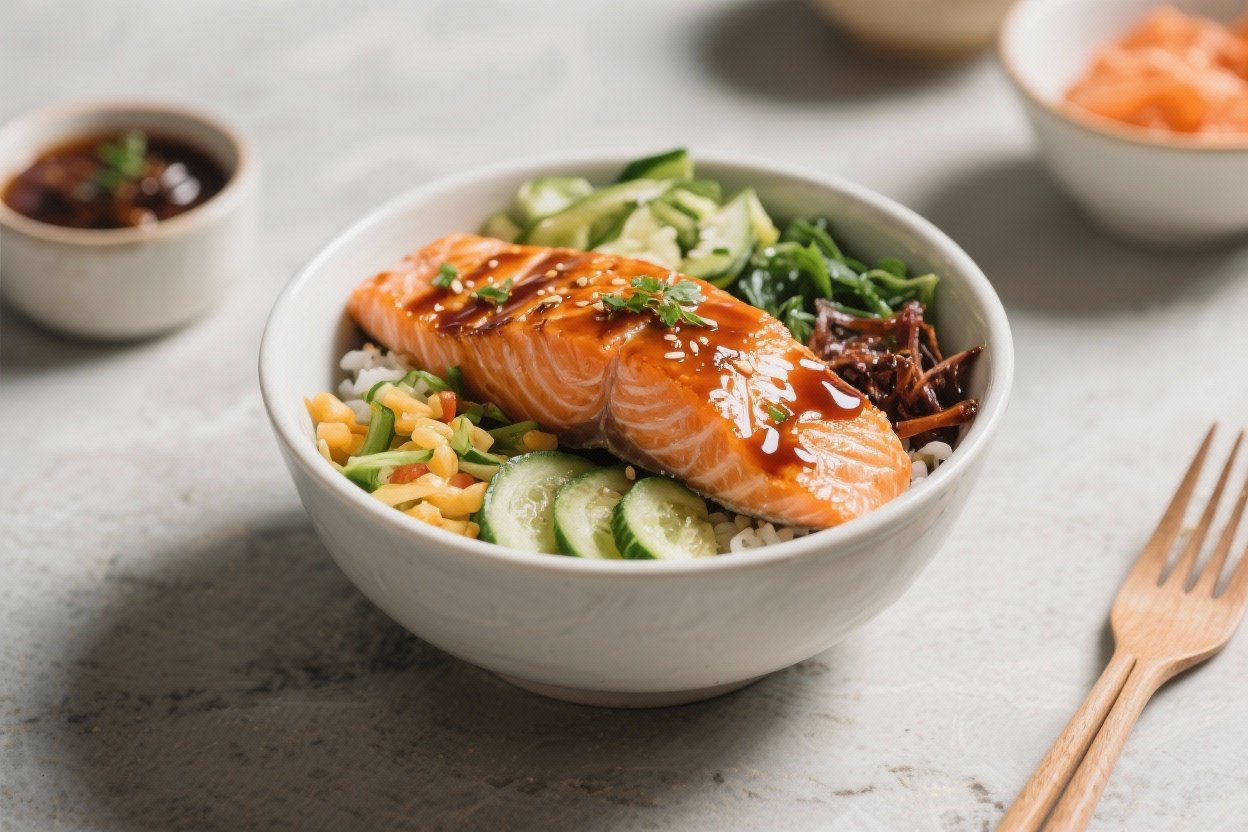
Healthy High Protein Salmon Teriyaki Bowls - Fast, Flavorful, and Satisfying
Ingredients
Method
- Cook the rice or grain: Prepare your rice or quinoa according to package directions. Keep warm and fluff with a fork. A little squeeze of lime and pinch of salt brighten the flavor.
- Make the teriyaki sauce: In a small saucepan, whisk soy sauce, maple syrup, rice vinegar, ginger, garlic, and sesame oil. Bring to a gentle simmer. Stir in the cornstarch slurry and cook 30–60 seconds until glossy and slightly thick. Set aside.
- Prep the veggies: Cut broccoli into small florets, slice bell pepper, ribbon carrots, and trim snap peas. Thinly slice green onions for topping.
- Quick-cook the vegetables: Heat a large skillet with a drizzle of oil over medium-high heat. Add broccoli and snap peas; cook 3–4 minutes. Add bell pepper and carrots; cook 2 more minutes, just until crisp-tender. Season with a pinch of salt and pepper. Transfer to a bowl.
- Season the salmon: Pat salmon dry and sprinkle lightly with salt and pepper. Drying helps it sear better.
- Sear the salmon: In the same skillet, heat a bit more oil over medium-high heat. Place salmon skin-side down (if using skin-on). Cook 3–4 minutes until the skin is crisp and the sides begin to turn opaque.
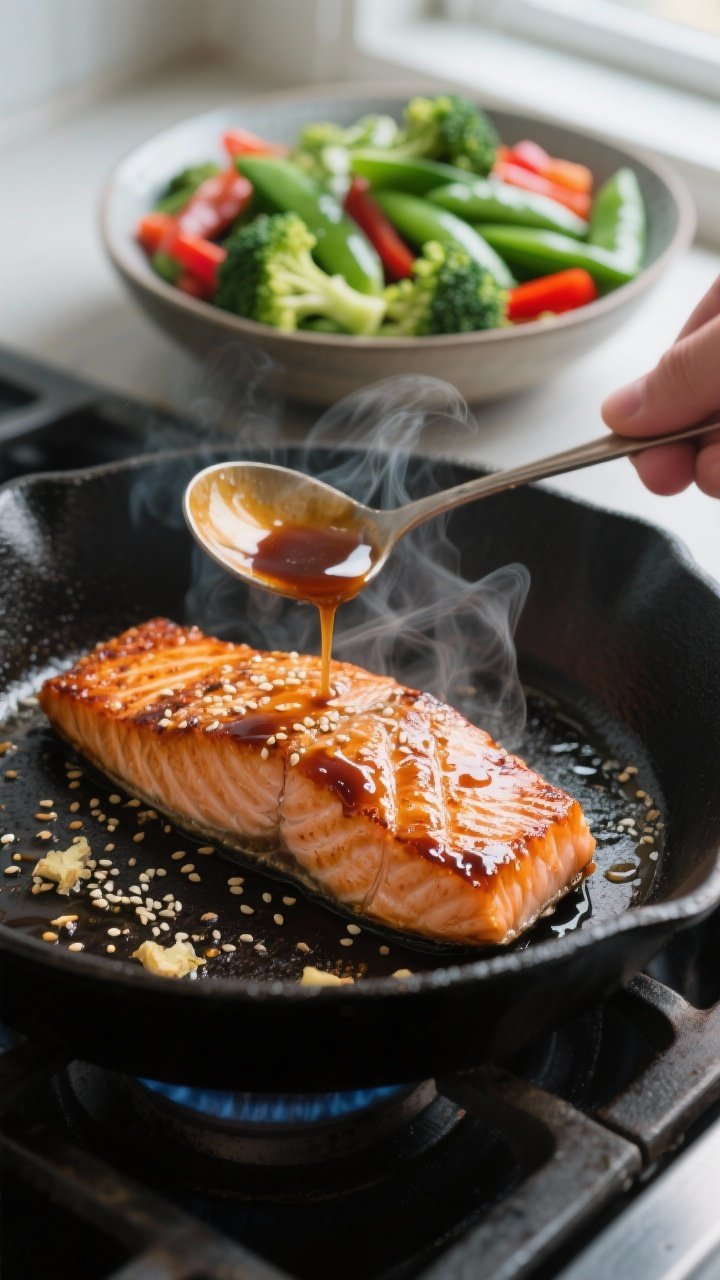
- Glaze and finish: Flip salmon carefully. Spoon a few tablespoons of teriyaki sauce over the top. Cook 2–3 more minutes, basting once or twice, until the salmon flakes easily but is still moist in the center.
- Assemble the bowls: Add a scoop of rice to each bowl. Top with a portion of veggies and a salmon fillet. Drizzle with more teriyaki sauce.
- Garnish: Sprinkle sesame seeds and green onions. Add lime wedges and a little sriracha if you like heat. Avocado adds creaminess and extra healthy fats.
- Serve immediately: The salmon is best hot, with the sauce glossy and the veggies crisp.
Overeating is a pattern. This helps you fix that problem. A quick reset for cravings, snacking, and “I’ll start tomorrow” moments.
Built for busy home cooks who want real-life structure. Simple steps that fit meal prep, family dinners, and late-night snack attacks.
What Makes This Recipe So Good
- High in protein and healthy fats: Salmon provides lean protein and omega-3s, supporting heart and brain health.
- Balanced meal in one bowl: Carbs from rice, fiber from veggies, and a satisfying sauce make it complete and filling.
- Quick and weeknight-friendly: The salmon cooks in under 10 minutes, and the sauce is pantry-simple.
- Customizable: Swap veggies, change the grain, or tweak the sauce to fit your taste or dietary needs.
- Great for meal prep: The components store well and are easy to reheat without losing texture.
Shopping List
- Salmon: 4 salmon fillets (4–6 ounces each), skin-on if possible
- Rice or grain: 2 cups cooked brown rice, white rice, jasmine rice, or quinoa
- Vegetables: 2 cups broccoli florets, 1 red bell pepper (sliced), 1 cup snap peas or edamame, 2 carrots (ribboned or thinly sliced), 2 green onions
- Teriyaki sauce ingredients:
- 1/3 cup low-sodium soy sauce or tamari
- 2 tablespoons maple syrup or honey
- 1 tablespoon rice vinegar
- 1 tablespoon fresh grated ginger
- 2 cloves garlic, minced
- 1 teaspoon sesame oil
- 1–2 teaspoons cornstarch mixed with 2 teaspoons water (slurry) for thickening
- Cooking oil: Avocado oil or olive oil
- Toppings (optional but recommended): Sesame seeds, lime wedges, sriracha or chili crisp, sliced avocado, chopped cilantro
- Salt and pepper
Instructions
- Cook the rice or grain: Prepare your rice or quinoa according to package directions. Keep warm and fluff with a fork.
A little squeeze of lime and pinch of salt brighten the flavor.
- Make the teriyaki sauce: In a small saucepan, whisk soy sauce, maple syrup, rice vinegar, ginger, garlic, and sesame oil. Bring to a gentle simmer. Stir in the cornstarch slurry and cook 30–60 seconds until glossy and slightly thick.
Set aside.
- Prep the veggies: Cut broccoli into small florets, slice bell pepper, ribbon carrots, and trim snap peas. Thinly slice green onions for topping.
- Quick-cook the vegetables: Heat a large skillet with a drizzle of oil over medium-high heat. Add broccoli and snap peas; cook 3–4 minutes.
Add bell pepper and carrots; cook 2 more minutes, just until crisp-tender. Season with a pinch of salt and pepper. Transfer to a bowl.
- Season the salmon: Pat salmon dry and sprinkle lightly with salt and pepper.
Drying helps it sear better.
- Sear the salmon: In the same skillet, heat a bit more oil over medium-high heat. Place salmon skin-side down (if using skin-on). Cook 3–4 minutes until the skin is crisp and the sides begin to turn opaque.
- Glaze and finish: Flip salmon carefully.
Spoon a few tablespoons of teriyaki sauce over the top. Cook 2–3 more minutes, basting once or twice, until the salmon flakes easily but is still moist in the center.
- Assemble the bowls: Add a scoop of rice to each bowl. Top with a portion of veggies and a salmon fillet.
Drizzle with more teriyaki sauce.
- Garnish: Sprinkle sesame seeds and green onions. Add lime wedges and a little sriracha if you like heat. Avocado adds creaminess and extra healthy fats.
- Serve immediately: The salmon is best hot, with the sauce glossy and the veggies crisp.
Keeping It Fresh
To meal prep, store components separately when possible.
Keep salmon and rice in airtight containers up to 3 days in the fridge, and store the sauce in a small jar. Reheat salmon gently in a skillet over low heat or in the microwave at 50% power to prevent drying. If the sauce thickens in the fridge, loosen with a splash of water and warm it briefly.
For veggies, undercook slightly if you plan to reheat so they stay crisp.
Health Benefits
- Protein for satiety and muscle support: A 5–6 ounce salmon fillet delivers roughly 30–35 grams of protein, helping keep you full and energized.
- Omega-3 fatty acids: Salmon is rich in EPA and DHA, which support heart health, reduce inflammation, and promote brain function.
- Fiber and micronutrients: Broccoli, carrots, and peppers bring fiber, vitamin C, beta-carotene, and antioxidants. Brown rice or quinoa add extra fiber and minerals.
- Lower-sugar sauce option: Using maple syrup or honey in moderation keeps sweetness balanced without relying on heavy bottled sauces.
- Sodium awareness: Low-sodium soy sauce and fresh aromatics let you control salt while keeping flavor high.
Pitfalls to Watch Out For
- Overcooking the salmon: Dry salmon is the fastest way to ruin the dish. Pull it when it flakes easily and is slightly translucent in the center.
- Using too much sauce: Teriyaki should glaze, not drown.
Start with less, add more at the end to taste.
- Soggy vegetables: High heat and quick cooking keep veggies crisp. Don’t crowd the pan.
- Skipping the cornstarch slurry: Adding dry cornstarch can clump. Mix it with water first for a smooth, glossy sauce.
- Unbalanced bowls: Aim for a good ratio: about half veggies, a quarter protein, a quarter grains for a satisfying, nutrient-dense meal.
Alternatives
- Protein swaps: Try tofu, chicken breast, shrimp, or tempeh.
For tofu, press and sear until golden before glazing.
- Grain options: Use cauliflower rice for lower carbs, quinoa for extra protein, or soba noodles for a fun twist.
- Gluten-free: Choose tamari or coconut aminos instead of soy sauce and check labels on vinegar and cornstarch.
- No added sugar: Replace maple syrup with a few drops of liquid stevia or use mashed date paste. Adjust to taste.
- Veggie variations: Swap in bok choy, mushrooms, zucchini, cabbage, or frozen edamame for convenience.
- Air fryer method: Cook salmon at 390°F (200°C) for 7–9 minutes, brushing with sauce in the last 2–3 minutes.
FAQ
How do I know when salmon is done?
Look for salmon that flakes easily with a fork and is just opaque in the center. If using a thermometer, aim for 125–130°F for moist, medium doneness.
It will carryover cook slightly after you remove it from heat.
Can I use store-bought teriyaki sauce?
Yes, but check the label for sugar and sodium. If it’s very thick or sweet, cut it with a splash of water and rice vinegar, then add fresh ginger and garlic to brighten the flavor.
What’s the best salmon to buy?
Look for firm, brightly colored fillets that don’t smell fishy. Skin-on works well for searing.
Wild-caught is a great choice, but high-quality farmed salmon can also be excellent. Frozen fillets are convenient—thaw overnight in the fridge.
How can I make this spicier?
Add red pepper flakes to the sauce, drizzle with sriracha or chili crisp, or top with thinly sliced fresh chili. Adjust to your heat tolerance.
Can I make it ahead for lunches?
Absolutely.
Pack rice, veggies, and salmon in containers and keep the sauce separate. Reheat gently and add sauce right before eating. It stays fresh up to 3 days.
What if I don’t have cornstarch?
Use arrowroot starch or tapioca starch in the same amount.
You can also simmer the sauce longer to reduce, though it won’t be as glossy.
Is there a lower-carb version?
Swap the rice for cauliflower rice or a bed of shredded cabbage. Keep the sauce light and load up on extra veggies.
Final Thoughts
Healthy High Protein Salmon Teriyaki Bowls are a dependable go-to: fast, flavorful, and nourishing. With a short ingredient list and simple steps, they fit into busy weeks without sacrificing taste.
Customize the veggies, tweak the sauce, and make it your own. Once you try it, you’ll keep this bowl in your regular rotation—easy, satisfying, and good for you.
Printable Recipe Card
Want just the essential recipe details without scrolling through the article? Get our printable recipe card with just the ingredients and instructions.