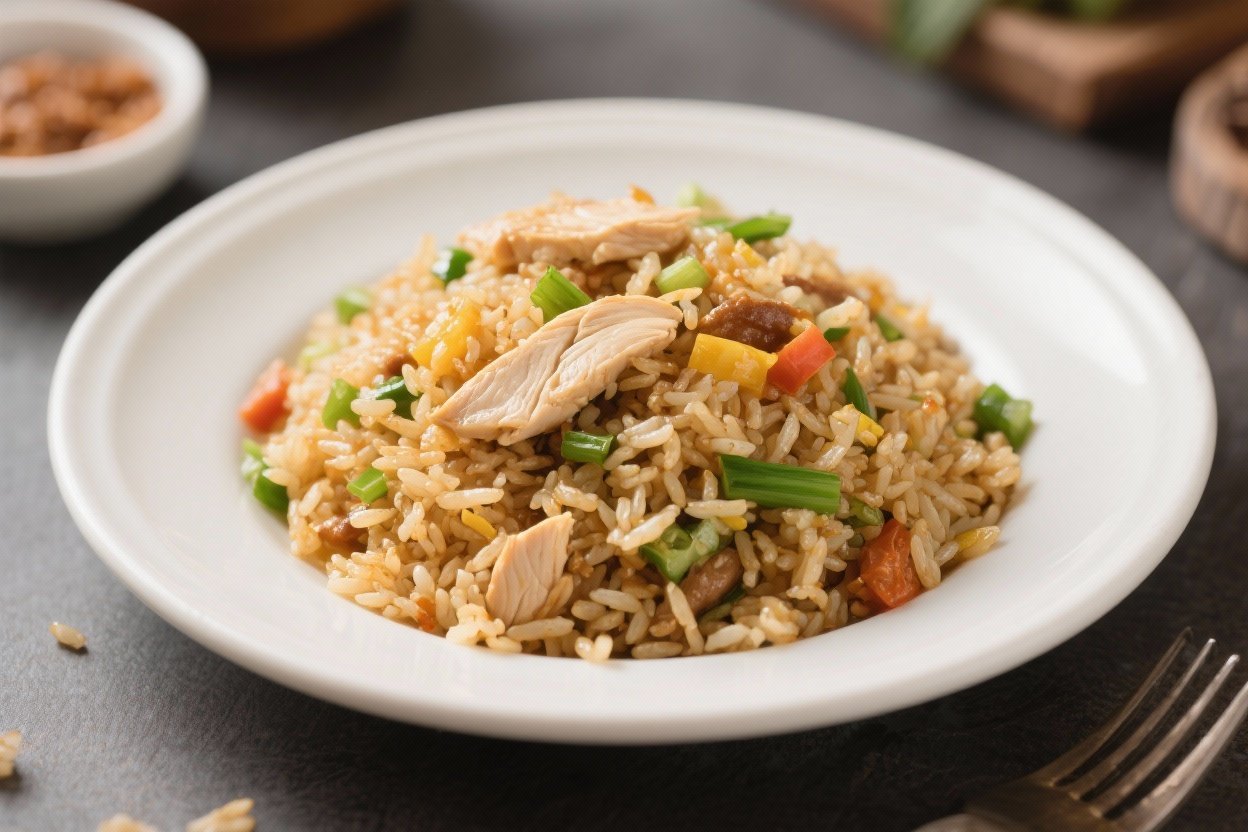
High Protein Low Calorie Chicken Fried Rice – Simple, Lean, and Satisfying
Chicken fried rice doesn’t have to be heavy or greasy. This version packs a serious protein punch while keeping calories in check, so you can enjoy a generous bowl without feeling weighed down. It’s quick, comforting, and easy to customize with whatever veggies you have on hand.
Whether you’re meal prepping for the week or throwing together a weeknight dinner, this recipe hits the sweet spot between flavor and balance. It tastes like takeout, but leaves you feeling better afterward.
Ingredients
Method
- Prep the rice: Use cold, day-old rice for the best texture. If making it fresh, spread hot cooked rice on a sheet pan and chill it in the fridge for at least 30 minutes to dry slightly.
- Season the chicken: Toss diced chicken with a pinch of salt, pepper, and 1 teaspoon soy sauce. This adds flavor without extra calories.
- Heat the pan: Use a large nonstick skillet or wok over medium-high heat. Add 1 teaspoon neutral oil.
- Cook the chicken: Sear the chicken in an even layer for 3–4 minutes, stirring once or twice, until cooked through. Remove to a plate.
- Scramble the egg whites: Add a quick spritz of oil if needed. Pour in the egg whites and scramble just until set, breaking them into small curds. Remove and set aside with the chicken.
- Sauté aromatics: Add another 1 teaspoon oil. Cook onion for 2 minutes until softened. Stir in garlic, ginger, and the white parts of the green onions for 30–45 seconds until fragrant.
- Add vegetables: Toss in the mixed veggies. Stir-fry 2–3 minutes until warmed and slightly tender.
- Fry the rice: Add the chilled rice, breaking up clumps with a spatula. Let it sit for 30–45 seconds at a time to lightly toast, then stir. Do this for 3–4 minutes.
- Season: Add 1 tablespoon low-sodium soy sauce and the sesame oil. Taste and add more soy sauce as needed. Stir in rice vinegar and sriracha if using.
- Finish: Return chicken and eggs to the pan. Toss to combine and heat through. Fold in the green parts of the green onions. Adjust salt and pepper.
- Serve: Plate hot. For extra crunch and protein, sprinkle with toasted sesame seeds or chopped roasted edamame (optional).
Overeating is a pattern. This helps you fix that problem. A quick reset for cravings, snacking, and “I’ll start tomorrow” moments.
Built for busy home cooks who want real-life structure. Simple steps that fit meal prep, family dinners, and late-night snack attacks.
What Makes This Special
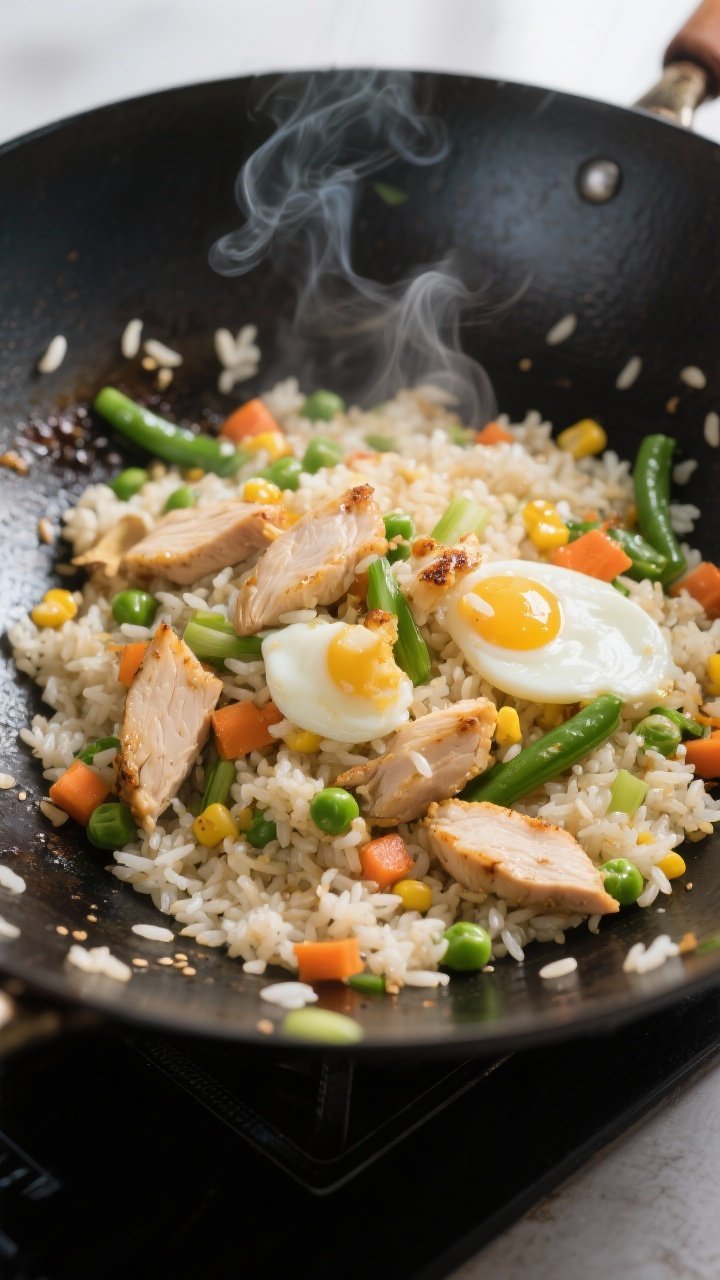
- High protein, low calorie: Lean chicken breast, egg whites, and a veggie-heavy base make each serving filling without the extra calories.
- Takeout flavor, cleaner ingredients: A few smart swaps—reduced-sodium soy sauce and minimal oil—keep the flavor big and the calories low.
- Great texture: Using cold, day-old rice helps you get that classic fried rice bite without clumping.
- Flexible and fast: Works with frozen veggies, leftover rice, and whatever protein you’ve got. Ready in about 20 minutes once the prep is done.
Ingredients
- 2 cups cooked, chilled rice (preferably day-old; jasmine or basmati; cauliflower rice works too)
- 10–12 oz chicken breast, diced small
- 1 cup egg whites (or 2 whole eggs + 1/2 cup egg whites for richer flavor)
- 1 1/2 cups mixed vegetables (peas, carrots, corn, and green beans; frozen is fine)
- 1 small onion, finely diced
- 3 cloves garlic, minced
- 1-inch piece fresh ginger, minced or grated (optional but recommended)
- 3 green onions, sliced (white and green parts separated)
- 1–2 tbsp low-sodium soy sauce or tamari
- 1 tsp sesame oil (for aroma)
- 1–2 tsp neutral oil (avocado, canola, or light olive oil)
- 1–2 tsp rice vinegar (optional, for brightness)
- 1–2 tsp sriracha or chili garlic sauce (optional)
- Salt and black pepper to taste
How to Make It
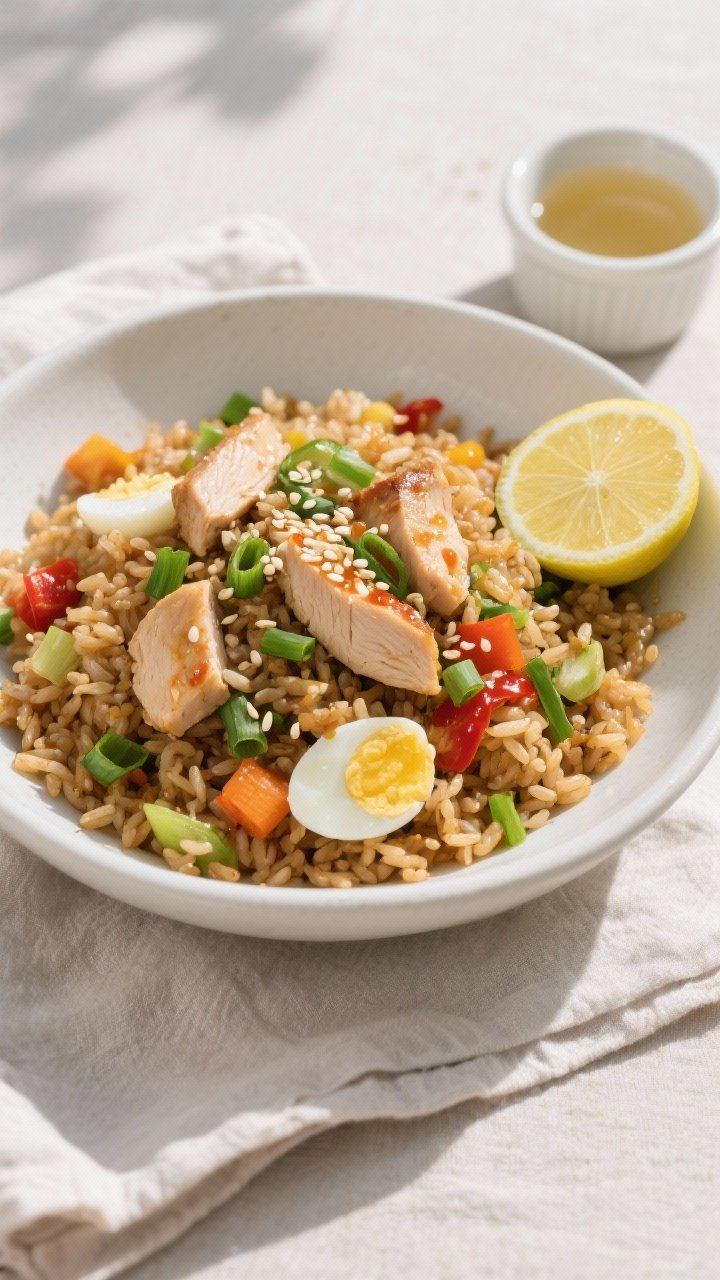
- Prep the rice: Use cold, day-old rice for the best texture.
If making it fresh, spread hot cooked rice on a sheet pan and chill it in the fridge for at least 30 minutes to dry slightly.
- Season the chicken: Toss diced chicken with a pinch of salt, pepper, and 1 teaspoon soy sauce. This adds flavor without extra calories.
- Heat the pan: Use a large nonstick skillet or wok over medium-high heat. Add 1 teaspoon neutral oil.
- Cook the chicken: Sear the chicken in an even layer for 3–4 minutes, stirring once or twice, until cooked through.
Remove to a plate.
- Scramble the egg whites: Add a quick spritz of oil if needed. Pour in the egg whites and scramble just until set, breaking them into small curds. Remove and set aside with the chicken.
- Sauté aromatics: Add another 1 teaspoon oil.
Cook onion for 2 minutes until softened. Stir in garlic, ginger, and the white parts of the green onions for 30–45 seconds until fragrant.
- Add vegetables: Toss in the mixed veggies. Stir-fry 2–3 minutes until warmed and slightly tender.
- Fry the rice: Add the chilled rice, breaking up clumps with a spatula.
Let it sit for 30–45 seconds at a time to lightly toast, then stir. Do this for 3–4 minutes.
- Season: Add 1 tablespoon low-sodium soy sauce and the sesame oil. Taste and add more soy sauce as needed.
Stir in rice vinegar and sriracha if using.
- Finish: Return chicken and eggs to the pan. Toss to combine and heat through. Fold in the green parts of the green onions.
Adjust salt and pepper.
- Serve: Plate hot. For extra crunch and protein, sprinkle with toasted sesame seeds or chopped roasted edamame (optional).
How to Store
- Fridge: Store in airtight containers for up to 4 days. Let it cool slightly before sealing to avoid condensation.
- Freezer: Portion into freezer-safe containers or bags.
Freeze up to 2 months. Thaw overnight in the fridge for best texture.
- Reheat: Microwave with a damp paper towel for 1–2 minutes, stirring halfway. Or reheat in a lightly oiled skillet over medium heat to revive texture.
Why This is Good for You
- High-quality protein: Chicken breast and egg whites give you lean protein that supports muscle repair and keeps you full longer.
- Lower in calories: Minimal oil and smart seasoning deliver flavor without a calorie overload.
- Fiber and micronutrients: Veggies add fiber, vitamins, and minerals that support digestion and overall health.
- Balanced macros: Protein, complex carbs, and a small amount of fat make this satisfying and steady on energy.
Common Mistakes to Avoid
- Using warm, fresh rice: It turns gummy.
Always chill the rice or use day-old rice for a better stir-fry texture.
- Crowding the pan: Overcrowding steams the food. Cook in batches if needed, especially when browning chicken.
- Too much sauce: It can make the rice soggy and spike sodium. Start with less, then adjust after tasting.
- Skipping aromatics: Garlic, ginger, and green onion add depth.
Without them, the dish tastes flat.
- Overcooking the egg whites: They turn rubbery. Pull them as soon as they set.
Alternatives
- Protein swaps: Use shrimp, ground turkey, extra-firm tofu, or edamame. Shrimp cooks fast; tofu should be pressed and cubed.
- Rice options: Cauliflower rice lowers calories further.
Brown rice adds more fiber and a nuttier flavor. Half regular rice, half cauliflower rice is a nice middle ground.
- Sauce variations: Try coconut aminos for a sweeter, lower-sodium option. Add a splash of fish sauce for umami or a dash of white pepper for classic takeout vibes.
- Veggie upgrades: Bell peppers, mushrooms, zucchini, spinach, or cabbage work well.
Keep pieces small for quick cooking.
- Gluten-free: Use tamari or coconut aminos in place of soy sauce.
FAQ
Can I make this without oil?
Yes. Use a good nonstick skillet and skip the oil for the eggs and rice. For chicken, use a small splash of low-sodium broth to prevent sticking and add moisture.
Is it okay to use rotisserie chicken?
Yes, but choose the breast meat to keep it lean.
Add it at the end just to warm through so it doesn’t dry out.
How do I keep it from getting soggy?
Use cold rice, don’t add too much sauce, and cook over medium-high heat. Let the rice sit undisturbed in the pan for short intervals to lightly crisp before stirring.
What’s the best pan to use?
A wok is ideal for high heat and fast tossing, but a large nonstick or stainless-steel skillet works well. Just avoid small pans that crowd the ingredients.
How much protein is in a serving?
It depends on your portions, but with 10–12 oz chicken breast and 1 cup egg whites spread over four servings, you’ll land around 28–35 grams of protein per serving, give or take.
Can I make it spicy?
Absolutely.
Add sriracha, chili garlic sauce, or red pepper flakes to taste. You can also sauté a chopped fresh chili with the aromatics.
Do I have to use sesame oil?
No, but a small amount goes a long way for that signature flavor. If you skip it, consider a pinch of toasted sesame seeds for aroma.
What if I don’t have day-old rice?
Cook rice, spread it on a sheet pan, and chill it uncovered for 30–45 minutes.
This helps dry out the grains enough for frying.
Can I add pineapple or fruit?
You can, but it’ll change the flavor profile and add some natural sugars. If you like sweet-salty dishes, small pineapple chunks can be great—just keep portions modest.
How can I reduce sodium further?
Use low-sodium soy sauce or coconut aminos, skip added salt, and load up on fresh aromatics, vinegar, and a squeeze of lime for brightness instead of more soy.
Wrapping Up
High Protein Low Calorie Chicken Fried Rice is a fast, flexible meal that delivers comfort without the excess. With simple ingredients and smart technique, you get a bowl that tastes like takeout and fits your goals.
Keep some cooked rice in the fridge, a bag of frozen veggies in the freezer, and you’re always one quick stir-fry away from a satisfying, balanced meal. Make it once, and it’ll become a regular in your weekly rotation.
Printable Recipe Card
Want just the essential recipe details without scrolling through the article? Get our printable recipe card with just the ingredients and instructions.