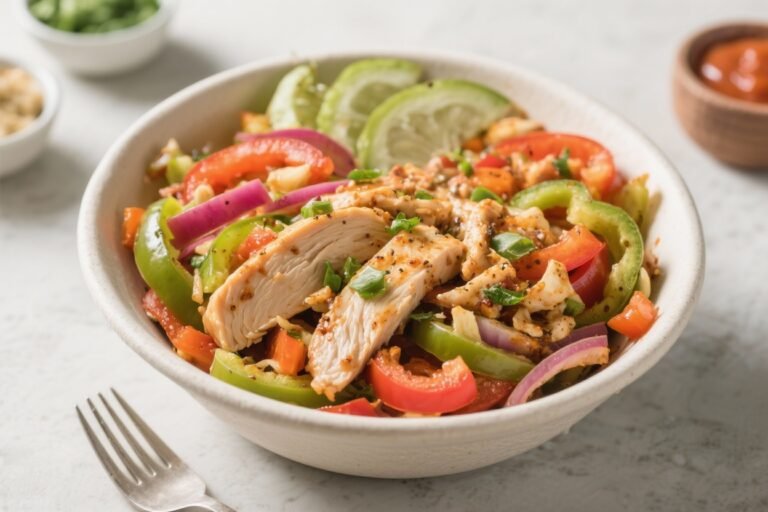
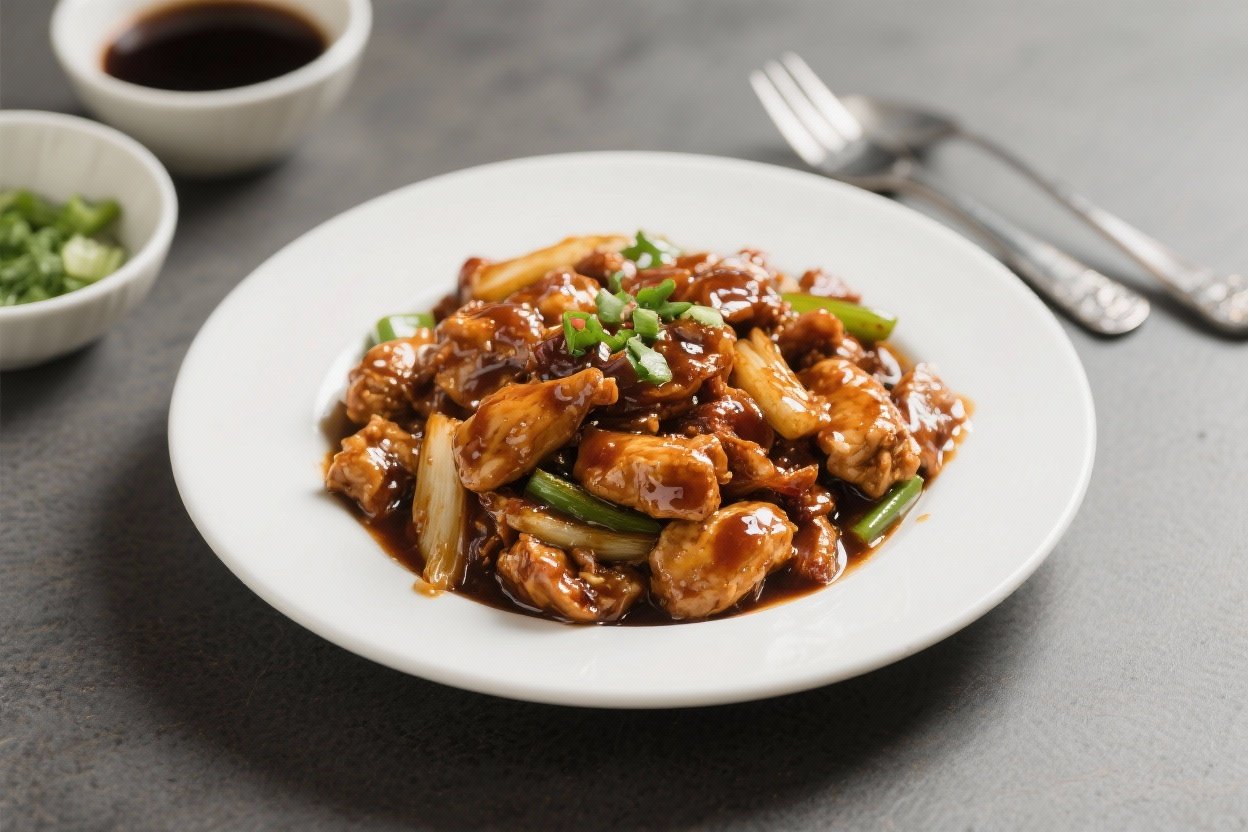
High Protein Low Calorie Mongolian Chicken – A Lighter Take on a Takeout Favorite
Skip the greasy takeout and make a version of Mongolian chicken that’s bold, saucy, and surprisingly light. This recipe keeps the flavor you love—savory, slightly sweet, and garlicky—while cutting excess oil and sugar. It’s quick enough for a weeknight and satisfying enough to impress guests.
You’ll get a high-protein dish with a glossy sauce, tender chicken, and plenty of crunch from fresh scallions. Pair it with cauliflower rice or steamed veggies, and you’ve got a balanced meal that still feels like a treat.
High Protein Low Calorie Mongolian Chicken - A Lighter Take on a Takeout Favorite
Ingredients
Method
- Prep the chicken: Pat the chicken dry and slice thinly against the grain. Toss with 1/2 tablespoon cornstarch and a pinch of salt. This helps it sear nicely without deep-frying.
- Make the sauce: In a small bowl, whisk together soy sauce, water or broth, brown sugar (or substitute), rice vinegar, garlic, ginger, and red pepper flakes if using.
- Mix the slurry: In another small bowl, stir 1 tablespoon cornstarch with 1 tablespoon cold water until smooth. Set aside.
- Heat the pan: Place a large nonstick skillet or wok over medium-high heat. Add half the oil and swirl to coat.
- Sear the chicken in batches: Add half the chicken in a single layer. Cook 2 to 3 minutes per side until lightly browned and just cooked through. Transfer to a plate. Repeat with the remaining oil and chicken.
- Bloom the aromatics: Reduce heat to medium. If the pan is dry, add a splash of water. Pour in the sauce and let it bubble for 30 seconds to wake up the garlic and ginger.
- Thicken the sauce: Stir the cornstarch slurry again and pour it into the pan while stirring. Simmer 30 to 60 seconds until the sauce turns glossy and slightly thick.
- Combine: Return the chicken and any juices to the pan. Toss to coat. Add the scallions and cook 1 minute more to soften slightly but keep their crunch.
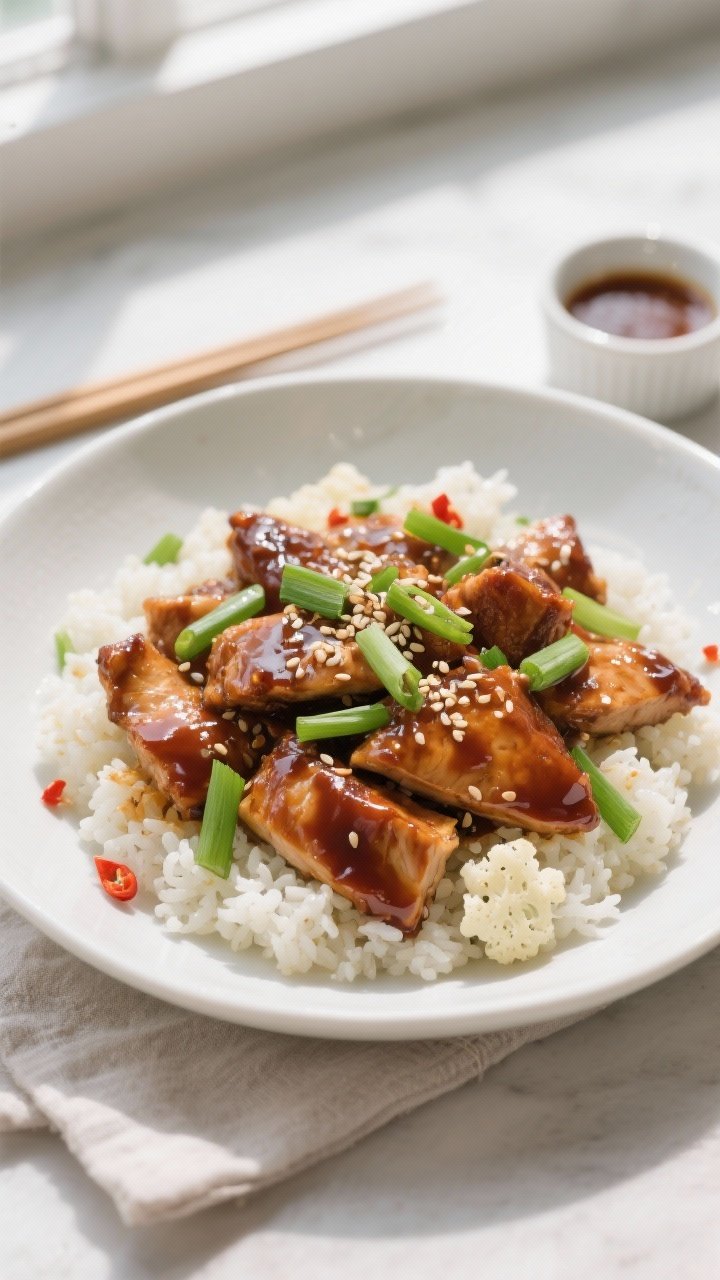
- Finish and serve: Taste and adjust seasoning—add a splash more vinegar for brightness or a pinch more sweetener if you want it sweeter. Sprinkle sesame seeds if desired. Serve with cauliflower rice for a low-cal option or a small scoop of regular rice.
Overeating is a pattern. This helps you fix that problem. A quick reset for cravings, snacking, and “I’ll start tomorrow” moments.
Built for busy home cooks who want real-life structure. Simple steps that fit meal prep, family dinners, and late-night snack attacks.
What Makes This Special
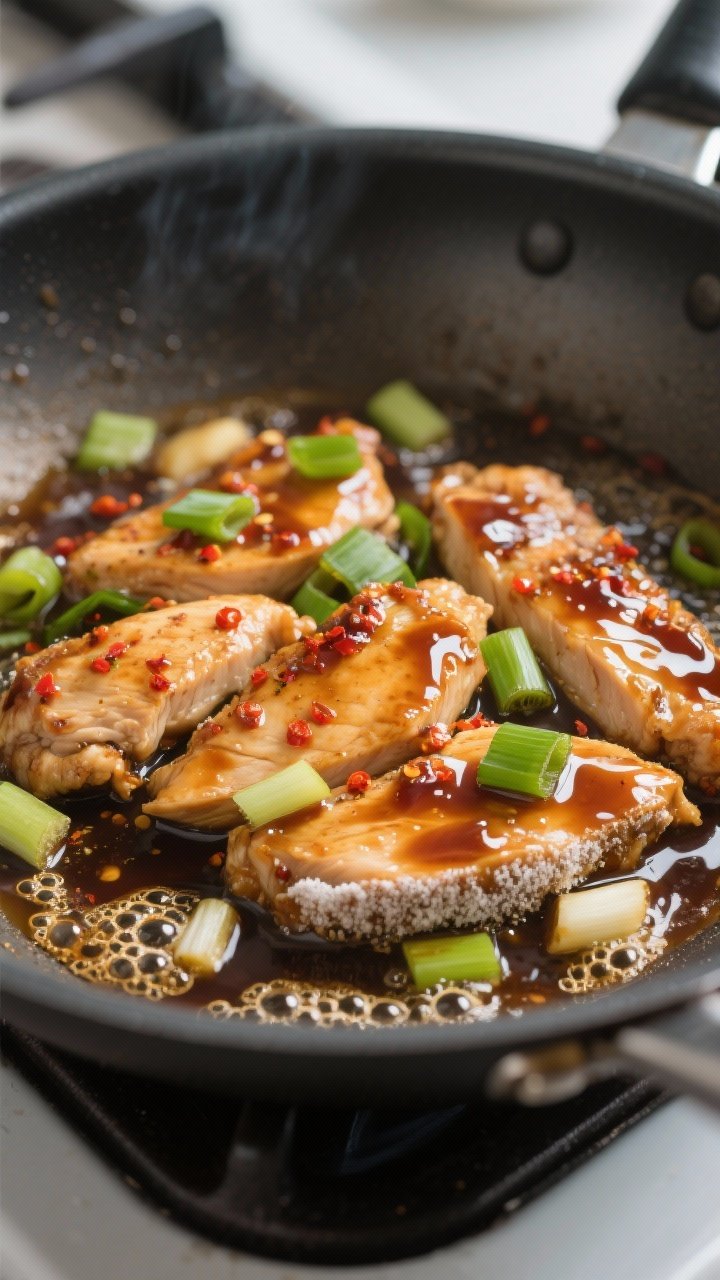
This isn’t your typical heavy stir-fry. It trades deep-frying for a light sear and uses a smarter sauce with less sugar and fewer calories.
The result is a clean, sticky glaze that coats lean chicken without weighing it down. – High protein: Lean chicken breast provides plenty of protein with minimal fat. – Lower calorie sauce: Uses less sweetener and a cornstarch slurry instead of heavy thickeners. – Fast and simple: From chopping board to plate in about 25 minutes. – Meal prep friendly: Holds up well for a few days, so lunch is ready to go.
Shopping List
- Chicken: 1.5 pounds boneless, skinless chicken breasts, thinly sliced
- Low-sodium soy sauce: 1/3 cup
- Water or low-sodium chicken broth: 1/3 cup
- Brown sugar or a zero-calorie brown sugar substitute: 1.5 to 2 tablespoons
- Rice vinegar: 1 tablespoon
- Fresh garlic: 4 cloves, minced
- Fresh ginger: 1 tablespoon, finely grated
- Cornstarch: 1.5 tablespoons (divided: 1 tablespoon for slurry, 1/2 tablespoon for chicken)
- Avocado oil or light olive oil: 1 to 1.5 tablespoons
- Red pepper flakes: 1/2 teaspoon (optional, for heat)
- Scallions (green onions): 5 to 6, cut into 1-inch pieces
- Sesame seeds: 1 teaspoon (optional, for garnish)
- Cauliflower rice or steamed rice: optional for serving
Step-by-Step Instructions
- Prep the chicken: Pat the chicken dry and slice thinly against the grain. Toss with 1/2 tablespoon cornstarch and a pinch of salt. This helps it sear nicely without deep-frying.
- Make the sauce: In a small bowl, whisk together soy sauce, water or broth, brown sugar (or substitute), rice vinegar, garlic, ginger, and red pepper flakes if using.
- Mix the slurry: In another small bowl, stir 1 tablespoon cornstarch with 1 tablespoon cold water until smooth.
Set aside.
- Heat the pan: Place a large nonstick skillet or wok over medium-high heat. Add half the oil and swirl to coat.
- Sear the chicken in batches: Add half the chicken in a single layer. Cook 2 to 3 minutes per side until lightly browned and just cooked through.
Transfer to a plate. Repeat with the remaining oil and chicken.
- Bloom the aromatics: Reduce heat to medium. If the pan is dry, add a splash of water.
Pour in the sauce and let it bubble for 30 seconds to wake up the garlic and ginger.
- Thicken the sauce: Stir the cornstarch slurry again and pour it into the pan while stirring. Simmer 30 to 60 seconds until the sauce turns glossy and slightly thick.
- Combine: Return the chicken and any juices to the pan. Toss to coat.
Add the scallions and cook 1 minute more to soften slightly but keep their crunch.
- Finish and serve: Taste and adjust seasoning—add a splash more vinegar for brightness or a pinch more sweetener if you want it sweeter. Sprinkle sesame seeds if desired. Serve with cauliflower rice for a low-cal option or a small scoop of regular rice.
Storage Instructions
– Refrigerator: Store in an airtight container for up to 4 days.
Keep rice or sides separate so the sauce doesn’t get absorbed. – Freezer: Freeze in meal-size portions for up to 2 months. Thaw overnight in the fridge before reheating. – Reheating: Warm gently in a nonstick pan over medium heat with a splash of water to loosen the sauce. Microwave in short bursts, stirring between intervals to avoid overcooking the chicken.
Why This is Good for You
– Lean protein: Chicken breast supports muscle repair and keeps you fuller longer with fewer calories. – Smarter sauce: Lower sugar and controlled oil mean fewer empty calories while keeping flavor front and center. – High-volume, low-cal add-ins: Scallions add crunch and aroma without many calories.
Serve with steamed broccoli, snap peas, or bok choy to bulk up the plate for minimal calories. – Balanced macros: The dish delivers protein with modest carbs and fat, making it easy to fit into weight-loss or maintenance goals.
What Not to Do
– Don’t overcrowd the pan: The chicken will steam instead of sear, turning pale and tough. Cook in batches. – Don’t skip the slurry: Adding dry cornstarch straight to the pan can clump. Mix it with cold water first. – Don’t drown it in oil: A tablespoon or so is enough thanks to the nonstick pan and thin slices of chicken. – Don’t over-reduce the sauce: It will thicken fast.
Remove from heat once it glazes the chicken to keep it light and glossy. – Don’t add scallions too early: They should stay crisp and bright. Add in the last minute.
Variations You Can Try
– Extra-lean swap: Use chicken tenderloins or turkey breast. – Gluten-free: Replace soy sauce with tamari or coconut aminos (adjust sweetness since aminos are sweeter). – No added sugar: Use a zero-calorie brown sugar substitute or a touch of monk fruit blend. – Veggie boost: Add sliced bell peppers, zucchini, mushrooms, or snow peas during the final 2 to 3 minutes. – Spicy version: Stir in chili-garlic sauce or a teaspoon of gochujang. – Air fryer twist: Toss chicken with 1/2 tablespoon oil and 1/2 tablespoon cornstarch. Air fry at 400°F (205°C) for 8 to 10 minutes, shaking once, then toss with simmered sauce on the stove. – Lower sodium: Use low-sodium soy sauce and dilute with extra water; finish with a squeeze of lime for brightness instead of more salt.
FAQ
Can I use chicken thighs instead of breasts?
Yes.
Thighs are more forgiving and stay juicy. Trim excess fat and slice thinly. Calories will be slightly higher, but flavor and tenderness are great.
How do I make it sweeter without adding many calories?
Use a brown sugar substitute or blend 1 tablespoon brown sugar with a few drops of liquid stevia or monk fruit.
Start small and taste as you go.
What can I use instead of cornstarch?
Arrowroot works well. Use the same amount and add it at a slightly lower heat to prevent a gummy texture. Avoid flour—it dulls the sauce and adds more calories.
Why is my chicken tough?
It likely overcooked or steamed.
Slice evenly, cook hot and fast in batches, and pull it off the heat as soon as it’s done.
How can I meal prep this without it getting soggy?
Store the chicken and sauce together, but keep rice and veggies separate. Reheat the chicken gently, then combine with freshly steamed vegetables for best texture.
Is this recipe suitable for a low-carb diet?
Mostly, yes. Pair it with cauliflower rice and keep the sweetener minimal or use a zero-calorie option.
The cornstarch adds a small amount of carbs but is manageable for most low-carb plans.
In Conclusion
This High Protein Low Calorie Mongolian Chicken gives you big takeout flavor with a lighter touch. It’s quick, simple, and easy to tailor to your needs—spicy, gluten-free, extra-lean, or veggie-packed. Keep a bag of chicken breast and a few pantry staples on hand, and you can make this any night of the week.
It’s the kind of meal that hits the craving without derailing your goals.
Printable Recipe Card
Want just the essential recipe details without scrolling through the article? Get our printable recipe card with just the ingredients and instructions.