How to Break the All-or-Nothing Eating Pattern for Good
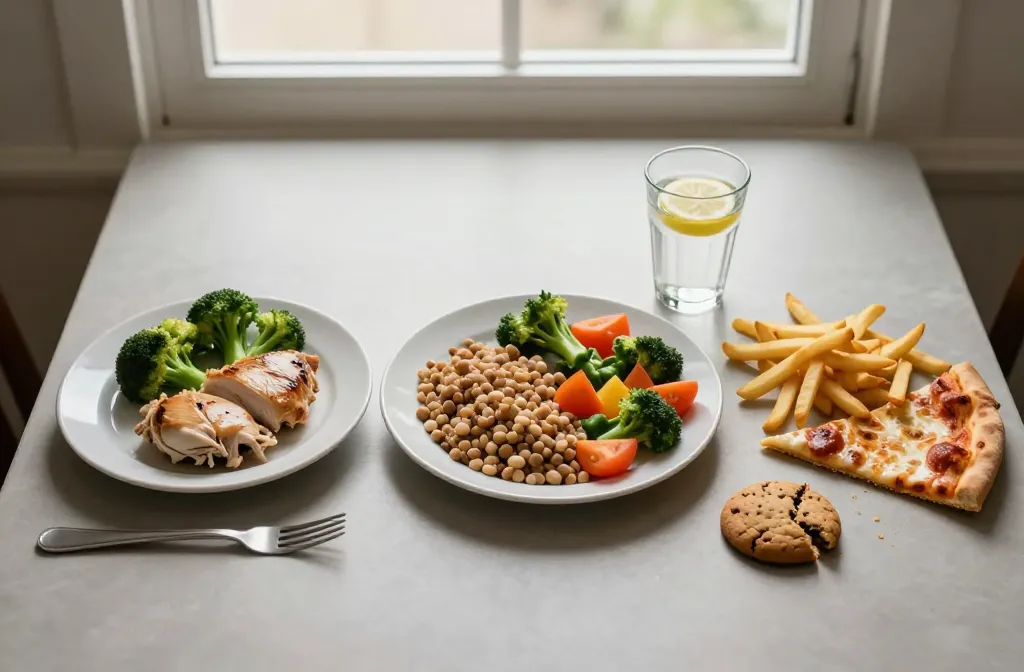
You swear you’ll “be good” all week, then one unplanned cookie turns into “welp, day’s ruined, might as well order the fries.” Sound familiar? That’s the all-or-nothing eating pattern, and it’s sneaky. It feels like control, but it actually creates chaos. Let’s ditch the extremes and build something saner that still includes pizza, FYI.
Spot the All-or-Nothing Trap
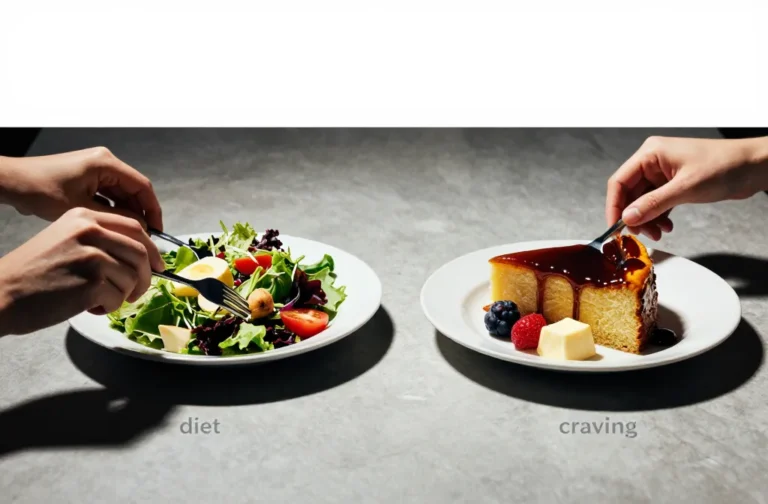
You know the script: “clean eating” or total free-for-all. One “bad” bite flips the switch. You label foods as saints or sinners, then punish yourself with rules.
Red flags to watch for:
Overeating is a pattern. This helps you fix that problem. A quick reset for cravings, snacking, and “I’ll start tomorrow” moments.
Built for busy home cooks who want real-life structure. Simple steps that fit meal prep, family dinners, and late-night snack attacks.
- “I’ll start Monday.” Again.
- Food labels like “good,” “bad,” “clean,” “junk.”
- Skipping meals to “make up for” last night.
- Fear of eating out because you can’t be perfect.
Why It Backfires
When you restrict, cravings spike. Then you binge, feel guilty, and restrict harder. That cycle doesn’t fix habits; it trains you to distrust your appetite. IMO, it’s time we stop trying to out-discipline biology.
Reframe the Goal: From Perfect to Consistent

Perfection sounds noble, but consistency wins. You don’t need flawless days. You need reliable “pretty good” days that stack up.
Try this mindset swap:
- Instead of “no sugar ever,” try “add protein and fiber when I can.”
- Instead of “I ruined it,” try “next meal gets me back to baseline.”
- Instead of “clean,” try “balanced enough.”
The 80/20 Reality Check
Aim for 80% balanced choices, 20% flexibility. That wiggle room prevents the pendulum swing. And no, 20% doesn’t mean a weekend-long food festival—more like a dessert a few times a week or pizza night without guilt.
Use “Add, Don’t Ban” as a Rule of Thumb
Restriction makes food louder in your head. So add stuff instead:
- Protein at every meal (eggs, yogurt, beans, chicken, tofu).
- Fiber from fruits, veggies, whole grains.
- Volume with salad, broth-based soups, roasted veg.
You’ll feel fuller and calmer, which makes moderation… not terrible.
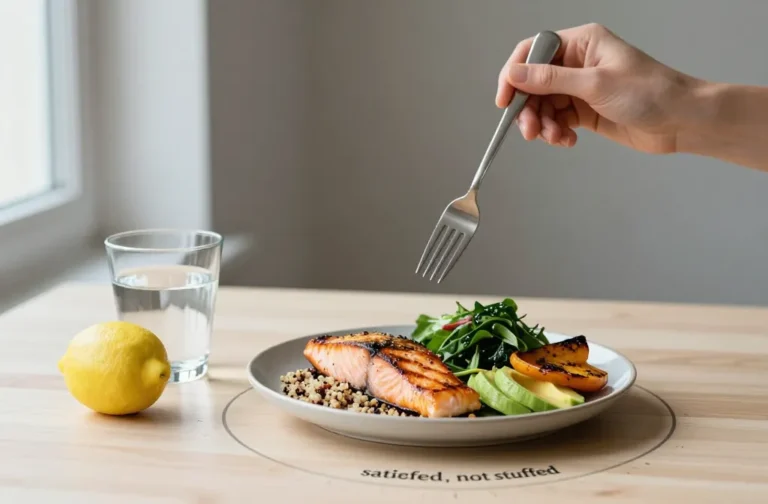
The One-Plate Formula
Keep it simple:
- Half plate: veggies or fruit
- Quarter plate: protein
- Quarter plate: carbs you like
- Bonus: some fat (avocado, olive oil, nuts, cheese)
Not perfect. Just balanced enough. FYI, fries can be your carb sometimes. It’s allowed.
Plan for Real Life, Not Fantasy You
Fantasy You cooks elaborate meals nightly and leaps out of bed for 5 a.m. workouts. Real You gets tired and orders takeout. Plan for Real You.
Low-effort backups to keep handy:
- Frozen veggies + rotisserie chicken + microwave rice
- Tuna or chickpea salad with whole-grain crackers
- Greek yogurt bowls with fruit and granola
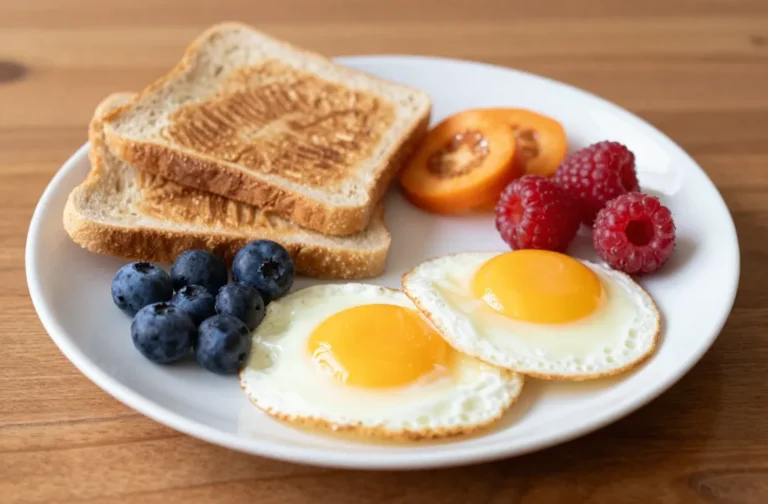
- Eggs + toast + side salad
When Eating Out
Use a “plus one” approach: order what you want and add one supportive thing.
- Burger + side salad
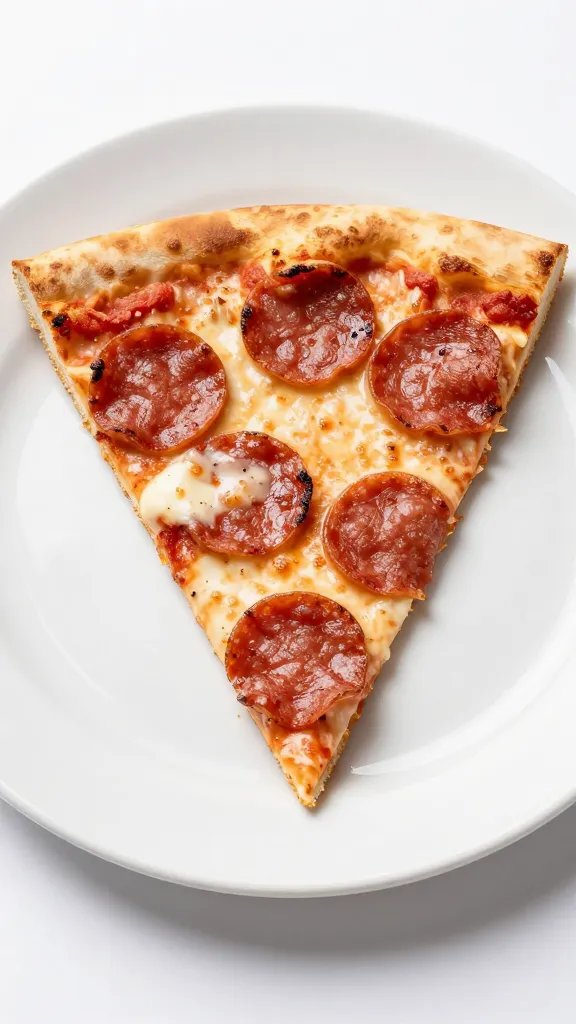
- Pizza + extra veg on top
- Pad Thai + steamed veggies or share an app
That one tweak breaks the “if I can’t be perfect, why try” mindset.
Build Small Wins That Snowball
Pick one or two tiny actions and repeat them until boring. Boring is the dream.
Ideas that work:
- Drink a glass of water before coffee.
- Eat breakfast with at least 20g protein.
- Add a fruit or veg to two meals per day.
- Close the kitchen after your planned evening snack.
Stack them slowly. Consistency > intensity, always.
The 2-Minute Rule
If it takes less than 2 minutes, do it now: wash an apple, prep a yogurt bowl, portion nuts, defrost chicken. These micro-moves reduce “screw it” moments later.
Handle “I Messed Up” Like a Pro

You didn’t “ruin” anything. You ate some food. Cool. Next.
Use the One-Meal Reset:
- Don’t skip the next meal.
- Make it protein-forward with produce and carbs you like.
- Drink water. Go for a short walk.
That’s it. You’re back on track in hours, not Monday.
Self-Talk That Doesn’t Suck
Try: “I can choose differently at my next opportunity.” It’s simple, true, and doesn’t invite shame. Shame fuels all-or-nothing. Curiosity ends it.
Make Gentle Structure Your Secret Weapon
Structure doesn’t mean rules carved in stone. Think guardrails, not handcuffs.
Simple guardrails:
- Eat every 3–5 hours to avoid ravenous decisions.
- Include protein at each meal or snack.
- Keep treats visible but portioned—single-serve or pre-portioned bags.
- Schedule 1–2 “fun foods” per day so nothing feels forbidden.
IMO, predictability kills the all-or-nothing drama.
FAQ
What if I can’t stop after one serving?
Try eating it with a meal, not alone. Pair treats with protein and fiber so you don’t approach them starving. Pre-portion it, sit down, and actually taste it. If it still feels chaotic, increase meal consistency first—chaos often signals under-fueling.
Should I avoid trigger foods completely?
Short term, you can reduce exposure while you build basic structure. Long term, total avoidance usually backfires. Re-introduce in a planned way (e.g., have ice cream with dinner out, not a full tub at home). Training wheels now, freedom later.
How do I deal with social pressure?
Decide ahead of time what you want. Then use simple lines: “I’m good, thanks,” or “I’ll grab some later.” Bring a dish you like. People move on faster than you think.
Is tracking macros necessary?
Not required. Helpful for some, annoying for others. If you track, treat it like feedback, not judgment. If you hate it, use the one-plate formula and protein-at-each-meal guideline instead.
What if my schedule is a mess?
Anchor 2–3 “non-negotiables” that survive chaos: a protein breakfast, a packed snack, and water on your desk. Perfection can’t survive life; anchors can.
Simple Recipes to Support the Middle Ground
Below are three easy, balanced recipes. I estimated nutrition using standard USDA data. Serving sizes noted; values are per serving. Net carbs = total carbs − fiber.
1) 5-Minute Greek Yogurt Bowl
- Ingredients (1 serving): 3/4 cup (170g) plain nonfat Greek yogurt, 1/2 cup blueberries (75g), 1 tbsp honey (21g), 2 tbsp granola (14g), 1 tbsp chopped almonds (9g)
- Estimated nutrition per serving (about 1 bowl, ~310g):
- Calories: 295
- Total Fat: 6.5 g
- Total Carbohydrates: 45 g
- Dietary Fiber: 4 g
- Net Carbs: 41 g
- Protein: 20 g
2) Rotisserie Chicken Veggie Rice Bowl
- Ingredients (serves 2): 2 cups cooked microwave brown rice (340g), 6 oz rotisserie chicken breast, shredded (170g), 2 cups steamed broccoli (300g), 2 tbsp olive oil (28g), 2 tbsp teriyaki sauce (34g), salt/pepper
- Serving size used: 1 bowl (half the recipe)
- Estimated nutrition per serving:
- Calories: 560
- Total Fat: 19 g
- Total Carbohydrates: 66 g
- Dietary Fiber: 8 g
- Net Carbs: 58 g
- Protein: 33 g
3) One-Pan Veggie-Loaded Egg Scramble
- Ingredients (serves 1): 3 large eggs, 1 cup diced bell pepper and onion mix (140g), 1 cup baby spinach (30g), 1 tsp olive oil (5g), 1 oz feta (28g), pinch salt/pepper
- Serving size used: full pan (about 1 generous plate)
- Estimated nutrition per serving:
- Calories: 430
- Total Fat: 33 g
- Total Carbohydrates: 9 g
- Dietary Fiber: 2 g
- Net Carbs: 7 g
- Protein: 26 g
Disclaimer: Nutrition values are estimates based on typical USDA data and common brands. Actual numbers vary by product, cooking method, and portion size.
Bottom Line
All-or-nothing eating looks like discipline, but it keeps you stuck. Choose consistency over perfection, add instead of ban, and reset at the next meal—no drama. You can enjoy fun foods, feel good, and make progress at the same time. Middle ground isn’t mediocre; it’s the strategy that actually works.