Lemon Dill Salmon With Potatoes – Bright, Simple, and Satisfying
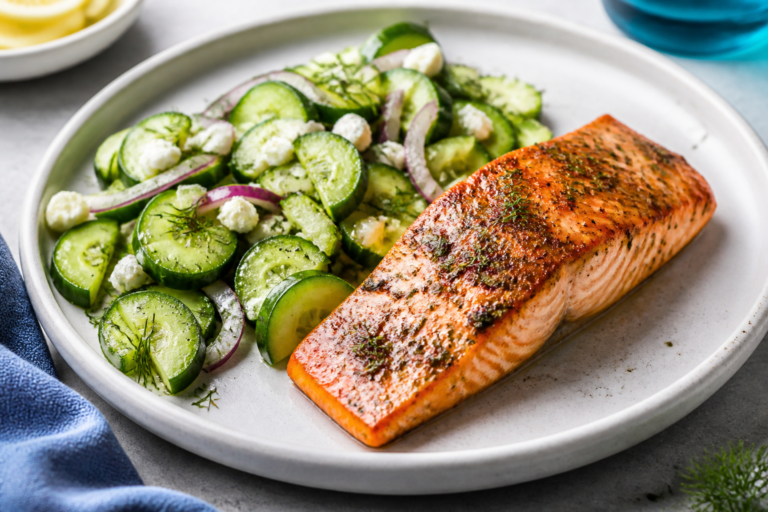
This Lemon Dill Salmon with Potatoes is the kind of weeknight dinner that feels like a treat without being fussy. Think flaky salmon, buttery baby potatoes, and a punchy lemon-dill sauce that ties everything together. It’s fresh, light, and comforting at the same time.
FREE 7-Day Easy Dinner Reset
Get 7 healthy, family-friendly dinners complete with recipes and simple meal plans delivered straight to your inbox.
You don’t need special tools or hard-to-find ingredients—just a sheet pan and a skillet. If you like meals that taste restaurant-worthy with minimal effort, this one’s for you.
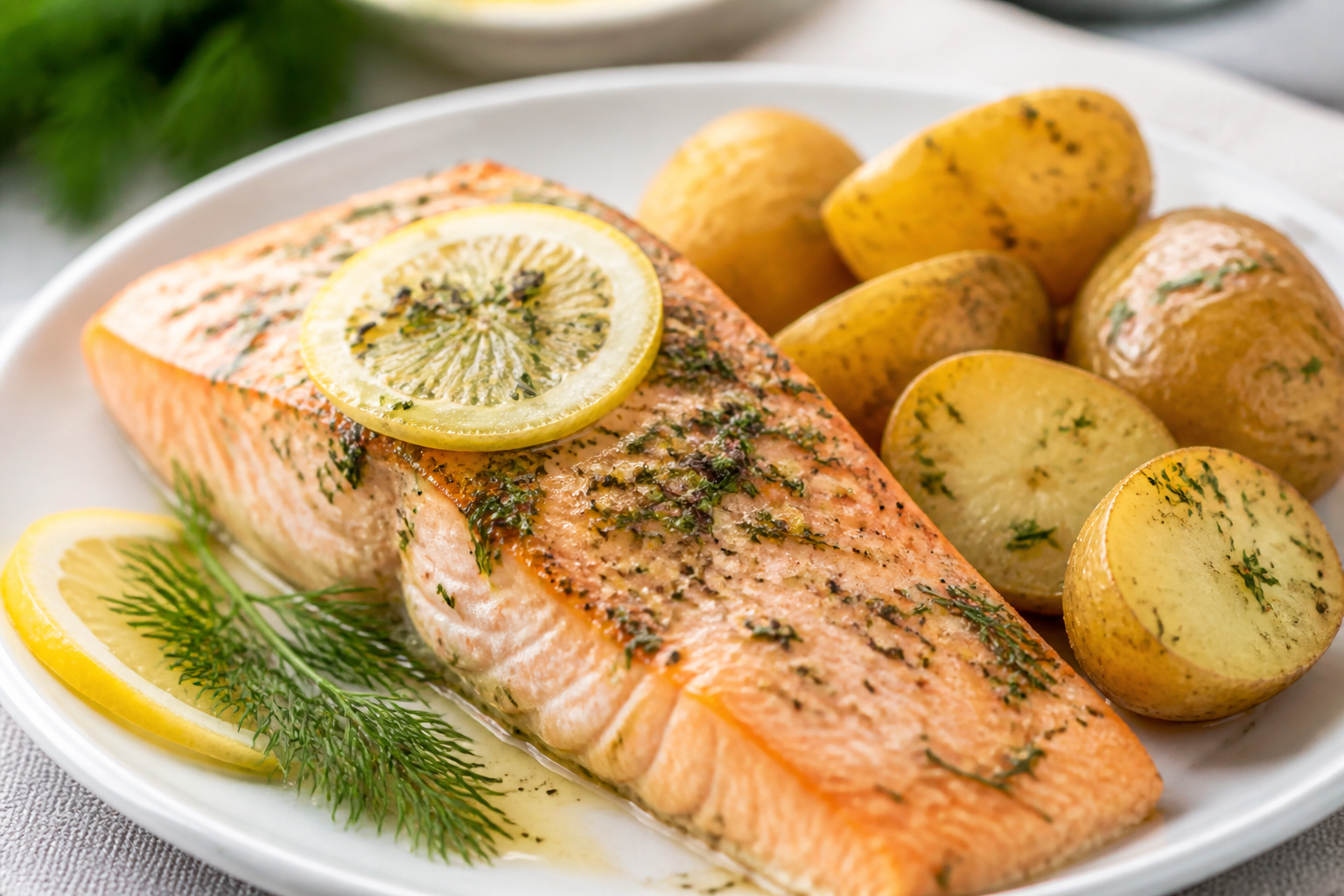
Ingredients
Method
- Preheat and prep: Heat your oven to 425°F (220°C). Line a large sheet pan with parchment for easy cleanup. Scrub the baby potatoes and halve them. Pat the salmon dry with paper towels.
- Parboil for speed (optional but recommended): Add the halved potatoes to a pot of salted boiling water. Simmer 6–8 minutes, until just tender on the edges but still firm in the center. Drain well and let steam-dry for a minute. This step helps you get golden, creamy potatoes without overcooking the salmon.
- Season the potatoes: Toss the potatoes with 1–2 tablespoons olive oil, a generous pinch of salt, black pepper, and a small pinch of red pepper flakes if you like heat. Spread them cut-side down on the sheet pan.
- Start roasting the potatoes: Roast for 12–15 minutes until edges begin to crisp. If you skipped parboiling, give them 25–30 minutes total and add the salmon later.
- Make the lemon-dill mixture: In a small bowl, combine 2 tablespoons olive oil, the zest of 1 lemon, juice of 1 lemon, 1–2 tablespoons finely chopped fresh dill (or 1 teaspoon dried), 1 minced garlic clove, 1 teaspoon Dijon, and 1 teaspoon honey. Whisk until glossy and emulsified. Taste and adjust with more salt, lemon, or dill.
- Season the salmon: Lightly oil the salmon and sprinkle with salt and black pepper. If the fillets have skin, place them skin-side down on the sheet pan.
- Add salmon to the pan: Pull the potatoes from the oven. Push them to one side to make room for the salmon. Nestle the fillets onto the pan and spoon about half the lemon-dill mixture over the top. Add a few thin lemon slices on the salmon if you like.
- Roast to finish: Return the pan to the oven and roast 10–14 minutes, depending on thickness. The salmon should flake easily and still look slightly translucent in the center. Thicker fillets may need a minute or two more.
- Optional butter baste: Melt 2 tablespoons butter with 1 minced garlic clove in a small pan. Stir in a tablespoon of chopped dill and a squeeze of lemon. Spoon over the salmon right out of the oven for a silky finish.
- Rest and serve: Let the salmon rest for 2–3 minutes. Toss the potatoes with any pan juices. Spoon the remaining lemon-dill mixture over the salmon and potatoes. Garnish with extra dill, parsley, or chives. Serve with lemon wedges.
What Makes This Recipe So Good
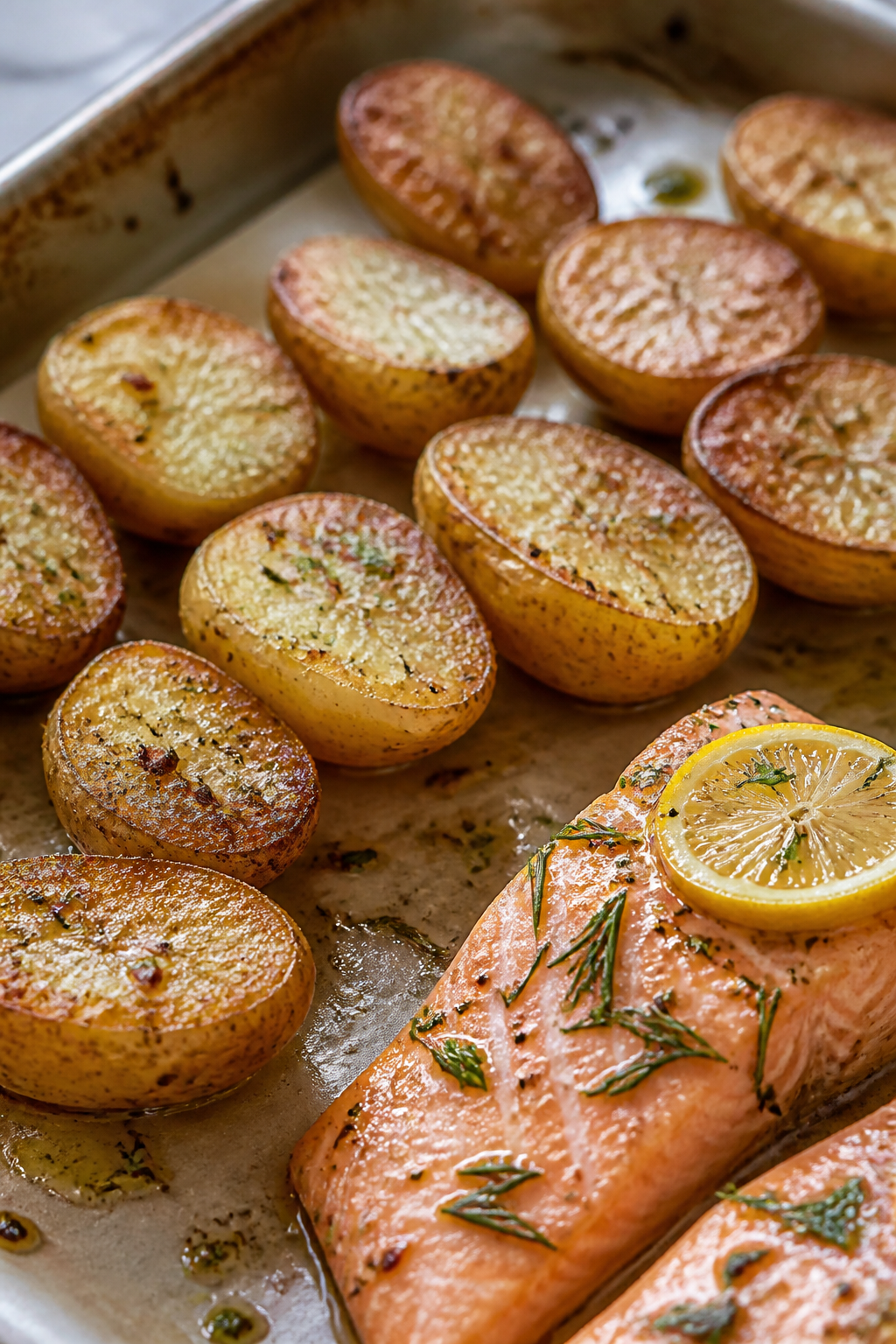
- Balanced flavors: Bright lemon, fragrant dill, and rich salmon are a natural trio that never gets old.
- One-pan friendly: Roast the potatoes and salmon on the same sheet pan for easy prep and cleanup.
- Quick cook time: The salmon roasts in under 15 minutes, and you can parboil or quick-roast the potatoes to keep dinner speedy.
- Healthy but hearty: You get protein, healthy fats, and satisfying carbs without heaviness.
- Flexible: Works with fresh or dried dill, and you can swap potatoes or add veggies based on what you have.
Shopping List
- Salmon fillets (skin-on or skinless), about 1.5 pounds total
- Baby potatoes (Yukon Gold or red), 1.5 pounds
- Fresh dill, 1 small bunch (or 2 teaspoons dried dill)
- Fresh lemons, 2 (you’ll need zest and juice)
- Garlic, 2–3 cloves
- Olive oil
- Unsalted butter (optional but lovely), 2 tablespoons
- Dijon mustard, 1 teaspoon (optional for extra tang)
- Honey or maple syrup, 1 teaspoon (optional to balance acidity)
- Sea salt and black pepper
- Crushed red pepper flakes (optional)
- Fresh parsley or chives (optional garnish)
Instructions
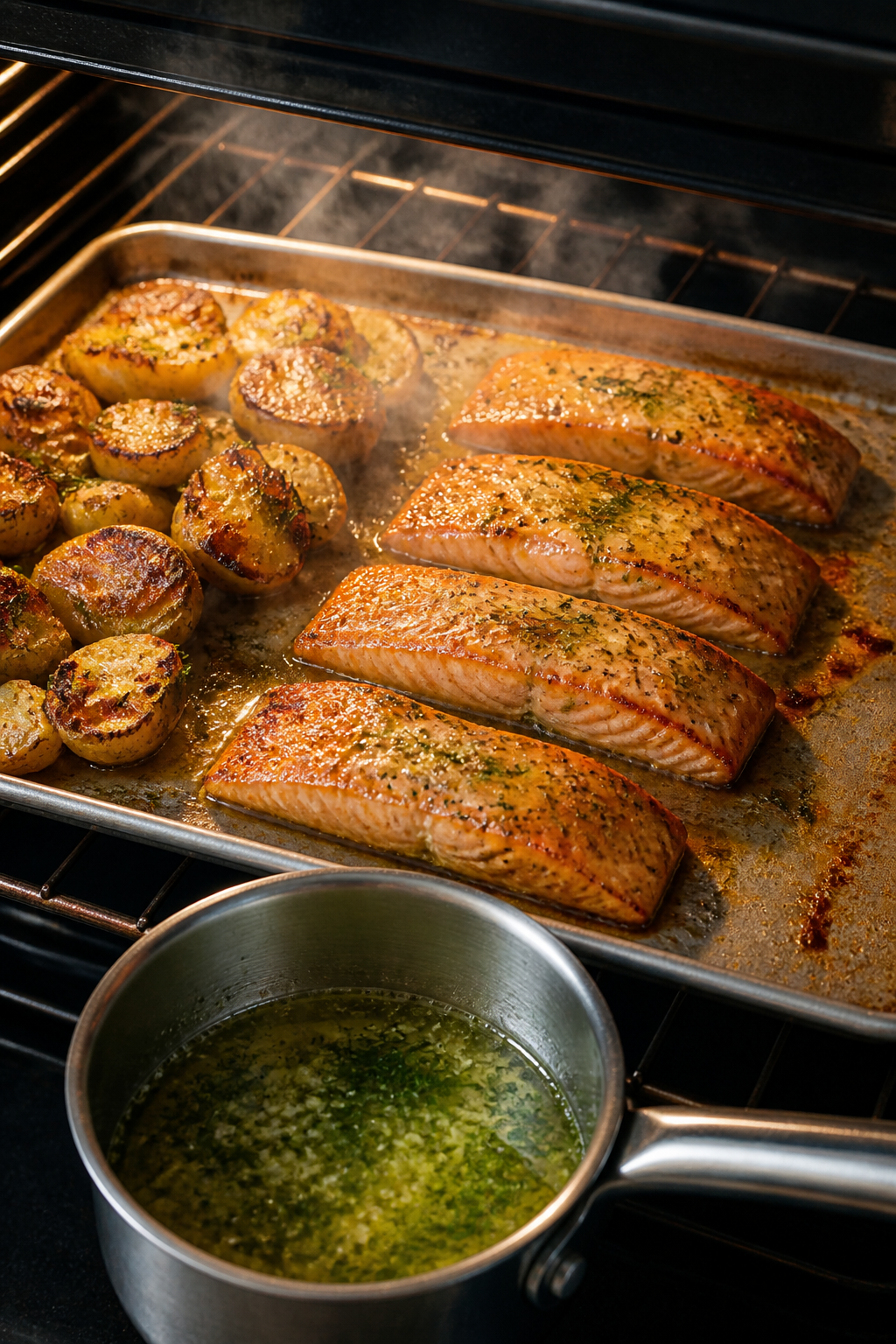
- Preheat and prep: Heat your oven to 425°F (220°C). Line a large sheet pan with parchment for easy cleanup.
Scrub the baby potatoes and halve them. Pat the salmon dry with paper towels.
- Parboil for speed (optional but recommended): Add the halved potatoes to a pot of salted boiling water. Simmer 6–8 minutes, until just tender on the edges but still firm in the center.
Drain well and let steam-dry for a minute. This step helps you get golden, creamy potatoes without overcooking the salmon.
- Season the potatoes: Toss the potatoes with 1–2 tablespoons olive oil, a generous pinch of salt, black pepper, and a small pinch of red pepper flakes if you like heat. Spread them cut-side down on the sheet pan.
- Start roasting the potatoes: Roast for 12–15 minutes until edges begin to crisp.
If you skipped parboiling, give them 25–30 minutes total and add the salmon later.
- Make the lemon-dill mixture: In a small bowl, combine 2 tablespoons olive oil, the zest of 1 lemon, juice of 1 lemon, 1–2 tablespoons finely chopped fresh dill (or 1 teaspoon dried), 1 minced garlic clove, 1 teaspoon Dijon, and 1 teaspoon honey. Whisk until glossy and emulsified. Taste and adjust with more salt, lemon, or dill.
- Season the salmon: Lightly oil the salmon and sprinkle with salt and black pepper.
If the fillets have skin, place them skin-side down on the sheet pan.
- Add salmon to the pan: Pull the potatoes from the oven. Push them to one side to make room for the salmon. Nestle the fillets onto the pan and spoon about half the lemon-dill mixture over the top.
Add a few thin lemon slices on the salmon if you like.
- Roast to finish: Return the pan to the oven and roast 10–14 minutes, depending on thickness. The salmon should flake easily and still look slightly translucent in the center. Thicker fillets may need a minute or two more.
- Optional butter baste: Melt 2 tablespoons butter with 1 minced garlic clove in a small pan.
Stir in a tablespoon of chopped dill and a squeeze of lemon. Spoon over the salmon right out of the oven for a silky finish.
- Rest and serve: Let the salmon rest for 2–3 minutes. Toss the potatoes with any pan juices.
Spoon the remaining lemon-dill mixture over the salmon and potatoes. Garnish with extra dill, parsley, or chives. Serve with lemon wedges.
Keeping It Fresh
- Storage: Cool leftovers completely, then refrigerate in an airtight container for up to 2 days.
Store salmon and potatoes together or separately.
- Reheating: Gently warm in a 300°F (150°C) oven for 8–10 minutes or microwave in short bursts at 50% power. Avoid high heat, which can dry out the fish.
- Make-ahead tips: Parboil potatoes and mix the lemon-dill sauce up to 24 hours ahead. Keep the sauce refrigerated and whisk before using.
- Freezing: Cooked salmon can be frozen for up to 2 months, but the texture softens slightly.
Potatoes don’t freeze well; they can turn mealy.
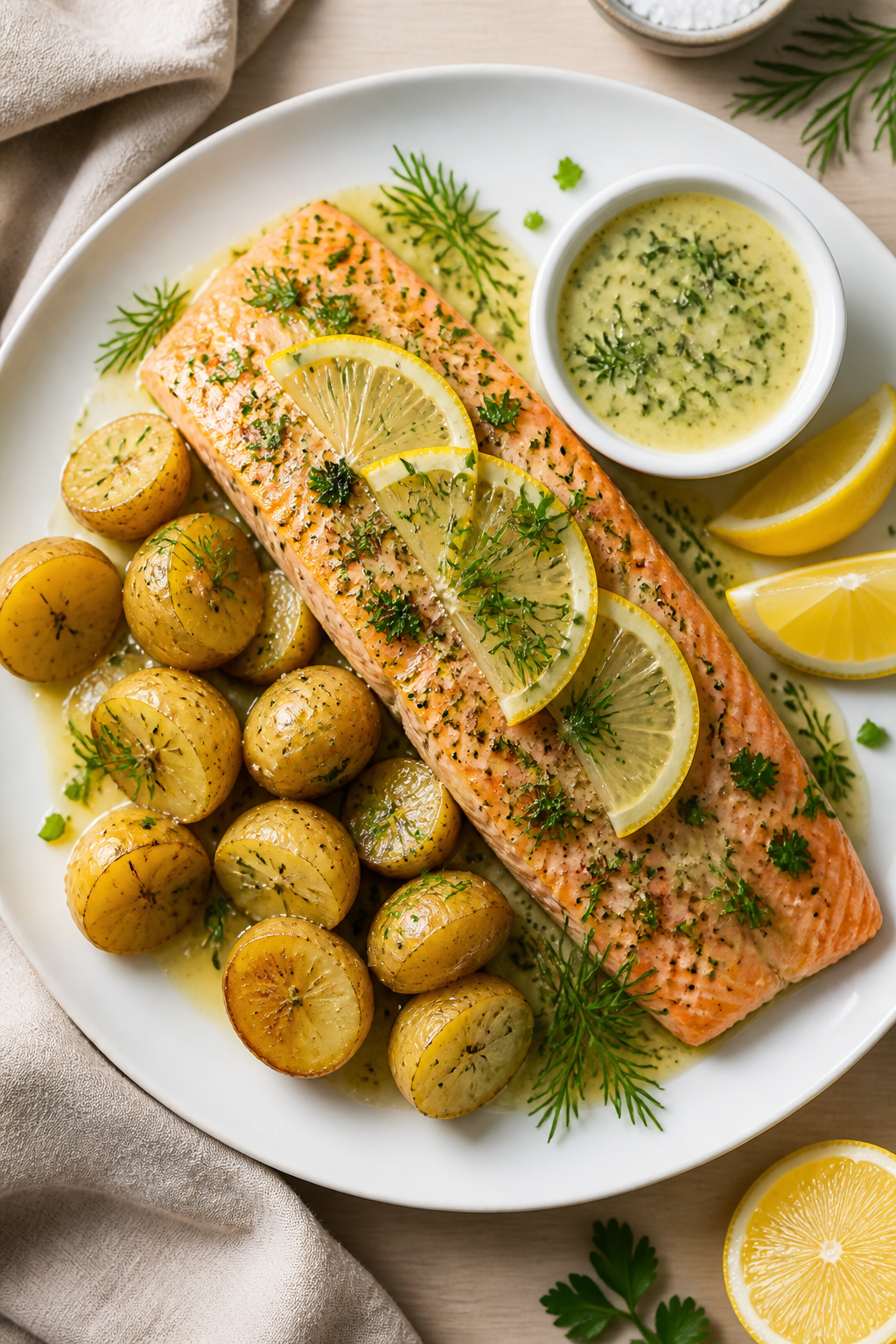
Benefits of This Recipe
- Nutrient-rich: Salmon is loaded with omega-3s and high-quality protein. Potatoes bring potassium, fiber (especially if you keep the skins on), and steady energy.
- Low effort, high payoff: A short ingredient list and simple steps deliver big flavor.
- Family-friendly: The lemon-dill profile is bright but gentle, and you can easily leave out heat or mustard for picky eaters.
- Flexible portions: Add or subtract fillets and potatoes without changing the method. It scales well for one or for a crowd.
What Not to Do
- Don’t overcook the salmon: Pull it when it flakes but is still moist in the center.
It will continue to cook slightly off the heat.
- Don’t skip drying the fillets: Moisture on the surface prevents a nice sear and can dull the flavor.
- Don’t drown it in lemon juice early: Too much acid upfront can start “curing” the fish. Use a balanced amount before roasting and save an extra splash for serving.
- Don’t crowd the pan: Give potatoes and salmon space so they roast instead of steam.
- Don’t forget salt: Season both the potatoes and the salmon. Proper seasoning makes the lemon and dill shine.
Variations You Can Try
- Sheet-pan veggies: Toss asparagus, green beans, or broccolini with olive oil and salt.
Add in the last 8–10 minutes of roasting.
- Herb swap: Try tarragon, parsley, basil, or chives. A mix of dill and parsley is especially fresh.
- Spice it up: Add paprika or a pinch of cayenne to the salmon before roasting. Smoked paprika gives a subtle barbecue note.
- Potato alternatives: Use fingerlings, small sweet potatoes, or halved baby Yukon Golds.
Adjust roasting times for size.
- Yogurt drizzle: Stir Greek yogurt with lemon zest, dill, salt, and a touch of olive oil. Spoon over the salmon at the table.
- Grill option: Grill the salmon skin-side down over medium heat and roast the potatoes indoors, or par-cook the potatoes and finish them on a grill pan.
FAQ
How do I know when salmon is done?
The flesh should turn opaque and flake easily with a fork but still look slightly glossy in the center. If you use a thermometer, aim for about 125–130°F (52–54°C) for medium.
Can I use frozen salmon?
Yes.
Never Wonder What's For Dinner Again
Get 7 healthy, family-friendly dinners complete with recipes, grocery lists, and simple meal plans delivered straight to your inbox.
Thaw it overnight in the fridge or under cold running water in its packaging. Pat very dry before seasoning so it roasts, not steams.
Is dried dill okay?
Absolutely. Use about one-third the amount of fresh.
Dried dill is more concentrated, so start small and add more to taste.
What if I don’t like mustard?
You can skip it. The sauce will still have great flavor from lemon, garlic, and dill. A splash of white wine or a pinch of sugar can add balance if needed.
Can I make this dairy-free?
Yes.
Just leave out the butter baste. Use only olive oil and finish with extra lemon and dill for richness and brightness.
Which potatoes work best?
Baby Yukon Gold or red potatoes hold their shape and roast evenly. Their thin skins crisp nicely, and their centers turn creamy.
How do I prevent the salmon skin from sticking?
Use parchment or a well-oiled pan, and don’t try to move the fish too soon.
Once the skin crisps, it will release more easily.
What can I serve with it?
A simple green salad, sautéed spinach, or steamed asparagus pairs well. A loaf of crusty bread for soaking up the lemony juices is great too.
Can I cook the potatoes without parboiling?
Yes. Start them earlier so they get enough time to brown, then add the salmon later.
Parboiling just speeds things up and improves texture.
How long will leftovers keep?
Up to 2 days in the fridge. Enjoy cold over salad or gently reheat at low temperature to keep the salmon tender.
In Conclusion
Lemon Dill Salmon with Potatoes delivers a bright, feel-good dinner with minimal fuss. The lemony herb sauce wakes up the rich salmon, and the golden potatoes make it a complete meal.
Keep the steps simple, watch the cook time, and finish with fresh dill and a squeeze of lemon. It’s the kind of recipe you’ll come back to whenever you want something fresh, fast, and reliably delicious.
Printable Recipe Card
Want just the essential recipe details without scrolling through the article? Get our printable recipe card with just the ingredients and instructions.
Loved This Recipe?
If you're looking for more simple, healthy dinners your family will actually eat, grab my FREE 7-Day Easy Dinner Reset. You'll get 7 easy dinner recipes, simple grocery lists, and a done-for-you plan that takes the stress out of mealtime.