Pesto Pasta With Roasted Vegetables – Fresh, Fast, and Flavorful
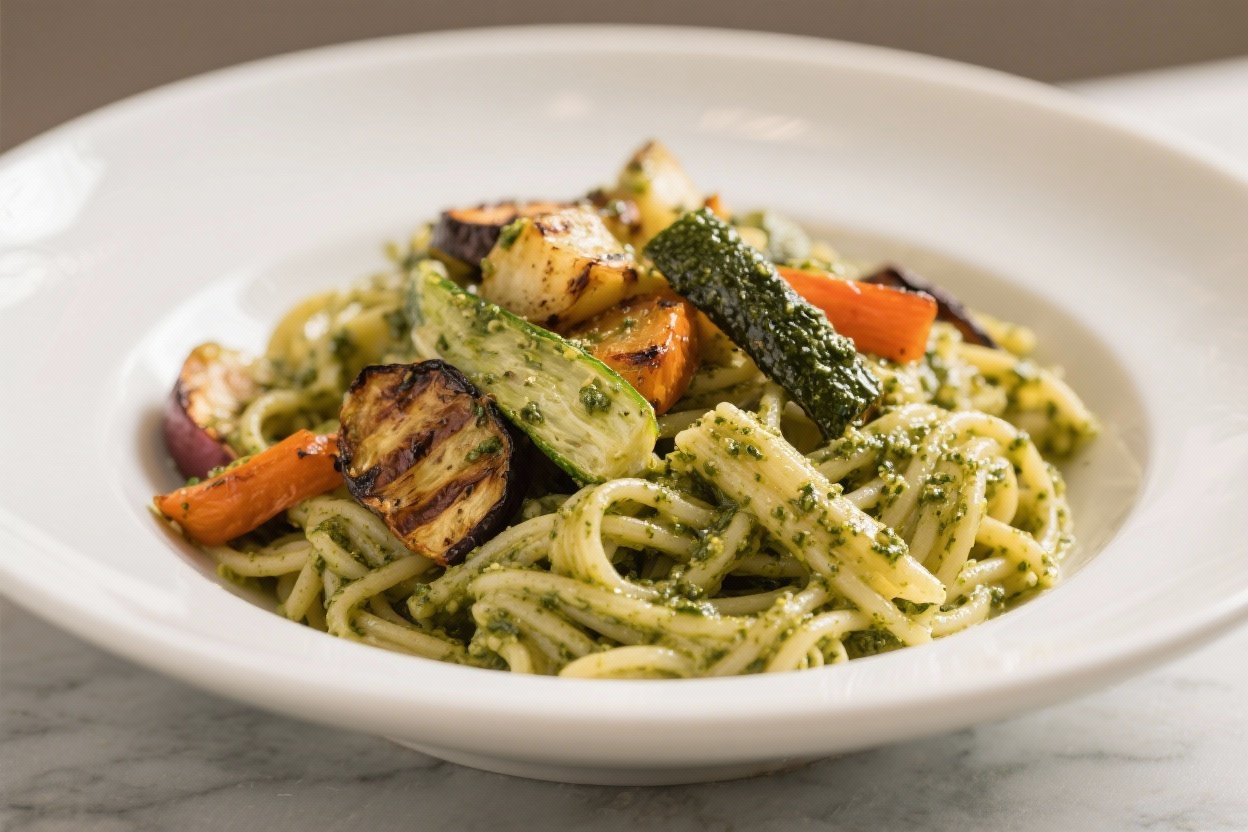
Pesto pasta with roasted vegetables is one of those comfort meals that feels special without asking much from you. It’s bright, fragrant, and loaded with color and texture. The roasted veggies bring caramelized edges and sweetness, while the pesto adds a lush, herby kick.
You can make it weeknight-quick or dress it up for guests. Best of all, it’s easy to customize with whatever you have in the fridge.
Ingredients
Method
- Heat the oven: Preheat to 425°F (220°C). This high heat gives vegetables those caramelized edges.
- Prep the vegetables: Cut the bell pepper into strips, slice the zucchini and yellow squash into half-moons, slice the red onion, cut broccoli into small florets, and leave cherry tomatoes whole.
- Toss with oil and season: On a large sheet pan, toss vegetables with 2–3 tablespoons olive oil, 1 teaspoon salt, and a few grinds of pepper. Spread in a single layer. If your pan is crowded, use two sheets so they roast instead of steam.
- Roast until tender and golden: Bake 18–22 minutes, tossing once halfway. The edges should brown slightly, and tomatoes should slump and burst.
- Cook the pasta: While the vegetables roast, boil pasta in well-salted water until al dente. Reserve 1/2 cup of pasta water before draining.
- Warm the pesto: Add pesto to a large bowl. Stir in a squeeze of lemon juice and a tablespoon of olive oil. This makes it silky and bright.
- Toss it all together: Add hot pasta to the bowl with pesto and toss to coat. Splash in 2–4 tablespoons of reserved pasta water as needed to loosen the sauce and help it cling.
- Add the vegetables: Fold in the roasted vegetables. Taste and adjust with salt, pepper, and more lemon if needed.
- Finish and serve: Top with grated Parmesan. For heat and freshness, add red pepper flakes and lemon zest. Serve warm.
- Optional extras: Toss in a handful of baby spinach or arugula to wilt slightly, or add cooked protein like grilled chicken or chickpeas for a heartier meal.
Overeating is a pattern. This helps you fix that problem. A quick reset for cravings, snacking, and “I’ll start tomorrow” moments.
Built for busy home cooks who want real-life structure. Simple steps that fit meal prep, family dinners, and late-night snack attacks.
What Makes This Recipe So Good
- Balanced flavors: Sweet roasted vegetables meet bold, garlicky pesto for a dish that tastes layered and satisfying.
- Flexible and forgiving: Swap the pasta shape, use different veggies, or choose dairy-free pesto. It still works.
- Meal-prep friendly: Roast vegetables and make pesto ahead, then toss with hot pasta when you’re ready to eat.
- Quick but impressive: It looks restaurant-worthy, yet the steps are simple and mostly hands-off.
- Nutrient-rich: You get fiber, healthy fats, and a rainbow of vegetables in one bowl.
Shopping List
- Pasta: 12 ounces of short pasta (penne, fusilli, or farfalle) or long pasta (spaghetti or linguine).
- Vegetables: 1 red bell pepper, 1 zucchini, 1 yellow squash, 1 small red onion, 1 cup cherry or grape tomatoes, 1 small head of broccoli (or 1 cup florets).
- Olive oil: Extra-virgin for roasting and tossing.
- Salt and black pepper.
- Pesto: 1 cup basil pesto (store-bought or homemade).
For homemade, you’ll need fresh basil, garlic, pine nuts or walnuts, Parmesan, olive oil, lemon juice, and salt.
- Lemon: 1 lemon for juice and zest.
- Parmesan cheese: Freshly grated, for serving.
- Optional add-ins: Red pepper flakes, baby spinach or arugula, grilled chicken, shrimp, or chickpeas.
How to Make It
- Heat the oven: Preheat to 425°F (220°C). This high heat gives vegetables those caramelized edges.
- Prep the vegetables: Cut the bell pepper into strips, slice the zucchini and yellow squash into half-moons, slice the red onion, cut broccoli into small florets, and leave cherry tomatoes whole.
- Toss with oil and season: On a large sheet pan, toss vegetables with 2–3 tablespoons olive oil, 1 teaspoon salt, and a few grinds of pepper. Spread in a single layer.
If your pan is crowded, use two sheets so they roast instead of steam.
- Roast until tender and golden: Bake 18–22 minutes, tossing once halfway. The edges should brown slightly, and tomatoes should slump and burst.
- Cook the pasta: While the vegetables roast, boil pasta in well-salted water until al dente. Reserve 1/2 cup of pasta water before draining.
- Warm the pesto: Add pesto to a large bowl.
Stir in a squeeze of lemon juice and a tablespoon of olive oil. This makes it silky and bright.
- Toss it all together: Add hot pasta to the bowl with pesto and toss to coat. Splash in 2–4 tablespoons of reserved pasta water as needed to loosen the sauce and help it cling.
- Add the vegetables: Fold in the roasted vegetables.
Taste and adjust with salt, pepper, and more lemon if needed.
- Finish and serve: Top with grated Parmesan. For heat and freshness, add red pepper flakes and lemon zest. Serve warm.
- Optional extras: Toss in a handful of baby spinach or arugula to wilt slightly, or add cooked protein like grilled chicken or chickpeas for a heartier meal.
Storage Instructions
- Refrigerator: Store leftovers in an airtight container for up to 3 days.
Add a drizzle of olive oil before reheating to revive the sauce.
- Reheating: Warm gently on the stove over low heat with a splash of water, or microwave in 30-second bursts, stirring between rounds.
- Freezing: Not ideal once mixed, as pesto can darken and pasta can turn mushy. Instead, freeze pesto separately in ice cube trays up to 3 months.
- Make-ahead tips: Roast vegetables and make pesto up to 2 days ahead. Cook pasta fresh and toss everything together just before serving.
Health Benefits
- Vegetable variety: Bell peppers, tomatoes, zucchini, and broccoli provide vitamin C, potassium, and antioxidants that support immune and heart health.
- Healthy fats: Olive oil and nuts in pesto deliver monounsaturated fats that can help with satiety and support heart health.
- Fiber and fullness: Vegetables and whole-grain pasta (if used) offer fiber for better digestion and stable energy.
- Protein potential: Add chickpeas, grilled chicken, or shrimp to boost protein without changing the core flavor profile.
- Lower sodium control: Making pesto at home lets you control salt and cheese amounts, which helps if you’re watching sodium or saturated fat.
Common Mistakes to Avoid
- Overcrowding the sheet pan: When vegetables are piled up, they steam and turn soft.
Give them space for browning.
- Skipping pasta water: Starchy pasta water helps pesto coat noodles smoothly. Without it, the sauce can feel heavy or clumpy.
- Overcooking pasta: Go for al dente. Soft pasta won’t hold up to tossing and can turn mushy on reheating.
- Using cold pesto: Cold pesto can seize and clump.
Loosen it with a bit of olive oil and lemon, then mix with hot pasta.
- Under-seasoning: Vegetables need salt to taste their best. Season before roasting and adjust at the end.
Alternatives
- Pasta shapes: Try orecchiette, rotini, or bucatini. Short shapes trap vegetables well; long noodles give a silky texture.
- Vegetable swaps: Use asparagus, mushrooms, eggplant, or Brussels sprouts.
In winter, try roasted squash or carrots for sweetness.
- Pesto variations: Spinach-basil, arugula-walnut, or kale-almond pestos are great. For nut-free, use pumpkin seeds or skip nuts entirely.
- Dairy-free: Use vegan pesto and skip Parmesan, or top with a sprinkle of nutritional yeast for cheesy flavor.
- Gluten-free: Choose a gluten-free pasta made from brown rice, chickpeas, or corn.
- Protein add-ins: Grilled chicken, sautéed shrimp, seared tofu, or roasted chickpeas work well. Fold in at the end to keep textures distinct.
- Citrus twist: Add lemon zest and a squeeze of juice for brightness.
A splash of white wine in the pan when reheating is lovely too.
FAQ
Can I use store-bought pesto?
Yes. Choose a good-quality pesto in the refrigerated section for fresher flavor. You can refresh it with a little lemon juice and extra-virgin olive oil.
How do I prevent the pesto from turning brown?
Use fresh basil, add a splash of lemon juice, and store tightly covered with a thin film of olive oil on top.
If making ahead, keep it in the fridge and avoid excess air exposure.
What’s the best pasta for this?
Short, ridged shapes like penne or fusilli hold sauce and catch vegetables. That said, spaghetti or linguine also work if you prefer a twirl-able bite.
Can I make it without nuts?
Absolutely. Use a nut-free pesto made with pumpkin seeds or sunflower seeds, or simply skip the nuts.
The result will still be creamy and flavorful.
How can I make it higher in protein?
Add grilled chicken, shrimp, or a can of drained chickpeas. You can also toss in white beans or top with seared tofu for a vegetarian option.
What if I don’t have an oven?
Sauté the vegetables in a large skillet over medium-high heat with olive oil and salt until browned and tender. Work in batches to avoid steaming.
Can I serve this cold as a pasta salad?
Yes.
Cool the pasta and vegetables, then toss with pesto and a bit of extra olive oil and lemon. Taste and re-season just before serving.
In Conclusion
Pesto pasta with roasted vegetables is a bright, flexible meal that fits any season. It’s quick enough for a weeknight and vibrant enough for company.
With simple techniques—roast hot, salt well, and use pasta water—you’ll get a silky, satisfying bowl every time. Keep the add-ins flexible, lean on your favorite pesto, and make it your own.
Printable Recipe Card
Want just the essential recipe details without scrolling through the article? Get our printable recipe card with just the ingredients and instructions.