Shockingly Easy How to Stop Eating Past Full Without Using Willpower
You don’t overeat because you “lack willpower.” You overeat because your brain and body run on ancient software in a modern buffet. Good news: you can change the environment and the signals you pay attention to. Better news: it feels easier than white-knuckling through dinner.
Let’s walk through practical, zero-moralizing strategies to stop eating past full—no “just try harder” pep talks required.
Overeating is a pattern. This helps you fix that problem. A quick reset for cravings, snacking, and “I’ll start tomorrow” moments.
Built for busy home cooks who want real-life structure. Simple steps that fit meal prep, family dinners, and late-night snack attacks.
Start With Your Body’s Volume Knob
You can’t rely on willpower if your hunger hormones scream like a fire alarm. So you adjust the “volume” first.
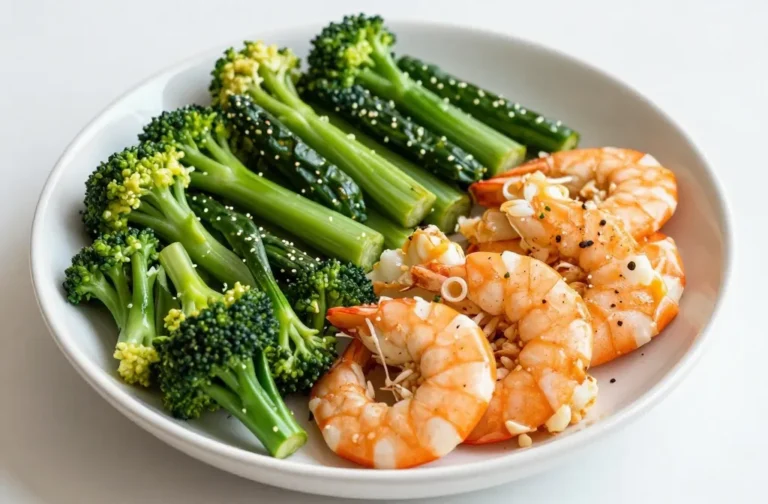
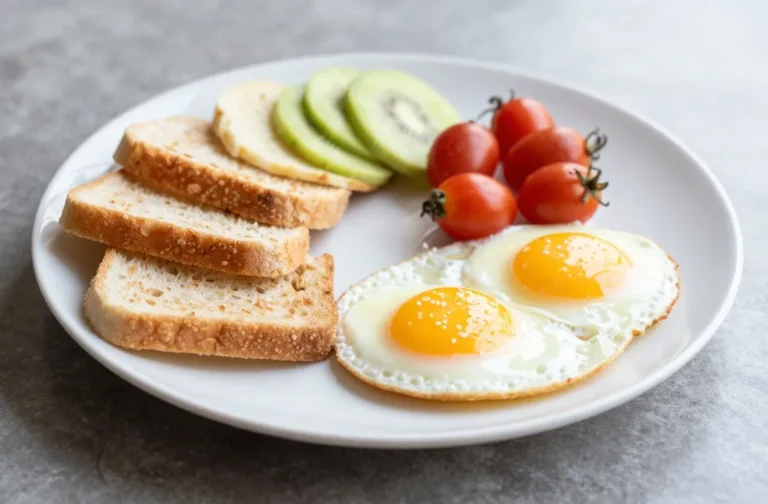
- Front-load protein and fiber: They slow digestion and quiet ghrelin (the “feed me” hormone). Aim for 25–35 g protein and 8–12 g fiber at meals.
- Eat earlier: Late meals often mean ravenous eating. If you show up to dinner already starving, you’ll overshoot fullness every time.
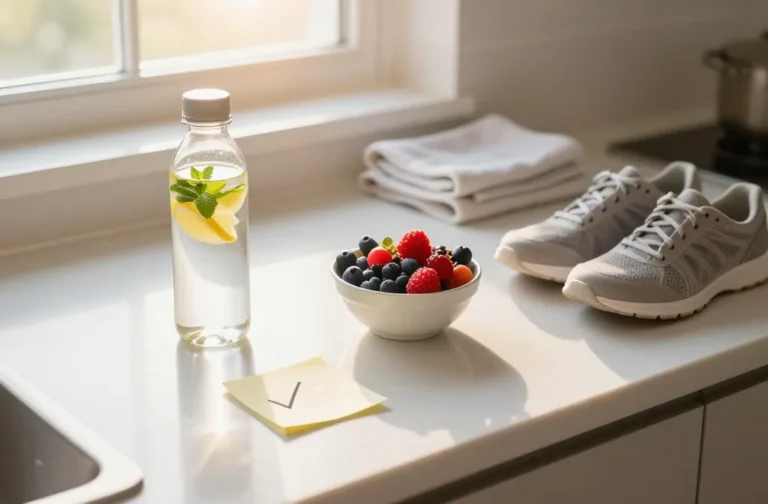
- Pre-game with water: 8–12 oz 10–20 minutes before the meal nudges fullness sooner. Not magic, just physics.
Check Your Baseline
If you routinely skip meals, you train your brain to pounce when food appears. IMO, consistent meals beat “I’ll just be good later.” Later you turns into a raccoon at a trash can. FYI, that raccoon is very effective.
Engineer the First Three Bites

The first few bites drive speed and desire. You win or lose the meal right there.
- Start with the slow stuff: Soup, salad, or roasted veg first. They set a steady pace and take up space—literally.
- Cut your first portion in half: Plate what looks reasonable, then take half off. You can always add more. Your brain loves second helpings way more than giant firsts.
- Use the “3-bite check-in”: After three bites, ask: “How hungry am I now?” If the answer drops from “ravenous” to “mildly human,” you can slow down.
Micro-Slowers That Don’t Feel Annoying
– Put the fork down while you chew.
– Sip water between bites.
– Switch hands for a minute. It feels goofy, but it works.
– Talk more. Social delay = fewer autopilot bites.
Make Fullness Obvious (Your Brain Needs Signs)
Your stomach sends fullness signals, but your brain loves vibes and visuals.
- Plate contrast: Use smaller plates and visible spacing. A crowded big plate encourages “finish line” eating.
- Serve family-style… but keep mains farther away: Put veggies in easy reach. Let the entrée sit a step away so seconds require a decision, not a reflex.
- Set a pause point: When your plate is 2/3 done, pause for 2 minutes. Rate your hunger 0–10. If you’re ≤4, stop. If >4, continue for five mindful bites and reassess.
The 80% Rule (But Make It Practical)
Don’t chase “perfectly full.” Aim for “I could eat more, but I don’t need to.” If you feel stuffed 20 minutes later, you overshot. Adjust earlier next time, not with guilt, just with data.
Neutralize Trigger Foods Without Banning Them

Bans breed binges. But you can lower their gravitational pull.
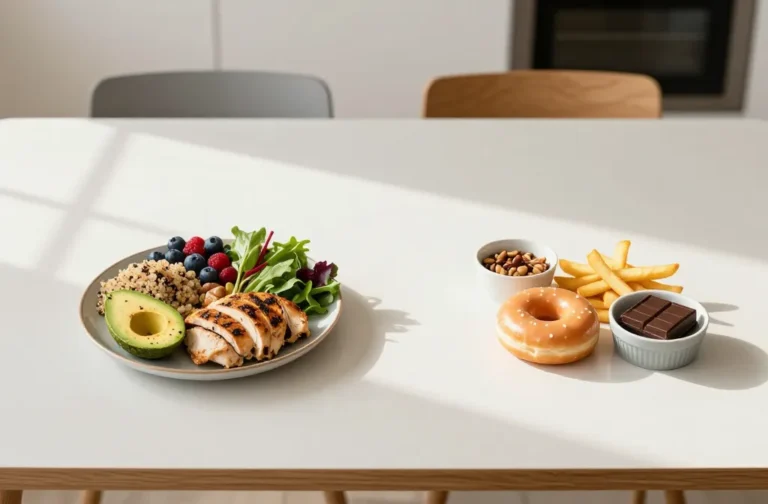
- Put them in friction zones: Wrap, freeze, or store on a high shelf. Add a 20-second barrier.
- Pre-portion proactively: Keep single-serve bags or containers ready. Do it when you’re calm, not when you’re prowling.
- Pair with protein: If you want chips, eat them with Greek yogurt dip or a turkey roll-up. Cravings soften when blood sugar doesn’t spike and crash.
Permission > Perfection
Tell yourself you can have more tomorrow. Scarcity fuels overeating right now. Abundance mindset sounds cheesy, but it neuters urgency.
Rituals That End The Meal (So You Don’t Keep Picking)
You don’t need discipline—you need closure.
- Tea or mint ritual: Brew peppermint or have a mint at the end. It’s a “meal over” cue.
- Clear and cover: Put leftovers away before you eat or right after you plate. Lids kill grazing.
- Change locations: Stand up, go to the couch, take a quick walk, or brush your teeth. New context, new behavior.
The 10-Minute Delay Button
Want seconds? Start a 10-minute timer. If you still want them, serve a small amount. Most urges fade when your stomach and brain finally sync.
Decode Emotional Eating Without Therapy Homework
Food solves problems fast. It just doesn’t solve the right ones.
- Name the state: “I’m bored,” “I’m anxious,” or “I’m tired.” Labels reduce cravings by making them less mysterious.
- Swap the fix: Bored? Stimulate (walk, playlist, short call). Anxious? Soothe (breathwork, hot shower, weighted blanket). Tired? Sleep or rest if possible.
- Set a floor, not a ceiling: If you choose to eat, do it with a boundary like, “I will eat one serving on a plate at the table.” That beats pantry drive-bys.
Make Stopping Easier Than Continuing
Willpower runs out. Systems don’t.
- Single-plate rule: Everything you plan to eat goes on one plate. If you want more, you must re-plate intentionally.
- Hard stops on screens: Eating with a show? Pause every commercial break or at episode midpoint to check fullness. If you binge the show, the food often follows.
- Default leftovers: Before you eat, pack tomorrow’s lunch from tonight’s dinner. Built-in boundary, future-you wins.
Two Easy “Stop-Past-Full” Recipes
These are protein- and fiber-forward meals that create natural fullness without drama.
Recipe 1: High-Protein Veggie Egg Scramble
Serves: 1 (approx. 1 large plate; 450–500 g cooked)
Ingredients:
– 3 large eggs
– 1/2 cup liquid egg whites
– 1 cup chopped bell pepper
– 1 cup chopped zucchini
– 1/2 cup diced onion
– 1 cup baby spinach
– 1 oz feta cheese
– 1 tsp olive oil
– Salt, pepper, chili flakes
Instructions:
1) Sauté onion, pepper, and zucchini in olive oil 4–5 minutes.
2) Add spinach to wilt.
3) Pour in eggs and egg whites; scramble until set.
4) Crumble feta on top. Season and serve.
Estimated Nutrition per serving (1 plate):
– Calories: 420
– Total Fat: 25 g
– Total Carbohydrates: 17 g
– Dietary Fiber: 4 g
– Net Carbs: 13 g
– Protein: 36 g
Notes: Based on USDA averages (eggs, egg whites, olive oil, feta, and mixed non-starchy veg). Great front-load protein meal to blunt later overeating.
Recipe 2: Loaded Lentil and Chicken Salad Bowl
Serves: 2 (serving size estimated: ~450 g/1 large bowl each)
Ingredients:
– 1 cup cooked brown lentils (split into 2 servings)
– 8 oz cooked chicken breast, chopped
– 3 cups mixed greens
– 1 cup cherry tomatoes, halved
– 1/2 cup cucumber, sliced
– 1/2 medium avocado, diced
– 2 tbsp olive oil
– 1 tbsp lemon juice
– 1 tsp Dijon, salt, pepper
Instructions:
1) Whisk olive oil, lemon, Dijon, salt, and pepper.
2) Toss greens, tomatoes, cucumber, lentils, and chicken with dressing.
3) Top with avocado.
Estimated Nutrition per serving (1 bowl):
– Calories: 565
– Total Fat: 29 g
– Total Carbohydrates: 36 g
– Dietary Fiber: 12 g
– Net Carbs: 24 g
– Protein: 43 g
Notes: Hearty protein + fiber combo helps you hit that “I’m good” feeling without a fight.
FAQ
How do I know if I’m actually full or just bored?
Ask, “Would a grilled chicken breast sound good right now?” If yes, you’re hungry. If only cookies sound good, it’s likely boredom or emotion. Do a 10-minute pause and try a non-food fix first.
What if I overeat anyway?
Data, not drama. Note what happened before the meal (too hungry? distracted?), pick one tweak for next time (protein, pause, portion), and move on. Beating yourself up just fuels the next overeat.
Can I snack and still stop past full?
Yes, if snacks work as mini-meals. Aim for protein + fiber (Greek yogurt + berries, apple + peanut butter). Snacks that look like desserts turn into “more, more, more.”
Do I need to count calories?
Not required. Some people like the structure; others spiral. You can use habits—protein, fiber, pre-meal water, pause point—to self-regulate without tracking. IMO, consistency beats precision for most folks.
Are “cheat days” a bad idea?
They create scarcity and rebound overeating. Plan “fun foods” regularly instead. Permission reduces the urge to go nuclear on Saturdays.
Conclusion
You don’t fix overeating with grit; you fix it with design. Feed your body what calms hunger, slow the first bites, make fullness obvious, close the meal cleanly, and give emotions a better outlet. Do that, and stopping at “satisfied” becomes the easy choice—not a heroic act.
Nutrition disclaimer: Values above are estimates based on standard USDA ingredient data and typical household measures. Actual nutrition can vary due to brand differences, cooking methods, and portion sizes.
Printable Recipe Card
Want just the essential recipe details without scrolling through the article? Get our printable recipe card with just the ingredients and instructions.