Prep the salmon: Pat the fillets dry with paper towels.
Season both sides with salt and black pepper. If using lemon, zest a little over the fish for brightness.
Sear the salmon: Heat a large skillet over medium-high. Add 1 tablespoon olive oil.
When shimmering, place salmon skin-side up and cook 3–4 minutes until golden. Flip, reduce heat to medium, and cook 2–4 minutes more, depending on thickness. Transfer to a plate.
The salmon will finish gently in the sauce.
Sauté aromatics: In the same pan, add the remaining 1 tablespoon olive oil and 1 tablespoon butter. Stir in the chopped shallot and a pinch of salt. Cook 2–3 minutes until softened.
Add minced garlic and cook 30 seconds until fragrant, not browned.
Build the tomato base: Pour in 1 cup crushed tomatoes and 1/2 cup broth. Scrape up any browned bits from the pan. Simmer 3–4 minutes to blend flavors.
If you like heat, add a pinch of red pepper flakes.
Add cream and cheese: Lower the heat to medium-low. Stir in 1/2 cup heavy cream. If using, add 1/4 cup grated Parmesan and stir until smooth.
Taste and season with salt and pepper. The sauce should be creamy, slightly tangy, and well seasoned.
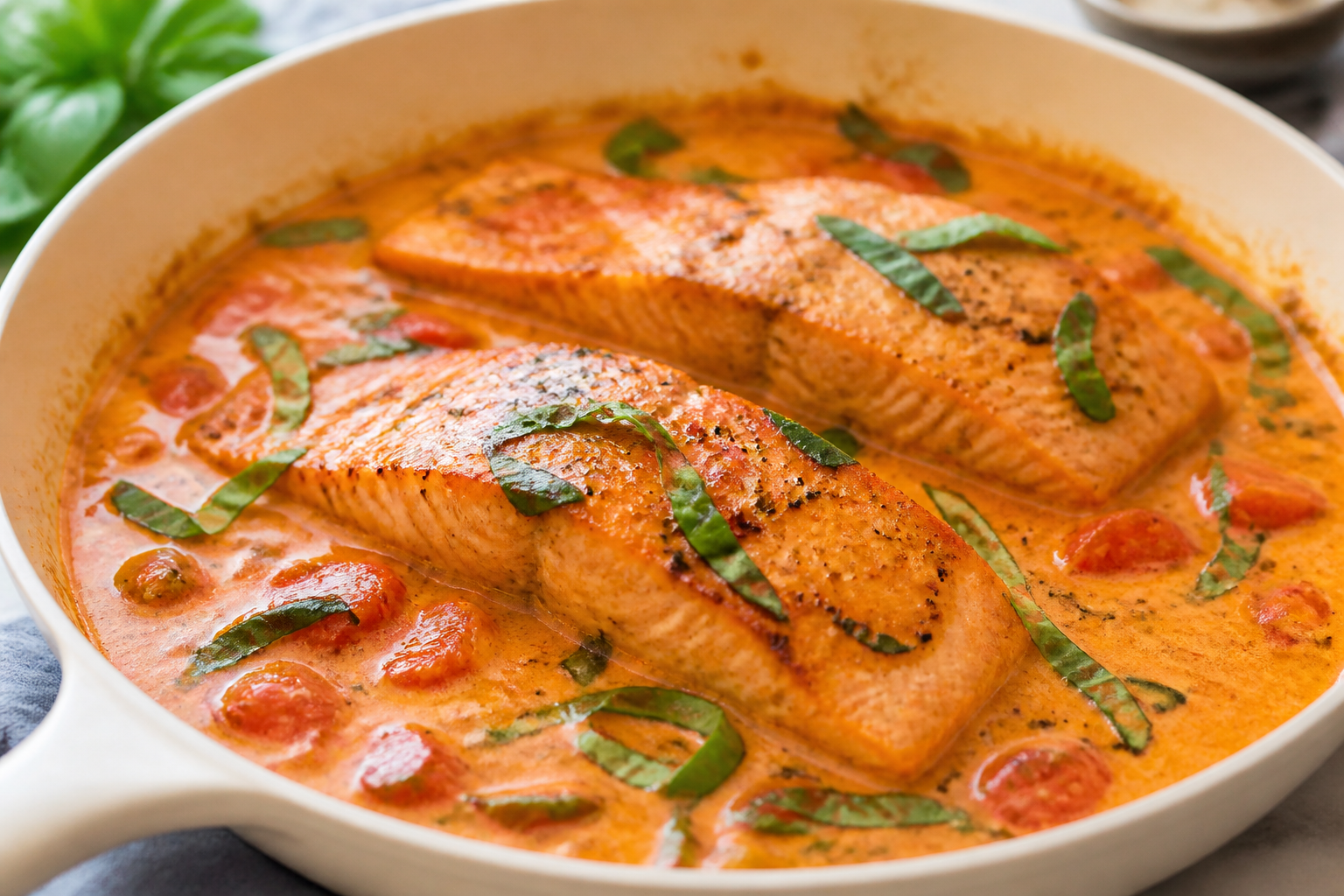
Return salmon to the pan: Nestle the fillets into the sauce, spooning some over the tops. Simmer gently 2–3 minutes, or until salmon is just cooked through and flakes easily with a fork.
Avoid rapid boiling to keep the sauce silky.
Finish with basil and lemon: Turn off the heat. Stir in most of the fresh basil, saving a little for garnish. Squeeze in 1–2 teaspoons lemon juice to brighten the sauce.
Adjust seasoning as needed.
Serve: Plate salmon with extra sauce. Garnish with remaining basil and a light dusting of Parmesan, if you like. Serve with pasta, rice, sautéed greens, or crusty bread.