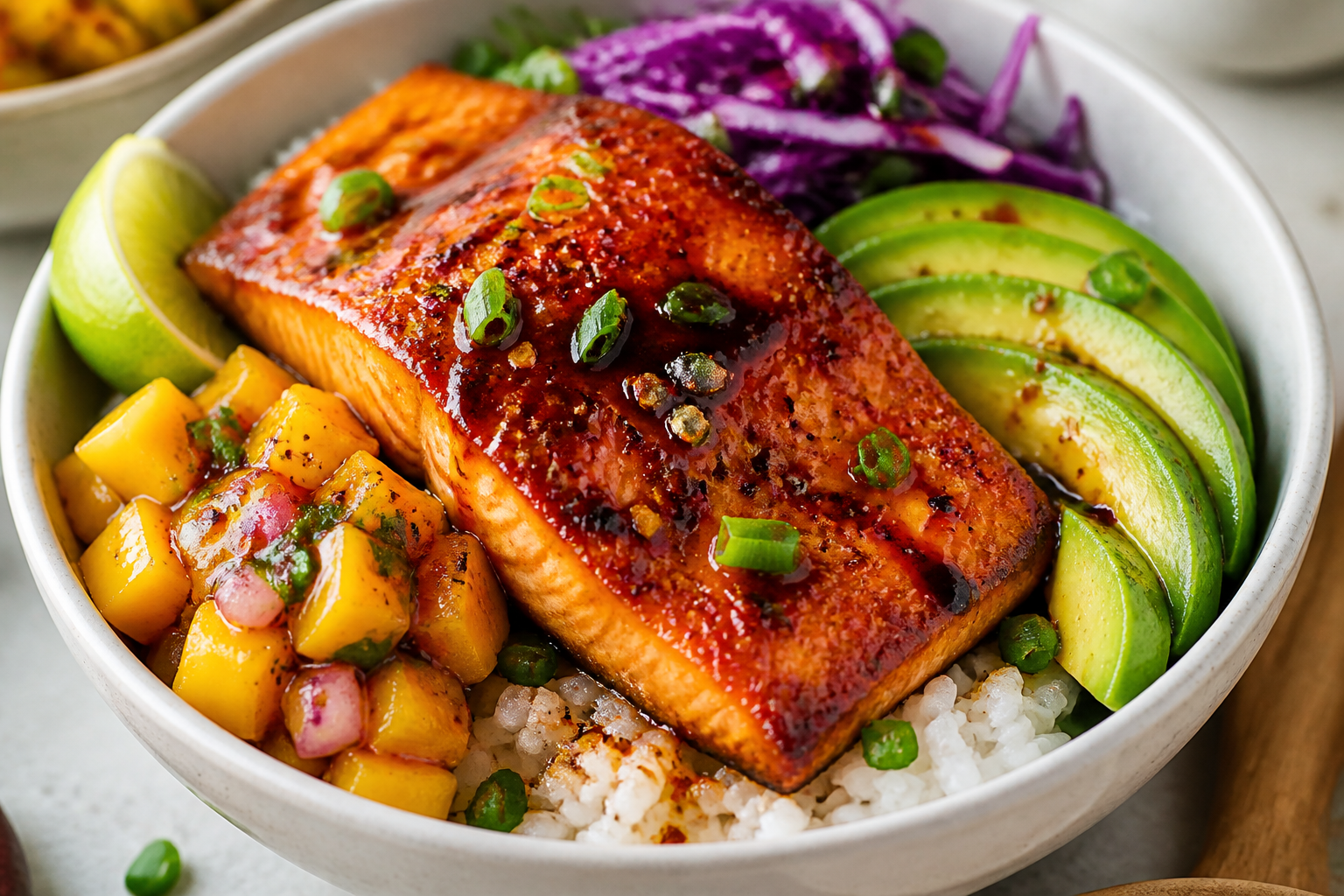
Cook the base: Make your rice or grain according to package directions. Keep it warm.
Fluffy, slightly sticky rice works best for soaking up the glaze.
Mix the glaze: In a small bowl, whisk hot honey, soy sauce, rice vinegar or lime, minced garlic, and ginger. Taste and adjust. If you like it spicier, add more chili.
If it’s too sweet, add a splash more acid.
Pat the salmon dry: Use paper towels to dry the fillets. Season both sides with salt and pepper. Dry fish sears better and helps the glaze cling.
Choose your cooking method: For fast weeknights, pan-searing is ideal.
If you prefer hands-off, bake or broil. Pan-sear: Heat oil in a nonstick or well-seasoned skillet over medium-high. Place salmon skin side down. Cook 3 to 4 minutes until the skin is crisp and the sides look opaque about halfway up.
Oven-bake: Heat oven to 400°F (200°C).
Place salmon on a lined sheet pan and bake for 8 to 10 minutes, depending on thickness.
Broil (for extra caramelization): Broil on high for 5 to 7 minutes, watching closely.
Glaze and finish: If pan-searing, flip salmon and immediately pour half the glaze into the pan. Tilt the pan and spoon the bubbling glaze over the fish for 1 to 2 minutes, until glossy and just cooked through. If baking or broiling, brush the glaze on during the last 2 to 3 minutes to prevent burning.
Reserve some glaze for drizzling the bowls.
Toss the veggies: In a bowl, toss cucumbers, carrots, and cabbage with a pinch of salt and a squeeze of lime or a splash of rice vinegar. This quick seasoning keeps them crisp and bright.
Make the creamy drizzle: Stir together Greek yogurt or mayo, lime juice, hot honey, and a pinch of salt until smooth. Thin with a teaspoon of water if needed.
Assemble the bowls: Add warm rice to each bowl.
Top with salmon, the quick-pickled veggies, and herbs. Drizzle with remaining glaze and the creamy sauce. Finish with sesame seeds and lime wedges.
Check doneness: Salmon is best at medium, about 125–130°F (52–54°C) in the thickest part, or when it flakes easily but stays moist.