High Protein Low Calorie Teriyaki Salmon Bowls – Simple, Satisfying, and Fresh
These teriyaki salmon bowls hit the sweet spot: bold flavor, light calories, and plenty of protein to keep you full. Think tender salmon with a glossy teriyaki glaze, fluffy rice, and crisp veggies that add color and crunch. It’s a weeknight-friendly meal that feels restaurant-level without the fuss.
FREE 7-Day Easy Dinner Reset
Get 7 healthy, family-friendly dinners complete with recipes and simple meal plans delivered straight to your inbox.
The ingredients are familiar, the steps are easy, and you can meal prep them without the fish turning dry. If you want something healthy that doesn’t taste like “diet food,” this is it.
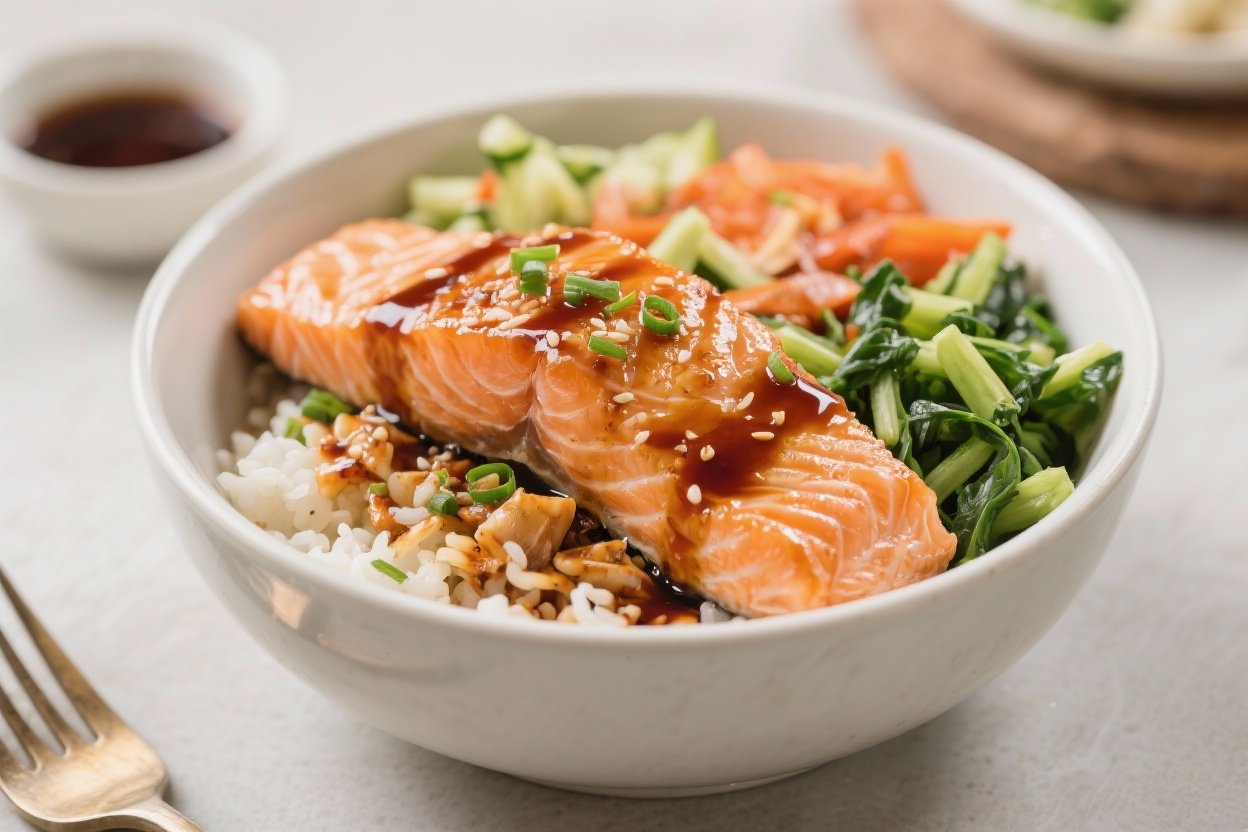
High Protein Low Calorie Teriyaki Salmon Bowls - Simple, Satisfying, and Fresh
Ingredients
Method
- Prep the rice and veggies: Cook your rice according to package directions. Steam or sauté broccoli and any other sturdy veggies. Slice cucumbers, grate carrots, and chop green onions for fresh crunch.
- Make the lighter teriyaki: In a small saucepan, whisk 1/3 cup low-sodium soy sauce, 2 tablespoons rice vinegar, 1–1.5 tablespoons honey, 1 teaspoon sesame oil, 2 minced garlic cloves, and 1 teaspoon grated ginger. Bring to a simmer. Stir 2 teaspoons cornstarch with 2 teaspoons cold water, then whisk into the pot and simmer 1–2 minutes until glossy. Set aside.
- Season the salmon: Pat salmon dry, then lightly season with salt and pepper. Brush a thin layer of teriyaki over the top.
- Cook the salmon: Bake at 400°F (205°C) for 10–12 minutes, or air fry at 390°F (200°C) for 7–9 minutes, until just opaque and flaky. Avoid overcooking to keep it juicy.
- Glaze: Brush more teriyaki over the salmon right after cooking for a shiny finish. Reserve some sauce for the bowls.
- Assemble the bowls: Add rice or cauliflower rice to each bowl. Top with veggies, the salmon (flaked or in a fillet), and a drizzle of extra teriyaki. Sprinkle with sesame seeds and green onions. Add lime wedges and a pinch of red pepper flakes if you like heat.
Why This Recipe Works

- Lean protein, big flavor: Salmon is naturally rich in protein and omega-3s. A lighter, homemade teriyaki keeps the calories in check while still delivering that sweet-savory punch.
- Quick cook time: Salmon cooks fast in the oven or air fryer, so dinner is ready in under 30 minutes.
- Balanced bowl: You get protein, smart carbs, and fiber-packed veggies.
It’s satisfying without feeling heavy.
- Easy to customize: Swap the base, switch the veggies, or make it gluten-free with a simple soy sauce swap.
Shopping List
- Salmon: Skin-on fillets, about 4–6 ounces each
- Soy sauce or tamari: Low-sodium preferred
- Rice vinegar (or apple cider vinegar)
- Honey (or maple syrup)
- Garlic (fresh cloves)
- Ginger (fresh, or ground in a pinch)
- Cornstarch (to thicken the sauce)
- Sesame oil (a little goes a long way)
- Cooked rice or cauliflower rice: Jasmine, brown, or a low-carb alternative
- Vegetables: Broccoli, cucumber, edamame, carrots, bell pepper, or snap peas
- Green onions and sesame seeds for garnish
- Lime (optional, for brightness)
- Red pepper flakes or sriracha (optional, for heat)
Instructions

- Prep the rice and veggies: Cook your rice according to package directions. Steam or sauté broccoli and any other sturdy veggies. Slice cucumbers, grate carrots, and chop green onions for fresh crunch.
- Make the lighter teriyaki: In a small saucepan, whisk 1/3 cup low-sodium soy sauce, 2 tablespoons rice vinegar, 1–1.5 tablespoons honey, 1 teaspoon sesame oil, 2 minced garlic cloves, and 1 teaspoon grated ginger.
Bring to a simmer. Stir 2 teaspoons cornstarch with 2 teaspoons cold water, then whisk into the pot and simmer 1–2 minutes until glossy. Set aside.
- Season the salmon: Pat salmon dry, then lightly season with salt and pepper.
Brush a thin layer of teriyaki over the top.
- Cook the salmon: Bake at 400°F (205°C) for 10–12 minutes, or air fry at 390°F (200°C) for 7–9 minutes, until just opaque and flaky. Avoid overcooking to keep it juicy.
- Glaze: Brush more teriyaki over the salmon right after cooking for a shiny finish. Reserve some sauce for the bowls.
- Assemble the bowls: Add rice or cauliflower rice to each bowl.
Top with veggies, the salmon (flaked or in a fillet), and a drizzle of extra teriyaki. Sprinkle with sesame seeds and green onions. Add lime wedges and a pinch of red pepper flakes if you like heat.
How to Store
- Meal prep: Store cooked salmon, rice, veggies, and sauce separately in airtight containers for up to 3 days.
- Reheating: Warm salmon gently in the microwave at 50% power for 45–60 seconds, or in a low oven.
Add a spoon of sauce to keep it moist.
- Freezing: You can freeze cooked salmon and rice, but not fresh cucumbers. Freeze in portions for up to 2 months and thaw overnight in the fridge.
- Sauce: Keeps in the fridge for 1 week. If it thickens too much, whisk in a splash of water.
Why This is Good for You
- High protein: Salmon packs around 20–25 grams of protein per 4-ounce serving, which supports muscle repair and keeps you full.
- Healthy fats: Omega-3s in salmon support heart and brain health and may help reduce inflammation.
- Lower calories, real satisfaction: A light teriyaki and plenty of veggies bring volume and flavor without piling on calories.
- Balanced macros: Carb base for energy, protein for satiety, fiber for digestion, and healthy fats for satisfaction.
What Not to Do
- Don’t overcook the salmon: It dries out fast.
Pull it when it flakes and is just opaque in the center.
- Don’t drown it in sauce: The glaze should coat, not pool. Extra sugar means extra calories without better flavor.
- Don’t skip the acid: A squeeze of lime or a splash of vinegar brightens everything and keeps the bowl from tasting flat.
- Don’t rely on only soft veggies: Add something crisp (cucumber, shredded carrots) for texture and balance.
Variations You Can Try
- Low-carb swap: Use cauliflower rice and edamame for fiber and protein. Keep the sauce light to cut calories further.
- Gluten-free: Use tamari or coconut aminos.
Check your cornstarch and any add-ins for gluten-free labels.
- Spicy teriyaki: Add sriracha or gochujang to the sauce, or sprinkle red pepper flakes on the finished bowl.
- Citrus teriyaki: Stir in 1–2 tablespoons orange juice and a bit of zest for a bright twist.
- Grill it: Brush salmon with sauce and grill skin-side down over medium heat for a smoky edge.
- Different base: Try quinoa, mixed greens, or a half-and-half rice/cauliflower rice combo.
- Extra protein: Add a soft-boiled egg or a handful of roasted tofu cubes for a bigger protein boost.
FAQ
Never Wonder What's For Dinner Again
Get 7 healthy, family-friendly dinners complete with recipes, grocery lists, and simple meal plans delivered straight to your inbox.
How many calories are in a bowl?
A typical bowl with 1/2 cup cooked rice, 4–5 ounces salmon, veggies, and a light drizzle of sauce lands around 400–550 calories. Exact numbers depend on your portion sizes and how much sauce you use.
Can I use frozen salmon?
Yes. Thaw it fully in the fridge overnight, then pat dry before cooking.
Remove excess moisture so the glaze sticks and the fish roasts instead of steaming.
What if I don’t have fresh ginger?
Use 1/4 teaspoon ground ginger in the sauce. It’s not as bright as fresh, but it still works nicely.
Is there a sugar-free option?
You can reduce or omit the honey and sweeten to taste with a zero-calorie sweetener that measures like sugar. Start small and adjust, since some sweeteners are more intense.
Can I cook the salmon on the stovetop?
Absolutely.
Sear skin-side down in a nonstick pan over medium heat with a touch of oil, 4–5 minutes, then flip and cook 2–3 minutes more. Brush with sauce at the end.
What vegetables work best?
Broccoli, edamame, cucumber, carrots, bell pepper, snap peas, and cabbage all hold up well. Aim for a mix of cooked and fresh for texture.
How do I keep the sauce light?
Use low-sodium soy sauce, keep honey modest, and thicken with a small amount of cornstarch.
A little sesame oil adds aroma without many calories—measure it.
In Conclusion
High Protein Low Calorie Teriyaki Salmon Bowls are a go-to meal when you want something fast, fresh, and satisfying. You get rich, tender salmon, plenty of crunch, and a lighter teriyaki that still delivers flavor. Keep the portions balanced, don’t overcook the fish, and finish with something bright.
It’s simple, flexible, and perfect for meal prep or an easy weeknight dinner.
Printable Recipe Card
Want just the essential recipe details without scrolling through the article? Get our printable recipe card with just the ingredients and instructions.
Loved This Recipe?
If you're looking for more simple, healthy dinners your family will actually eat, grab my FREE 7-Day Easy Dinner Reset. You'll get 7 easy dinner recipes, simple grocery lists, and a done-for-you plan that takes the stress out of mealtime.