High Protein Spicy Korean Chicken Bowls – Bold Flavor, Simple Meal Prep
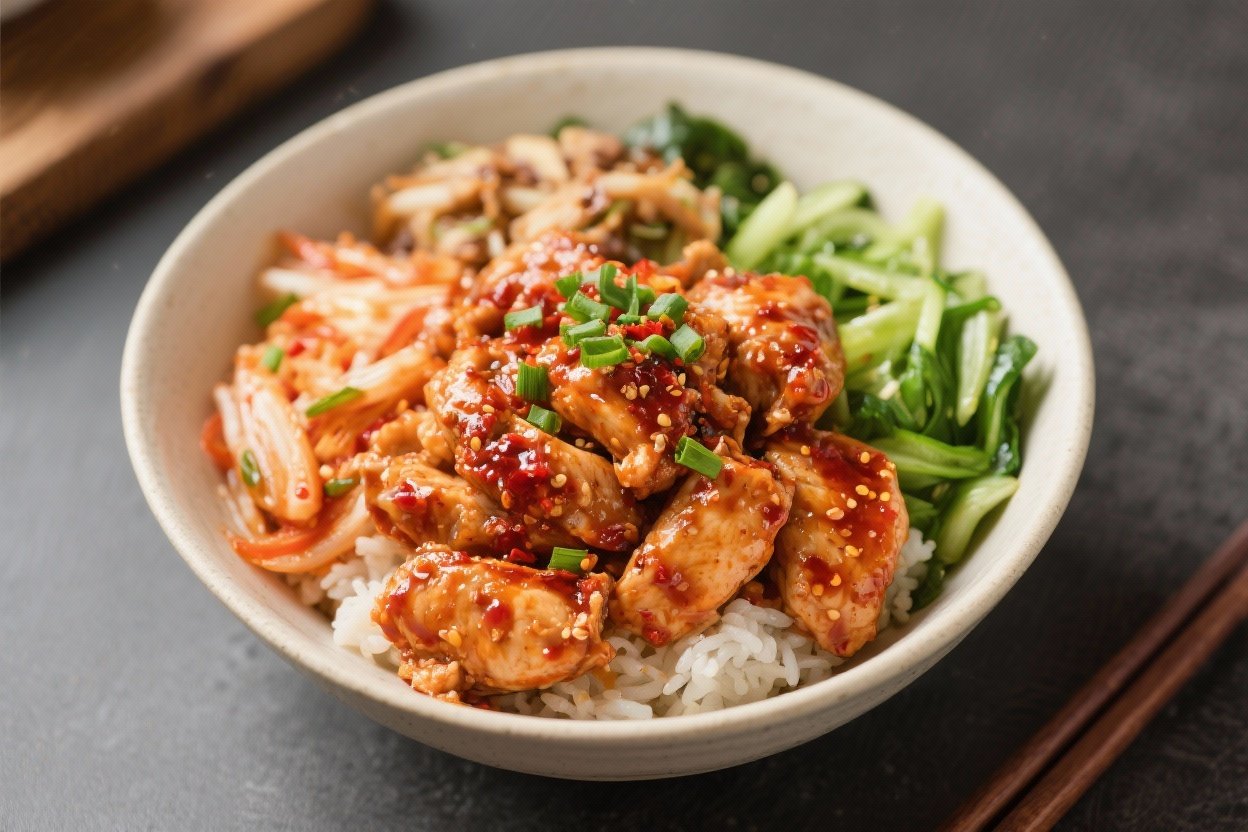
These bowls bring restaurant-level flavor to your weeknight table with very little fuss. Think juicy chicken coated in a sweet-and-spicy gochujang sauce, paired with fluffy rice, crisp veggies, and a bright, tangy finish. It’s the kind of meal that wakes up your taste buds but still feels clean and balanced.
FREE 7-Day Easy Dinner Reset
Get 7 healthy, family-friendly dinners complete with recipes and simple meal plans delivered straight to your inbox.
If you’re looking for a high-protein meal that won’t bore you, this one hits the mark. It’s great for meal prep, easy to customize, and unbelievably satisfying.
Ingredients
Method
- Prep the chicken: Pat the chicken dry and cut into bite-size pieces. Season lightly with salt and pepper. This helps it brown well and stay juicy.
- Make the sauce: In a bowl, whisk gochujang, soy sauce, rice vinegar, honey, sesame oil, garlic, and ginger. Taste and adjust. Add gochugaru if you want extra heat.
- Cook the rice: Make your base according to package directions. Fluff and keep warm. Leftover rice works great here too.
- Stir-fry the chicken: Heat a large skillet over medium-high with a drizzle of oil. Add chicken in a single layer. Cook 5–7 minutes, stirring occasionally, until browned and cooked through.
- Sauce it up: Lower heat to medium. Pour the sauce over the chicken and toss to coat. Simmer 1–2 minutes until the sauce thickens and clings to the chicken.
- Prep the veggies: While the chicken cooks, slice cucumbers, shred carrots and cabbage, and steam broccoli until just tender. Keep the veggies crisp for texture.
- Assemble the bowls: Add a scoop of rice, top with spicy chicken, then add your veggies. Finish with green onions, sesame seeds, and a squeeze of lime. Add kimchi for a punchy, fermented kick.
- Optional egg: For extra protein, top each bowl with a fried egg or jammy soft-boiled egg.
What Makes This Recipe So Good

- High in protein: Lean chicken breast or thighs deliver plenty of protein to keep you full and energized.
- Big flavor, simple steps: Gochujang, garlic, and ginger do the heavy lifting without a long ingredient list.
- Balanced bowl: Carbs from rice, protein from chicken, and fiber from veggies make this a complete meal.
- Customizable heat: Adjust the spice level to your comfort without losing flavor.
- Meal-prep friendly: Holds up well for several days, so lunch is sorted.
Shopping List
- Chicken: 1.5 pounds boneless, skinless chicken breasts or thighs
- Rice: 2 cups cooked white or brown rice (or quinoa/cauliflower rice)
- Gochujang: 3 tablespoons Korean red chili paste
- Soy sauce or tamari: 3 tablespoons
- Rice vinegar: 1 to 2 tablespoons
- Honey or maple syrup: 1 to 2 tablespoons
- Sesame oil: 1 tablespoon
- Garlic: 3 to 4 cloves, minced
- Fresh ginger: 1 tablespoon, grated
- Gochugaru (optional): 1 teaspoon for extra heat
- Vegetables: 1 cup shredded carrots, 1 cup cucumber (thinly sliced), 1 cup shredded red cabbage, 1 cup steamed broccoli
- Green onions: 3, sliced
- Sesame seeds: For topping
- Lime or lemon: For a squeeze of brightness
- Neutral oil: Avocado or canola for cooking
- Optional add-ins: Kimchi, pickled radish, fried or jammy egg, nori strips
How to Make It

- Prep the chicken: Pat the chicken dry and cut into bite-size pieces. Season lightly with salt and pepper.
This helps it brown well and stay juicy.
- Make the sauce: In a bowl, whisk gochujang, soy sauce, rice vinegar, honey, sesame oil, garlic, and ginger. Taste and adjust. Add gochugaru if you want extra heat.
- Cook the rice: Make your base according to package directions.
Fluff and keep warm. Leftover rice works great here too.
- Stir-fry the chicken: Heat a large skillet over medium-high with a drizzle of oil. Add chicken in a single layer.
Cook 5–7 minutes, stirring occasionally, until browned and cooked through.
- Sauce it up: Lower heat to medium. Pour the sauce over the chicken and toss to coat. Simmer 1–2 minutes until the sauce thickens and clings to the chicken.
- Prep the veggies: While the chicken cooks, slice cucumbers, shred carrots and cabbage, and steam broccoli until just tender.
Keep the veggies crisp for texture.
- Assemble the bowls: Add a scoop of rice, top with spicy chicken, then add your veggies. Finish with green onions, sesame seeds, and a squeeze of lime. Add kimchi for a punchy, fermented kick.
- Optional egg: For extra protein, top each bowl with a fried egg or jammy soft-boiled egg.
How to Store
- Refrigerator: Store chicken and rice in airtight containers for up to 4 days.
Keep fresh veggies separate to preserve crunch.
- Freezer: The chicken and rice freeze well for up to 2 months. Thaw overnight in the fridge. Add fresh veggies after reheating.
- Reheat: Microwave with a splash of water to keep the rice fluffy.
Heat in 60–90 second bursts, stirring in between.
Why This is Good for You
- High-quality protein: Chicken supports muscle repair and keeps you satisfied longer.
- Complex carbs and fiber: Rice and veggies offer steady energy and help digestion.
- Fermented benefits: Adding kimchi brings probiotics that support gut health.
- Antioxidants: Garlic, ginger, and colorful vegetables provide compounds that help fight inflammation.
- Healthier sauce: Gochujang delivers bold flavor, so you need less sugar and oil overall.
Common Mistakes to Avoid
- Crowding the pan: Overloading the skillet steams the chicken. Cook in batches for better browning.
- Skipping the taste test: Sauces vary in saltiness and heat. Taste and adjust vinegar, honey, and spice before adding to the pan.
- Overcooking chicken: Pull it off the heat as soon as it’s cooked through.
It will keep cooking slightly as the sauce simmers.
- Soggy veggies: Keep fresh veggies raw or barely steamed for a crisp contrast.
- Cold rice clumps: If using leftover rice, break it up and warm it with a splash of water for the best texture.
Variations You Can Try
- Extra protein: Add edamame, tofu cubes, or a soft-boiled egg for an even higher protein count.
- Low-carb swap: Use cauliflower rice and extra greens like spinach or kale.
- Gluten-free: Use tamari or coconut aminos instead of soy sauce. Check that your gochujang is gluten-free.
- Sweet-heat balance: Try pineapple chunks or mango for a juicy contrast to the spice.
- Crunch factor: Add roasted seaweed, crushed peanuts, or toasted almonds for texture.
- Sheet pan version: Toss chicken with sauce and roast at 425°F (220°C) for 12–16 minutes, then broil 1–2 minutes for char.
FAQ
How spicy are these bowls?
Never Wonder What's For Dinner Again
Get 7 healthy, family-friendly dinners complete with recipes, grocery lists, and simple meal plans delivered straight to your inbox.
The heat level is medium as written. You can reduce spice by using less gochujang and skipping gochugaru, or increase it with more gochujang and a drizzle of chili oil.
Can I use chicken thighs instead of breasts?
Yes.
Thighs are juicy and forgiving. They’re a great choice if you prefer richer flavor and a little more tenderness.
What can I use instead of gochujang?
Gochujang is unique, but a quick mix of sriracha, a little miso or soy sauce, and honey can mimic the sweet-savory heat. It won’t be the same, but it will still taste great.
Can I meal prep these bowls?
Absolutely.
Portion rice and chicken into containers, keep fresh veggies and sauces separate, and assemble right before eating for the best texture.
How do I make it dairy-free or nut-free?
The recipe is naturally dairy-free and nut-free. If you add crunchy toppings, choose seeds (like sesame) instead of nuts if needed.
Is there a way to cut the sugar?
Use half the honey or swap for a non-nutritive sweetener you like. The sauce may taste spicier, so balance with a touch more rice vinegar.
What vegetables work best?
Cucumbers, carrots, cabbage, and broccoli are classic.
You can also use bell peppers, snap peas, radishes, or a simple spring mix if that’s what you have.
Can I make it without oil?
Yes. Use a good nonstick pan and a splash of water as needed to prevent sticking. You’ll lose a little browning, but the sauce will still shine.
Wrapping Up
High Protein Spicy Korean Chicken Bowls deliver bold flavor, smart nutrition, and easy prep in one go.
The gochujang sauce brings heat and depth, the veggies add crunch and color, and the rice ties it all together. Keep it flexible, make it your own, and enjoy a meal that’s both comforting and energizing. This is the kind of recipe that earns a regular spot in your week.
Printable Recipe Card
Want just the essential recipe details without scrolling through the article? Get our printable recipe card with just the ingredients and instructions.
Loved This Recipe?
If you're looking for more simple, healthy dinners your family will actually eat, grab my FREE 7-Day Easy Dinner Reset. You'll get 7 easy dinner recipes, simple grocery lists, and a done-for-you plan that takes the stress out of mealtime.