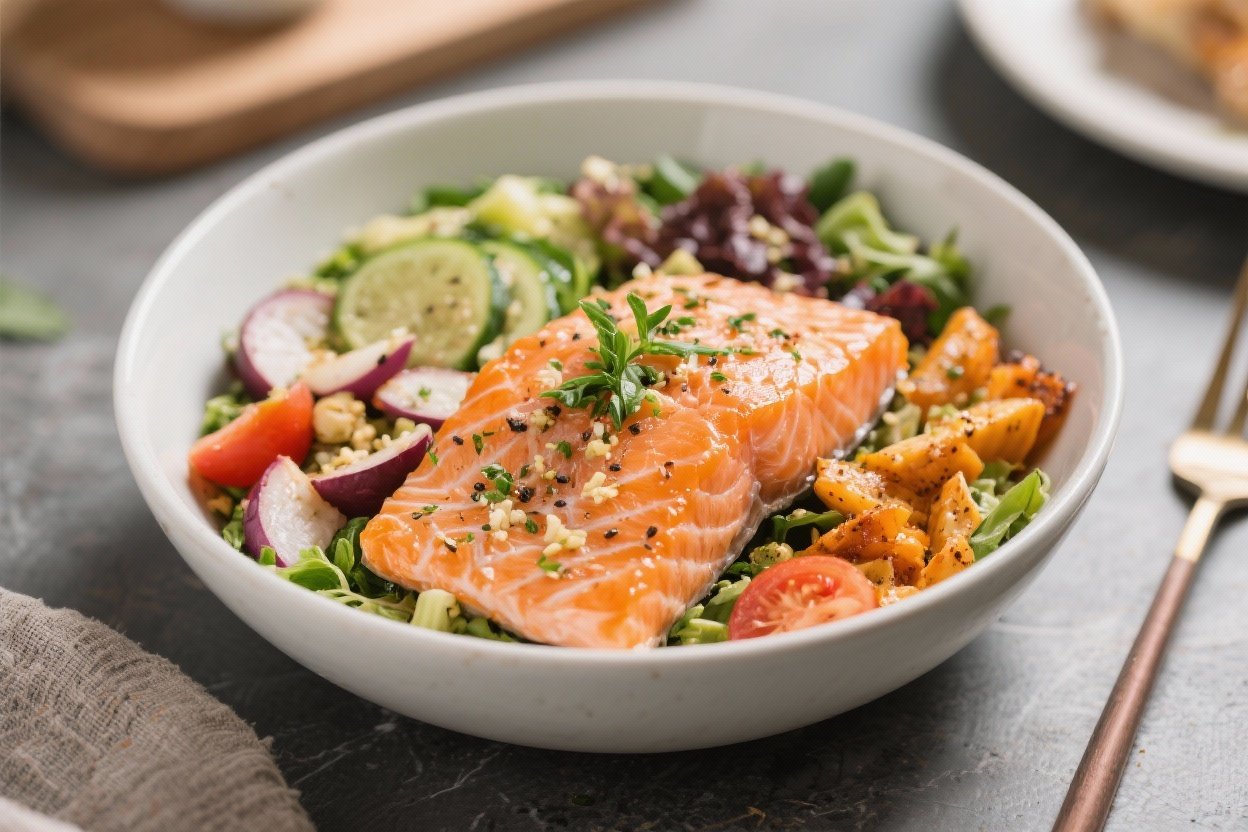
Healthy High Protein Salmon Mediterranean Bowls – Simple, Fresh, And Satisfying
These salmon Mediterranean bowls make a fresh, satisfying meal that’s easy to put together any night of the week. You get flaky salmon, crisp veggies, bright herbs, and a creamy, lemony sauce — all layered over high-protein grains. The flavors are clean and vibrant, and the textures keep every bite interesting.
FREE 7-Day Easy Dinner Reset
Get 7 healthy, family-friendly dinners complete with recipes and simple meal plans delivered straight to your inbox.
It’s the kind of meal that feels restaurant-worthy but comes together with pantry staples. If you want something wholesome and filling without feeling heavy, this bowl checks every box.
Healthy High Protein Salmon Mediterranean Bowls - Simple, Fresh, And Satisfying
Ingredients
Method
- Cook your grain base: Rinse the quinoa or farro. Cook according to package directions with a pinch of salt. Fluff and set aside. For extra flavor, stir in a squeeze of lemon and a drizzle of olive oil.
- Preheat the oven: Heat to 400°F (200°C). Line a baking sheet with parchment for easy cleanup.
- Season the salmon: Pat the salmon dry. Rub with olive oil, salt, pepper, smoked paprika, oregano, lemon zest, and minced garlic. Place on the prepared sheet, skin-side down if using skin-on.
- Roast the salmon: Bake 10–14 minutes, depending on thickness, until it flakes easily and is just opaque in the center. For crisply caramelized edges, broil for the last 1–2 minutes. Squeeze half a lemon over the salmon after baking.
- Make the sauce: In a small bowl, mix Greek yogurt, tahini, lemon juice and zest, grated garlic, olive oil, salt, and pepper. Whisk in water, 1 teaspoon at a time, until it’s drizzleable.
- Toss the veggies: In a bowl, combine tomatoes, cucumber, red onion, olives, and herbs. Add a pinch of salt, a splash of olive oil, and a little lemon juice. Fold in feta, if using.
- Build the bowls: Spoon warm grains into bowls. Add a generous portion of the roasted salmon, flaked into large pieces. Pile on the veggie mix. Drizzle with the lemon-tahini yogurt sauce.
- Finish and serve: Add any extras—avocado slices, greens, or pine nuts. Serve with the remaining lemon half for extra brightness.
What Makes This Special

- High protein without the heaviness: Salmon paired with protein-rich grains like quinoa or farro keeps you full, energized, and balanced.
- Bold Mediterranean flavor: Lemon, olive oil, garlic, fresh herbs, olives, and tomatoes bring brightness and depth without complicated steps.
- Perfect for meal prep: Components store well separately, so you can build bowls in minutes all week.
- Customizable: Swap veggies, grains, and sauces based on what you have. It’s flexible, not fussy.
- Nutrient-dense: Healthy fats, fiber, and antioxidants make this a smart choice for heart health and steady energy.
Ingredients
- For the salmon:
- 1 to 1.5 pounds salmon fillet, skin-on or skinless
- 2 tablespoons extra-virgin olive oil
- 1 teaspoon kosher salt
- 1/2 teaspoon black pepper
- 1 teaspoon smoked paprika
- 1 teaspoon dried oregano
- 1 lemon, zested and halved
- 2 garlic cloves, minced
- For the grain base:
- 1 cup dry quinoa or farro (or brown rice), cooked per package
- 1/2 teaspoon salt (for cooking water)
- For the veggie mix:
- 1 cup cherry tomatoes, halved
- 1 cucumber, diced
- 1/2 small red onion, thinly sliced
- 1/3 cup Kalamata olives, pitted and halved
- 1/4 cup crumbled feta (optional)
- 1/4 cup chopped fresh parsley or dill
- For the lemon-tahini yogurt sauce:
- 1/2 cup plain Greek yogurt (2% or 5%)
- 1 tablespoon tahini
- 1 tablespoon lemon juice
- 1 teaspoon lemon zest
- 1 small garlic clove, grated
- 1 tablespoon olive oil
- Pinch of salt and pepper
- Water to thin (as needed)
- Optional add-ons: Avocado, arugula or baby spinach, roasted red peppers, toasted pine nuts, pickled onions.
How to Make It

- Cook your grain base: Rinse the quinoa or farro.
Cook according to package directions with a pinch of salt. Fluff and set aside. For extra flavor, stir in a squeeze of lemon and a drizzle of olive oil.
- Preheat the oven: Heat to 400°F (200°C).
Line a baking sheet with parchment for easy cleanup.
- Season the salmon: Pat the salmon dry. Rub with olive oil, salt, pepper, smoked paprika, oregano, lemon zest, and minced garlic. Place on the prepared sheet, skin-side down if using skin-on.
- Roast the salmon: Bake 10–14 minutes, depending on thickness, until it flakes easily and is just opaque in the center.
For crisply caramelized edges, broil for the last 1–2 minutes. Squeeze half a lemon over the salmon after baking.
- Make the sauce: In a small bowl, mix Greek yogurt, tahini, lemon juice and zest, grated garlic, olive oil, salt, and pepper. Whisk in water, 1 teaspoon at a time, until it’s drizzleable.
- Toss the veggies: In a bowl, combine tomatoes, cucumber, red onion, olives, and herbs.
Add a pinch of salt, a splash of olive oil, and a little lemon juice. Fold in feta, if using.
- Build the bowls: Spoon warm grains into bowls. Add a generous portion of the roasted salmon, flaked into large pieces.
Pile on the veggie mix. Drizzle with the lemon-tahini yogurt sauce.
- Finish and serve: Add any extras—avocado slices, greens, or pine nuts. Serve with the remaining lemon half for extra brightness.
Keeping It Fresh
- Store components separately: Keep salmon, grains, veggies, and sauce in separate containers in the fridge.
This keeps textures crisp and flavors bright.
- Fridge life: Cooked salmon lasts 2–3 days. Grains keep 4–5 days. The veggie mix is best within 2–3 days.
Sauce keeps 3–4 days.
- Reheat smart: Warm grains in the microwave with a splash of water. Gently reheat salmon at 275°F (135°C) for 8–10 minutes or briefly in a skillet to avoid overcooking.
- Pack for lunch: Keep sauce in a small container and drizzle just before eating so nothing gets soggy.
Health Benefits
- High-quality protein: Salmon provides complete protein to support muscle repair, fullness, and steady energy. Greek yogurt and grains add extra protein for a well-rounded meal.
- Omega-3 fats: Salmon is rich in EPA and DHA, which support heart, brain, and joint health and help tame inflammation.
- Fiber and micronutrients: Cucumbers, tomatoes, olives, and herbs bring antioxidants, vitamins C and K, potassium, and polyphenols.
Whole grains add gut-friendly fiber.
- Balanced macros: You get a satisfying mix of protein, complex carbs, and healthy fats that won’t spike blood sugar.
What Not to Do
- Don’t overcook the salmon: Dry salmon loses flavor and texture fast. Pull it when it flakes but is still moist in the center.
- Don’t drown the bowl in sauce: Start light, then add more. The goal is balance, not sogginess.
- Don’t skip seasoning the grain: A pinch of salt and lemon makes a big difference in overall flavor.
- Don’t assemble too far ahead: If you’re meal prepping, keep wet and dry elements separate until serving.
- Don’t forget acid: A final squeeze of lemon wakes up all the flavors.
Recipe Variations
- Spice it up: Swap smoked paprika and oregano for harissa or za’atar.
Add red pepper flakes for heat.
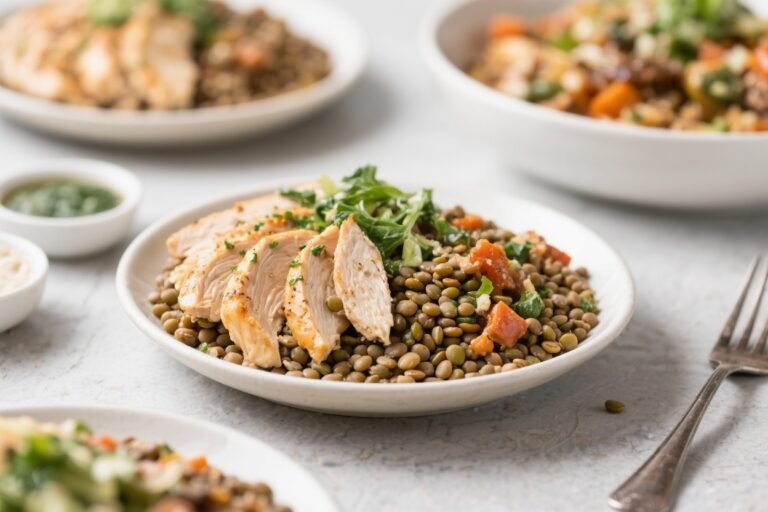
- Change the base: Use farro, barley, brown rice, or couscous. For extra protein, try quinoa or a quinoa-lentil mix.
- Greens-forward: Serve over a bed of arugula or baby spinach and toss with olive oil and lemon instead of grains.
- Dairy-free: Skip the feta and use a tahini-only sauce thinned with lemon and water.
- Air fryer salmon: Cook at 390°F (200°C) for 7–10 minutes for crisp edges and a tender center.
- Extra crunch: Add toasted almonds, pistachios, or pine nuts just before serving.
- Roasted veg version: Roast zucchini, bell peppers, and red onion with olive oil and oregano for a warm bowl.
Never Wonder What's For Dinner Again
Get 7 healthy, family-friendly dinners complete with recipes, grocery lists, and simple meal plans delivered straight to your inbox.
FAQ
How much protein is in one bowl?
A typical bowl with 5–6 ounces of salmon, 3/4 cup cooked quinoa, veggies, and yogurt sauce lands around 40–50 grams of protein, depending on portions.
Can I use canned salmon?
Yes. Drain it well, flake it, and season with lemon, olive oil, and spices.
It won’t have the same texture as roasted fillets, but it’s fast, budget-friendly, and still nutritious.
What if I don’t like olives?
Leave them out or swap in capers for a similar briny kick. Pickled onions or marinated artichokes also add a bright, tangy note.
How do I know when salmon is done?
It should flake with a fork and look just opaque in the center. An instant-read thermometer should read about 125–130°F (52–54°C) for moist, medium doneness.
Can I grill the salmon?
Absolutely.
Oil the grates, season the fish, and grill over medium-high heat for 3–4 minutes per side, depending on thickness. A grill basket helps prevent sticking.
What can I use instead of tahini?
Almond butter or olive oil can work in a pinch. If using olive oil, keep the sauce light with extra lemon and a bit of yogurt to maintain creaminess.
Is this bowl gluten-free?
Yes, if you use quinoa or rice and confirm your ingredients are certified gluten-free.
Avoid farro or barley, which contain gluten.
How can I make it spicier?
Add harissa paste to the yogurt sauce, sprinkle red pepper flakes on the salmon, or drizzle with a little chili oil before serving.
Wrapping Up
Healthy High Protein Salmon Mediterranean Bowls bring together everything you want in a weeknight meal: fast prep, fresh flavor, and solid nutrition. The components are simple, but when you layer them, you get a bowl that feels complete and satisfying. Keep the basics the same—good salmon, bright lemon, quality olive oil—and swap the rest based on your mood.
Make it once, and you’ll have a new go-to for lunches and quick dinners.
Printable Recipe Card
Want just the essential recipe details without scrolling through the article? Get our printable recipe card with just the ingredients and instructions.
Loved This Recipe?
If you're looking for more simple, healthy dinners your family will actually eat, grab my FREE 7-Day Easy Dinner Reset. You'll get 7 easy dinner recipes, simple grocery lists, and a done-for-you plan that takes the stress out of mealtime.