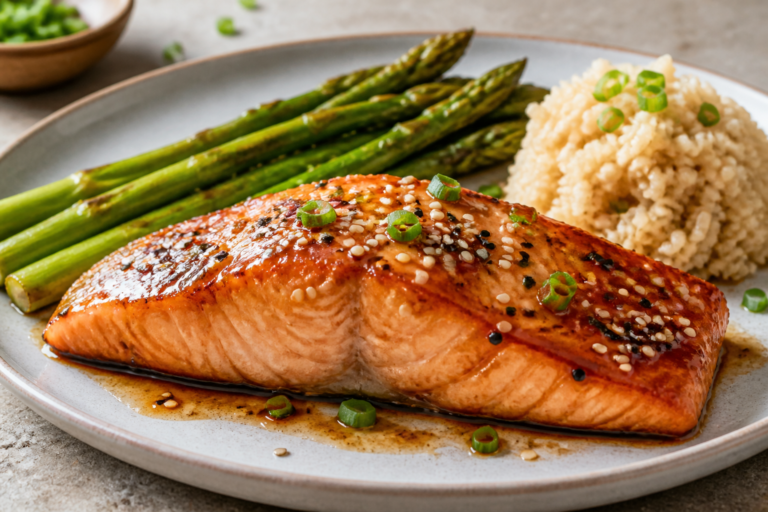
Baked Ranch Salmon & Veggies – Easy, Flavorful, and Weeknight-Friendly
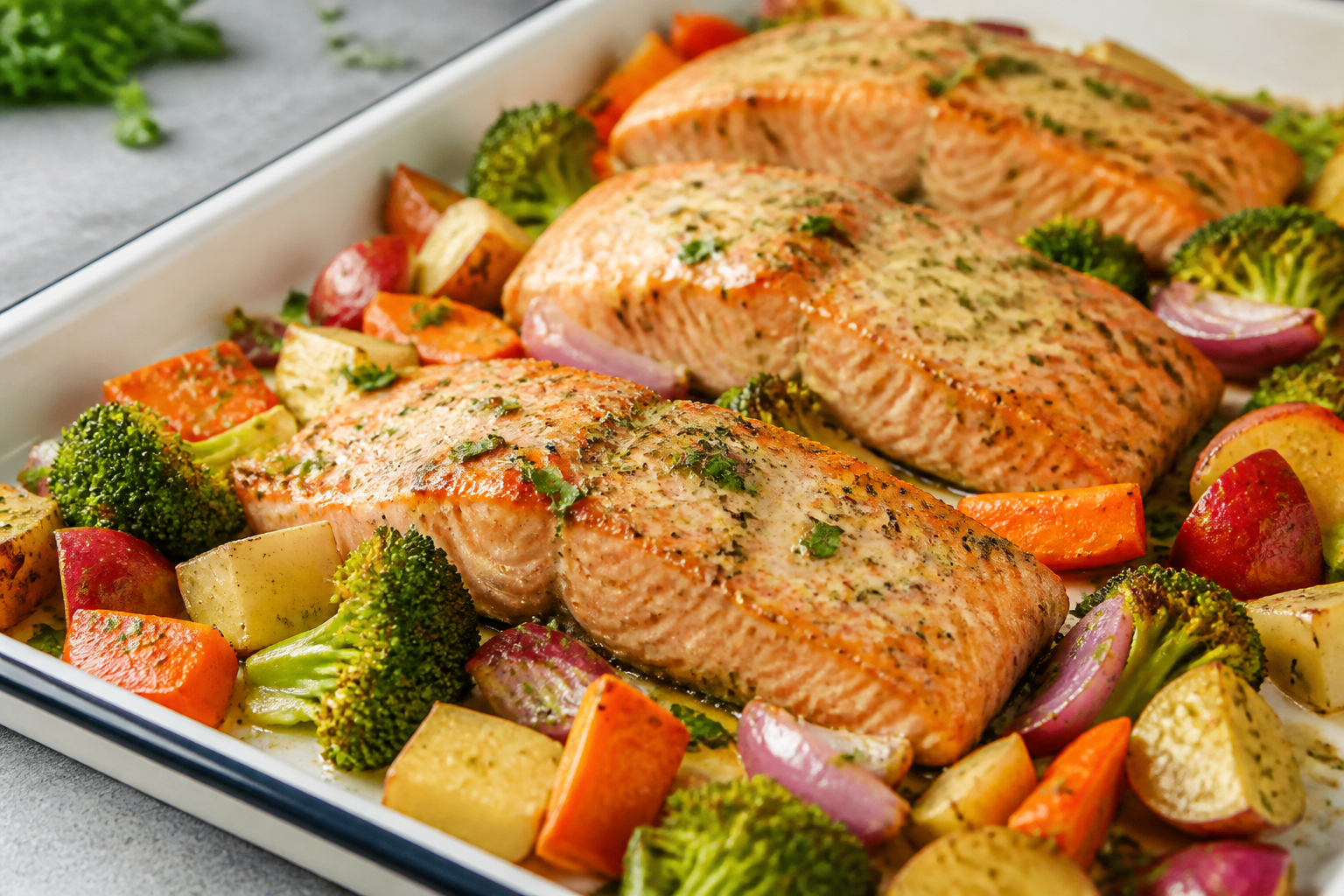
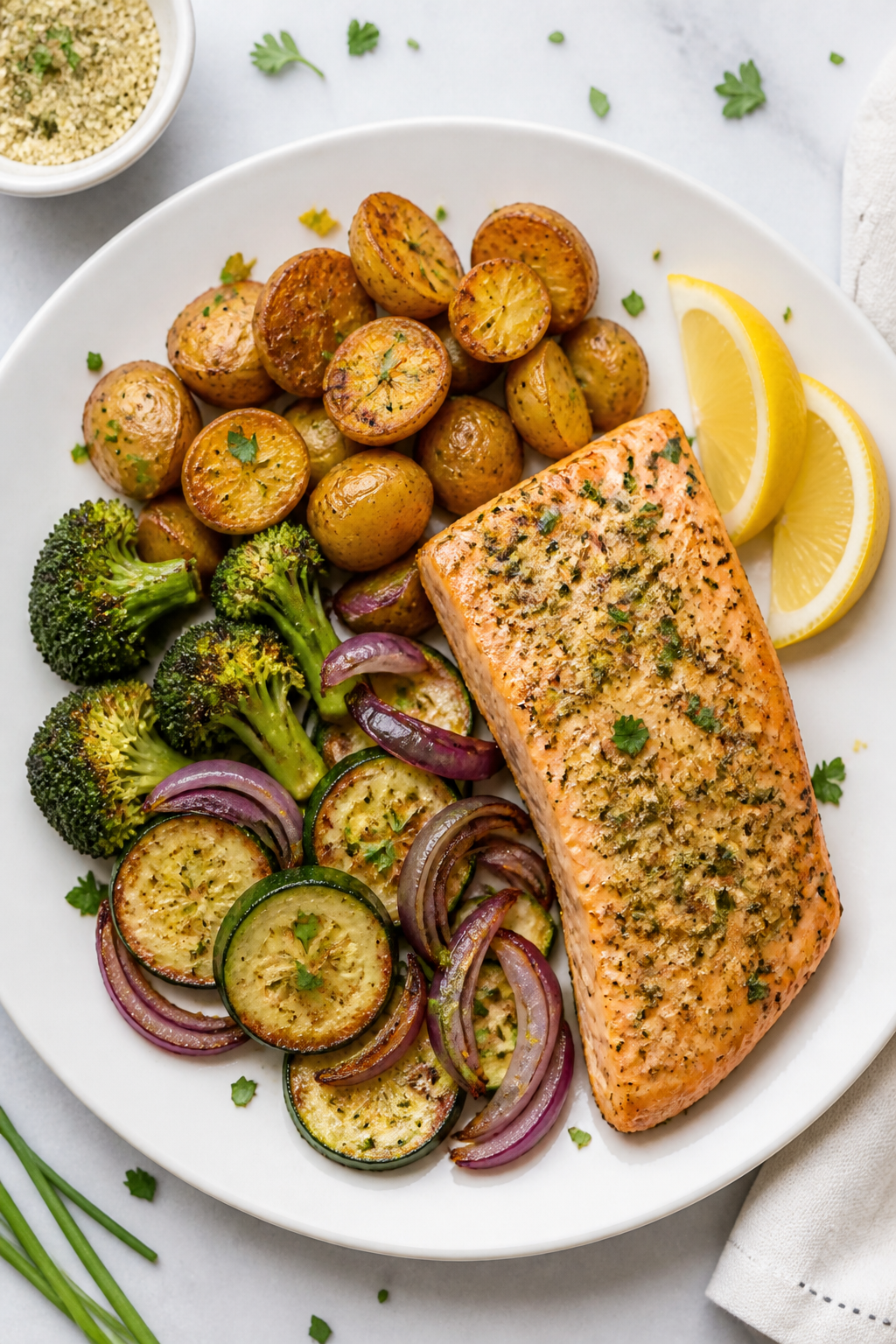
This Baked Ranch Salmon & Veggies is the kind of dinner you make when you want something wholesome without hovering over the stove. It’s one pan, minimal prep, and a quick bake—then you’re eating. The ranch seasoning adds a familiar, herby punch that makes the veggies taste great and keeps the salmon juicy.
FREE 7-Day Easy Dinner Reset
Get 7 healthy, family-friendly dinners complete with recipes and simple meal plans delivered straight to your inbox.
It’s perfect for busy nights, meal prep, or when you’re feeding a mixed crowd. Simple ingredients, big flavor, and hardly any cleanup.
Ingredients
Method
- Preheat and prep the pan. Heat the oven to 425°F (220°C). Line a large rimmed sheet pan with parchment or spray with nonstick spray. A hot oven gives you crisp veggies and juicy salmon.
- Par-cook the potatoes. Toss the halved baby potatoes with 1 tablespoon olive oil, a pinch of salt, pepper, and 1 teaspoon ranch seasoning. Spread them on the pan and roast for 10 minutes. Potatoes need a head start so they’re tender by the time the salmon is done.
- Season the remaining veggies. In a bowl, toss broccoli, peppers, onion, and zucchini/asparagus with 1 tablespoon olive oil, 1–2 teaspoons ranch seasoning, and minced garlic if using. Add a squeeze of lemon for brightness.
- Add veggies to the pan. After the potatoes roast for 10 minutes, push them to one side. Scatter the seasoned veggies on the other side in an even layer. Roast for another 8 minutes.
- Prepare the salmon. Pat salmon dry with paper towels. Brush with 1 tablespoon olive oil. Sprinkle 1–1.5 tablespoons ranch seasoning evenly over the top. Add a light pinch of black pepper. If your ranch blend is low-sodium, add a little salt.
- Nestle salmon on the pan. Pull the pan from the oven. Create space in the center and place the salmon skin-side down. Return the pan to the oven.
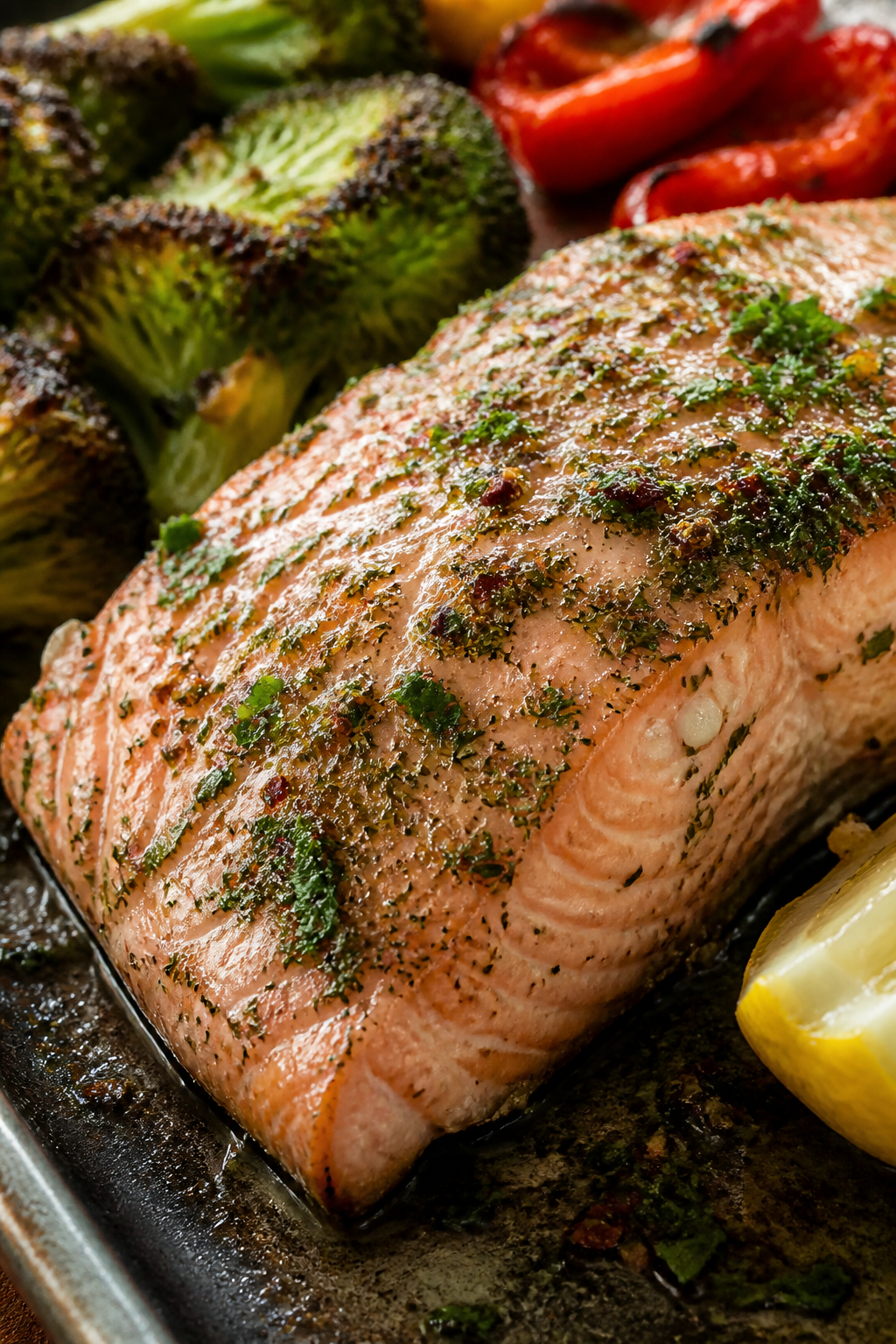
- Roast to just done. Bake 8–12 minutes, depending on thickness. Salmon should flake easily with a fork and be opaque with a slightly rosy center. Aim for an internal temperature of 125–130°F for medium. Thinner fillets cook faster, so check early.
- Finish with lemon and herbs. Squeeze fresh lemon over the salmon and vegetables. Sprinkle chopped parsley or chives on top. Taste and adjust with a pinch of salt, pepper, or a few red pepper flakes.
- Serve. Plate salmon with a generous scoop of veggies. Add extra lemon wedges on the side for anyone who wants more zing.
What Makes This Special
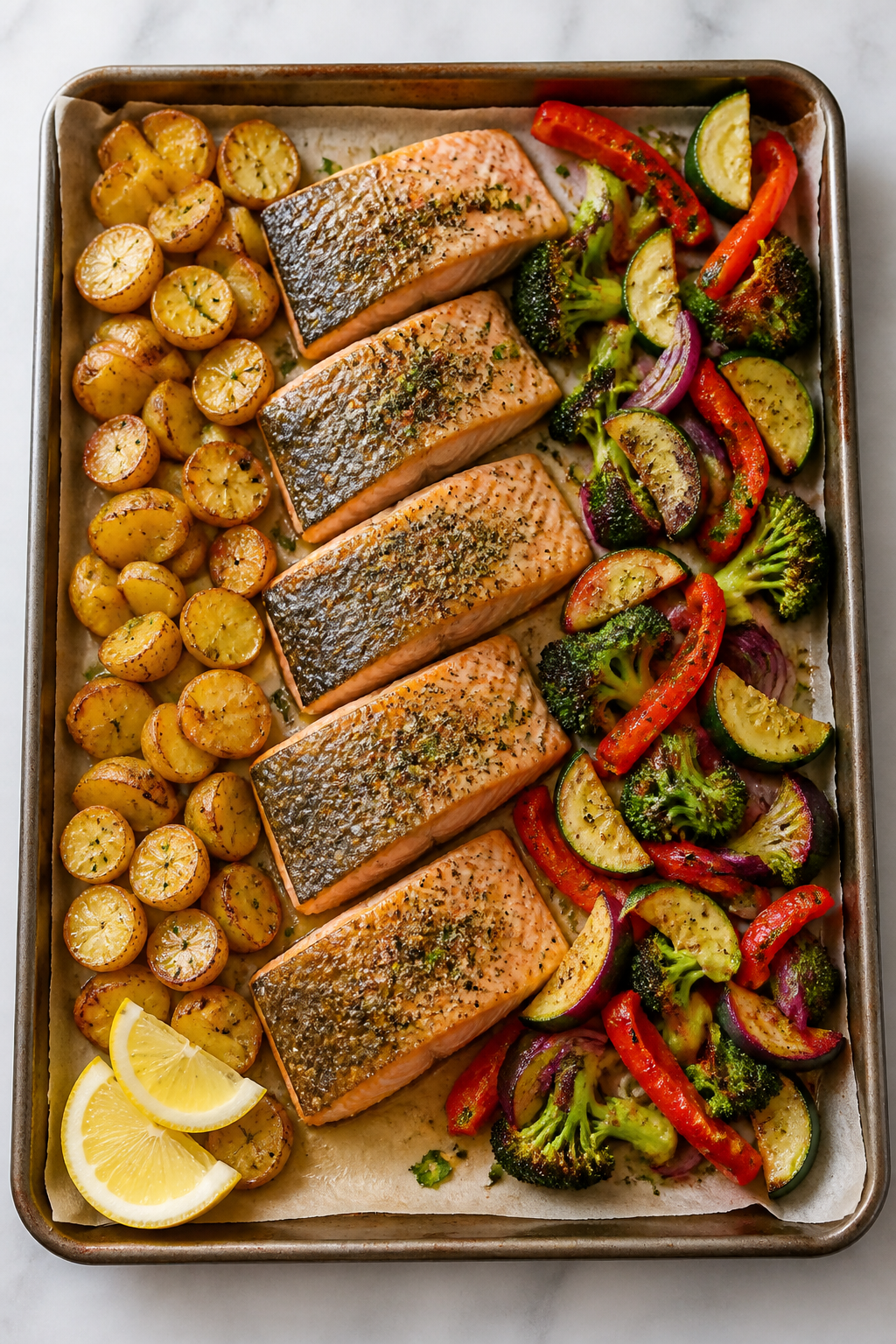
This recipe pulls off a lot with a short ingredient list. The ranch seasoning brings garlic, onion, and herbs in one scoop, so you don’t need a dozen spices.
Roasting everything together means the veggies soak up the salmon’s savory juices while the salmon stays tender under a light coating of ranch and olive oil.
It’s also flexible. Swap in whatever sturdy vegetables you’ve got, use homemade or store-bought ranch seasoning, and adjust the spice level to your taste. Best of all, the whole thing finishes in about 20–25 minutes once it’s in the oven.
What You’ll Need
- Salmon: 4 skin-on fillets (about 6 ounces each) or one 1.5–2 lb side of salmon
- Ranch seasoning: 2–3 tablespoons (store-bought packet or homemade)
- Olive oil: 3 tablespoons, divided
- Lemon: 1, cut into wedges (plus 1 teaspoon zest if you like)
- Garlic: 2 cloves, minced (optional for extra punch)
- Vegetables:
- 1 pound baby potatoes, halved or quartered
- 1 cup broccoli florets
- 1 cup bell peppers, sliced
- 1 small red onion, sliced
- 1 cup zucchini or asparagus, cut into chunks
- Salt and black pepper: to taste
- Crushed red pepper flakes: optional, for a little heat
- Fresh parsley or chives: chopped, for garnish
- Nonstick spray or parchment: for the sheet pan
Step-by-Step Instructions
- Preheat and prep the pan. Heat the oven to 425°F (220°C).
Line a large rimmed sheet pan with parchment or spray with nonstick spray. A hot oven gives you crisp veggies and juicy salmon.
- Par-cook the potatoes. Toss the halved baby potatoes with 1 tablespoon olive oil, a pinch of salt, pepper, and 1 teaspoon ranch seasoning. Spread them on the pan and roast for 10 minutes.
Potatoes need a head start so they’re tender by the time the salmon is done.
- Season the remaining veggies. In a bowl, toss broccoli, peppers, onion, and zucchini/asparagus with 1 tablespoon olive oil, 1–2 teaspoons ranch seasoning, and minced garlic if using. Add a squeeze of lemon for brightness.
- Add veggies to the pan. After the potatoes roast for 10 minutes, push them to one side. Scatter the seasoned veggies on the other side in an even layer.
Roast for another 8 minutes.
- Prepare the salmon. Pat salmon dry with paper towels. Brush with 1 tablespoon olive oil. Sprinkle 1–1.5 tablespoons ranch seasoning evenly over the top.
Add a light pinch of black pepper. If your ranch blend is low-sodium, add a little salt.
- Nestle salmon on the pan. Pull the pan from the oven. Create space in the center and place the salmon skin-side down.
Return the pan to the oven.
- Roast to just done. Bake 8–12 minutes, depending on thickness. Salmon should flake easily with a fork and be opaque with a slightly rosy center. Aim for an internal temperature of 125–130°F for medium.
Thinner fillets cook faster, so check early.
- Finish with lemon and herbs. Squeeze fresh lemon over the salmon and vegetables. Sprinkle chopped parsley or chives on top. Taste and adjust with a pinch of salt, pepper, or a few red pepper flakes.
- Serve. Plate salmon with a generous scoop of veggies.
Add extra lemon wedges on the side for anyone who wants more zing.
How to Store
Let leftovers cool until just warm, then store in airtight containers. Keep in the fridge for up to 3 days. Reheat gently in a 300°F oven for 8–10 minutes or microwave in short bursts to avoid drying out the salmon.
If you’re meal-prepping, pack salmon and veggies together with a lemon wedge; add fresh herbs after reheating for the best flavor.
Freezing is possible but not ideal. Cooked salmon can become a bit dry after thawing. If you do freeze, wrap portions tightly and use within 1 month.
Thaw overnight in the fridge and reheat low and slow.
Health Benefits
- Omega-3s from salmon: Support heart and brain health, help reduce inflammation, and can improve skin and joint function.
- Lean protein: Helps you feel satisfied and supports muscle recovery after workouts.
- Fiber and micronutrients from veggies: Potatoes, broccoli, peppers, and zucchini bring vitamin C, potassium, antioxidants, and gut-friendly fiber.
- Controlled sodium: Using a homemade or low-sodium ranch blend keeps the salt in check without losing flavor.
- Balanced meal: You get protein, complex carbs, and colorful vegetables all on one pan.
What Not to Do
- Don’t skip drying the salmon. Water on the surface prevents good seasoning adhesion and can steam the fish.
- Don’t crowd the pan. Overlapping veggies steam instead of roast. Use two pans if needed.
- Don’t add salmon too early. It overcooks while the potatoes finish. Give potatoes a head start.
- Don’t forget to taste for salt. Ranch blends vary.
Taste a roasted veg and adjust before serving.
- Don’t overbake. Dry salmon is a deal-breaker. Start checking at 8 minutes, especially for thin fillets.
Variations You Can Try
- Spicy ranch: Mix ranch seasoning with smoked paprika and cayenne. Add a drizzle of hot honey after baking.
- Parmesan crust: Combine ranch seasoning with 2–3 tablespoons grated Parmesan and a little panko.
Press lightly onto the salmon before baking.
- Dairy-free ranch: Use a dairy-free ranch mix or make your own with dried dill, parsley, chives, garlic powder, onion powder, lemon zest, salt, and pepper.
- Mediterranean twist: Swap ranch for a mix of oregano, garlic, lemon zest, and a pinch of cumin. Add cherry tomatoes and olives to the pan.
- Different veggies: Try Brussels sprouts, green beans, cauliflower, sweet potatoes, or carrots. Adjust roasting times as needed for denser vegetables.
- Whole side of salmon: Roast veggies first, then place a single 1.5–2 lb salmon side on top.
Add 2–3 minutes to cooking time if it’s thick.
Never Wonder What's For Dinner Again
Get 7 healthy, family-friendly dinners complete with recipes, grocery lists, and simple meal plans delivered straight to your inbox.
FAQ
Can I use frozen salmon?
Yes. Thaw completely in the fridge overnight and pat dry before seasoning. If you’re short on time, place sealed fillets in cool water for 30–45 minutes, then dry well.
Frozen salmon can release more moisture, so drying is key.
What if I only have bottled ranch dressing?
You can use it, but go light. Brush a thin layer on the salmon and toss a small amount with the veggies so they don’t get soggy. Add a pinch of extra garlic powder and pepper to boost flavor.
Powdered seasoning is best for roasting, though.
How do I know when the salmon is done without a thermometer?
Press the top gently with a fork. If it flakes easily and looks opaque with a slightly rosy center, it’s ready. Another clue: the albumin (white protein) starts to bead on top—when you see a little of that, it’s usually done.
Is this good for meal prep?
Absolutely.
Portion salmon and veggies into containers with lemon wedges. Reheat gently and add fresh herbs right before eating. It keeps well for about three days.
Can I cook this at a lower temperature?
You can, but it changes the texture.
At 375°F, you’ll need a few extra minutes and the veggies won’t crisp as much. If you prefer tender, less browned vegetables, 375°F works; just monitor doneness closely.
What’s a simple homemade ranch seasoning?
Try 1 tablespoon each dried parsley and dried dill; 2 teaspoons each garlic powder and onion powder; 1 teaspoon dried chives; 1 teaspoon fine salt; 1/2 teaspoon black pepper; optional 1/2 teaspoon lemon zest. Mix and store in a jar.
Can I make this with chicken instead of salmon?
Yes, but adjust timing.
Use boneless, skinless chicken thighs or breasts cut into cutlets. Roast veggies for 10 minutes, add chicken, and cook 15–20 more minutes until the chicken reaches 165°F. Keep an eye so it doesn’t overcook.
Final Thoughts
Baked Ranch Salmon & Veggies is that rare mix of fast, comforting, and good for you.
It’s simple enough for weeknights and flexible enough for whatever’s in your crisper. With a few pantry staples, you get a sheet pan dinner that tastes fresh and feels complete. Keep a packet of ranch seasoning on hand, and this meal is always an option.
Once you’ve made it once, tweak it to your taste—spicier, cheesier, or with different vegetables.
Just don’t overcook the salmon, finish with a squeeze of lemon, and enjoy the kind of dinner that practically cooks itself.
Printable Recipe Card
Want just the essential recipe details without scrolling through the article? Get our printable recipe card with just the ingredients and instructions.
Loved This Recipe?
If you're looking for more simple, healthy dinners your family will actually eat, grab my FREE 7-Day Easy Dinner Reset. You'll get 7 easy dinner recipes, simple grocery lists, and a done-for-you plan that takes the stress out of mealtime.