High Protein Salmon Power Bowls – A Simple, Satisfying Meal Prep Favorite
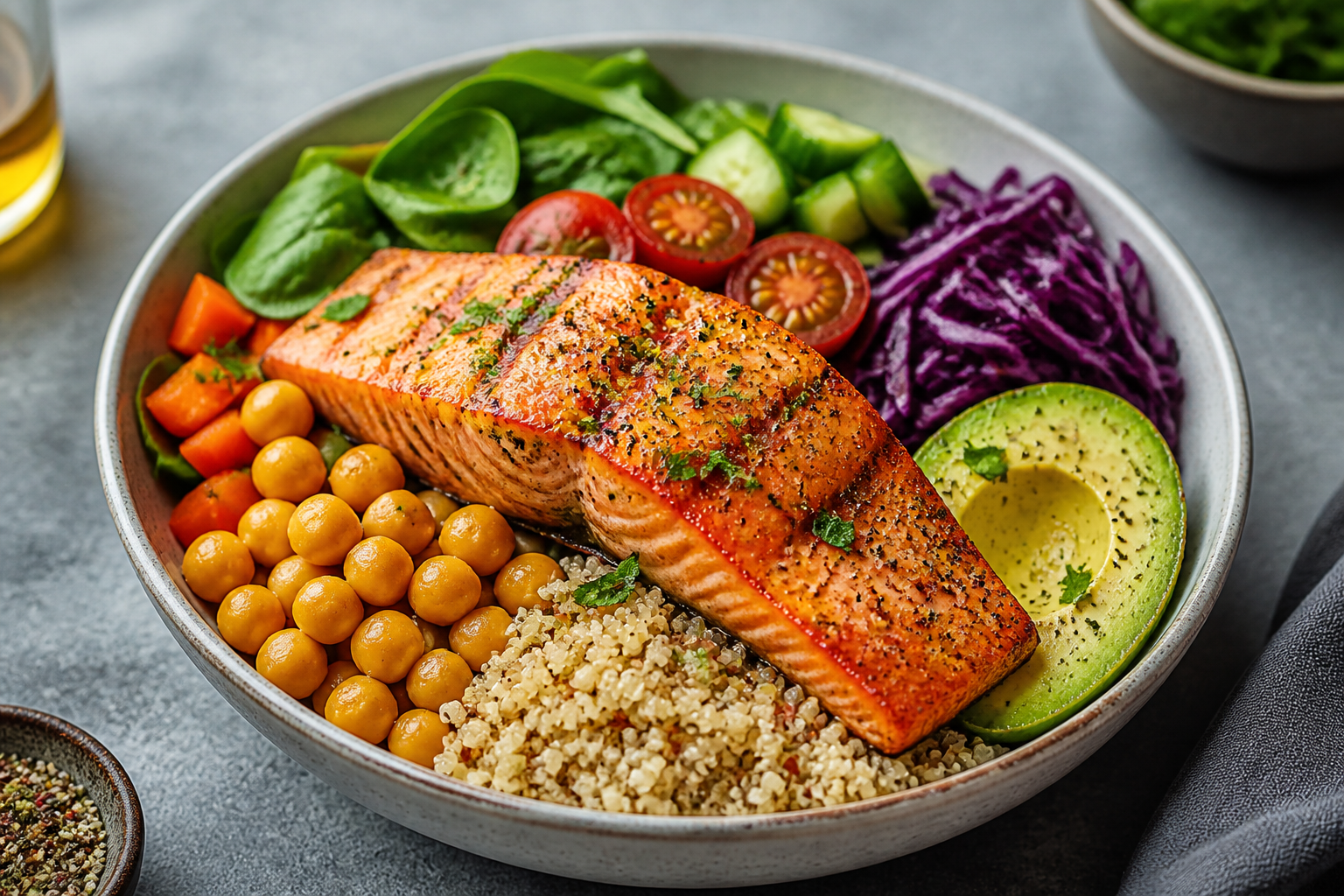
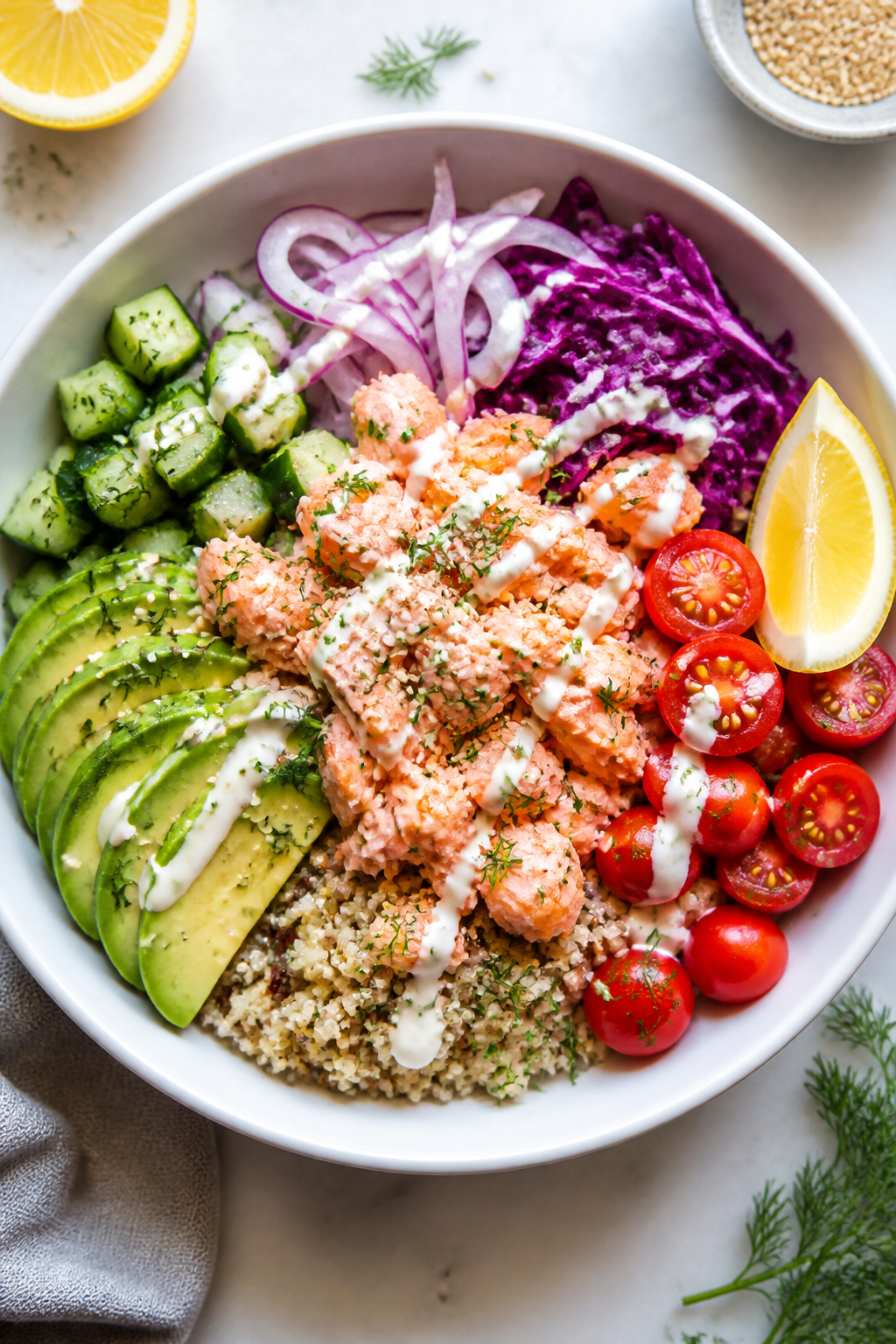
If you’re looking for a fast, filling meal that actually keeps you full, these High Protein Salmon Power Bowls deliver. They pack in flaky roasted salmon, hearty grains, crisp veggies, and a bright, creamy sauce that ties it all together. The flavors are fresh and balanced, and the textures make every bite interesting.
FREE 7-Day Easy Dinner Reset
Get 7 healthy, family-friendly dinners complete with recipes and simple meal plans delivered straight to your inbox.
They’re easy enough for a weeknight, but polished enough to feel special. Whether you meal prep or cook on the fly, this bowl fits right in.
Ingredients
Method
- Preheat and prep: Heat your oven to 400°F (200°C). Line a sheet pan with parchment for easy cleanup.
- Season the salmon: Pat the salmon dry. Rub with olive oil, salt, pepper, smoked paprika, garlic powder, lemon zest, and lemon juice. Let it sit for 5 minutes while you start the sauce.
- Make the sauce: In a small bowl, whisk Greek yogurt, olive oil, lemon juice, honey, grated garlic, salt, and pepper. Adjust acidity and sweetness to taste. It should be tangy and lightly garlicky.
- Cook the grain: If you haven’t already, cook quinoa or brown rice according to package directions. Fluff and keep warm. For extra flavor, add a pinch of salt and a squeeze of lemon at the end.
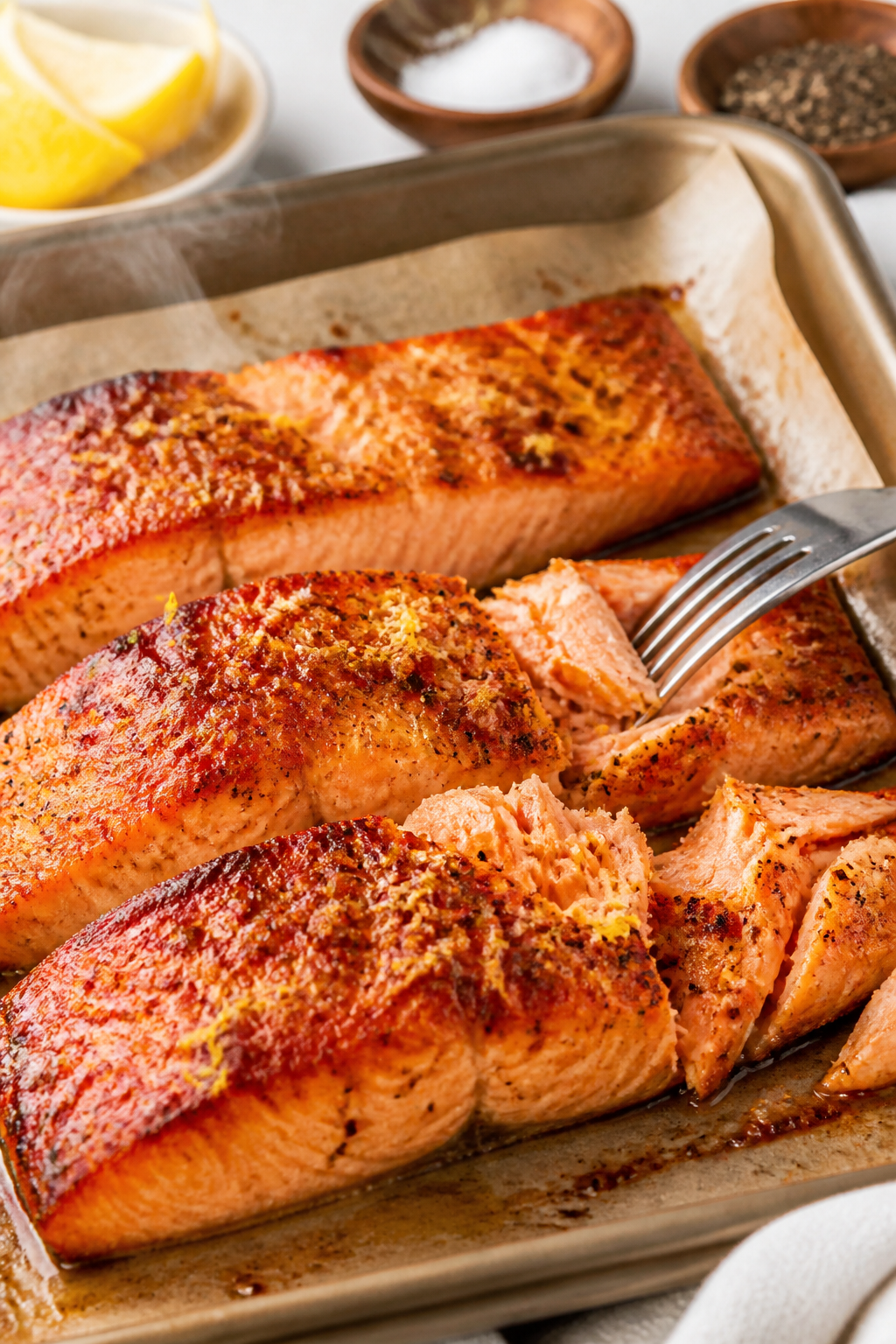
- Roast the salmon: Place salmon on the sheet pan. Roast for 10–14 minutes, depending on thickness, until it flakes easily with a fork and reaches 125–130°F (52–54°C) for medium. Rest 3 minutes, then flake into large chunks.
- Prep the veggies: While the salmon cooks, slice tomatoes, dice cucumber, shred cabbage, and slice red onion. Slice avocado just before serving to keep it fresh.
- Assemble the bowls: Divide grains between 4 bowls. Top with salmon, veggies, and optional chickpeas. Spoon over the lemon yogurt sauce. Finish with herbs, seeds, and a squeeze of fresh lemon.
- Adjust and serve: Taste and add a pinch of salt, extra pepper, or more sauce if you like. Serve warm or at room temperature.
Why This Recipe Works
- Balanced macros: Salmon brings complete protein and healthy fats, while quinoa or brown rice adds complex carbs for steady energy.
- Layered textures: Tender fish, chewy grains, and crunchy veggies keep the bowl satisfying and never boring.
- Simple seasoning, big flavor: Lemon, garlic, and a touch of spice brighten the salmon without overpowering it.
- Meal-prep friendly: Components store well and reheat easily, so you can assemble bowls throughout the week.
- Customizable: Swap veggies or grains to match what you have and what you like.
Ingredients
- For the salmon:
- 1.5 pounds salmon fillets, skin on or off
- 1 tablespoon olive oil
- 1 teaspoon kosher salt
- 1/2 teaspoon black pepper
- 1 teaspoon smoked paprika
- 1/2 teaspoon garlic powder
- Zest of 1 lemon + 1 tablespoon fresh lemon juice
- For the grain base:
- 2 cups cooked quinoa or brown rice (about 3/4 cup dry)
- For the veggies:
- 1 cup cherry tomatoes, halved
- 1 large cucumber, diced
- 1 cup shredded red cabbage or baby spinach
- 1/2 small red onion, thinly sliced
- 1 avocado, sliced
- For the creamy lemon yogurt sauce:
- 3/4 cup plain Greek yogurt (2% or 5%)
- 1 tablespoon olive oil
- 1 tablespoon lemon juice
- 1 teaspoon honey or maple syrup
- 1 small garlic clove, grated
- Salt and pepper to taste
- Optional add-ins and toppings:
- 1/2 cup canned chickpeas, rinsed and drained
- 2 tablespoons chopped fresh dill or parsley
- 1 tablespoon toasted sesame seeds or pepitas
- Lemon wedges, for serving
Instructions
- Preheat and prep: Heat your oven to 400°F (200°C). Line a sheet pan with parchment for easy cleanup.
- Season the salmon: Pat the salmon dry.
Rub with olive oil, salt, pepper, smoked paprika, garlic powder, lemon zest, and lemon juice. Let it sit for 5 minutes while you start the sauce.
- Make the sauce: In a small bowl, whisk Greek yogurt, olive oil, lemon juice, honey, grated garlic, salt, and pepper. Adjust acidity and sweetness to taste.
It should be tangy and lightly garlicky.
- Cook the grain: If you haven’t already, cook quinoa or brown rice according to package directions. Fluff and keep warm. For extra flavor, add a pinch of salt and a squeeze of lemon at the end.
- Roast the salmon: Place salmon on the sheet pan.
Roast for 10–14 minutes, depending on thickness, until it flakes easily with a fork and reaches 125–130°F (52–54°C) for medium. Rest 3 minutes, then flake into large chunks.
- Prep the veggies: While the salmon cooks, slice tomatoes, dice cucumber, shred cabbage, and slice red onion. Slice avocado just before serving to keep it fresh.
- Assemble the bowls: Divide grains between 4 bowls.
Top with salmon, veggies, and optional chickpeas. Spoon over the lemon yogurt sauce. Finish with herbs, seeds, and a squeeze of fresh lemon.
- Adjust and serve: Taste and add a pinch of salt, extra pepper, or more sauce if you like.
Serve warm or at room temperature.
Keeping It Fresh
- Store components separately: Keep salmon, grains, cut veggies, and sauce in separate containers. This preserves texture.
- Refrigeration: Salmon keeps 3 days in the fridge. Grains up to 4–5 days.
Sauce 4 days. Avocado is best sliced fresh.
- Reheating: Warm salmon and grains gently in the microwave at 50–70% power to avoid drying. Keep veggies and sauce cold, then assemble.
- Meal prep tip: Build “ready-to-go” kits by pairing grains and salmon in one container and storing veggies and sauce in small side cups.
Benefits of This Recipe
- High protein and omega-3s: Salmon offers complete protein and EPA/DHA, supporting muscle repair and heart health.
- Fiber-rich: Quinoa or brown rice plus veggies add fiber for fullness and steady energy.
- Lower in saturated fat: The creamy texture comes from Greek yogurt, not heavy mayo.
- Weeknight-friendly: From start to finish, you’re looking at about 30 minutes.
- Flexible for dietary needs: Easy to adapt for gluten-free, dairy-free, or lower-carb preferences.
Pitfalls to Watch Out For
- Overcooking the salmon: Dry fish is the fastest way to ruin the bowl.
Pull it at 125–130°F and let it rest.
- Watery veggies: Very juicy tomatoes or cucumbers can water down the bowl. Pat them dry or seed the cucumber.
- Underseasoned grains: Grains need salt and a splash of acid to stand up to the salmon. Don’t skip it.
- Heavy-handed sauce: The sauce should complement, not drown, the bowl.
Start with a spoonful, then add more if needed.
Recipe Variations
- Spicy harissa: Swap smoked paprika for 1–2 teaspoons harissa paste on the salmon. Add a dollop to the yogurt sauce for heat.
- Teriyaki twist: Brush salmon with a light teriyaki glaze and use brown rice. Top with edamame, carrots, and scallions.
Use a miso-lime yogurt sauce.
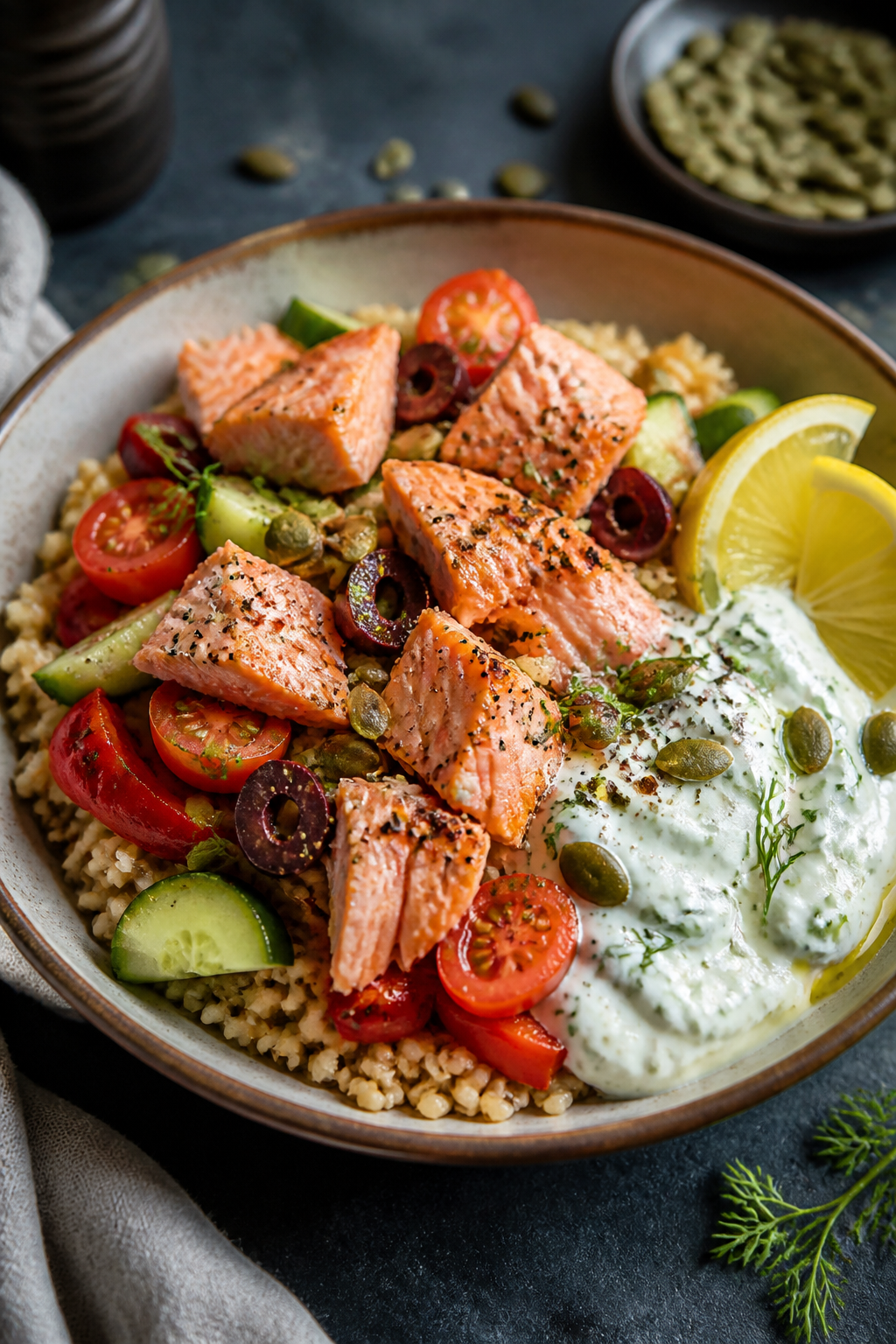
- Mediterranean style: Add olives, roasted red peppers, and feta. Use dill-heavy yogurt and a sprinkle of oregano.
- Low-carb option: Replace grains with cauliflower rice or extra greens. Add more avocado or nuts for satiety.
- Dairy-free: Make a tahini-lemon sauce with warm water, lemon, garlic, and salt instead of yogurt.
- Canned salmon meal prep: Use high-quality canned wild salmon.
Drain well, flake, and season with lemon, olive oil, and spices.
Never Wonder What's For Dinner Again
Get 7 healthy, family-friendly dinners complete with recipes, grocery lists, and simple meal plans delivered straight to your inbox.
FAQ
Can I use frozen salmon?
Yes. Thaw it overnight in the fridge or under cold running water in its packaging. Pat very dry before seasoning to help it roast instead of steam.
What’s the best grain for these bowls?
Quinoa is great for extra protein and a light, fluffy texture.
Brown rice adds chew and a neutral base. Farro works well if you don’t need gluten-free.
How do I know the salmon is done without a thermometer?
Press the thickest part with a fork. It should flake easily and be just opaque in the center.
If it looks dry and chalky, it’s overcooked.
Can I grill or air-fry the salmon?
Absolutely. Grill over medium-high heat, about 3–4 minutes per side, or air-fry at 390°F (200°C) for 7–10 minutes. Times vary with thickness.
What if I don’t like yogurt sauce?
Try tahini-lemon, avocado-lime crema, or a simple olive oil, lemon, and Dijon vinaigrette.
Keep acidity for balance.
How can I add even more protein?
Add chickpeas, edamame, or a scoop of cottage cheese on the side. You can also use extra salmon per bowl.
Is this recipe good for meal prep?
Yes. Store components separately and assemble within 3 days for best texture.
Keep sauces and herbs on the side until serving.
Can I make it spicy?
Sure. Add red pepper flakes to the salmon rub, a pinch of cayenne to the sauce, or sliced jalapeño on the bowl.
Wrapping Up
High Protein Salmon Power Bowls are the kind of meal that makes eating well feel easy. You get protein, fiber, healthy fats, and bright flavors in one simple bowl.
Prep the basics once and enjoy fresh, filling meals for days. Keep the core the same, then switch up sauces and veggies to match your mood. It’s reliable, tasty, and built to fit your life.
Printable Recipe Card
Want just the essential recipe details without scrolling through the article? Get our printable recipe card with just the ingredients and instructions.
Loved This Recipe?
If you're looking for more simple, healthy dinners your family will actually eat, grab my FREE 7-Day Easy Dinner Reset. You'll get 7 easy dinner recipes, simple grocery lists, and a done-for-you plan that takes the stress out of mealtime.