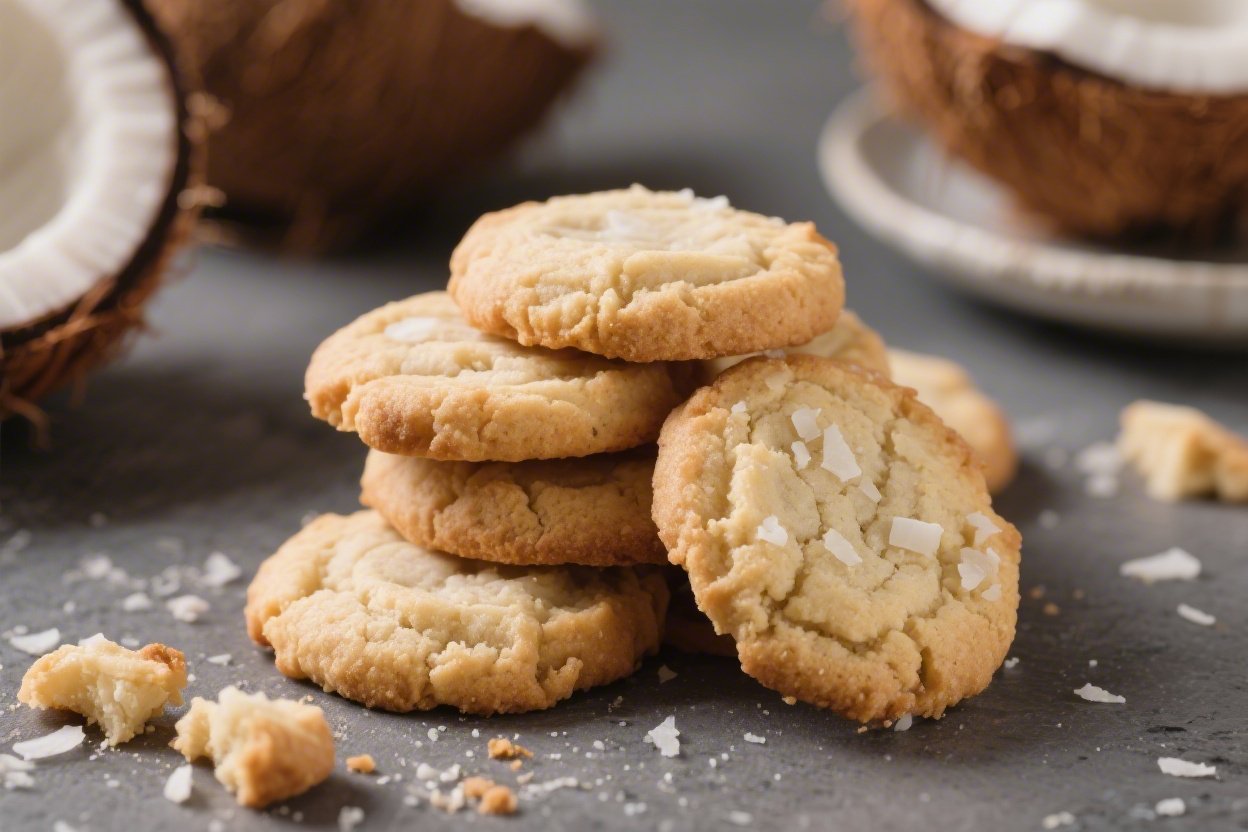
Keto Coconut Cookies – Simple, Chewy, and Low-Carb
These keto coconut cookies hit that sweet spot when you’re craving something cozy yet still want to stick to your goals. They’re soft in the center, slightly crisp around the edges, and full of toasty coconut flavor. You don’t need special equipment or rare ingredients—just a bowl, a spoon, and a short list of pantry staples.
They come together quickly, bake fast, and make a great afternoon treat with coffee or tea.
Ingredients
Method
- Prep the oven and pan: Preheat the oven to 350°F (175°C). Line a baking sheet with parchment paper or a silicone mat.
- Combine dry ingredients: In a bowl, whisk 1 1/2 cups unsweetened shredded coconut, 3/4 cup fine almond flour, 1/2 cup granulated keto sweetener, 1 teaspoon baking powder, and 1/4 teaspoon fine sea salt.
- Mix the wet ingredients: In a small bowl, whisk 1 large egg, 1/3 cup melted butter (slightly cooled), and 1 teaspoon vanilla extract until smooth.
- Bring the dough together: Pour the wet mixture into the dry ingredients. Stir with a spatula until a thick, sticky dough forms. If it looks dry, add 1–2 teaspoons of water. If too wet, sprinkle in a bit more almond flour.
- Portion the cookies: Scoop tablespoon-sized mounds (about 1 heaping tablespoon each) onto the prepared sheet. Space them about 2 inches apart.
- Flatten slightly: Lightly press each mound with your fingertips to about 1/2 inch thick. For defined edges, smooth the sides a bit as you press.
- Bake: Bake 10–12 minutes, until the edges turn light golden brown. The centers should look set but still soft.
- Cool on the pan: Let the cookies rest on the baking sheet for 10 minutes. They firm up as they cool.
- Finish cooling: Transfer to a rack and cool completely for best texture. Enjoy once they reach room temperature.
Overeating is a pattern. This helps you fix that problem. A quick reset for cravings, snacking, and “I’ll start tomorrow” moments.
Built for busy home cooks who want real-life structure. Simple steps that fit meal prep, family dinners, and late-night snack attacks.
What Makes This Recipe So Good

- Truly low-carb: Made with unsweetened coconut and a keto-friendly sweetener, these cookies fit easily into a ketogenic or low-carb plan.
- Fast and fuss-free: The dough mixes in one bowl and doesn’t need chilling. Perfect for weeknights.
- Great texture: Lightly crisp edges, chewy middles, and plenty of coconut in every bite.
- Customizable sweetness: Adjust the sweetener to taste without affecting texture too much.
- Gluten-free by default: Almond flour keeps them tender without wheat or gluten.
What You’ll Need
- Unsweetened shredded coconut: The star ingredient for flavor and chew.
- Almond flour (fine blanched): Adds body and softness without gluten.
- Granulated keto sweetener: Erythritol, allulose, or a blend. Choose one that measures like sugar.
- Butter, melted and slightly cooled: For richness and crisp edges.
Coconut oil works too.
- Large egg: Binds the dough and adds moisture.
- Vanilla extract: Rounds out the coconut flavor.
- Baking powder: A little lift keeps them from being dense.
- Fine sea salt: Balances sweetness and boosts flavor.
- Optional add-ins: Unsweetened coconut flakes for extra texture, sugar-free chocolate chips, or a pinch of cinnamon.
Step-by-Step Instructions

- Prep the oven and pan: Preheat the oven to 350°F (175°C). Line a baking sheet with parchment paper or a silicone mat.
- Combine dry ingredients: In a bowl, whisk 1 1/2 cups unsweetened shredded coconut, 3/4 cup fine almond flour, 1/2 cup granulated keto sweetener, 1 teaspoon baking powder, and 1/4 teaspoon fine sea salt.
- Mix the wet ingredients: In a small bowl, whisk 1 large egg, 1/3 cup melted butter (slightly cooled), and 1 teaspoon vanilla extract until smooth.
- Bring the dough together: Pour the wet mixture into the dry ingredients. Stir with a spatula until a thick, sticky dough forms.
If it looks dry, add 1–2 teaspoons of water. If too wet, sprinkle in a bit more almond flour.
- Portion the cookies: Scoop tablespoon-sized mounds (about 1 heaping tablespoon each) onto the prepared sheet. Space them about 2 inches apart.
- Flatten slightly: Lightly press each mound with your fingertips to about 1/2 inch thick.
For defined edges, smooth the sides a bit as you press.
- Bake: Bake 10–12 minutes, until the edges turn light golden brown. The centers should look set but still soft.
- Cool on the pan: Let the cookies rest on the baking sheet for 10 minutes. They firm up as they cool.
- Finish cooling: Transfer to a rack and cool completely for best texture.
Enjoy once they reach room temperature.
Storage Instructions
- Room temperature: Store in an airtight container for up to 3 days. Add a small piece of parchment between layers to prevent sticking.
- Refrigerator: Keeps well for up to 1 week. The chill helps them stay chewy.
- Freezer: Freeze in a zip-top bag or container for up to 2 months.
Thaw at room temperature for 15–20 minutes or warm briefly in a low oven.
- Make-ahead dough: Shape portions and freeze unbaked on a tray. Once solid, store in a bag. Bake from frozen, adding 1–2 extra minutes.

Benefits of This Recipe
- Low net carbs: Using almond flour and unsweetened coconut keeps carbs down compared to regular cookies.
- Healthy fats: Coconut and almond flour offer satisfying fats that support satiety on a keto plan.
- Gluten- and grain-free: Suitable for many dietary needs without extra substitutions.
- Quick to make: Minimal prep, short bake time, and simple cleanup.
- Easy to customize: You can tweak sweetness, add spices, or include sugar-free chocolate.
Pitfalls to Watch Out For
- Overbaking: Keto cookies can dry out fast.
Pull them when edges are just golden and centers look set.
- Wrong sweetener: Some sweeteners crystallize or taste cooling. If sensitive to that effect, try allulose or a monk fruit blend.
- Coarse almond meal: Use fine blanched almond flour. Coarse meal can make the cookies crumbly and gritty.
- Skipping the cool-down: They’re fragile hot out of the oven.
Let them firm up on the pan before moving.
- Too much coconut: Packing the measuring cup tightly can dry the dough. Fluff the coconut and level the cup for accuracy.
Variations You Can Try
- Chocolate chip coconut: Fold in 1/3 cup sugar-free chocolate chips for a classic combo.
- Lemon coconut: Add 1 teaspoon lemon zest and 1/2 teaspoon lemon extract for bright citrus notes.
- Toasted coconut: Lightly toast half the shredded coconut before mixing for deeper, nutty flavor.
- Coconut macaroons style: Skip the almond flour, add an extra egg white, and bake as mounded bites for a chewier, macaroon-like cookie. Note: texture will be denser.
- Cinnamon vanilla: Stir in 1/2 teaspoon ground cinnamon and a pinch of nutmeg for warmth.
- Almond joy vibe: Add chopped roasted almonds and a drizzle of melted sugar-free chocolate on top.
FAQ
Can I use coconut flour instead of almond flour?
Coconut flour is much more absorbent and won’t swap 1:1.
If you must use it, start with 2–3 tablespoons and add more only if the dough feels too wet. Expect a drier, more cakey texture.
Which sweetener works best?
Allulose gives the softest, chewiest result and no cooling effect, though it browns a bit less. Erythritol or monk fruit blends work well too and hold shape nicely.
Choose a granulated variety that measures like sugar.
Can I make these dairy-free?
Yes. Use melted coconut oil instead of butter. Add a pinch more salt and a splash of vanilla to balance the flavor.
The cookies will be slightly crisper at the edges.
How do I prevent the cookies from spreading too much?
Use fine almond flour, measure carefully, and avoid over-melting the butter. If your kitchen is warm, chill the portioned dough on the sheet for 10 minutes before baking.
How many carbs are in each cookie?
Exact macros depend on your brands and cookie size. As a general guide, a tablespoon-sized cookie made with almond flour, unsweetened coconut, and a zero-calorie sweetener usually lands around 1–2 net carbs per cookie.
Calculate with your specific ingredients for accuracy.
Can I add protein powder?
You can, but go easy. Replace up to 2 tablespoons of almond flour with unflavored or vanilla whey or egg white protein. Too much can make the cookies dry.
Why are my cookies grainy or gritty?
That often comes from coarse almond meal or certain erythritol-heavy sweeteners.
Switching to fine blanched almond flour and using allulose or a monk fruit blend usually fixes it.
Do I need to press the dough down?
Yes, a gentle press helps them bake evenly and get those lightly crisp edges. These cookies don’t spread as much as traditional sugar cookies.
Can I add an egg substitute?
A flax egg can work in a pinch: mix 1 tablespoon ground flaxseed with 2 1/2 tablespoons water and rest for 5 minutes. The cookies may be a bit more tender and crumbly but still tasty.
In Conclusion
These keto coconut cookies keep things simple: real coconut flavor, an easy one-bowl method, and a texture that’s soft, chewy, and just sweet enough.
With a short ingredient list and plenty of room to customize, they’re a reliable go-to for weeknight baking or last-minute cravings. Bake a batch, let them cool, and enjoy a treat that fits your low-carb lifestyle without feeling like a compromise.
Printable Recipe Card
Want just the essential recipe details without scrolling through the article? Get our printable recipe card with just the ingredients and instructions.