Parmesan Herb Crusted Salmon – Crispy, Savory, and Weeknight-Friendly
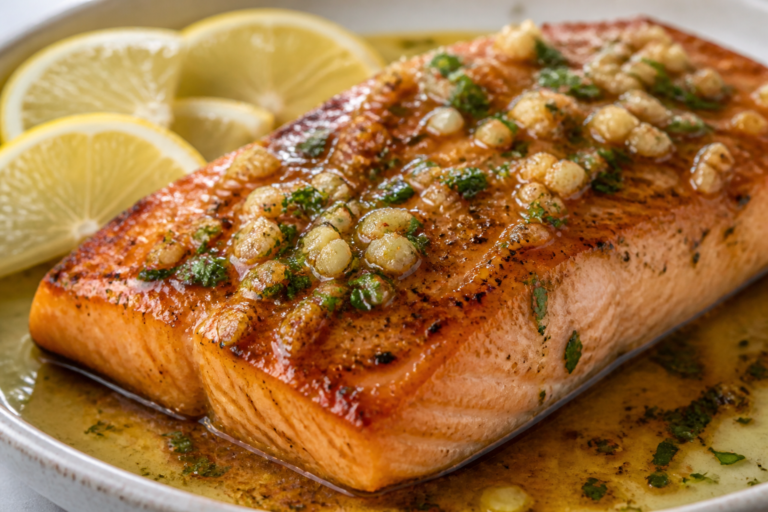
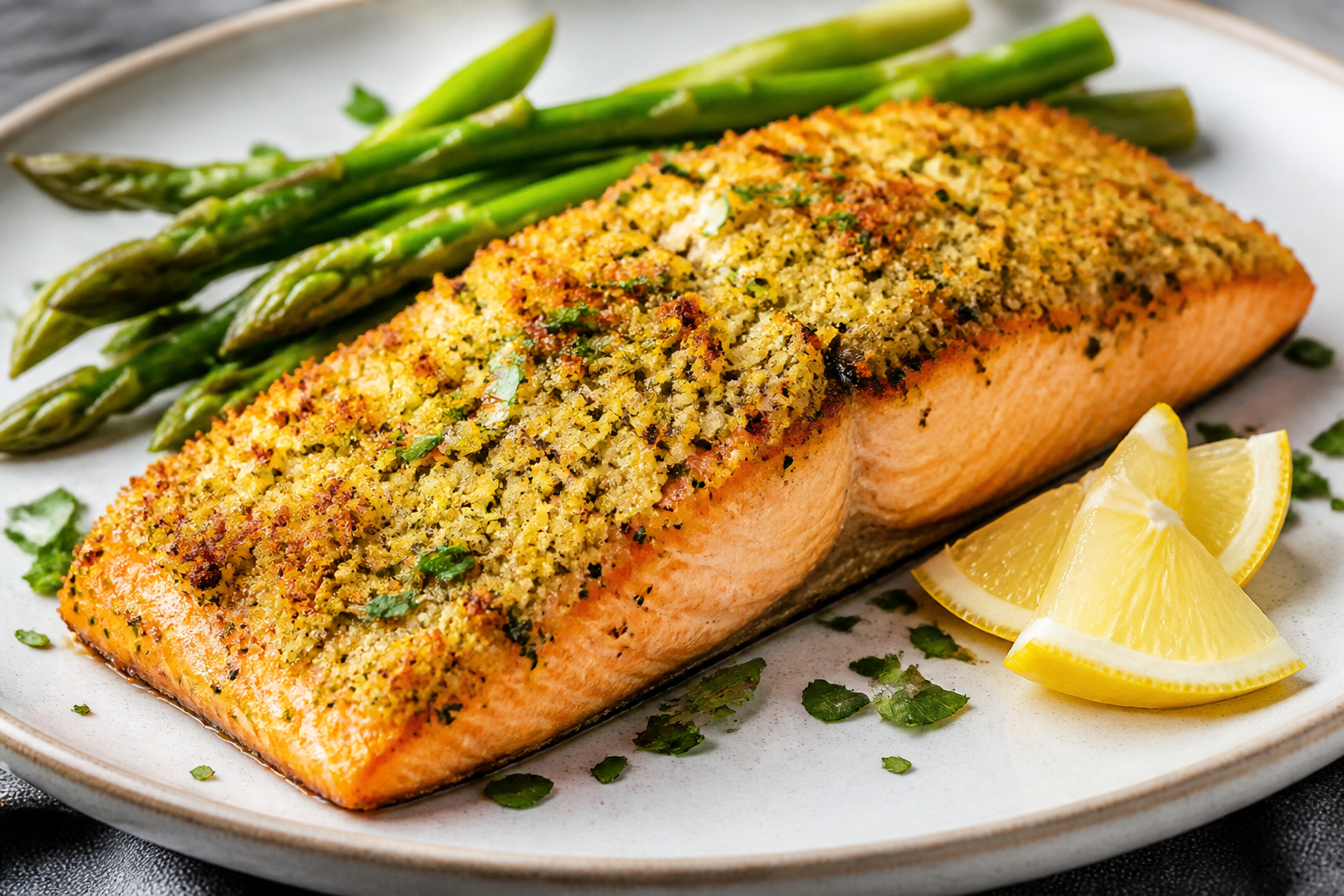
This Parmesan Herb Crusted Salmon is the kind of recipe that makes dinner feel special without demanding much from you. The crust bakes up golden and crisp, while the salmon stays tender and juicy underneath. It’s packed with bright herbs, nutty cheese, and a little lemon to keep everything fresh.
FREE 7-Day Easy Dinner Reset
Get 7 healthy, family-friendly dinners complete with recipes and simple meal plans delivered straight to your inbox.
Best of all, it comes together fast, so it fits into a busy weeknight just as easily as a laid-back weekend meal.
Ingredients
Method
- Preheat and prep the pan. Heat your oven to 400°F (200°C). Line a baking sheet with parchment paper or lightly grease it with olive oil for easy cleanup.
- Pat the salmon dry. Use paper towels to blot excess moisture. Dry fish sears and crusts better, helping the topping stick and the salmon cook evenly.
- Season the fillets. Lightly sprinkle both sides with salt and pepper. Place the salmon skin-side down if it has skin.
- Make the crust mixture. In a bowl, combine 1/2 cup finely grated Parmesan, 1/2 cup panko, 2 tablespoons chopped parsley, 1 tablespoon chopped dill (or 1 teaspoon dried), 1 small minced garlic clove, and the zest of half a lemon. Add 2 tablespoons olive oil and mix until the crumbs look evenly moistened. Add a pinch of red pepper flakes if you like heat.
- Spread a thin Dijon layer. Brush the top of each fillet with 1 to 2 teaspoons of Dijon. This acts like glue and adds a tangy backbone that cuts through the richness of the salmon.
- Press on the crust. Spoon the Parmesan-herb mixture over the top of each fillet. Press gently so it adheres in an even layer, about 1/4 inch thick.
- Bake until just cooked through. Place the tray on the middle rack and bake for 10–14 minutes, depending on thickness. Thicker center-cut pieces will need closer to 14 minutes. You’re aiming for an internal temperature of 125–130°F (52–54°C) for moist, medium doneness.
- Optional broil for extra color. If the crust needs more browning, switch to broil for 1 minute, watching closely so it doesn’t burn.
- Rest briefly and serve. Let the salmon rest for 3 minutes to finish cooking gently. Serve with fresh lemon wedges. A simple side like roasted asparagus, a crisp salad, or garlicky green beans makes a great pairing.
Why This Recipe Works
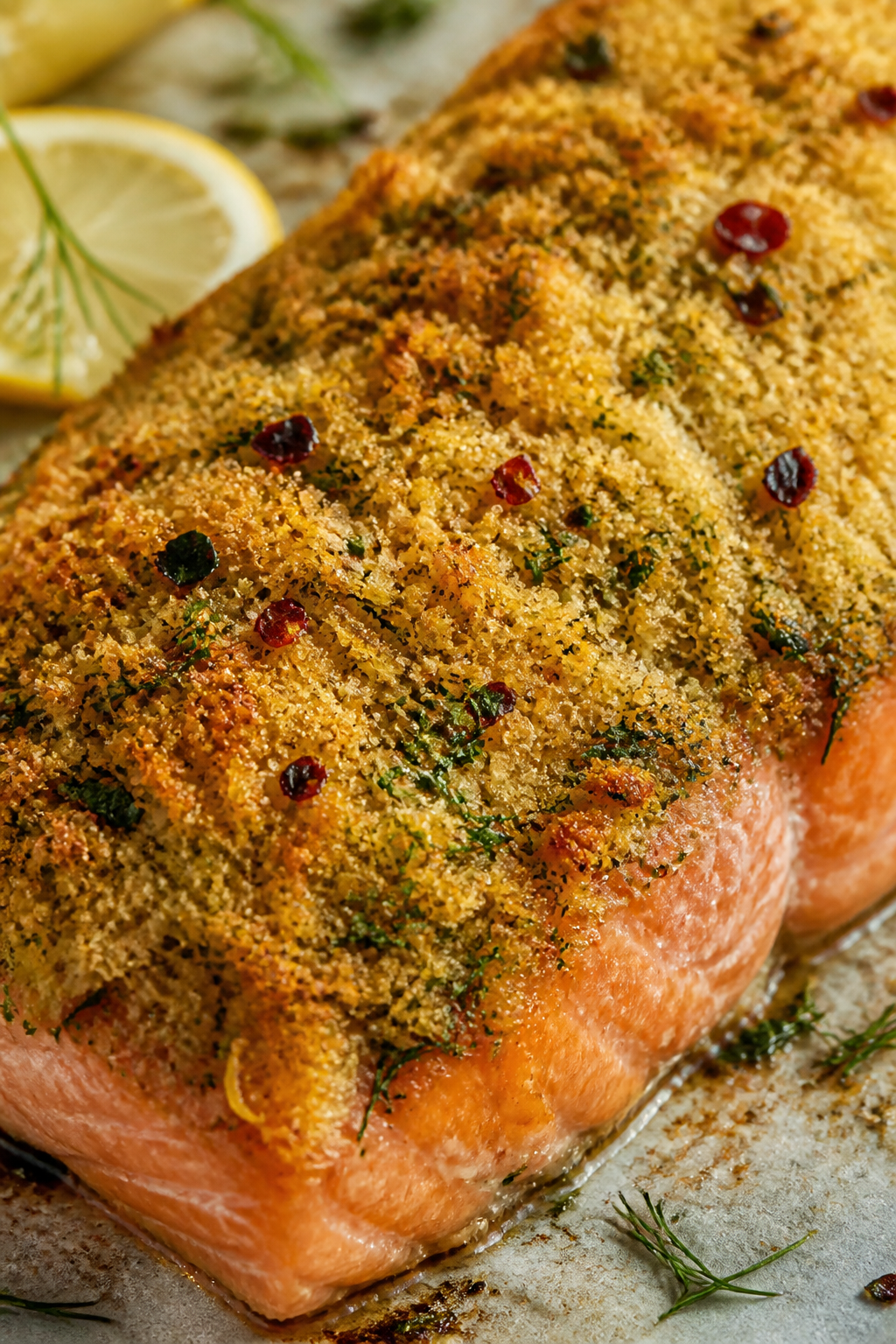
The secret is a quick, flavorful crust that cooks at the same pace as the salmon. The mix of grated Parmesan, panko, and herbs gives you a crunchy top that won’t turn soggy. A thin layer of Dijon mustard helps the crumbs stick and adds a subtle tang that balances the richness of the fish.
Baking at a moderately high temperature locks in moisture while browning the crust. The result is a meal that hits all the right notes: savory, crisp, juicy, and bright.
Shopping List
- Fresh salmon fillets (skin-on or skinless, about 4 fillets, 5–6 ounces each)
- Parmesan cheese, finely grated (not pre-shredded)
- Panko breadcrumbs (or regular breadcrumbs in a pinch)
- Fresh parsley, chopped
- Fresh dill or thyme, chopped
- Garlic, minced
- Lemon (zest and wedges for serving)
- Dijon mustard
- Olive oil
- Salt and black pepper
- Optional: crushed red pepper flakes for a little heat
Step-by-Step Instructions
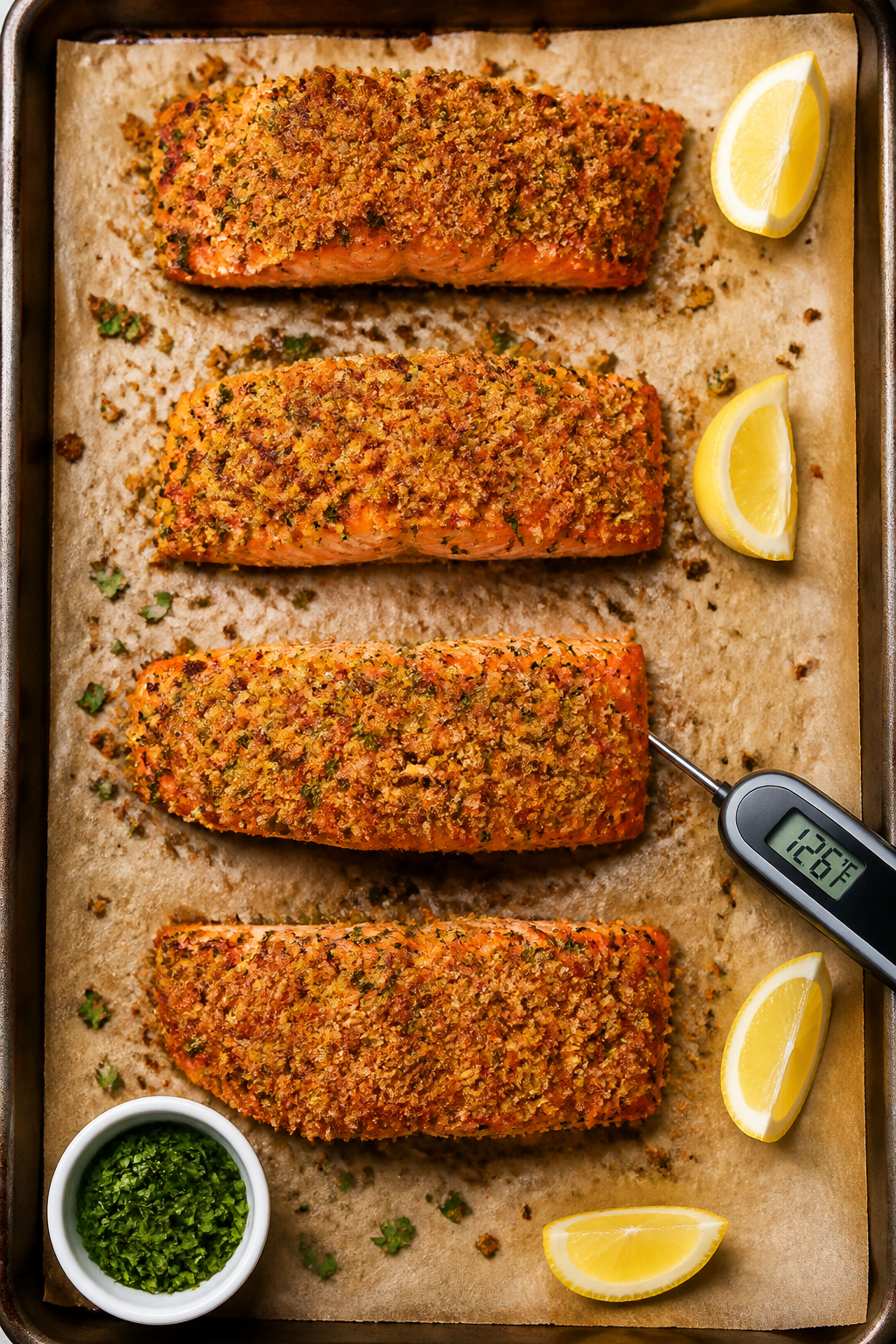
- Preheat and prep the pan. Heat your oven to 400°F (200°C). Line a baking sheet with parchment paper or lightly grease it with olive oil for easy cleanup.
- Pat the salmon dry. Use paper towels to blot excess moisture. Dry fish sears and crusts better, helping the topping stick and the salmon cook evenly.
- Season the fillets. Lightly sprinkle both sides with salt and pepper.
Place the salmon skin-side down if it has skin.
- Make the crust mixture. In a bowl, combine 1/2 cup finely grated Parmesan, 1/2 cup panko, 2 tablespoons chopped parsley, 1 tablespoon chopped dill (or 1 teaspoon dried), 1 small minced garlic clove, and the zest of half a lemon. Add 2 tablespoons olive oil and mix until the crumbs look evenly moistened. Add a pinch of red pepper flakes if you like heat.
- Spread a thin Dijon layer. Brush the top of each fillet with 1 to 2 teaspoons of Dijon. This acts like glue and adds a tangy backbone that cuts through the richness of the salmon.
- Press on the crust. Spoon the Parmesan-herb mixture over the top of each fillet.
Press gently so it adheres in an even layer, about 1/4 inch thick.
- Bake until just cooked through. Place the tray on the middle rack and bake for 10–14 minutes, depending on thickness. Thicker center-cut pieces will need closer to 14 minutes. You’re aiming for an internal temperature of 125–130°F (52–54°C) for moist, medium doneness.
- Optional broil for extra color. If the crust needs more browning, switch to broil for 1 minute, watching closely so it doesn’t burn.
- Rest briefly and serve. Let the salmon rest for 3 minutes to finish cooking gently.
Serve with fresh lemon wedges. A simple side like roasted asparagus, a crisp salad, or garlicky green beans makes a great pairing.
Storage Instructions
- Refrigerator: Store leftovers in an airtight container for up to 2 days. The crust will soften, but the flavor stays great.
- Reheating: Warm gently at 275°F (135°C) for 8–10 minutes, uncovered, to revive the crust a bit without overcooking the fish.
A quick 1–2 minute broil at the end can re-crisp the top. Avoid microwaving if possible.
- Freezer: Not ideal. The crust becomes soggy when thawed.
If you must freeze, wrap tightly and reheat in the oven from frozen at 300°F (150°C) until hot, then broil briefly.
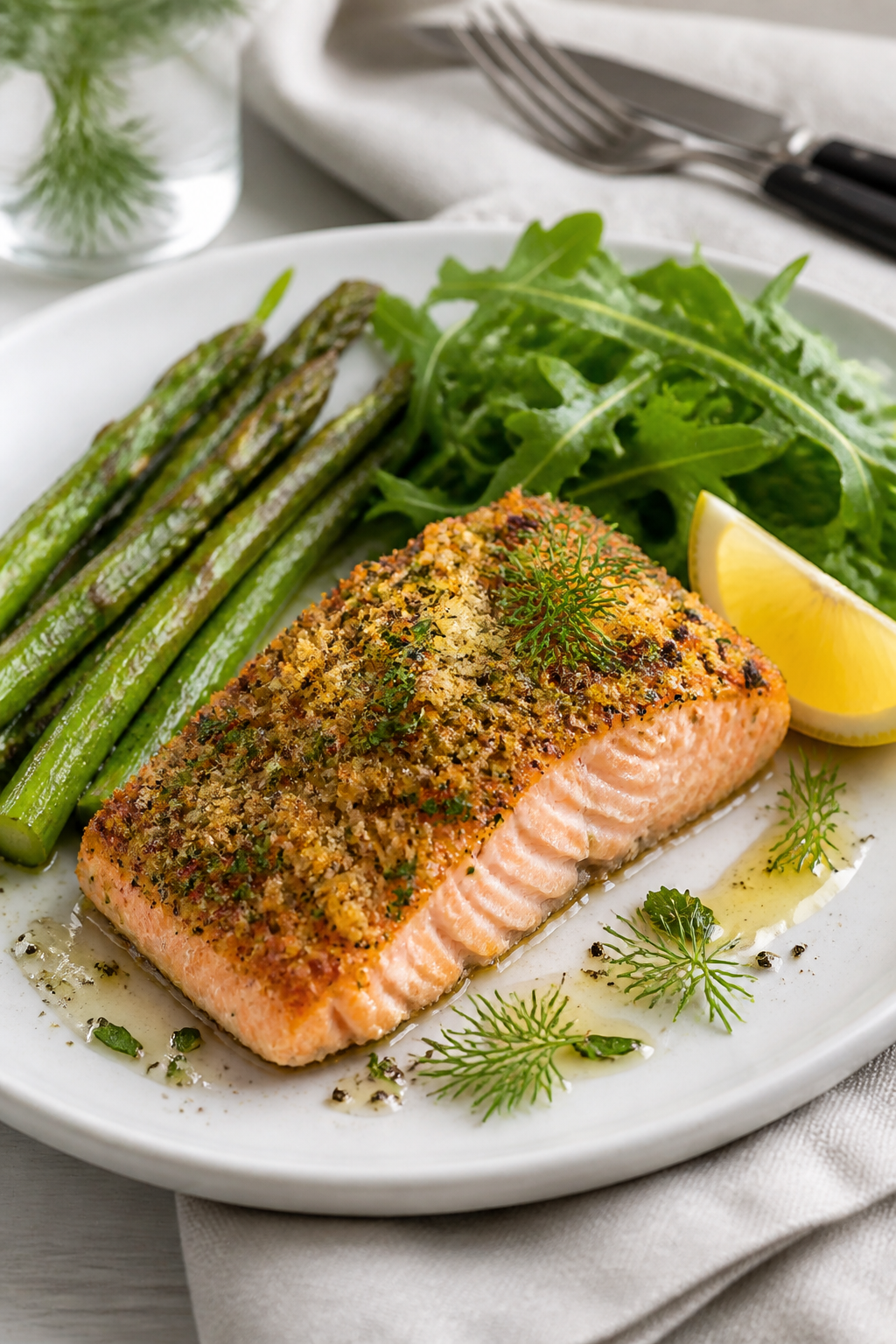
Why This is Good for You
Salmon is rich in omega-3 fatty acids, which support heart and brain health. It’s also a solid source of high-quality protein and B vitamins. The herb and lemon-forward crust adds flavor without heavy sauces, keeping the meal lighter.
Using olive oil and Parmesan in modest amounts gives you satisfying richness with fewer empty calories. Paired with vegetables or a fresh salad, this is a balanced, nutrient-dense dinner that still feels indulgent.
Common Mistakes to Avoid
- Overcooking the salmon. Dry salmon is the most common issue. Start checking for doneness early, especially with thinner fillets.
- Using pre-shredded Parmesan. It often contains anti-caking agents and won’t melt or brown as nicely.
Finely grate fresh Parmesan for the best texture.
- Skipping the Dijon. It’s not just flavor—it helps the crust grip. Without it, crumbs can slide off.
- Too much moisture on the fish. If you don’t pat the salmon dry, the crust may turn mushy.
- Uneven crust layer. Thick clumps won’t brown evenly. Spread a thin, uniform layer for crispness.
Alternatives
- Air fryer method: Cook at 380°F (193°C) for 8–10 minutes, depending on thickness.
Check early to avoid overcooking.
- Herb swaps: Try thyme, chives, or basil if you don’t have dill. Dried herbs work—use about one-third the amount of fresh.
- Breadcrumb options: Use regular breadcrumbs, crushed Ritz crackers for a buttery vibe, or almond flour for a lower-carb twist. If using almond flour, add a little extra Parmesan and oil to help it toast.
- Dairy-free: Skip the Parmesan and add extra herbs, lemon zest, and a tablespoon of nutritional yeast for a hint of savory flavor.
- Mustard swap: If Dijon isn’t your thing, use whole grain mustard or a thin smear of mayonnaise mixed with lemon juice.
- Fish options: This crust works with cod, halibut, or trout.
Adjust timing: thinner white fish may be done in 8–10 minutes.
- Gluten-free: Use gluten-free panko or crushed gluten-free crackers.
Never Wonder What's For Dinner Again
Get 7 healthy, family-friendly dinners complete with recipes, grocery lists, and simple meal plans delivered straight to your inbox.
FAQ
Can I use frozen salmon?
Yes, just thaw it completely in the fridge overnight, then pat very dry before seasoning. Excess moisture will stop the crust from crisping.
How do I know when the salmon is done without a thermometer?
Press the top gently with a fork. It should flake easily but still look slightly translucent in the center.
Pull it from the oven just before it looks fully opaque—residual heat will finish the job.
Is skin-on or skinless better?
Either works. Skin-on protects the fish from overcooking and makes it easier to lift from the pan. You won’t eat the skin here since the crust is on top, but it helps keep moisture in.
Can I make the crust mixture ahead?
Yes.
Mix the dry ingredients and refrigerate in a sealed container for up to 2 days. Stir in olive oil right before using so it stays fresh and crisp.
What sides go well with this?
Roasted asparagus, sautéed green beans, lemony arugula salad, or garlicky broccolini are excellent. For carbs, try roasted baby potatoes, couscous, or a quinoa salad with cucumber and herbs.
How can I make it spicier?
Add 1/4 teaspoon red pepper flakes to the crumb mix or a small pinch of cayenne.
You can also serve with a drizzle of chili crisp or a squeeze of sriracha-lemon sauce.
Can I cook it on the grill?
Yes—use a grill-safe pan or foil to keep the crust from falling through grates. Grill over medium heat, lid closed, for 8–12 minutes until the crust is golden and the salmon flakes.
Final Thoughts
This Parmesan Herb Crusted Salmon is the kind of dependable, flavor-forward recipe you’ll want in your regular rotation. It’s quick to prep, easy to customize, and consistently delivers crisp, savory results.
With just a handful of common ingredients, you get a restaurant-quality dinner that feels fresh and satisfying. Keep a fillet or two on hand, grab a lemon and some herbs, and dinner practically makes itself.
Printable Recipe Card
Want just the essential recipe details without scrolling through the article? Get our printable recipe card with just the ingredients and instructions.
Loved This Recipe?
If you're looking for more simple, healthy dinners your family will actually eat, grab my FREE 7-Day Easy Dinner Reset. You'll get 7 easy dinner recipes, simple grocery lists, and a done-for-you plan that takes the stress out of mealtime.