Preheat and prep the pan. Heat your oven to 400°F (200°C). Line a baking sheet with parchment paper or lightly grease it with olive oil for easy cleanup.
Pat the salmon dry. Use paper towels to blot excess moisture. Dry fish sears and crusts better, helping the topping stick and the salmon cook evenly.
Season the fillets. Lightly sprinkle both sides with salt and pepper.
Place the salmon skin-side down if it has skin.
Make the crust mixture. In a bowl, combine 1/2 cup finely grated Parmesan, 1/2 cup panko, 2 tablespoons chopped parsley, 1 tablespoon chopped dill (or 1 teaspoon dried), 1 small minced garlic clove, and the zest of half a lemon. Add 2 tablespoons olive oil and mix until the crumbs look evenly moistened. Add a pinch of red pepper flakes if you like heat.
Spread a thin Dijon layer. Brush the top of each fillet with 1 to 2 teaspoons of Dijon. This acts like glue and adds a tangy backbone that cuts through the richness of the salmon.
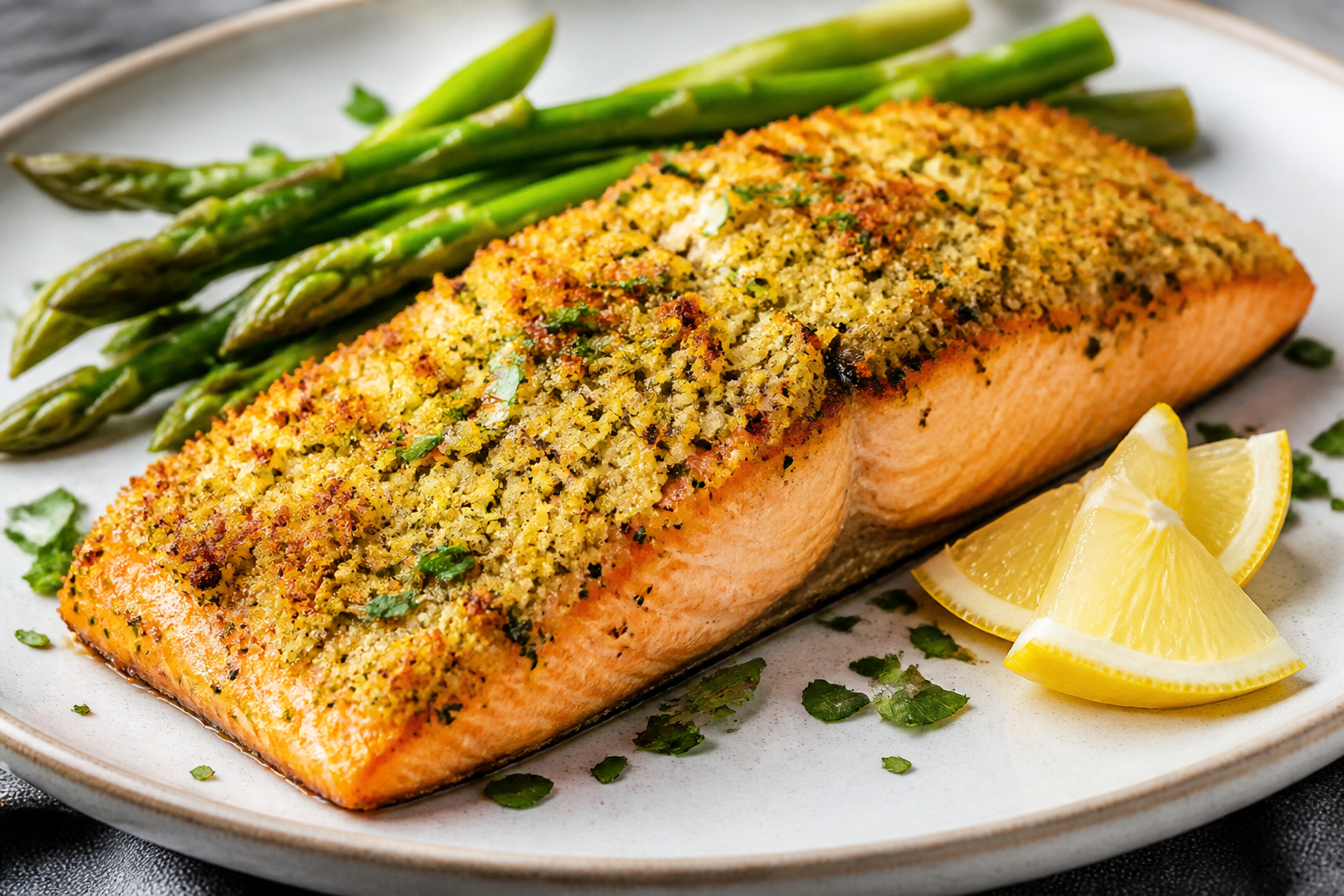
Press on the crust. Spoon the Parmesan-herb mixture over the top of each fillet.
Press gently so it adheres in an even layer, about 1/4 inch thick.
Bake until just cooked through. Place the tray on the middle rack and bake for 10–14 minutes, depending on thickness. Thicker center-cut pieces will need closer to 14 minutes. You’re aiming for an internal temperature of 125–130°F (52–54°C) for moist, medium doneness.
Optional broil for extra color. If the crust needs more browning, switch to broil for 1 minute, watching closely so it doesn’t burn.
Rest briefly and serve. Let the salmon rest for 3 minutes to finish cooking gently.
Serve with fresh lemon wedges. A simple side like roasted asparagus, a crisp salad, or garlicky green beans makes a great pairing.