Pineapple Coconut Protein Muffins – Tropical Flavor With a Protein Boost
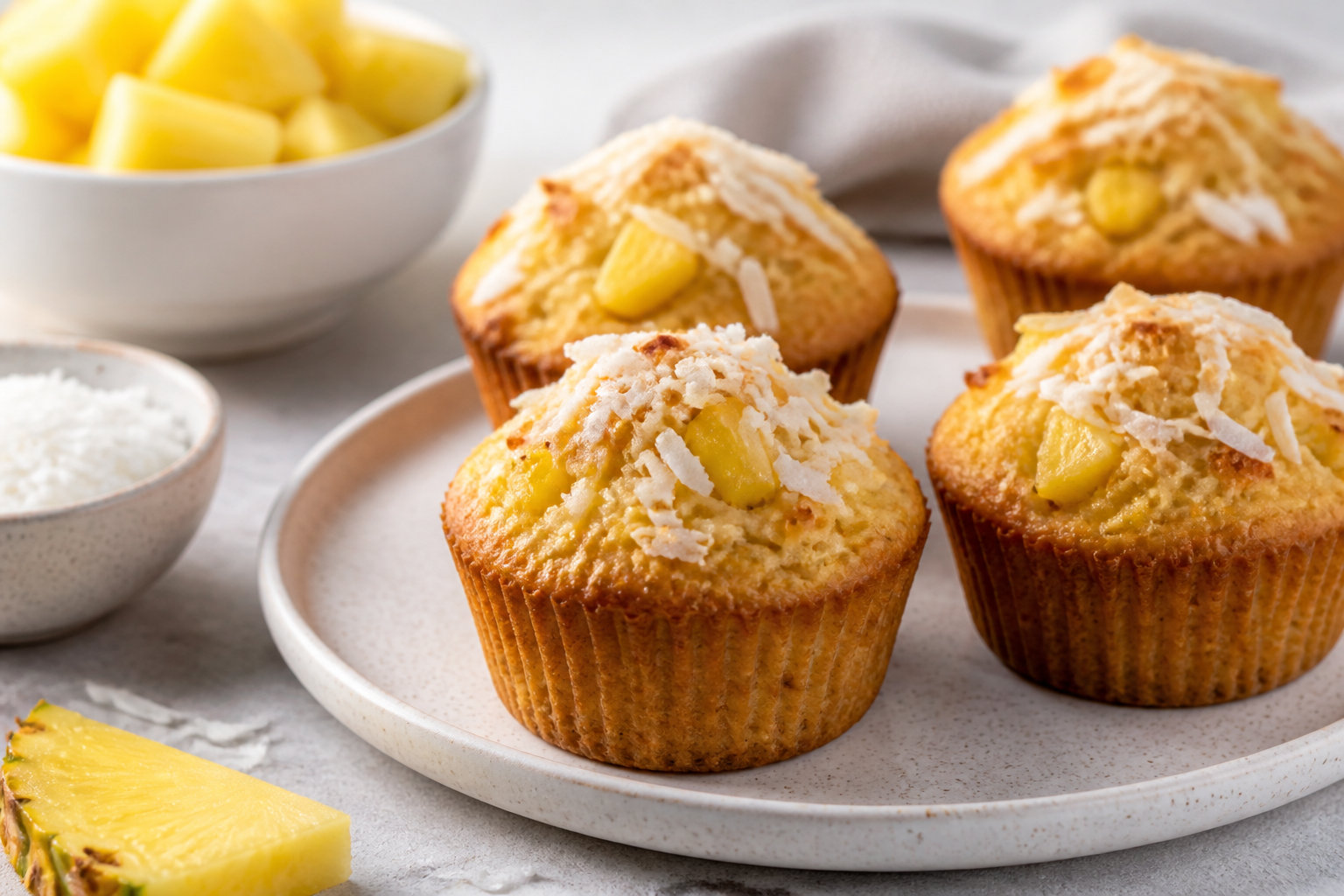
Warm, sunny flavor meets a satisfying boost of protein in these Pineapple Coconut Protein Muffins. They’re soft, lightly sweet, and packed with juicy pineapple in every bite. Whether you need a make-ahead breakfast, a pre-workout snack, or a better-for-you treat, these muffins hit the spot without feeling heavy.
FREE 7-Day Easy Dinner Reset
Get 7 healthy, family-friendly dinners complete with recipes and simple meal plans delivered straight to your inbox.
Plus, they’re simple to whip up and hold up well for the week. If you love a tropical twist, this is your new go-to bake.
Ingredients
Method
- Prep the pan and oven. Heat the oven to 350°F (175°C). Line a 12-cup muffin tin with paper liners or grease lightly. This helps the muffins release cleanly.
- Drain the pineapple well. Press the crushed pineapple with a spoon in a sieve to remove extra juice. Reserve a splash of juice in case the batter needs thinning.
- Whisk dry ingredients. In a large bowl, whisk flour, oats, protein powder, baking powder, baking soda, salt, and cinnamon. Break up any protein powder clumps so the crumb stays even.
- Combine wet ingredients. In a separate bowl or measuring jug, whisk Greek yogurt, eggs, honey, melted coconut oil, vanilla, and lime zest. The mixture should be smooth and glossy.
- Bring it together. Pour the wet mixture into the dry. Stir gently with a spatula until just combined. If the batter looks too thick (like cookie dough), add 1–2 tablespoons of reserved pineapple juice to loosen. The batter should be thick but scoopable.
- Fold in the fruit and coconut. Add the drained crushed pineapple and shredded coconut. Fold lightly to distribute without overmixing.
- Fill the muffin cups. Divide the batter evenly among the 12 cups. Sprinkle each with a pinch of coconut flakes for a toasty top if you like.
- Bake. Bake for 16–20 minutes, or until the tops are set, lightly golden at the edges, and a toothpick comes out with a few moist crumbs. Avoid overbaking; protein bakes can dry out quickly.
- Cool. Let muffins cool in the pan for 5 minutes, then transfer to a wire rack. Cooling helps them set and improves texture.
- Enjoy. Serve warm or at room temperature. They’re great plain, with a swipe of Greek yogurt, or a drizzle of warm honey.
What Makes This Special
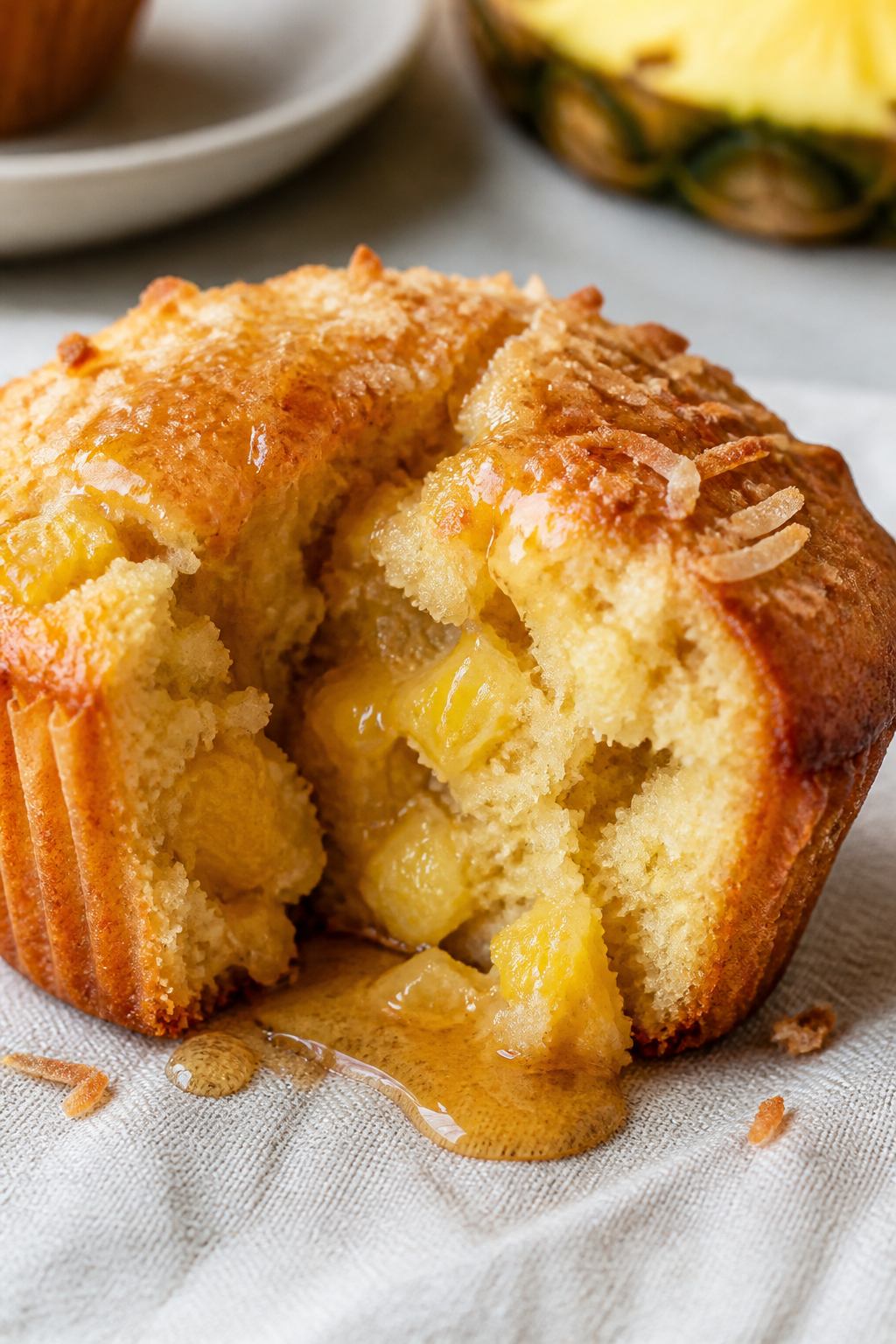
These muffins bring together bright pineapple and toasty coconut with the staying power of protein. The texture is moist and tender, not dry like some protein bakes can be.
They use pantry staples and a single bowl for easy cleanup. You can keep them wholesome with oats and Greek yogurt, or personalize them with nuts, chocolate chips, or dairy-free swaps. Best of all, they taste like a mini vacation while staying balanced and nutrient-dense.
What You’ll Need
- White whole wheat flour (or a 50/50 mix of all-purpose and whole wheat): 1 cup
- Rolled oats (old-fashioned): 1/2 cup
- Vanilla whey or plant-based protein powder: 1/2 cup
- Baking powder: 1 1/2 teaspoons
- Baking soda: 1/2 teaspoon
- Fine sea salt: 1/4 teaspoon
- Ground cinnamon (optional): 1/2 teaspoon
- Canned crushed pineapple in juice, well drained: 1 cup (reserve 2–3 tablespoons juice)
- Unsweetened shredded coconut: 1/2 cup
- Plain Greek yogurt (2% or 0%): 3/4 cup
- Eggs: 2 large
- Honey or pure maple syrup: 1/3 cup
- Coconut oil, melted and cooled (or neutral oil): 3 tablespoons
- Vanilla extract: 1 teaspoon
- Lime zest (optional but great with pineapple): 1 teaspoon
- Unsweetened coconut flakes for topping (optional): 2 tablespoons
Step-by-Step Instructions
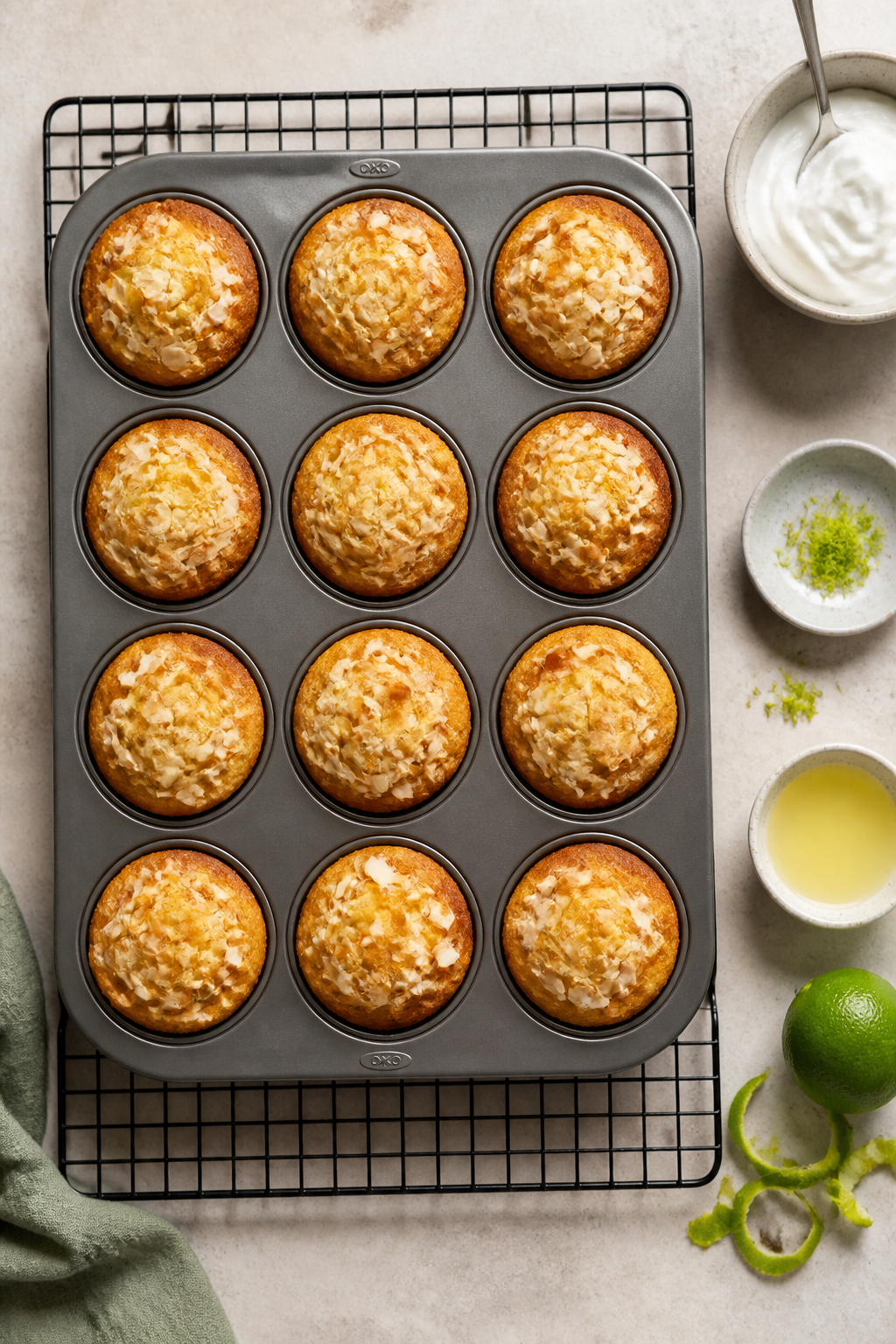
- Prep the pan and oven. Heat the oven to 350°F (175°C).
Line a 12-cup muffin tin with paper liners or grease lightly. This helps the muffins release cleanly.
- Drain the pineapple well. Press the crushed pineapple with a spoon in a sieve to remove extra juice. Reserve a splash of juice in case the batter needs thinning.
- Whisk dry ingredients. In a large bowl, whisk flour, oats, protein powder, baking powder, baking soda, salt, and cinnamon.
Break up any protein powder clumps so the crumb stays even.
- Combine wet ingredients. In a separate bowl or measuring jug, whisk Greek yogurt, eggs, honey, melted coconut oil, vanilla, and lime zest. The mixture should be smooth and glossy.
- Bring it together. Pour the wet mixture into the dry. Stir gently with a spatula until just combined.
If the batter looks too thick (like cookie dough), add 1–2 tablespoons of reserved pineapple juice to loosen. The batter should be thick but scoopable.
- Fold in the fruit and coconut. Add the drained crushed pineapple and shredded coconut. Fold lightly to distribute without overmixing.
- Fill the muffin cups. Divide the batter evenly among the 12 cups.
Sprinkle each with a pinch of coconut flakes for a toasty top if you like.
- Bake. Bake for 16–20 minutes, or until the tops are set, lightly golden at the edges, and a toothpick comes out with a few moist crumbs. Avoid overbaking; protein bakes can dry out quickly.
- Cool. Let muffins cool in the pan for 5 minutes, then transfer to a wire rack. Cooling helps them set and improves texture.
- Enjoy. Serve warm or at room temperature.
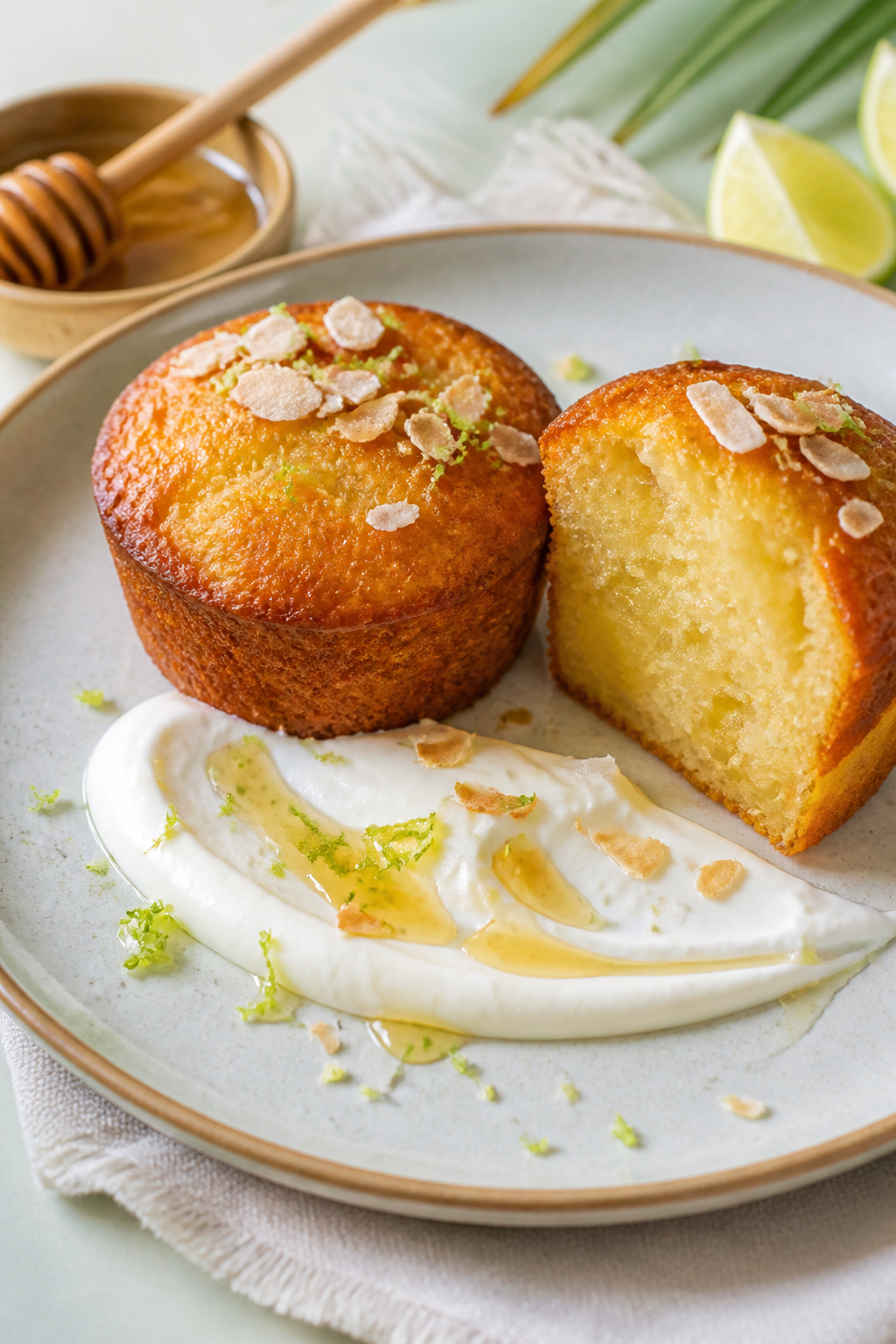
They’re great plain, with a swipe of Greek yogurt, or a drizzle of warm honey.
Keeping It Fresh
Store cooled muffins in an airtight container at room temperature for up to 2 days. For longer storage, refrigerate for 4–5 days for best texture. To freeze, wrap each muffin individually and place in a freezer bag.
They’ll keep well for up to 3 months. Reheat from frozen in the microwave for 25–35 seconds or in a low oven until warmed through. Pro tip: Slip a paper towel into the container to absorb excess moisture and keep the tops from getting soggy.
Health Benefits
These muffins offer a solid balance of protein, fiber, and healthy fats. Protein powder and Greek yogurt support muscle repair and keep you full longer.
Oats and whole wheat flour add beta-glucan fiber for heart health and steady energy. Pineapple brings vitamin C and bromelain, which may aid digestion. Coconut contributes satisfying fats that make these feel indulgent without heavy sugar.
Compared to standard bakery muffins, this version is lower in added sugar and offers more staying power for breakfast or snacks.
Common Mistakes to Avoid
- Overmixing the batter: This can make muffins dense. Stir just until you don’t see dry streaks.
- Not draining the pineapple: Excess liquid can lead to gummy centers. Press out the juice and add it back only if needed.
- Overbaking: Protein dries out quickly.
Start checking at 16 minutes and pull when the tops spring back.
- Using the wrong protein powder: Some powders absorb more liquid. Whey or a fine plant blend works best. Gritty or casein-heavy blends may need extra liquid.
- Skipping cooling time: Letting muffins rest helps set the crumb and locks in moisture.
Alternatives
- Flour swap: Use all-purpose flour if you prefer lighter texture. For gluten-free, try a 1:1 gluten-free baking blend and certified GF oats.
- Protein options: Use unflavored protein and add an extra teaspoon of vanilla and a bit more sweetener to taste.
If using pea/rice blends, you may need 1–2 tablespoons more liquid.
- Sweetener: Swap honey with maple syrup or 1/2 cup coconut sugar (add 2 tablespoons milk if batter thickens).
- Dairy-free: Replace Greek yogurt with a thick coconut yogurt and use plant-based protein powder.
- Add-ins: Chopped macadamias, pecans, or mini dark chocolate chips are great. Keep add-ins to about 1/2 cup total.
- Fruit variations: Try mango, diced peaches, or a mix of pineapple and banana for a softer crumb.
- Boosted fiber: Add 1 tablespoon ground flaxseed or chia to the dry mix and 1–2 tablespoons milk if needed.
Never Wonder What's For Dinner Again
Get 7 healthy, family-friendly dinners complete with recipes, grocery lists, and simple meal plans delivered straight to your inbox.
FAQ
Can I make these without protein powder?
Yes. Replace the 1/2 cup protein powder with 1/3 cup flour and 3 tablespoons finely ground oats.
You may need 1–2 tablespoons less liquid since protein powder absorbs differently.
How much protein is in each muffin?
It depends on your protein powder. With a typical whey powder (about 20–24g protein per scoop/30g), each muffin lands around 8–10g of protein. Check your brand’s label for exact numbers.
Why are my muffins dense?
Overmixing, too much liquid from undrained pineapple, or using a heavy protein blend can cause density.
Make sure to drain fruit well, measure flour correctly, and fold the batter gently.
Can I use fresh pineapple?
You can, but chop it very small and pat it dry. Fresh pineapple can be juicier than canned, so watch the batter texture and bake time.
What if I don’t have coconut oil?
Use a neutral oil like avocado or light olive oil. Melted butter also works and adds flavor, though the muffins will be a bit richer.
How do I prevent sticking to the liners?
Use high-quality parchment liners or lightly spray the liners before filling.
Let muffins cool at least 10–15 minutes before peeling off the paper.
Can I make mini muffins?
Yes. Spoon into a mini muffin tin and bake 10–12 minutes. Start checking early, as minis overbake quickly.
Are these suitable for kids?
Absolutely.
They’re gently sweet and soft. If serving to toddlers, consider chopping any nuts very fine and skipping large coconut flakes on top.
Wrapping Up
Pineapple Coconut Protein Muffins bring bright, summery flavor to a wholesome, easy bake you can enjoy any day of the week. They’re simple to customize, freeze well, and deliver that rare combo of comfort and nutrition.
Keep a batch on hand for quick breakfasts, gym days, or a coffee break that feels a little tropical. With the right protein powder and a light hand when mixing, you’ll get tender, juicy muffins every time. Enjoy the sunshine in every bite.
Printable Recipe Card
Want just the essential recipe details without scrolling through the article? Get our printable recipe card with just the ingredients and instructions.
Loved This Recipe?
If you're looking for more simple, healthy dinners your family will actually eat, grab my FREE 7-Day Easy Dinner Reset. You'll get 7 easy dinner recipes, simple grocery lists, and a done-for-you plan that takes the stress out of mealtime.